

To create a simple map for mesh node placement in most homes, position your primary node near the modem in a central spot. Place secondary nodes roughly equidistant from the main, avoiding obstacles like thick walls or metal objects. Elevate nodes on shelves or high furniture for better coverage. Keep nodes away from appliances that cause interference, such as microwaves. For more tips on fine-tuning your setup and achieving seamless Wi Fi, continue exploring how to optimize your network.

Prime made for students and young adults
- Fast, free delivery for dorm and study essentials
- Prime Video and Amazon Music included
- Member-only deals
Key Takeaways
- Place the primary node near the modem in a central, elevated location for optimal coverage.
- Position secondary nodes roughly equidistant from the primary to ensure seamless mesh connectivity.
- Avoid obstacles like thick walls, large metal appliances, or mirrors that can weaken signals.
- Elevate nodes on shelves or high furniture to improve signal distribution throughout the home.
- Regularly assess network performance and adjust node placement to eliminate dead zones and optimize coverage.
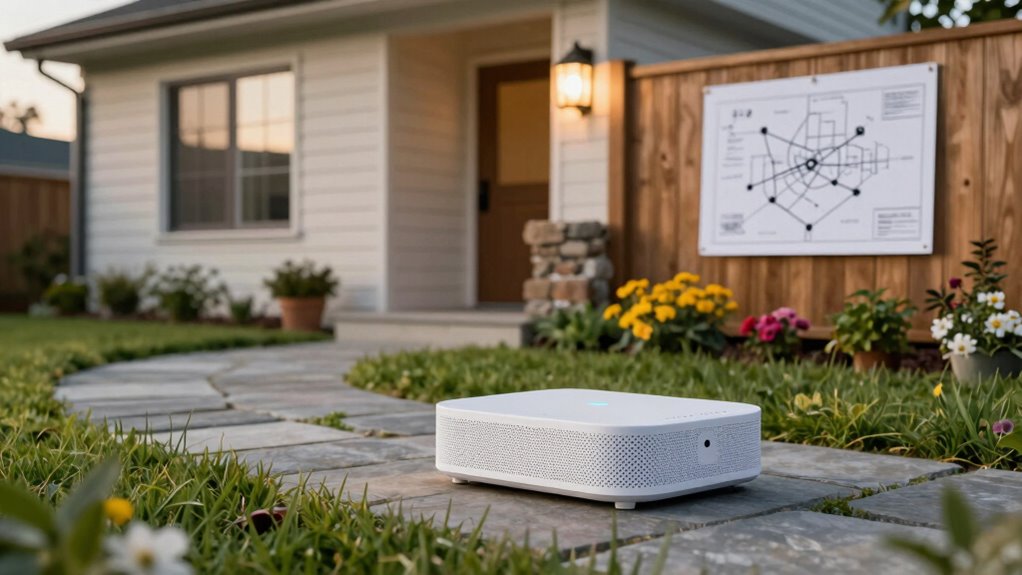
Have you ever wondered how to guarantee your mesh network provides reliable coverage? The key lies in proper mesh node placement. When you position your nodes thoughtfully, you can minimize Wi Fi interference and optimize your signal, ensuring smooth streaming, quick downloads, and strong connections everywhere in your home. First, recognize that Wi Fi interference is a common obstacle—devices like microwaves, cordless phones, and even neighboring Wi Fi networks can disrupt your signal. To combat this, you need to place your mesh nodes in spots where interference is minimal, such as away from electronic appliances that emit radio waves or thick walls that block signals. Signal optimization is all about finding the right balance; you want your nodes close enough to each other to maintain a strong backhaul connection but far enough apart to extend coverage effectively. Proper node placement also involves understanding media literacy, so you can identify and avoid sources of interference and false signals that may affect your network. Start by placing your primary node near your modem, ideally in a central location. This node acts as the anchor, distributing your Wi Fi signal across your home. From there, position the secondary nodes roughly equidistant from the primary, ensuring they are not in direct line of sight with large metal appliances, mirrors, or thick walls. If your house has multiple floors, aim to place nodes on each floor, particularly in open areas rather than cluttered or enclosed spaces, to promote better signal flow. Avoid placing nodes behind furniture or inside cabinets, as obstacles weaken the signal strength. Instead, opt for elevated spots like shelves or high furniture to maximize coverage. Keep in mind that Wi Fi interference can be reduced by choosing channels with less congestion; some mesh systems automatically select the best channels, but it’s worth checking your network settings to optimize performance further. Also, consider the placement relative to your devices—if your laptop or smartphone often connects in a particular area, make sure a node is nearby to provide a strong, interference-free connection. Regularly reassess your setup. If you notice dead zones or slow speeds, reposition the nodes slightly, always aiming for that sweet spot where interference is minimized and coverage is maximized. Using a Wi Fi analyzer app can help identify interference sources and weak signal areas. With strategic placement and mindful positioning, your mesh network will deliver consistent, high-quality coverage across your home. Proper node placement isn’t complicated, but it requires attention to detail—by reducing Wi Fi interference and focusing on signal optimization, you’ll create a seamless, reliable network that keeps all your devices connected effortlessly.
Frequently Asked Questions
How Many Mesh Nodes Are Ideal for a Large Home?
For a large home, you’ll want around 3 to 5 mesh nodes to guarantee seamless coverage. Place them strategically to minimize wireless interference and maximize device compatibility. Keep nodes away from thick walls and electronics that cause interference. Start with fewer nodes and add more if needed. This setup helps create a reliable, fast Wi-Fi network that supports all your devices without dead zones or slow spots.
Can Mesh Nodes Be Placed Outdoors?
You can absolutely place mesh nodes outdoors, but it’s best to choose ones designed for outdoor signal and weather resistance. While some nodes handle the elements well, others may need extra protection, like weatherproof enclosures. Installing outdoor mesh nodes helps extend your Wi-Fi coverage seamlessly, ensuring your network stays strong and stable outside, even in harsh weather. Just make sure to select the right equipment meant for outdoor conditions to avoid issues.
Do Mesh Nodes Interfere With Smart Home Devices?
Mesh nodes generally don’t interfere with your smart home devices if you place them correctly. Interference concerns mainly come from overlapping signals or incompatible devices. To avoid issues, keep your mesh nodes away from other wireless gadgets that operate on similar frequencies, and guarantee all devices are compatible with your mesh system. Proper placement and choosing compatible devices help maintain a smooth, interference-free smart home experience.
How Often Should Mesh Nodes Be Repositioned?
Reposition your mesh nodes regularly to optimize signal strength and interference management. Typically, you should check and adjust every few months or if you notice sluggish speeds or dead zones. If your Wi-Fi falters, interference might be to blame, so moving nodes to higher, open spots can help. Stay vigilant, and you’ll make certain of seamless streaming and smooth surfing throughout your space.
Is Professional Installation Necessary for Optimal Placement?
You don’t need a professional for ideal mesh node placement, but following DIY tips can help you maximize signal enhancement. Start by placing nodes in central locations, avoiding obstructions like thick walls or appliances. Use the mesh system’s app to test signal strength and adjust positions accordingly. With careful placement and these simple steps, you’ll ensure strong, consistent Wi-Fi coverage throughout your home without extra help.
Conclusion
Think of your mesh nodes as guiding stars in your home’s night sky, creating a web of light that connects every corner. When you place them wisely, they form a constellation of strong signals, illuminating your entire space. Just as stars cluster to form patterns, your nodes work best when positioned thoughtfully. With this simple map, you’ll craft a network that’s as reliable and beautiful as a clear, starry night—bringing harmony to your digital universe.
Evergreen bestsellers Picks
bestsellers
As an affiliate, we earn on qualifying purchases.