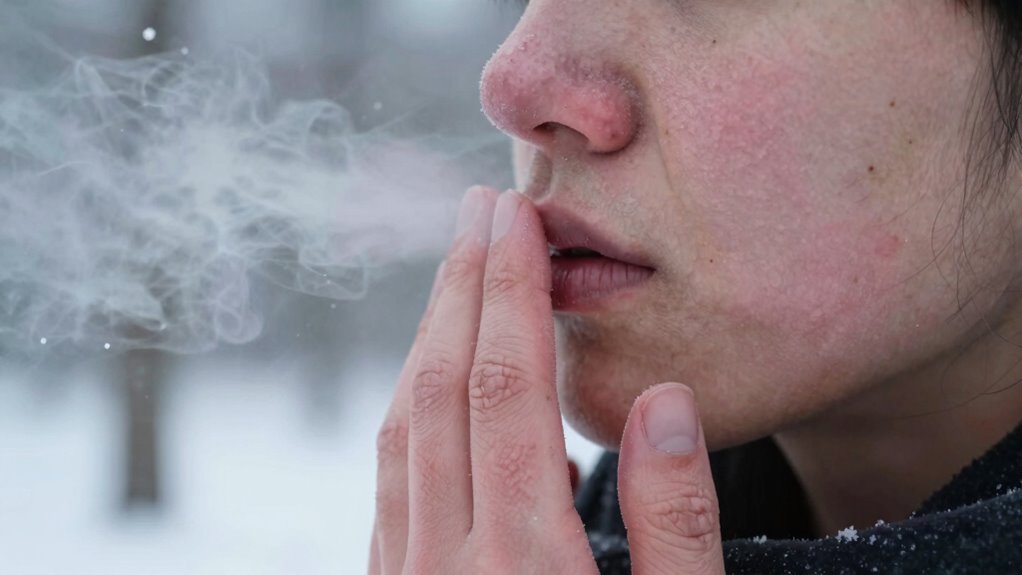

In winter, cold air and low humidity weaken your skin’s natural barrier, making it feel dry, rough, and sensitive. The chill causes blood vessels to constrict, reducing blood flow and leaving your skin looking dull. Heating indoors worsens dehydration, stripping away moisture. To keep your skin healthy, you need richer moisturizers, protective clothing, and proper hydration strategies. Wondering how to adapt your skincare routine to these seasonal changes? Keep exploring for more tips.

Prime made for students and young adults
- Fast, free delivery for dorm and study essentials
- Prime Video and Amazon Music included
- Member-only deals
Key Takeaways
- Cold air weakens the skin’s barrier, causing dryness, roughness, and irritation.
- Lower humidity levels strip moisture from the skin, leading to dehydration.
- Reduced blood flow from constricted blood vessels results in dull, pale skin.
- Indoor heating decreases humidity, further dehydrating the skin.
- Protective clothing and soothing ingredients help shield skin from harsh winter elements.

When winter arrives, your skin often feels drier, tighter, or more sensitive than usual. This change isn’t just in your head; it’s a direct result of the season’s unique conditions. During colder months, the temperature effects on skin become more pronounced, causing your skin’s natural barrier to weaken. The drop in temperature decreases humidity levels in the air, stripping moisture from your skin and making it harder for your body to retain hydration. As a result, your skin might feel rough, flaky, or irritated, especially if you’re not adjusting your skincare routine to meet these new demands. That’s why implementing a targeted winter skincare routine is essential to protect and nourish your skin throughout the season.
Winter’s cold air weakens skin’s barrier, causing dryness, flakiness, and irritation—adapt your skincare to stay protected.
In winter, your skincare routines need to evolve to combat the dryness caused by the cold air and indoor heating. You should start by switching to a richer, more emollient moisturizer that can lock in moisture more effectively. Look for products containing hydrating ingredients like hyaluronic acid, glycerin, or ceramides, which help reinforce your skin’s barrier. Applying moisturizer immediately after washing your face is crucial because it traps the remaining water on your skin and prevents moisture loss. You might also want to incorporate a gentle, hydrating serum into your routine to boost hydration levels. Avoid hot water when cleansing, as it can strip away natural oils, leaving your skin even more vulnerable to the cold.
The temperature effects on skin during winter don’t just stop at moisture loss; they also influence how your skin reacts to environmental stressors. Cold air can cause blood vessels to constrict, reducing blood flow and making your skin look dull or pale. It also triggers an inflammatory response, which can heighten skin sensitivity or redness. To counteract these effects, consider using products with soothing ingredients like aloe vera or oatmeal extract. Wearing protective clothing, like scarves and gloves, can also shield your skin from direct exposure to harsh elements, minimizing irritation and dryness. Additionally, using smart home technology such as humidifiers can help maintain optimal indoor humidity levels, which is crucial for preventing skin dehydration. Incorporating seasonal skincare adjustments ensures you are proactively caring for your skin’s changing needs. Being aware of how temperature effects on skin work in winter can help you develop smarter skincare routines. Remember, consistency is key. Regularly moisturizing, avoiding overly hot showers, and protecting your skin from the cold can make a significant difference. By adjusting your skincare to meet the season’s challenges, you’ll not only prevent discomfort but also maintain healthy, glowing skin despite the winter weather.
winter moisturizer with hyaluronic acid
As an affiliate, we earn on qualifying purchases.
As an affiliate, we earn on qualifying purchases.
Frequently Asked Questions
Can Winter Weather Cause Permanent Skin Damage?
Winter weather can cause some skin damage, but it usually isn’t permanent if you take proper care. Cold, dry air leads to winter skin damage like chapping and irritation, which can sometimes cause lasting effects if left untreated. To prevent permanent skin effects, moisturize regularly, wear protective clothing, and avoid harsh soaps. With consistent care, you can protect your skin from winter’s harsh effects and maintain healthy, resilient skin year-round.
How Does Cold Weather Affect Oily Skin Types?
Cold weather loves to play tricks on oily skin, turning your face into a shiny, clogged pore battlefield. You might think the cold helps, but it actually triggers excess shine and more clogged pores as your skin overcompensates for dryness. So, while you might enjoy the winter chill, your oily skin won’t thank you for neglecting hydration and proper skincare. Keep it balanced, or face the consequences of winter’s oily deception.
Are There Specific Ingredients to Avoid During Winter?
During winter, you should avoid skincare ingredients like harsh chemicals and fragrance allergens, as they can strip your skin of its natural oils and cause irritation. Opt for gentle, hydrating products instead. Stay away from alcohol-based toners and heavily scented creams. Instead, choose soothing ingredients like ceramides and hyaluronic acid to keep your skin barrier healthy and comfortable through the cold months.
Does Indoor Heating Impact Skin Hydration?
Indoor heating does impact skin hydration by lowering indoor humidity, which can weaken your skin barrier. Scientific studies confirm that dry air strips moisture from your skin, leading to dryness and irritation. To protect your skin, you should use humidifiers and apply richer moisturizers. Keeping indoor humidity levels balanced helps maintain your skin’s health, preventing it from becoming overly dry or cracked during the winter months.
How Quickly Does Winter Skin Sensitivity Develop?
Winter skin sensitivity can develop within days to a week, especially if your skin barrier weakens and you experience moisture loss. Cold air and indoor heating strip natural oils, making your skin more prone to irritation and dryness. To prevent this, you should start moisturizing regularly and protect your skin from harsh elements early on. The sooner you care for your skin barrier, the less sensitive your skin will become during winter.
ceramide-rich face cream for dry skin
As an affiliate, we earn on qualifying purchases.
As an affiliate, we earn on qualifying purchases.
Conclusion
So, as it turns out, the chill in the air might just be doing more than making you shiver—it could be subtly changing your skin’s feel without you noticing. Maybe that dry, tight sensation is your skin’s way of telling you to switch up your routine. Coincidentally, the cozy winter months are also the perfect time to experiment with richer moisturizers. Who knew that winter’s chill might be a secret nudge for better skin habits?
hydrating serum for sensitive skin
As an affiliate, we earn on qualifying purchases.
As an affiliate, we earn on qualifying purchases.
As an affiliate, we earn on qualifying purchases.
Fall Picks
fall essentials
As an affiliate, we earn on qualifying purchases.