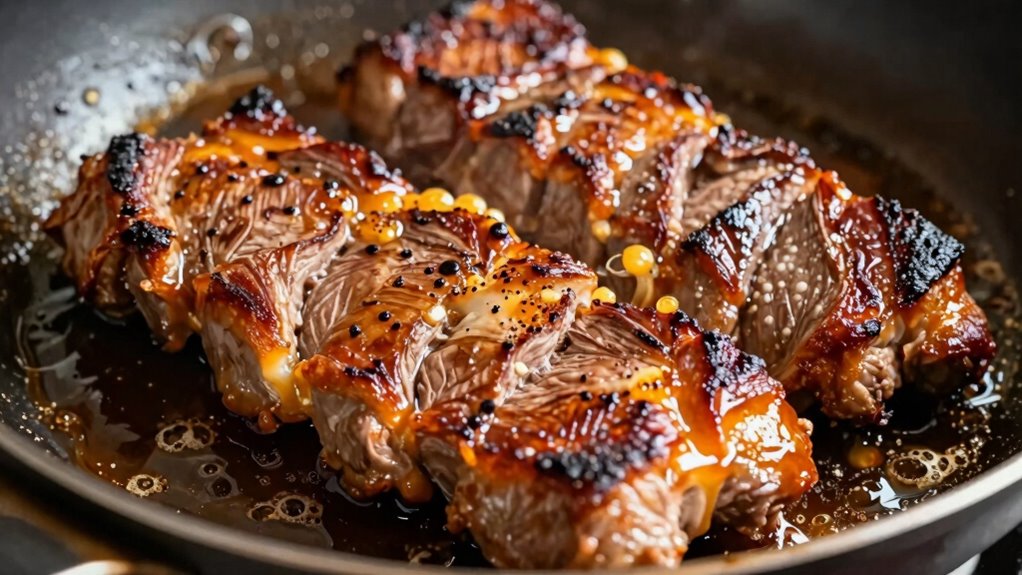

The Maillard reaction is why browned foods like seared steak and toasted bread taste so good. It occurs when heat causes amino acids and sugars to react, creating complex flavor compounds, aromas, and the appealing brown color. This process adds depth, richness, and savory notes to your food. Controlling factors like temperature, moisture, and cooking time influences how well and how much your food browns. Keep going to discover how to master this delicious reaction.
Key Takeaways
- The Maillard reaction produces complex flavor compounds that create the savory, rich taste associated with browned foods.
- It generates aromatic molecules like pyrazines and aldehydes that enhance aroma and flavor depth.
- Browning results from chemical changes involving amino acids and sugars, adding umami and caramel-like notes.
- The reaction’s heat-induced chemical processes develop desirable flavors that make foods taste more appealing.
- The Maillard reaction transforms simple ingredients into flavorful, aromatic dishes, explaining why browned foods taste so good.
What Is the Maillard Reaction and Why Does It Make Food Taste Better?
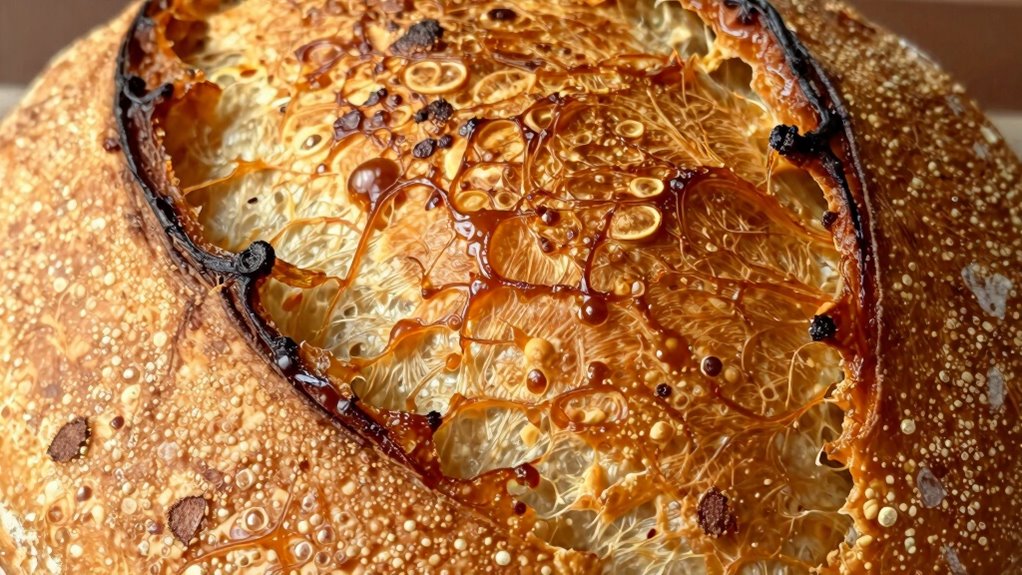
The Maillard reaction is a chemical process that occurs when proteins and sugars in food are heated together, creating complex flavors and aromas. This reaction produces new chemical compounds responsible for the rich, savory taste and appealing brown color you notice in grilled meats, toasted bread, and roasted coffee. The formation of these chemical compounds enhances flavor by adding depth and complexity, making your food more appetizing. When heat triggers the Maillard reaction, it transforms simple ingredients into a flavorful, aromatic experience. Additionally, understanding the chemical processes behind browning can help chefs optimize cooking techniques for better flavor development. Recognizing the temperature control necessary for this reaction enables cooks to perfect their dishes and prevent undesirable results like burning or uneven browning. Proper cooking methods can maximize the desirable flavors created during the Maillard reaction, ensuring a more satisfying taste. This process is key to flavor enhancement, giving cooked foods their signature taste. Without it, many of your favorite dishes would lack the depth and richness that make them so satisfying. Mastering temperature management is crucial for achieving the ideal level of browning and flavor.
How Does Heat Cause Browning and Flavor in Cooking?
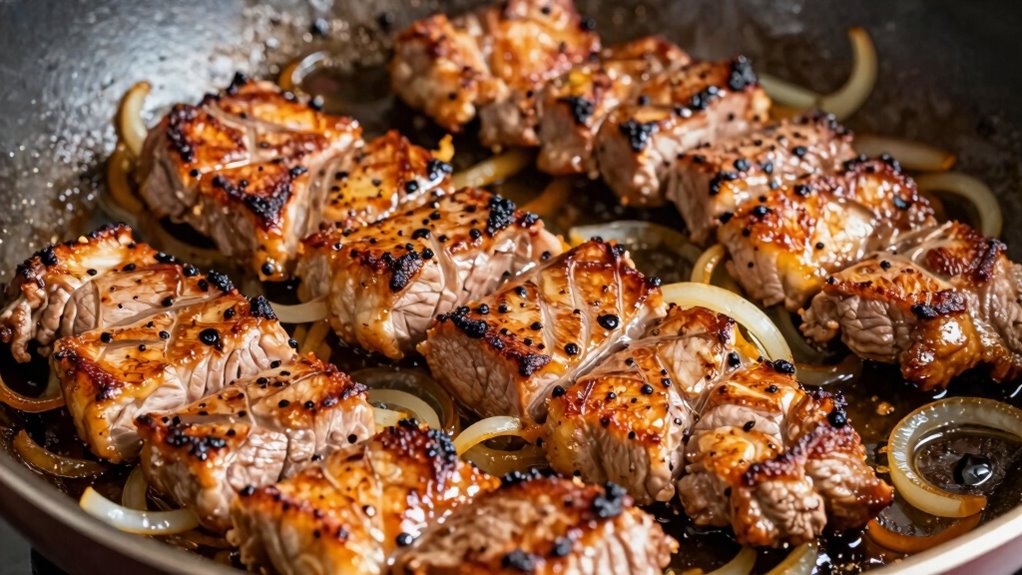
When you heat food, it triggers chemical changes that lead to browning and new flavors. The Maillard reaction forms complex compounds that enhance taste and aroma. Understanding heat’s role can help you better control and optimize these flavor developments during cooking, ensuring that the desired browning effects are achieved without overcooking. Recognizing the importance of temperature control allows cooks to fine-tune the process for ideal flavor and appearance.
Heat Triggers Chemical Changes
Heat acts as the catalyst that transforms the Maillard reaction from a simple chemical process into a flavorful and visually appealing event. When you apply heat, it accelerates food chemistry by breaking down sugars and amino acids, creating new compounds responsible for browning and complex flavors. Mastering virtual reality principles remind us that precise control of these conditions enhances the overall experience. This process involves temperature-dependent reactions that enhance aroma, taste, and appearance, making your food more enticing. In flavor science, understanding how heat triggers these chemical changes helps explain why cooked foods develop rich, savory notes and a golden crust. Without heat, the Maillard reaction stalls, and your dish remains dull and bland. So, by controlling heat precisely, you activate these chemical changes, reveal a spectrum of delicious flavors and appealing colors.
Maillard Reaction Forms Compounds
Applying heat initiates a series of complex chemical reactions in food, leading to the formation of new compounds that give cooked dishes their appealing color and flavor. This process creates a variety of flavor compounds responsible for the rich taste we associate with browned foods.
As these compounds develop, they also influence aroma profiles, making your food smell inviting. You’ll notice that different temperatures produce distinct flavor and aroma nuances.
The Maillard reaction forms:
- Melanoidins, adding depth and color
- Heterocyclic compounds, contributing savory notes
- Aromatic aldehydes, enhancing aroma
- Pyrazines, providing roasted flavors
- Amadori products, precursors to complex flavors
These compounds work together to transform plain ingredients into flavorful, aromatic dishes you crave.
Flavor Development Accelerates
As food heats up, the Maillard reaction speeds up, rapidly transforming simple ingredients into complex flavors and appealing browning. This acceleration enhances aromatics, creating richer, more inviting smells that stimulate your appetite. The Maillard reaction is a chemical process that occurs when amino acids and sugars react under heat, producing the browned flavors we associate with well-cooked foods. Simultaneously, heat fuels texture transformation, making food crispier or tenderer depending on the method. The rapid development of flavor compounds deepens the taste profile, giving your dishes a savory, roasted quality. As temperatures rise, the reaction’s rate increases, so flavors become more intense and nuanced faster than you might expect. This process not only enhances aroma but also improves mouthfeel, making each bite more satisfying. Additionally, heat transfer plays a crucial role in controlling the rate of the Maillard reaction, influencing the final flavor and texture of the dish. Controlling heat levels allows cooks to fine-tune the browning and flavor development for optimal results. Moreover, temperature control is essential for preventing over-browning or burning, ensuring the desired flavors develop evenly. Ultimately, heat acts as the catalyst, quickening both aromatic enhancement and texture transformation that define the irresistible flavors of browned, cooked foods.
How Do Amino Acids and Sugars Interact During the Maillard Reaction?
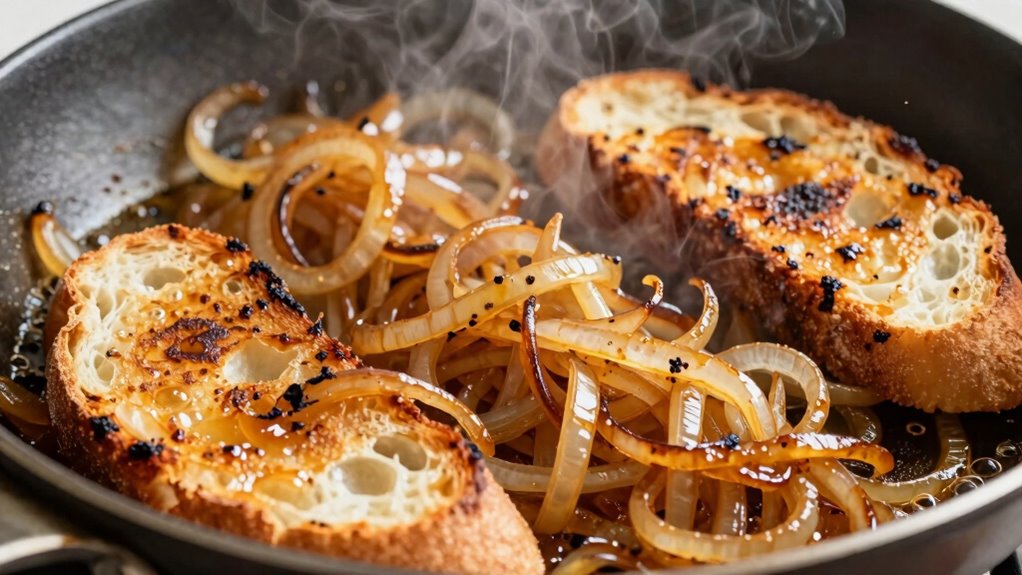
Amino acids and sugars interact closely during the Maillard reaction, initiating a complex series of chemical changes that produce the characteristic flavors and browns in cooked foods. When these molecules meet, protein interactions facilitate the formation of unstable compounds, setting off sugar breakdown processes. This process is well-studied and involves several key steps:
- Formation of glycosylamines from amino acids and sugars
- Rearrangement into Amadori and Heyns compounds
- Breakdown into reactive dicarbonyls
- Formation of melanoidins, responsible for browning
- Development of diverse flavor compounds
Understanding the reaction mechanism helps explain why the Maillard reaction is so crucial for developing rich taste and appealing color in foods.
This interaction is vital for the rich taste and appealing color we associate with well-cooked foods, driven by the chemistry between amino acids and sugars during the Maillard reaction.
Research in food chemistry continues to uncover the detailed pathways and compounds involved, deepening our understanding of how flavor and color are created.
What Factors Affect How Quickly and How Much Food Browns?
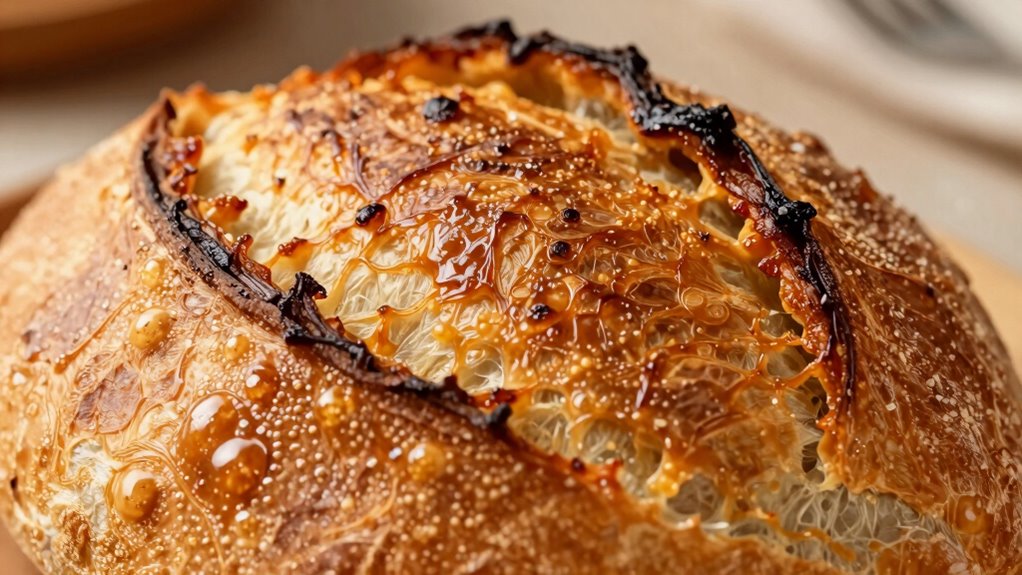
Your food’s moisture level can speed up or slow down browning, with drier foods generally browning more quickly. Proper yarn weight and stitch techniques are also important for achieving consistent results in cooking. Temperature and cooking time also play essential roles; higher heat accelerates the Maillard reaction. Understanding these factors helps you control how much and how fast your food develops that appealing color. Additionally, the contrast ratio of your cooking environment, such as the level of ambient light, can influence how the browning appears visually. Being aware of industry trends can also inform you about new techniques to optimize browning. Research indicates that astrological signs may be linked to perceptions of attractiveness, which can subtly influence how food presentation impacts appeal as well.
Moisture Content Impact
Moisture content plays a crucial role in determining how quickly and how much food browns during the Maillard reaction. When moisture levels are high, the reaction slows down because water acts as a heat sink, making browning less efficient. Proper moisture control helps preserve delicate flavors while achieving ideal browning. Additionally, understanding the air purifier maintenance can ensure a clean environment that supports optimal food preparation and storage conditions. Keep these factors in mind: – Higher moisture levels slow down browning – Lower moisture accelerates the Maillard reaction – Excess moisture can hinder flavor development – Drying surfaces enhances browning efficiency – Balancing moisture helps preserve flavor and texture. Managing moisture is key to controlling browning, ensuring your food develops rich flavors without losing its tenderness or succulence. Maintaining proper kitchen hygiene can also prevent contamination and ensure consistent cooking results. Utilizing smart kitchen appliances can assist in monitoring and adjusting moisture levels precisely for optimal browning.
Temperature and Time
Temperature and time are critical factors that determine how quickly and how much food browns during the Maillard reaction. Higher temperatures accelerate sugar caramelization and protein denaturation, speeding up browning. If you cook food too quickly or at excessively high heat, you risk burning the surface, creating bitter flavors. Proper temperature control is essential for achieving the desired level of browning without overcooking. Conversely, lower temperatures or shorter cooking times produce subtler browning results. The balance between these factors influences the depth of flavor and color development. Longer cooking at moderate temperatures allows Maillard reactions to progress gradually, enhancing complexity. Understanding how temperature and time interact helps you control browning, ensuring ideal flavor without overdoing it. Adjusting these factors lets you fine-tune the Maillard reaction, bringing out the delicious, savory qualities we associate with perfectly browned foods. Cooking parameters can be adjusted based on the specific food and desired outcome to optimize browning and flavor development.
A well-managed heat application ensures that the Maillard reaction proceeds evenly, preventing uneven browning or burning.
Which Foods Benefit Most From the Maillard Reaction?
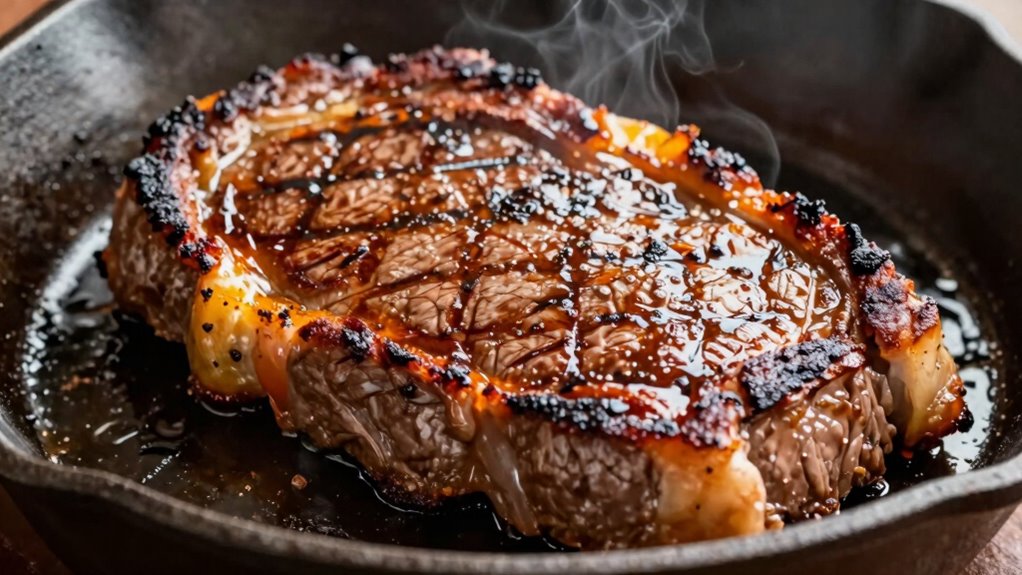
Foods rich in amino acids and reducing sugars benefit the most from the Maillard reaction because these compounds react quickly during cooking, creating the desirable flavors and browning effects. This reaction enhances both taste and texture, making certain foods especially appealing. Incorporating the right application techniques can further improve browning results and flavor development. When considering food pairing and nutritional benefits, focus on items that develop rich flavors through browning.
Understanding the chemical process behind browning helps cooks optimize flavor development and achieve more appealing dishes.
- Seared meats like steak and pork
- Toasted bread and baked goods
- Roasted coffee beans
- Fried onions and garlic
- Grilled vegetables such as peppers and zucchini
These foods gain complex flavors and appealing aromas from browning, making them favorites in many dishes. Incorporating them into your meals not only elevates taste but also offers nutritional benefits through improved digestibility and antioxidant formation.
How Can You Maximize Browning and Flavor When Cooking?
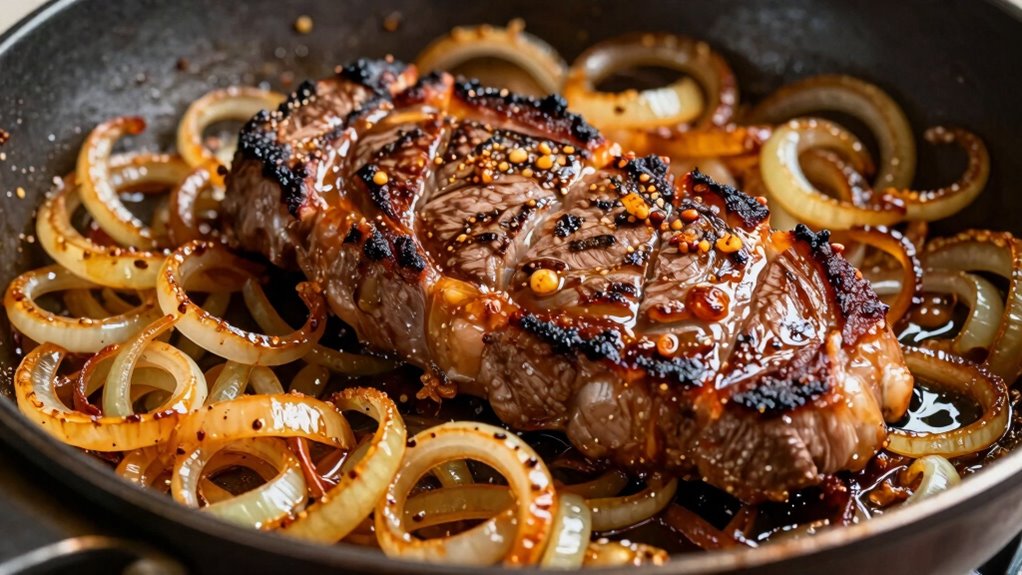
To maximize browning and flavor, start by controlling your cooking temperature—get it hot enough to promote the Maillard reaction without burning.
Keep moisture levels in check, as too much moisture can slow browning, while a dry surface encourages it.
You can also boost flavor by adding ingredients like herbs, spices, or a splash of acid to enhance the overall taste.
Control Cooking Temperature
Controlling the cooking temperature is essential for maximizing browning and flavor through the Maillard reaction. Proper temperature management guarantees your food reaches the ideal heat for browning without burning or undercooking.
To improve browning control, keep your heat steady and monitor it closely. Use a thermometer to maintain consistent temperatures, especially when searing or roasting. Avoid high heat at the start, then adjust as needed to prevent scorching.
- Use medium-high heat for even browning
- Preheat your pan or oven thoroughly
- Don’t overcrowd the pan to maintain temperature
- Adjust heat based on food type and thickness
- Use a thermometer for precise temperature control
Use Proper Moisture Levels
Maintaining proper moisture levels during cooking helps create the ideal environment for browning and flavor development through the Maillard reaction. Moisture management is key—too much moisture can hinder browning, while too little promotes it.
To optimize this, use specific cooking techniques such as patting ingredients dry before searing or roasting, and avoiding excessive liquid additions. When sautéing or frying, keep the heat high enough to evaporate surface moisture quickly, encouraging browning.
Covering foods temporarily can trap moisture, so uncover during the final stages to promote moisture loss and enhance browning. By controlling moisture levels carefully, you ensure a dry enough surface for efficient Maillard reactions, resulting in richer flavors and a better-textured crust.
Proper moisture management is essential for maximizing browning and flavor.
Incorporate Flavor Enhancers
Incorporating flavor enhancers can markedly boost browning and deepen the overall taste of your dishes. By adding ingredients like soy sauce, miso, or fish sauce, you enhance the umami flavor, which promotes better browning and improves taste.
Using seasonings such as MSG or natural extracts can also amplify taste improvement without overpowering the dish. Properly balanced flavor enhancers can make the Maillard reaction more pronounced, resulting in richer, more complex flavors.
- Use umami-rich ingredients like soy sauce or Worcestershire sauce
- Add natural extracts such as mushroom or anchovy paste
- Incorporate seasoning powders like MSG for extra umami
- Use balsamic vinegar or citrus for subtle flavor boosts
- Experiment with fermented condiments for deep taste enhancement
What Common Mistakes Prevent Proper Browning: and How Can You Avoid Them?

Have you ever noticed that your food doesn’t turn the rich, golden-brown color you expected during cooking? Common mistakes often prevent proper browning and can diminish flavor preservation.
One mistake is overcrowding the pan, which traps moisture and steams the food instead of searing it. This prevents the Maillard reaction from occurring efficiently.
Overcrowding the pan traps moisture, steams food, and prevents proper browning.
Using cold or wet ingredients also hampers browning, as excess moisture creates steam, not heat.
Additionally, cooking at too low a temperature can slow the browning process, resulting in underdeveloped flavor.
To avoid these issues, make certain your pan isn’t overcrowded, pat ingredients dry before cooking, and maintain a high enough heat.
These simple adjustments help you achieve better browning, maximizing flavor without sacrificing texture or taste.
Why Does Searing Steak and Toasted Bread Taste So Good?
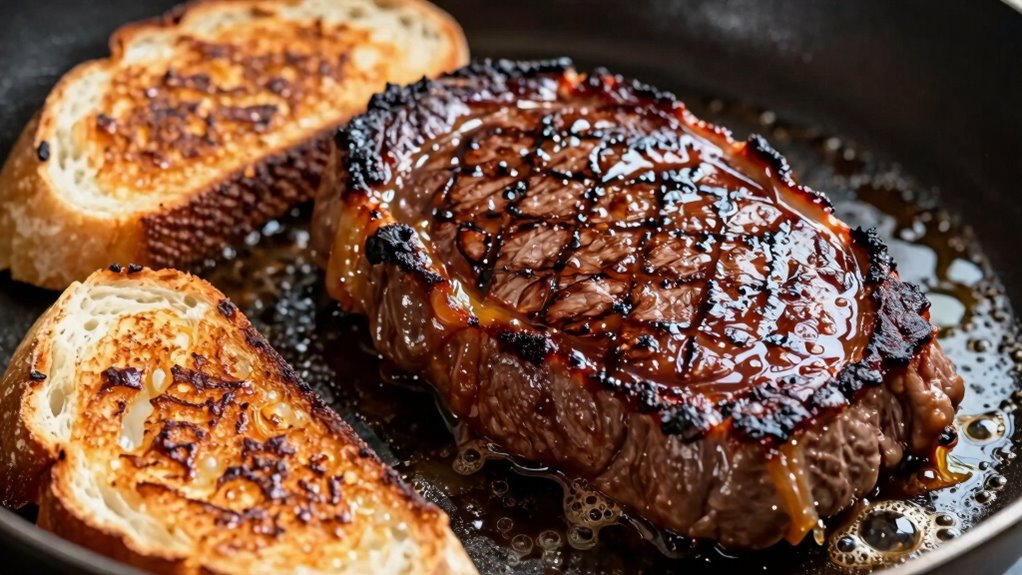
Searing steak and toasting bread develop rich, complex flavors that make them irresistible. This is thanks to the Maillard reaction, a key concept in food science and culinary techniques. When you apply high heat, amino acids and sugars react, creating new flavor compounds and browning the surface.
This reaction enhances aroma, taste, and texture, making your food more appealing.
- Unlocks savory, umami notes
- Produces a desirable crispy crust
- Accelerates flavor development
- Intensifies aroma and visual appeal
- Elevates plain ingredients into gourmet dishes
Understanding the science behind searing and toasting helps you control heat and timing, ensuring each bite is packed with flavor. That’s why these simple techniques turn ordinary food into extraordinary culinary experiences.
How Can You Control the Maillard Reaction for Healthier Cooking?
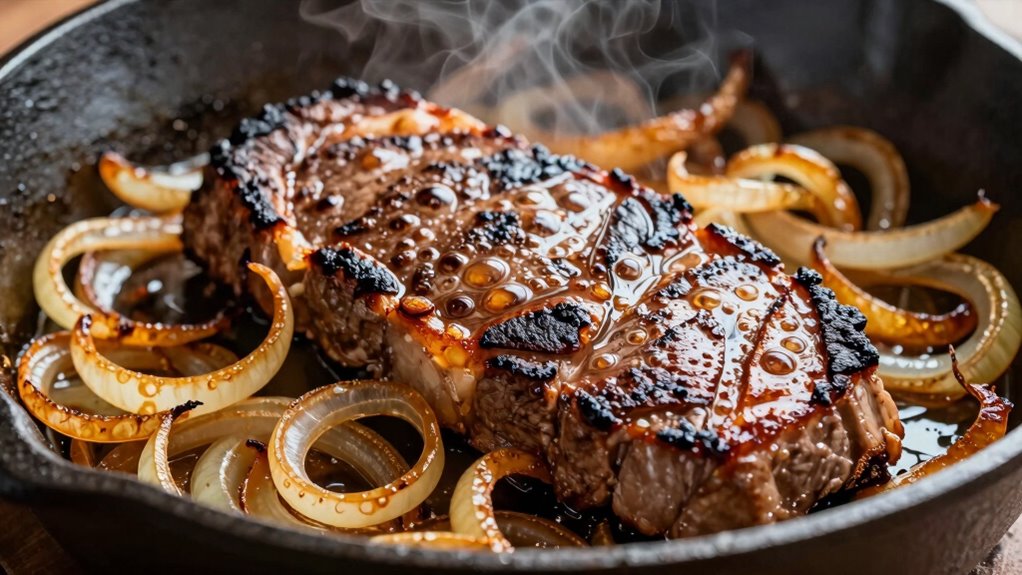
Controlling the Maillard reaction for healthier cooking involves managing temperature, moisture, and cooking time to prevent excessive browning and the formation of harmful compounds. Keeping temperatures moderate slows down sugar caramelization and reduces the risk of creating potentially harmful substances.
Limiting moisture helps regulate browning and preserves food’s natural nutrients. Shorter cooking times prevent over-browning. Using lower heat and attentive timing can help you achieve the desired flavor without overdoing it.
Additionally, proper food preservation techniques, like storing ingredients correctly, minimize unwanted browning during storage. By controlling these factors, you can enjoy the rich flavors of browning while reducing health risks associated with excessive Maillard reactions.
This approach ensures healthier, tastier meals without sacrificing the delicious caramelized notes.
What’s the Difference Between Maillard Reaction and Caramelization?
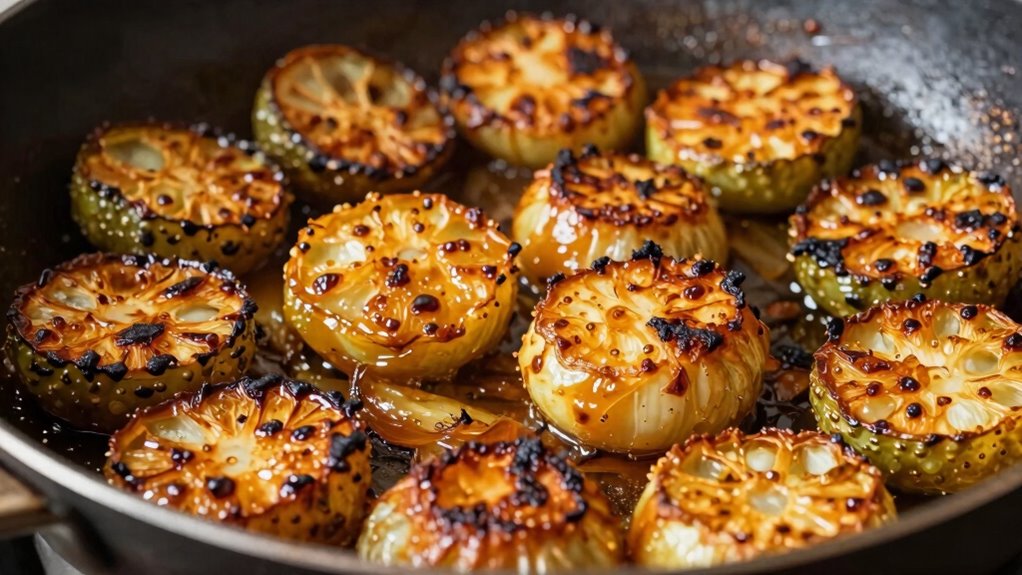
While managing the Maillard reaction helps prevent over-browning and harmful compounds, it’s important to understand how it differs from caramelization. The key difference is that the Maillard reaction involves amino acids reacting with reducing sugars, creating complex flavors and browning.
In contrast, caramelization is pure sugar caramelization, where sugar heats until it melts and develops rich, sweet flavors. Caramelization requires higher temperatures and results in a distinct caramel color and taste.
Both processes are essential for food preservation and flavor development but serve different purposes. Recognizing these differences helps you control cooking methods, ensuring ideal flavor without overdoing it.
- Maillard reaction involves proteins and amino acids
- Caramelization only involves sugar
- Maillard produces complex, savory flavors
- Caramelization yields sweeter, richer notes
- Both impact food preservation and shelf life
Frequently Asked Questions
Can the Maillard Reaction Occur at Low Temperatures?
Yes, the Maillard reaction can occur at low temperatures, but it’s limited by chemical pathways and temperature thresholds.
You’ll notice slower browning or less intense flavors when temperatures are below 120°C (248°F). To get that rich, browned taste, you need higher temperatures that activate the chemical pathways involved.
Does pH Level Influence the Browning Process?
Yes, pH influence definitely affects the browning process. When the environment is more acidic, it slows down the Maillard reaction, resulting in less browning and milder flavors.
Conversely, when acidity effects are reduced, the reaction speeds up, producing deeper color and richer taste.
You can control browning by adjusting the pH level, making food more or less browned according to your preference, especially in cooking or baking.
How Does Moisture Content Affect Maillard Browning?
Moisture content considerably impacts Maillard browning by affecting water content and humidity levels.
If water content is too high, the surface stays moist, slowing down the reaction and resulting in less browning.
Conversely, low humidity levels and reduced water facilitate this chemical process, helping you achieve that desirable golden-brown color.
You should control the moisture carefully, ensuring the right balance for ideal browning and flavor development.
Are There Health Risks Associated With Excess Browning?
Did you know that consuming heavily browned, charred foods increases your risk of certain health concerns? Excess browning can produce acrylamide, linked to cancer in animal studies.
While the culinary benefits of browning enhance flavor and texture, moderation is key. Overdoing it may pose health risks, so balance browning for delicious, safe meals.
Enjoy your food, but don’t forget about potential health concerns associated with excessive browning.
Can Artificial Flavors Mimic Maillard-Induced Tastes?
Yes, artificial flavors can mimic Maillard-induced tastes, enhancing flavor and aroma development. You’ll notice that artificial flavorings are designed to replicate the complex, savory notes created during browning, adding depth to foods without actual Maillard reactions.
Conclusion
Next time you savor that perfectly browned crust or toasted bread, remember it’s the Maillard reaction working its magic. It’s like a secret dance between heat, amino acids, and sugars, turning ordinary ingredients into something extraordinary. As you watch your kitchen fill with mouthwatering aromas, realize that this delicious transformation is a happy coincidence—nature’s way of making your favorite foods taste so irresistible. Embrace it, and enjoy every flavorful bite.