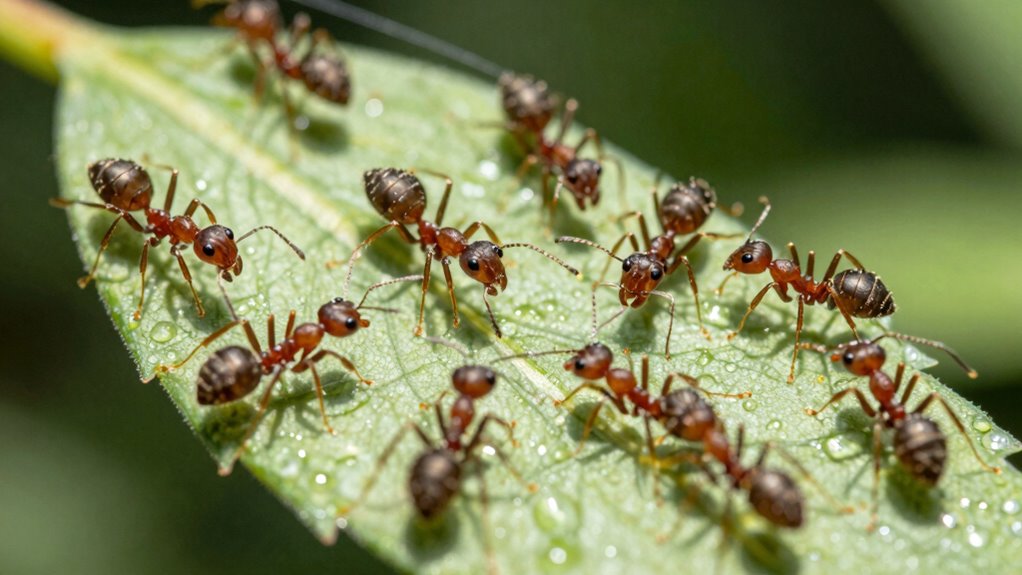

Ants communicate without talking through chemical signals, touch, and vibrations. They leave pheromone trails to guide others to food, use antenna contact to share quick info, and send alarm signals through chemicals and movements. These methods help them coordinate tasks, respond to threats, and organize efficiently. If you want to discover how these simple signals create a highly organized society, keep exploring how ants master silent communication.

Prime made for students and young adults
- Fast, free delivery for dorm and study essentials
- Prime Video and Amazon Music included
- Member-only deals
Key Takeaways
- Ants use pheromone trails to guide others to food sources and communicate path information.
- Touching antennae allows ants to share information directly through tapping and brushing.
- Chemical alarm pheromones quickly alert colony members about threats or danger.
- Vibrational signals and movements convey messages about food, danger, or task completion.
- Pheromones and tactile cues coordinate colony activities without spoken language.
As an affiliate, we earn on qualifying purchases.
Why Is Non-Verbal Communication So Important in Ant Societies?
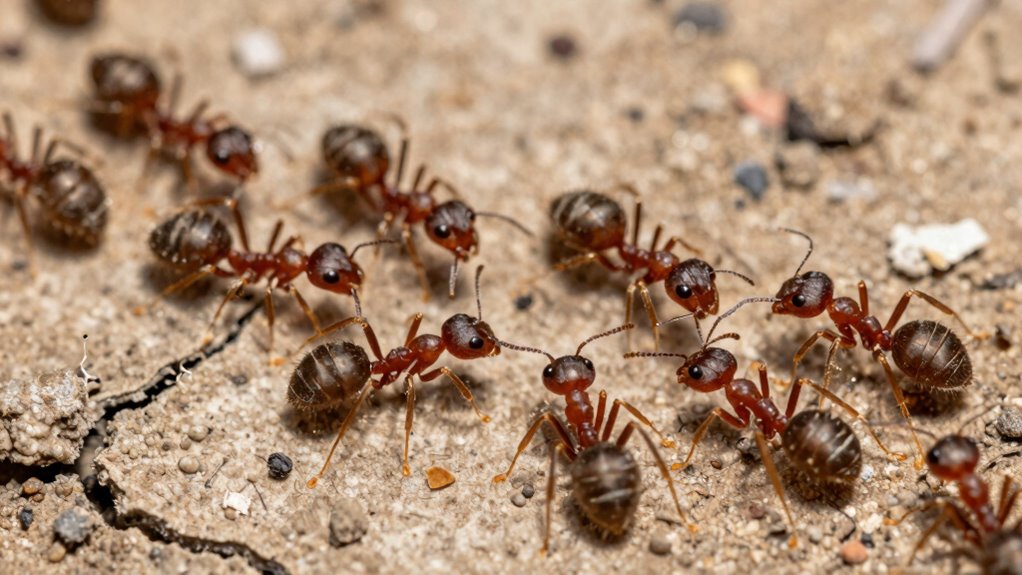
Non-verbal communication is essential in ant societies because it allows ants to coordinate complex tasks quickly and efficiently without spoken words. These non-verbal cues are indispensable for maintaining the ant colony hierarchy, ensuring each ant understands its role. When an ant finds food, it leaves behind a trail of pheromones that others can follow, signaling where resources are located. Touch and body movements also convey important messages, such as alarm signals or the status of a task. By relying on non-verbal cues, ants can respond rapidly to changing conditions and organize collective efforts seamlessly. This system of silent communication keeps the colony functioning smoothly, demonstrating how critical non-verbal interactions are for social cohesion and efficiency in ant societies.
As an affiliate, we earn on qualifying purchases.
How Do Ants Use Pheromone Trails to Find Food and Communicate?
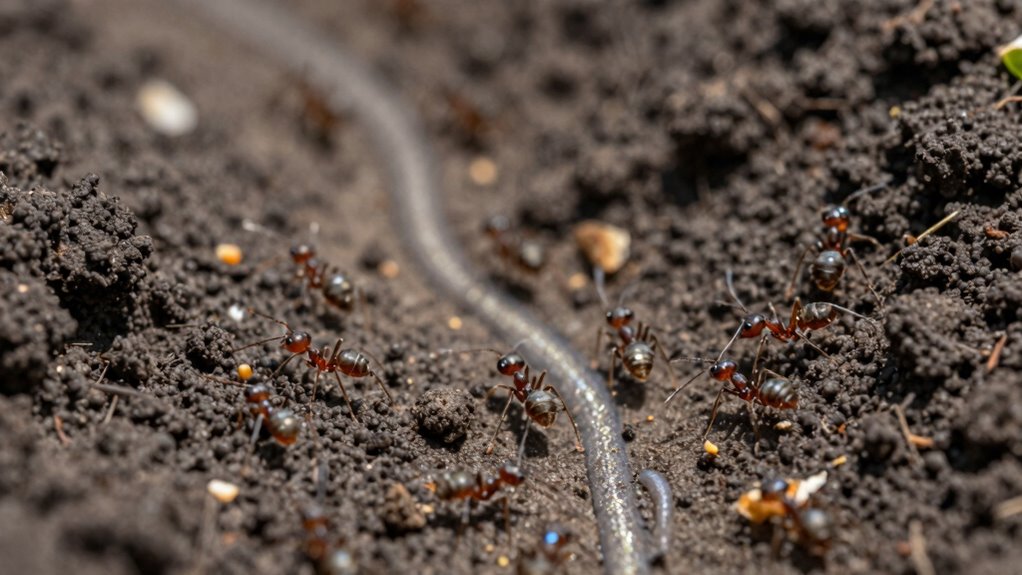
Ants rely heavily on chemical signals called pheromones to communicate, especially when searching for food. When an ant finds a food source, it leaves a pheromone trail that guides others to the same location. This trail enhances ant colony navigation, making collective foraging efficient. As more ants follow and reinforce the trail, it becomes stronger and easier to follow. However, pheromone signals don’t last forever; they deteriorate at a specific rate, known as the pheromone decay rate. This decay prevents ants from following outdated paths and encourages them to explore new sources of food. The balance between trail reinforcement and decay ensures the colony adapts quickly to changing environments and food availability.
ant communication experiment kit
As an affiliate, we earn on qualifying purchases.
As an affiliate, we earn on qualifying purchases.
How Do Ants Use Touch and Tactile Signals to Share Information?
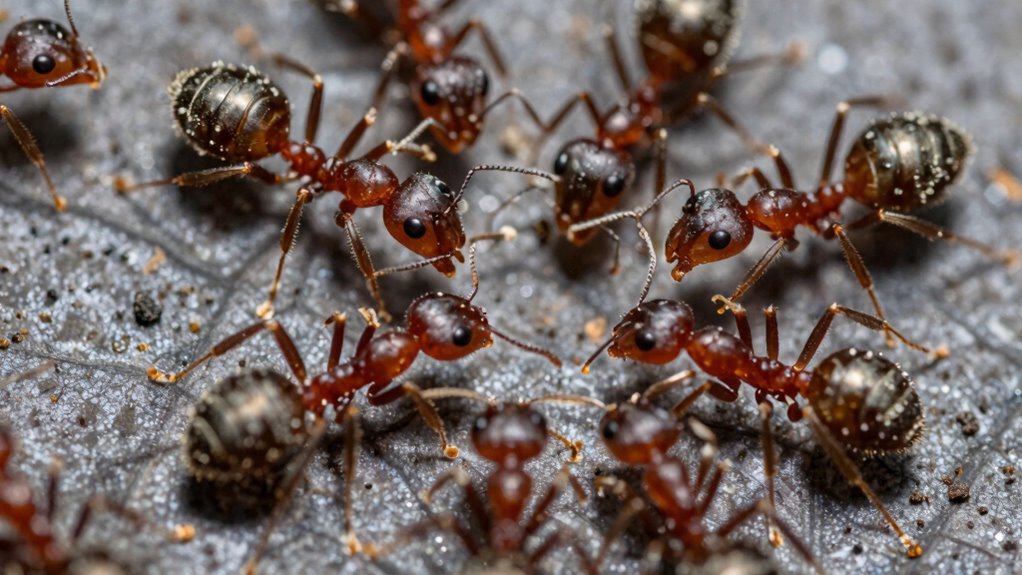
While chemical signals play an essential role, ants also rely on touch and tactile signals to share information within their colonies. You might observe ants using antennal contact, which involves gently tapping or brushing antennae against each other. This form of communication helps them exchange critical details like food sources or colony status. Tactile communication methods are quick and direct, allowing ants to coordinate actions efficiently. For example, when an ant encounters a food source, it might touch its nest mates to alert them or guide them toward the resource. These physical interactions are indispensable for maintaining colony organization and ensuring smooth cooperation. By using their antennae as sensory tools, ants effectively communicate complex information without the need for words or chemical signals. Understanding their sensory abilities reveals how crucial tactile signals are in their social interactions. Moreover, their ability to interpret subtle tactile cues demonstrates a highly adapted sensory system that supports their complex social behavior. Additionally, research shows that tactile communication can sometimes convey emotional states or urgency, further enhancing their social coordination.
As an affiliate, we earn on qualifying purchases.
How Do Ants Signal Danger and Alert Their Colony?
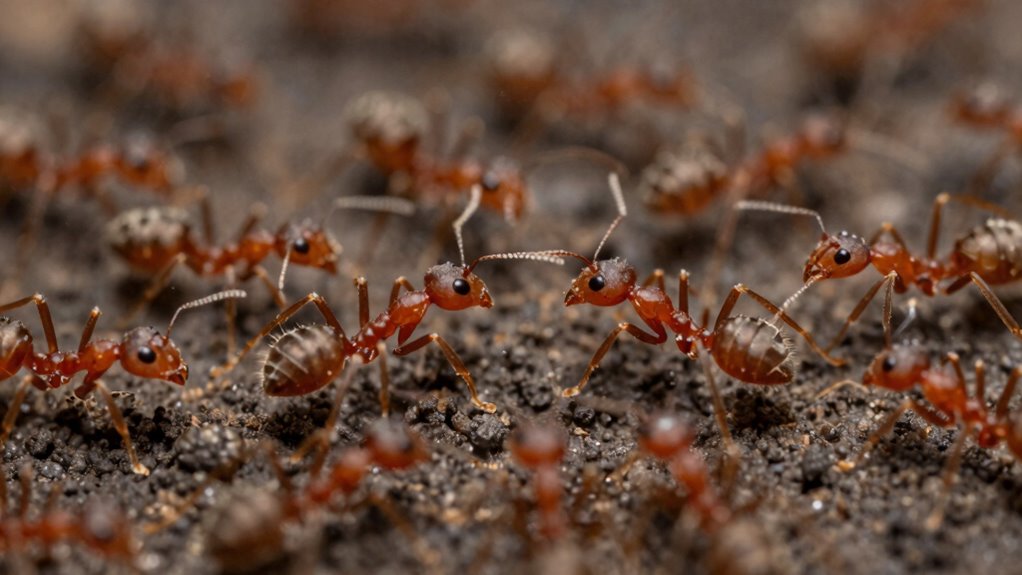
When danger threatens the colony, ants act swiftly to alert their nest mates through specialized signals. They use ant alarm calls, which can be chemical or vibrational signals, to warn others of impending threats. When an ant detects danger, it releases alarm pheromones that spread quickly through the colony, causing others to respond immediately. These alarm calls are often amplified by the colony’s hierarchies, with dominant or more experienced ants leading the alert and coordinating responses. Some ants also produce rapid vibrations or frantic movements to signal distress. This multi-layered system guarantees that the entire colony is aware of threats and can respond collectively, whether by defending the nest or fleeing to safety. Additionally, these communication methods exemplify how biological signaling allows non-verbal species to coordinate complex group behaviors effectively. The efficiency of these signals showcases the importance of chemical communication in social insect colonies, ensuring swift and organized reactions to danger. Furthermore, the use of multi-modal signaling enhances the robustness of their warning system, making sure the message reaches all members under various conditions. A rapid response system is crucial for colony survival, especially when threats are unpredictable or sudden.
How Do Ants Coordinate Tasks and Work Together Without Words?
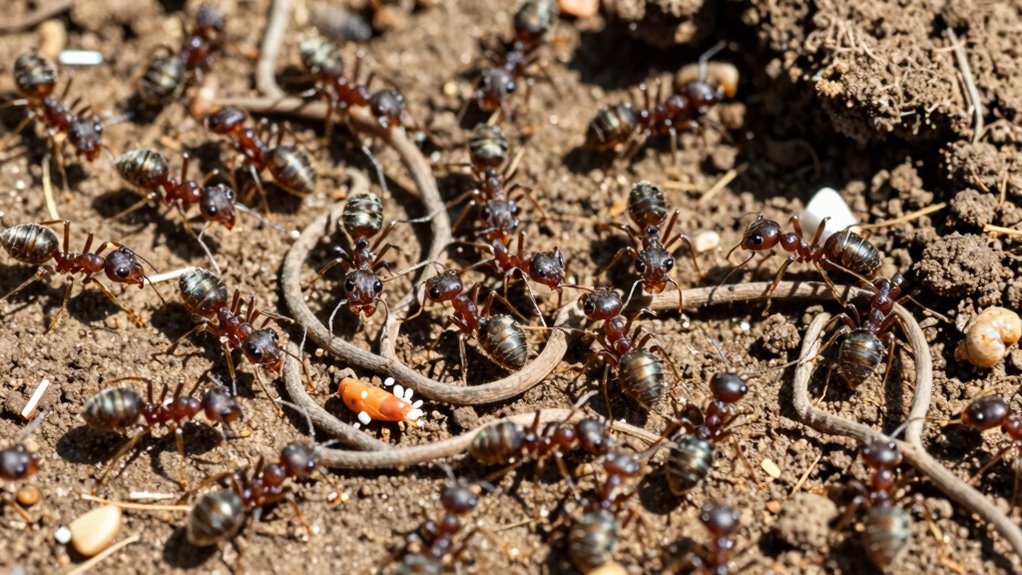
Ant colonies rely on a sophisticated system of chemical and vibrational signals to organize their activities and work seamlessly together. You see, ant colony organization depends on these cues to assign tasks and coordinate efforts. For example, when it’s time for nest maintenance, worker ants use pheromones to signal where repairs are needed, guiding others to the exact location. Vibrational signals also help ants communicate, alerting teammates to nearby food sources or danger. Without words, ants efficiently divide labor, with each ant responding to specific signals based on their role. This decentralized system ensures that tasks like foraging, defending, and nest upkeep happen smoothly. By sharing information through these signals, ants maintain a highly coordinated and resilient colony. Connected communication systems allow ants to adapt quickly to changing conditions and maintain colony health. Additionally, their ability to interpret multiple signals simultaneously demonstrates remarkable analytical thinking in their collective behavior.
Frequently Asked Questions
How Do Ants Recognize Members of Their Own Colony?
You recognize colony members through scent, specifically by their unique pheromone trails. Ants deposit these chemical signals as they move, creating a scent profile that helps other ants identify them. When you encounter an ant, it detects these pheromones, allowing it to distinguish whether the ant is part of its colony or an outsider. This efficient colony recognition system keeps the colony organized and protected from intruders.
Can Ant Communication Be Affected by Environmental Changes?
Environmental changes can profoundly impact ant communication. For example, a study shows that heavy rainfall can wash away pheromone trails, disrupting their ability to navigate and coordinate. You’ll notice that environmental impact alters how ants leave and follow pheromone trails, affecting colony efficiency. Changes like temperature shifts or pollution can also interfere with chemical signals, making it harder for ants to communicate and cooperate effectively within their environment.
Do Different Ant Species Use Different Communication Methods?
Yes, different ant species use various communication methods like ant scent trails and ant tactile signals. Some species rely heavily on scent trails to guide others to food, while others use tactile signals through their antennae or body contact. You’ll notice that these methods vary depending on their environment and social structure, allowing each species to efficiently coordinate and survive in their specific habitats.
How Quickly Can Ants Relay Information Across the Colony?
Like a well-orchestrated symphony, ants relay information swiftly through pheromone trails and antennal signals, often in just minutes. When a scout finds food, it leaves a trail that others follow rapidly, matching the urgency of a messenger in a busy city. Their communication is remarkably efficient, allowing the entire colony to respond within moments, ensuring survival and resourcefulness without a single spoken word.
Are There Any Limitations to Ant Communication Without Language?
Yes, there are limitations to ant communication without language. You rely on pheromone trails and non-verbal cues, which can be affected by environmental factors like rain or wind that wash away or distort the signals. This makes long-distance or complex communication challenging. Additionally, individual ants might misinterpret cues, leading to confusion or inefficient responses, highlighting how their communication system, while effective, isn’t as precise or flexible as spoken language.
Conclusion
You might find it fascinating that ants can communicate effectively without words, relying on non-verbal cues like pheromones and touch. In fact, some colonies can coordinate thousands of ants seamlessly, ensuring survival and efficiency. This shows how powerful non-verbal communication can be, even among tiny creatures. So next time you think words are essential, remember that ants prove sometimes actions and signals speak louder than words, connecting their entire society effortlessly.
Fall Picks
fall essentials
As an affiliate, we earn on qualifying purchases.