When comparing HEPA and “HEPA‑Type” filters, it’s important to know that true HEPA filters remove at least 99.97% of tiny particles as small as 0.3 microns, meeting strict standards. “HEPA‑Type” filters often use less dense materials and may trap fewer particles, making their effectiveness less reliable. Understanding these differences helps you choose an air purifier that truly improves indoor air quality—if you keep exploring, you’ll see how to make smarter choices.
Key Takeaways
- True HEPA filters meet strict standards of removing 99.97% of 0.3-micron particles, while “HEPA‑Type” filters often do not.
- “HEPA‑Type” labels can be misleading; they may not meet the same filtration efficiency as true HEPA filters.
- Genuine HEPA filters are made from dense, fine fibers ensuring reliable performance; “HEPA‑Type” filters use less dense materials.
- True HEPA filters maintain consistent effectiveness until saturation; “HEPA‑Type” filters often degrade faster and are less predictable.
- Choosing genuine HEPA filters ensures better indoor air quality and protection, avoiding false confidence from “HEPA‑Type” labels.
When choosing air purifiers, understanding the difference between HEPA and “HEPA‑Type” filters is essential. Many consumers get confused by these labels, but grasping their distinctions helps you make informed decisions. The key lies in air filtration standards and filter material differences. HEPA filters adhere to strict industry standards, meaning they must remove at least 99.97% of airborne particles as small as 0.3 microns. This level of filtration is proven and tested, making HEPA filters the gold standard for allergy sufferers, asthmatics, and anyone wanting cleaner indoor air. Conversely, “HEPA‑Type” filters often mimic the appearance of true HEPA filters but don’t meet these rigorous standards. Their filtration efficiency can vary widely, sometimes capturing fewer particles and sometimes only filtering larger ones. This variability makes it harder to rely solely on “HEPA‑Type” labels if you’re aiming for high filtration performance. Understanding filtration standards and how they influence performance can help you choose the right air purifier for your needs.
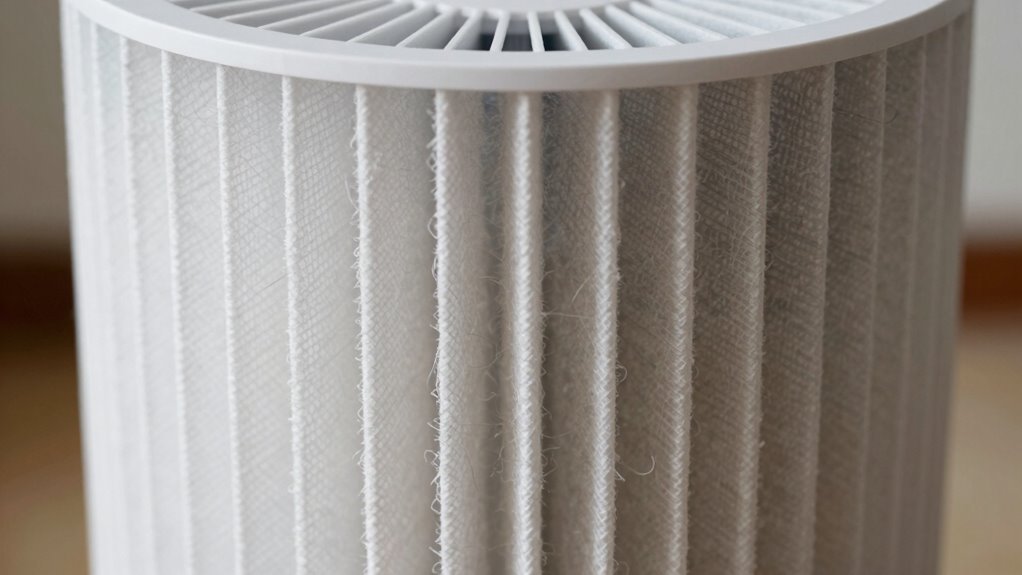
The difference in filter material is central to the standards each type must meet. True HEPA filters are constructed from a dense mat of fine fibers, usually composed of borosilicate glass or synthetic materials, arranged in a specific, tightly woven pattern. This construction ensures the filter can trap tiny particles effectively. On the other hand, “HEPA‑Type” filters typically use less dense, less sophisticated materials. They might rely on electrostatic charges or other mechanisms to trap particles, but these methods generally don’t match the efficiency or durability of true HEPA filters. As a result, their ability to meet the air filtration standards of 99.97% removal is often questionable.
Another aspect to consider is durability and lifespan. True HEPA filters are designed to perform consistently over time, and their efficiency remains stable until they reach their saturation point, which usually requires replacement. “HEPA‑Type” filters, however, may degrade faster or become less effective sooner because of their different materials and construction. If you’re sensitive to airborne allergens or pollutants, relying on a filter that doesn’t meet established air filtration standards could mean less protection for your health.

eufy Security Video Doorbell E340,No Subscription,Dual Cameras, 2K FHD,Head-to-Toe View, Doorbell Camera Wireless & Wired, Color Night Vision, Two-Way Talk, AI Motion/Package Detection, Built-in 8GB
𝐃𝐮𝐚𝐥 𝐂𝐚𝐦𝐞𝐫𝐚𝐬, 𝐃𝐨𝐮𝐛𝐥𝐞 𝐒𝐞𝐜𝐮𝐫𝐢𝐭𝐲 | Dual cameras work seamlessly together. The front camera captures visitors head-to-toe, while the...
As an affiliate, we earn on qualifying purchases.
Frequently Asked Questions
How Do I Identify a True HEPA Filter From a “Hepa-Type” Filter?
To identify a true HEPA filter, check its filter certification and manufacturing standards. True HEPA filters are certified to capture at least 99.97% of particles 0.3 microns in size, meeting strict standards like those set by the US Department of Energy. Look for labels stating “HEPA” along with certification details. “HEPA‑Type” filters often lack these certifications, so verify the documentation or specifications to guarantee you’re getting an authentic, high-quality filter.
Are “Hepa-Type” Filters Effective Against Allergens and Bacteria?
You can’t judge a book by its cover, so don’t assume “HEPA-type” filters aren’t effective. They do trap allergens and bacteria, but typically have higher airflow resistance and shorter filter longevity than true HEPA filters. While they can help improve air quality, they may not be as reliable for those with severe allergies or health concerns. For the best protection, consider investing in a certified HEPA filter.
Can “Hepa-Type” Filters Be Used in Medical or Pharmaceutical Settings?
You can use “HEPA‑Type” filters in medical or pharmaceutical settings if they meet medical grade filtration and pharmaceutical standards. However, not all “HEPA‑Type” filters are certified for such sensitive environments. Always verify that the filter is tested and certified to meet strict regulations for capturing airborne contaminants, bacteria, and viruses, ensuring safety and compliance in these critical settings.
Do All “Hepa-Type” Filters Meet Safety Standards?
Not all “HEPA-type” filters meet safety standards, even if their filter material claims similar efficiency. You should check for certification standards like ASTM F3502 or EN 1822, which confirm the filter’s safety and performance. Without proper certification, these filters might not reliably trap harmful particles. Always verify the certification to guarantee the filter material meets necessary safety and quality benchmarks for your specific environment.
How Often Should I Replace a “Hepa-Type” Filter Compared to a True HEPA?
You should replace a “HEPA‑Type” filter more often than a true HEPA filter because it usually has a shorter filter lifespan. Generally, check your filter every 3 to 6 months and replace when it’s dirty or clogged. True HEPA filters can last up to a year, but “HEPA‑Type” filters often need replacement every 3 to 6 months for peak performance. Always follow the manufacturer’s recommendations for best results.

REOLINK Video Doorbell WiFi Camera - Wired 2K Outdoor, 5G&2.4G WiFi, 4:3 Wide View Angle, Smart Detection, Local Storage, No Subscription Front Door Home Security, Customized Chime V2
2K Super HD Day & Night! Incredible 2K HD, with advanced HDR/3D DNR and distortion correction technologies, brings...
As an affiliate, we earn on qualifying purchases.
Conclusion
Now that you know the difference, don’t let the terms “HEPA” and “HEPA-type” trip you up like a maze. Think of it like steering through a map—you just need to recognize the right landmarks. Whether you’re choosing a filter for your home or car, understanding these terms keeps you one step ahead. Remember, clear terms are your compass, guiding you through the fog of confusion and helping you breathe easier with confidence.

Blink Video Doorbell (newest model) – Head-to-toe HD view, two-year battery life, and simple setup. Sync Module Core included – System (Black)
Video Doorbell is our second-generation smart security doorbell with up to two years of battery life, an expanded...
As an affiliate, we earn on qualifying purchases.

eufy Security Smart Lock C30, Keyless Entry Door Lock, Built-in WiFi Keypad Deadbolt for Front Door, No Bridge Required, Easy Installation, App Remote Control, Reliable Power, BHMA Grade 3
Our packaging is being updated. During this period, you may receive either the original or new version packaging....
As an affiliate, we earn on qualifying purchases.