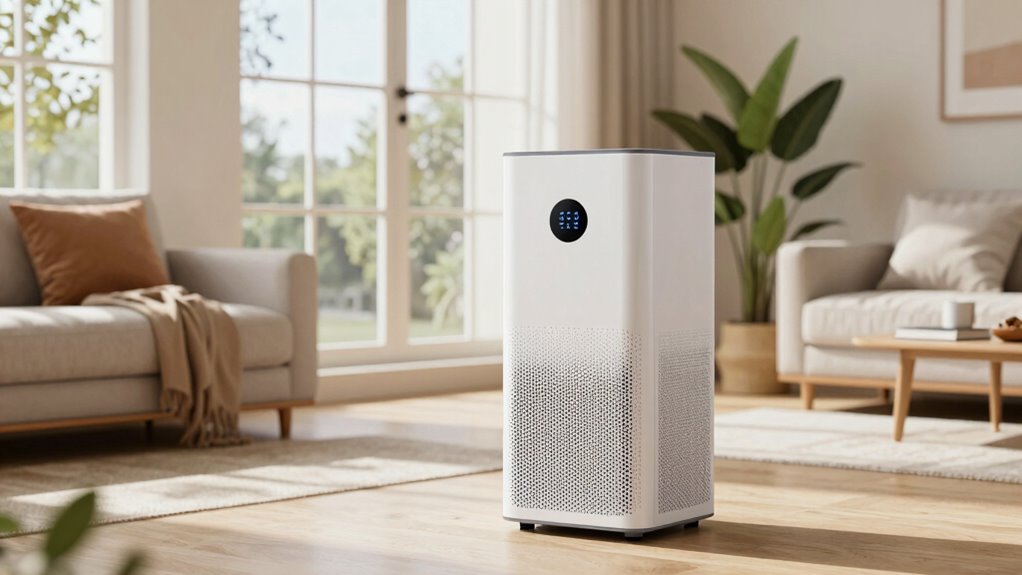

To match your air purifier’s CADR to your room, start by calculating the room’s square footage. For example, a room of 200 square feet needs a purifier with a CADR of at least 100, while larger spaces require proportionally higher ratings. Always choose a unit rated for your room size to guarantee effective air cleaning without wasting energy or creating excess noise. Keep going to get more tips on selecting the perfect size for your space.

Prime made for students and young adults
- Fast, free delivery for dorm and study essentials
- Prime Video and Amazon Music included
- Member-only deals
Key Takeaways
- Measure your room’s square footage to determine the appropriate CADR rating needed for effective air cleaning.
- Match the purifier’s CADR with the recommended level for your room size to ensure optimal performance.
- Consider room usage and pollutant levels to select a CADR that effectively removes contaminants.
- Balance CADR with noise levels and device size for a comfortable and efficient air purification setup.
- Regularly maintain and replace filters to sustain the purifier’s performance and ensure proper matching over time.

Choosing the right air purifier size is essential to effectively improve your indoor air quality. When selecting a unit, you need to take into account its Clean Air Delivery Rate (CADR) to ensure it can handle the size of your room. A purifier with a CADR that’s too low won’t clean the air efficiently, while one that’s too powerful may be unnecessary and waste energy. To determine the appropriate size, measure your room’s square footage and match it with the CADR rating recommended for that space. This ensures you get ideal air purification without overbuying, which can lead to higher energy bills and unnecessary noise. Additionally, considering the filter efficiency can help you select a unit that maintains optimal performance over time. Once you’ve chosen the right size, it’s important to think about HEPA filter maintenance. HEPA filters are highly effective at capturing airborne particles like dust, pollen, and pet dander, but they need regular upkeep to perform at their best. The frequency of HEPA filter replacement depends on factors like room size, air purifier usage, and the level of pollutants in your environment. Neglecting filter maintenance can cause the purifier to work harder, reducing its efficiency and potentially increasing noise levels. Make a habit of checking the filter regularly and replacing it as recommended by the manufacturer. Proper maintenance not only prolongs the lifespan of your device but also ensures it continues to deliver clean, fresh air. Noise level considerations are another critical aspect when sizing and operating your air purifier. Even the most efficient units can become disruptive if they generate excessive noise, especially if you plan to use the purifier in bedrooms or quiet office spaces. Look for models that specify noise levels in decibels (dB), and choose one with a low noise rating for peaceful operation. Many modern air purifiers feature a “sleep mode” or “quiet setting,” which minimizes noise while still maintaining effective filtration. Keep in mind that larger units with higher CADRs may produce more noise, so balancing size and noise levels is key. Positioning the purifier away from your main seating or sleeping area can also help reduce perceived noise, making your air cleaning efforts more comfortable and less intrusive.
air purifier for 200 square feet room
As an affiliate, we earn on qualifying purchases.
As an affiliate, we earn on qualifying purchases.
Frequently Asked Questions
How Often Should I Replace My Air Purifier Filters?
You should replace your air purifier filters every 6 to 12 months, depending on usage and air quality. Check your device’s filter lifespan guidelines, as high pollution or pets may shorten replacement frequency. Regularly inspect filters for dirt or odors, and follow manufacturer recommendations. Prompt replacements ensure peak air purification, maintaining your device’s efficiency and keeping your indoor air clean and healthy.
Can an Oversized Purifier Harm My Indoor Air Quality?
An oversized air purifier won’t harm your indoor air quality, but it might dramatically shorten its lifespan if you ignore filter maintenance frequency. It’ll cycle air too quickly, wasting energy and possibly causing noise, making your space less comfortable. While it won’t damage the air, neglecting filter changes can reduce efficiency, so stay on top of filter maintenance to keep your purifier running smoothly and your air clean.
Do CADR Ratings Differ Between Brands?
Yes, CADR ratings can differ between brands due to varying certification standards and testing methods. When you compare brands, look for units with standardized certification, like those from AHAM, which guarantee consistent measurement. This helps you make an informed decision based on reliable data. Keep in mind that a higher CADR generally means better air cleaning, but always consider brand reputation and certification standards for accurate comparisons.
How Does Room Shape Affect Purifier Efficiency?
Room shape profoundly impacts your air purifier’s efficiency because airflow patterns and room geometry influence how well clean air circulates. In irregularly shaped spaces, airflow may be uneven, creating zones with less purification. To maximize performance, position the purifier centrally and ensure unobstructed airflow. Consider the room’s layout, and possibly use multiple units if the space has complex geometry, so you achieve consistent air quality throughout.
Is Noise Level a Concern With High-Cadr Units?
Think of a high-CADR unit as a roaring lion—powerful but potentially loud. Noise considerations matter, especially if you’re sensitive to sound or want a peaceful environment. Many high-CADR purifiers offer adjustable sound levels, so you can find a balance that suits your sound level preferences. Don’t shy away from checking decibel ratings; a quieter setting can still deliver strong air purification without disturbing your peace.
HEPA air purifier with low noise
As an affiliate, we earn on qualifying purchases.
As an affiliate, we earn on qualifying purchases.
Conclusion
Just like a master chef selects the perfect ingredients to craft a delectable dish, choosing the right air purifier size guarantees your space breathes easy. By matching CADR to your room, you harness the wisdom of the ages—think of it as aligning your environment with nature’s harmony. So, take this knowledge, trust your instincts, and create a sanctuary where every breath is pure, echoing the timeless balance found in the natural world.
air purifier with adjustable CADR
As an affiliate, we earn on qualifying purchases.
As an affiliate, we earn on qualifying purchases.
best air purifier for pet dander and pollen
As an affiliate, we earn on qualifying purchases.
As an affiliate, we earn on qualifying purchases.
Halloween Picks
halloween
As an affiliate, we earn on qualifying purchases.