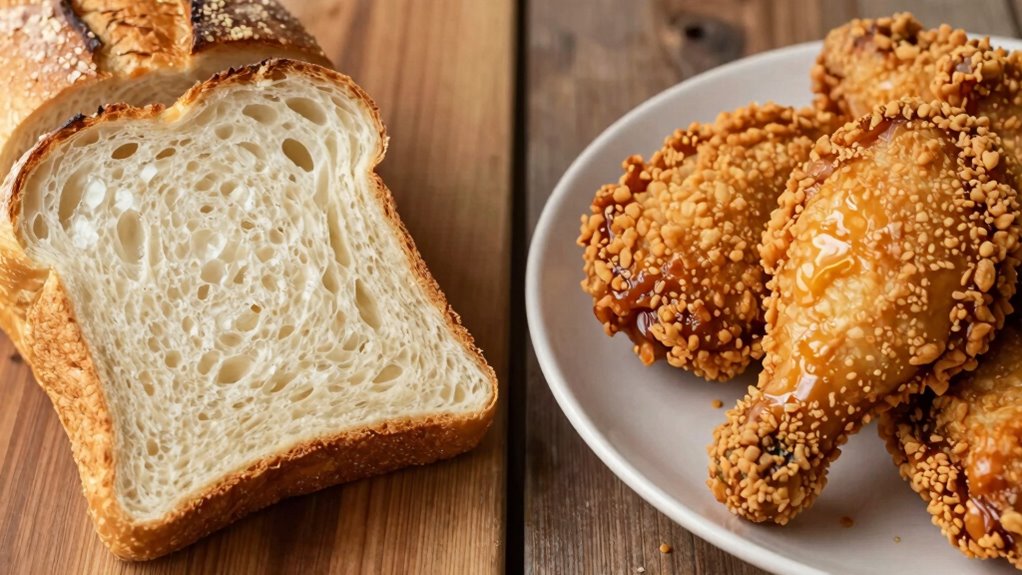
You might notice bread becomes dry and crumbly because moisture inside it moves outward and crystallizes starches, causing staling. On the other hand, crispy foods turn soft as they absorb moisture from the environment, breaking down their structure. Proper storage can slow these processes, helping keep your snacks fresh longer. If you’re curious about how moisture affects your baked goods and how to prevent them from going stale or softening too quickly, there’s more to uncover ahead.

Prime made for students and young adults
- Fast, free delivery for dorm and study essentials
- Prime Video and Amazon Music included
- Member-only deals
Key Takeaways
- Bread stales due to moisture migrating outward and starch crystallization, leading to dryness and firmness.
- Crispy foods soften when external humidity causes moisture absorption, disrupting their rigid structure.
- Staling involves starch retrogradation, which traps less water and reduces bread’s freshness.
- Proper storage in airtight containers slows moisture exchange, preserving the original texture of bread and crispy snacks.
- Moisture movement, driven by environmental humidity, is the core reason for bread going stale and crispy foods softening.
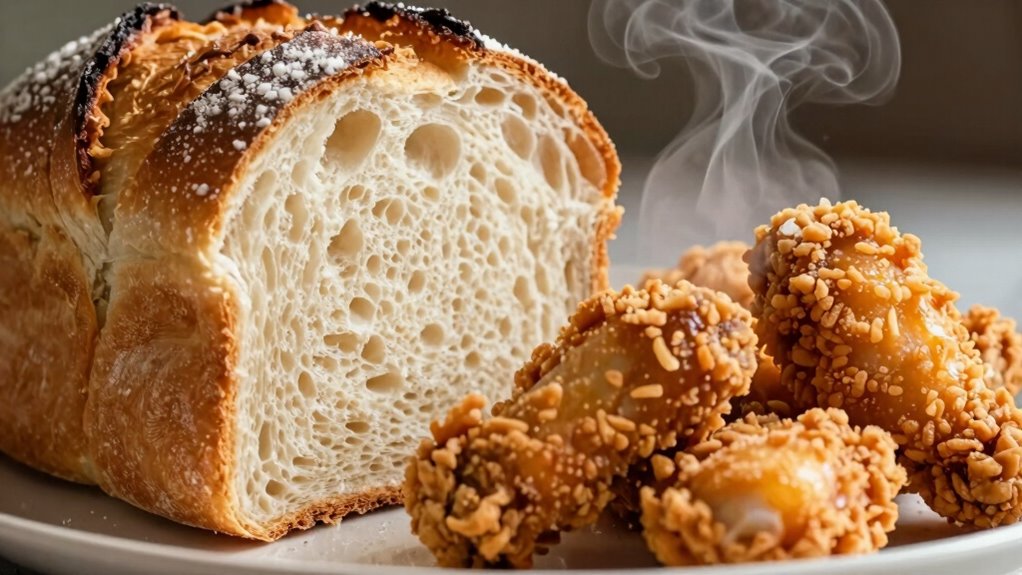
Ever wonder why bread becomes stale while crispy foods like chips or crackers turn soft over time? The answer lies in the way moisture moves within these foods and the underlying changes that happen after baking. When bread cools after baking, it undergoes a process called the fermentation process, which continues very subtly even after it leaves the oven. During this time, the starches in the bread start to crystallize, and moisture inside the loaf slowly migrates from the interior towards the surface. This moisture migration causes the bread to lose its initial freshness, making it feel dry and crumbly. The starch molecules, once gelatinized during baking, begin to retrograde, re-crystallizing and trapping less water within the bread structure. As moisture escapes, the bread becomes stale—firm, dry, and less flavorful. This is why bread, despite appearing fresh, can quickly lose its softness if left exposed to air. Proper storage methods** can significantly influence these moisture movements, helping to preserve freshness longer. Additionally, the crystallization of starches** is a key factor in the staling process, further emphasizing the importance of storage. Understanding the moisture migration process also highlights why certain storage techniques are effective. Proper storage not only slows down **moisture exchange but also helps maintain the bread’s original texture, which is crucial for keeping it fresh. An awareness of moisture dynamics can help consumers choose the best storage options for their baked goods. Crispy foods like chips and crackers, on the other hand, are initially dry and crisp because they have a low moisture content. Their crispiness depends on the absence of water, which makes their structure rigid. Over time, however, moisture from the surrounding environment—humidity or even the air itself—starts to migrate into these foods. This moisture absorption causes the surface of chips and crackers to become tacky or soft. Basically, moisture migrates from the humid air into the food, disrupting the delicate internal structure that kept these foods crispy in the first place. This process is accelerated if they’re stored improperly or exposed to high humidity. The change might seem subtle at first, but over time, the once-crisp snack turns chewy and less appealing. Understanding the role of moisture migration helps clarify why these foods behave differently over time. Bread, which starts out moist and soft, loses water to the environment or within its own structure, leading to staleness. In contrast, crispy snacks absorb moisture, causing them to lose their crunch. Storage methods can considerably influence these processes—air-tight containers slow moisture exchange, keeping bread fresh and snacks crispy longer. Conversely, exposure to air accelerates moisture migration, hastening the staling of bread and the softening of crispy foods. So, whether you’re trying to keep bread fresh or maintain the crispness of your snacks, controlling moisture movement** is key. Proper storage helps preserve the texture and taste, preventing the natural tendencies of moisture migration from turning your favorite foods into less desirable versions of themselves.
airtight bread storage container
As an affiliate, we earn on qualifying purchases.
As an affiliate, we earn on qualifying purchases.
Frequently Asked Questions
How Does Humidity Affect Bread and Crispy Foods Differently?
Humidity effects your bread and crispy foods differently because moisture migration impacts them uniquely. When humidity is high, bread absorbs moisture, making it go stale faster and become denser. Conversely, crispy foods absorb moisture from the air, causing them to soften and lose crunch. You notice this effect because humidity causes moisture to move into the food, altering their texture—staling bread and softening crispy items due to moisture migration.
Can Storage Containers Prevent Bread From Going Stale?
Think of storage containers like a knight’s shield, protecting bread from staleness. Yes, airtight seals in containers made of materials like plastic or glass can keep bread fresh longer by preventing moisture exchange. When you choose a container with a tight seal, it traps the bread’s natural moisture, slowing down staling. Just make sure the container is clean and dry before storing, and your bread stays fresher, longer.
Why Does Some Bread Stay Soft Longer Than Others?
Some bread stays soft longer because it has preservatives or moisture-retaining ingredients, which slow down flavor degradation and prevent texture alteration. Additionally, the type of flour and baking process influence its moisture content. Proper storage in airtight containers helps maintain freshness, but ingredients and packaging play vital roles. You’ll notice that bread with added fats or sugars tends to stay softer, resisting staleness longer.
Do Preservatives Impact the Staling Process?
Think of preservatives as guardians, fighting to keep your food fresh. Chemical preservatives specifically inhibit mold and slow down staling, so your bread stays soft longer. They act like shields, preventing bacteria and mold from attacking, thereby maintaining texture and freshness. By blocking the natural decay process, preservatives help your food stay appealing longer, giving you more time to enjoy your favorite snacks without worry.
How Do Temperature Changes Influence Moisture Transfer?
Temperature changes directly influence moisture transfer through their effect on thermal conductivity and phase shift. When you heat or cool food, thermal conductivity determines how quickly heat moves, affecting moisture movement. At certain temperatures, phase transitions like melting or evaporation occur, accelerating moisture loss or gain. This process makes bread go stale faster if stored improperly, as moisture migrates from the crumb to the crust or environment, altering texture and freshness.
As an affiliate, we earn on qualifying purchases.
Conclusion
So, next time you notice your bread turning stale or your crispy snacks softening, remember it’s all about moisture transfer—nothing more mysterious. Coincidentally, the same principles apply to why your favorite chips lose crunch or your pastries soften unexpectedly. It’s like nature’s little reminder that even in food, change is constant and often happening just beneath your nose. Embrace the science, and maybe, just maybe, you’ll find a new appreciation for those everyday transformations.
As an affiliate, we earn on qualifying purchases.
As an affiliate, we earn on qualifying purchases.
Halloween Picks
halloween
As an affiliate, we earn on qualifying purchases.