
Scammers often start with fake “wrong number” texts to trick you into sharing personal info or clicking malicious links. These messages may seem casual or urgent, claiming to be someone you know or a company offering prizes. Look for signs like suspicious links, poor grammar, or sudden requests for details. If you stay alert, you can catch these scams early. Keep going to discover how to protect yourself and spot these tricky messages.
Key Takeaways
- Scammers send fake “wrong number” texts to establish trust and initiate further contact.
- They may use the message to ask for personal info or direct recipients to malicious links.
- The scam often involves pretending to be someone the target knows or a legitimate organization.
- These texts aim to lure victims into sharing sensitive data or clicking harmful URLs.
- Recognizing suspicious language or urgent requests helps prevent falling for the scam.
How Can You Spot a Scam Text?

To spot a scam text, pay close attention to the sender’s message. Scammers often use phishing attempts to trick you into revealing personal information or clicking malicious links. Be wary of messages that claim you’ve won a prize or offer something too good to be true—these are common fake offers designed to lure victims. Look out for urgent language, such as “Act now” or “Your account will be closed,” which pressure you into quick action. Check the sender’s number—if it seems suspicious or unfamiliar, it’s a red flag. Never share sensitive info via text, especially if the message seems unprofessional or inconsistent. Recognizing these signs helps you avoid falling for scams that rely on deception and fake offers. Additionally, understanding the importance of digital literacy skills can further empower you to distinguish between genuine and fake messages. Being aware of content authenticity and contrast ratio in digital communications can also help identify suspicious messages trying to mimic legitimate sources. Developing critical thinking skills can help you analyze messages more effectively and avoid impulsive responses.
Signs That a Wrong Number Message Is Fake

When you receive a message from a wrong number that seems suspicious, it’s important to be cautious. Fake websites often link in scam messages, prompting you to click without thinking. Watch out for messages that direct you to unusual URLs or ask for personal information. Phishing links are common in fake texts, pretending to be legitimate sites to steal your details. If the message seems overly urgent or contains poor grammar, it’s a red flag. Scammers might also use generic greetings or copy official logos to appear authentic. Remember, never click on links or provide sensitive info unless you’re sure the sender is legitimate. Recognizing scam signs can help you stay protected from potential threats. Trust your instincts—if something feels off, it’s best to ignore or verify the message before taking any action. Recognizing suspicious message signs can help protect your personal information from scams, especially when you understand common scam tactics used by fraudsters. Being aware of wave and wind in scam techniques can help you identify new and evolving threats more effectively.
What Scammers Do After Contacting You?
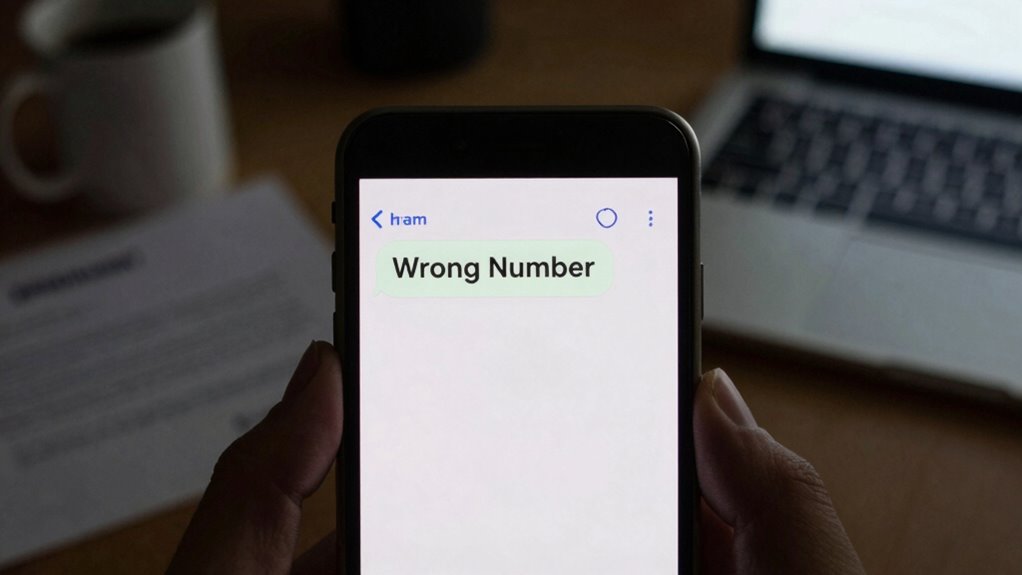
Once scammers establish contact, they quickly move to manipulate you into revealing personal information or taking actions that benefit them. They often use social engineering techniques to gain your trust, pretending to be a legitimate source like a bank or government official. In phone scams, they may ask for sensitive details such as passwords, account numbers, or social security info, claiming it’s necessary for verification. Sometimes, they create a sense of urgency, pressuring you to act fast. Their goal is to exploit your trust and extract valuable data or money. Be cautious of these tactics; scammers rely on your willingness to cooperate once they’ve made contact. Recognizing their methods is key to avoiding falling victim to their schemes. Understanding scam tactics can help you stay alert and protect yourself from fraud.
How to Protect Yourself From Text Scams

Protecting yourself from text scams starts with staying alert and skeptical of unfamiliar messages, especially those claiming urgency or offering too-good-to-be-true deals. Scammers use phishing tactics to trick you into revealing personal information or clicking malicious links. To prevent this, avoid responding to unexpected texts from unknown numbers, and never share sensitive data through text messages. Verify suspicious messages by contacting the sender through official channels rather than replying directly. Implement scam prevention measures like enabling spam filters on your device and reporting suspicious texts to your carrier. Remember, legit organizations rarely ask for confidential info via text. Staying vigilant and cautious helps you identify scam attempts early, reducing your risk of falling victim to these deceptive tactics.
What to Do If You Think You’re Targeted?

If you suspect you’ve been targeted by a scam, taking immediate action can prevent further harm. Stay calm and prioritize your phone safety by avoiding sharing personal info. Protect yourself by blocking suspicious numbers and reporting scams to authorities. Increase your scam awareness by reviewing recent messages and transactions for any unusual activity. Being aware of your affiliate disclosure can also help you understand potential motivations behind some messages. Remember that scammers often exploit social engineering techniques, so staying informed can help you recognize and thwart their efforts. Additionally, understanding the importance of luxury fashion insights can help you identify genuine offers and avoid counterfeit schemes that sometimes target consumers with luxury interests. Familiarizing yourself with common exfoliation benefits may also help you spot fake skincare offers that promise quick results. Recognizing patterns in Gold IRA markets scams can further protect you from fraudulent investment schemes.
Frequently Asked Questions
Can Scammers Access My Personal Information Through These Texts?
Scammers can’t directly access your personal information through these texts, but they use phishing techniques to trick you into revealing sensitive details. If you respond or click links, you risk giving scammers the opportunity to steal your data. To protect yourself, stay alert and practice scam detection. Never share personal info via suspicious texts, and verify any requests through official channels to avoid falling victim to these scams.
Are There Specific Phone Carriers More Targeted by These Scams?
Did you know that some carriers experience higher scam prevalence? You’re more vulnerable if you use smaller or less secure networks, as their carrier vulnerabilities often attract scammers. While no carrier is completely safe, scammers target certain networks more frequently due to weaker security measures. Stay alert, regardless of your carrier, and always verify messages before clicking links or sharing personal info to protect yourself from these scams.
Do Scam Texts Only Target Certain Age Groups?
You’re not alone if you wonder whether scam texts target specific age groups. These scams often involve age-related scams and generational targeting, meaning scammers tailor their messages based on your age to increase their chances of success. Younger people might get social media or investment scams, while older adults might see messages about health or financial emergencies. Stay alert and verify any suspicious messages regardless of your age.
How Common Are “Wrong Number” Scam Texts?
You often encounter “wrong number” scam texts, which are surprisingly common. These messages act as subtle invitations for phishing tactics, making scam detection tricky. Though not every message is malicious, scammers frequently use this tactic to lure in victims. Staying cautious helps you spot these scams early, protecting you from potential fraud. Being aware of how often these texts appear keeps you alert and better prepared to avoid falling for scams.
Can These Scams Lead to Identity Theft?
Yes, these scams can lead to identity theft. Scammers use phishing techniques within the ‘wrong number’ texts to lure you into revealing personal information. Their motivations are often financial gain or personal data theft. If you respond or click malicious links, you risk exposing sensitive details. Stay cautious, avoid sharing personal info, and never click unknown links to protect yourself from falling victim to these deceptive tactics.
Conclusion
Just like the Trojan Horse, scam texts hide danger behind a friendly face. Stay vigilant, recognize the signs, and don’t fall for their tricks. If you suspect a scam, remember Odysseus’s caution—trust your instincts and act wisely. Protect yourself by staying informed and cautious. In this digital world, your awareness is your shield. Don’t let scammers sail into your safe harbor—stay alert and keep your defenses up.