
Hard shell luggage usually offers better protection because its rigid materials, like polycarbonate or aluminum, resist impacts and prevent dents or damage during tough handling. Soft luggage is lighter and more flexible but doesn’t shield your belongings as well from bumps and crushes. If you’re worried about fragile items or rough journeys, hard shells can help keep things safe. To discover more about their differences and which suits your needs best, keep exploring.

Prime made for students and young adults
- Fast, free delivery for dorm and study essentials
- Prime Video and Amazon Music included
- Member-only deals
Key Takeaways
- Hard shell suitcases offer superior impact resistance and are less prone to denting or bending during rough handling.
- Soft luggage provides flexible interior compartments and padding but generally offers less impact protection.
- Hard shells typically include integrated locks and secure zippers, enhancing security against tampering.
- Soft bags, with reinforced seams and padding, still may not withstand heavy impacts as well as rigid cases.
- The choice depends on whether priority is impact protection (hard shell) or lightweight, flexible storage (soft luggage).
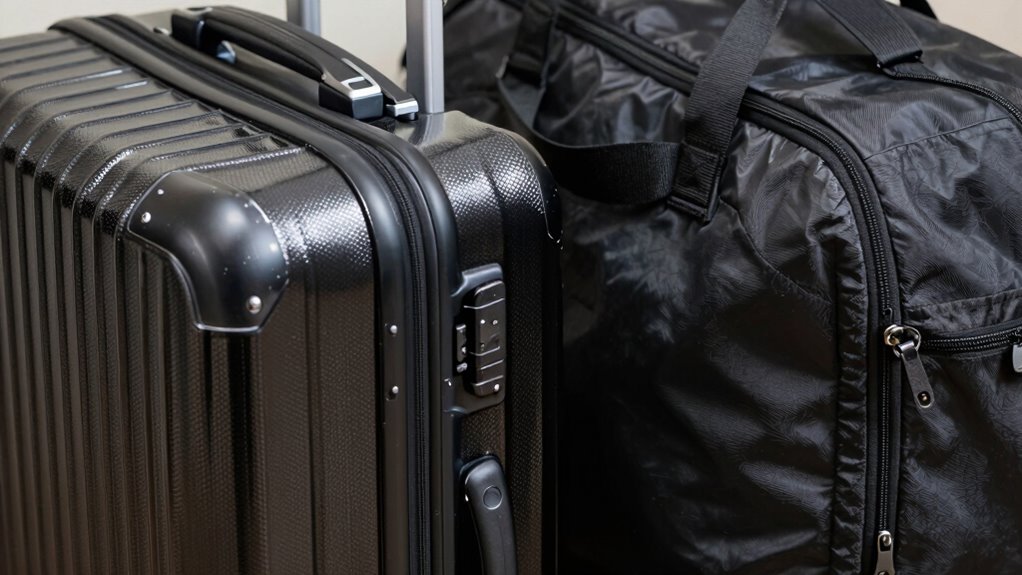
When choosing between hard shell and soft luggage, understanding their differences can help you make the best decision for your travel needs. One of the key factors to weigh is the durability comparison. Hard shell suitcases, made from materials like polycarbonate, ABS, or aluminum, tend to offer superior protection against impacts and rough handling. They’re less likely to dent or bend when thrown onto baggage carousels or stacked in cargo holds. This makes them ideal if you’re carrying fragile items or if your journey involves rough baggage handling. Soft luggage, usually constructed from fabrics like nylon or polyester, may not withstand heavy impacts as well. However, they often have reinforced seams and additional padding, providing a decent level of durability for everyday travel.
Weight considerations also play an essential role in your choice. Hard shell luggage is generally heavier than soft luggage of similar size. The sturdy materials and rigid structure add to its weight, which can impact your baggage allowances and handling ease. If you’re trying to keep your luggage light, soft bags might be a better fit since they’re typically lighter and easier to maneuver. They also tend to have flexible designs, allowing you to stuff more items into them or compress the shape. On the other hand, some hard shell cases are designed with lightweight materials, helping to reduce overall weight without sacrificing protection. It’s worth checking the weight specifications before making a decision, especially if you travel frequently or need to stay within strict weight limits.
Another aspect to think about is how each type of luggage protects your belongings. Hard shells provide a solid barrier that shields against physical impacts, making them a go-to choice for fragile or valuable items. Their rigid exterior keeps contents safe from crushing or squishing. Soft luggage, while more flexible, often has interior compartments and external pockets that can help organize your items but may not offer the same level of impact protection. If security is a priority, hard shells often come with integrated locks and hard-sided zippers, adding an extra layer of safety.
As an affiliate, we earn on qualifying purchases.
Frequently Asked Questions
How Do Weight Restrictions Differ Between Hard and Soft Luggage?
You’ll find that weight restrictions differ between hard and soft luggage mainly due to material weight and flexibility constraints. Hard shells tend to be heavier because of sturdy materials like polycarbonate or aluminum, which can limit what you pack. Soft luggage, made from lighter fabrics, offers more flexibility and generally weighs less, making it easier to stay within airline limits. Keep these factors in mind to avoid extra fees or surprises at check-in.
Which Luggage Type Is More Environmentally Friendly?
You might think soft luggage is more eco-friendly, but hard shell options often have better recyclability factors because they’re made from durable, recyclable plastics. While soft luggage may use less energy to produce, its materials can wear out faster, increasing waste. Ultimately, choosing luggage with sustainable manufacturing impact and recyclable parts helps reduce environmental harm, making hard shells a more environmentally conscious choice if you prioritize longevity and recyclability.
Can Soft Luggage Withstand Extreme Weather Conditions?
Soft luggage can handle some extreme weather, but it’s not always the best choice for severe conditions. With rain resistance, your soft bag can keep contents dry during light showers, and good temperature tolerance helps prevent damage from heat or cold. However, heavy rain or extreme temperatures might compromise its durability. To guarantee protection, consider additional features like waterproof coatings or thermal linings, especially if you expect harsh weather during your travels.
Are There Security Benefits With Either Luggage Type?
When it comes to security benefits, soft luggage often has an edge because you can easily access its security features like lockable zippers or hidden compartments. Hard shells sometimes attract theft risks due to their sturdy appearance, but they can also be fitted with TSA-approved locks for added security. Overall, your choice depends on your needs, but knowing these features helps you stay one step ahead and keep your belongings safe.
How Does Luggage Durability Compare Over Long-Term Use?
You’ll find that hard shell luggage offers superior material resilience and crack resistance over the long term, especially against impacts and rough handling. Soft luggage, while flexible, tends to wear out faster and may show tears or fraying over time. If you prioritize durability, a hard shell provides better protection and longevity, making it a smarter choice for frequent travelers seeking reliable, long-term use.
soft luggage with reinforced seams
As an affiliate, we earn on qualifying purchases.
As an affiliate, we earn on qualifying purchases.
Conclusion
Ultimately, choosing between hard shell and soft luggage depends on your travel needs. Hard shells offer protection, durability, and security, while soft bags provide flexibility, lightweight convenience, and easier storage. Consider your destination, packing style, and priorities. Whether you prioritize safeguarding valuables or ease of handling, understanding these differences helps you make an informed choice. By weighing protection, convenience, and adaptability, you decide what suits your journey best—because your luggage should work as hard as you do.
impact resistant hardside suitcase
As an affiliate, we earn on qualifying purchases.
As an affiliate, we earn on qualifying purchases.
As an affiliate, we earn on qualifying purchases.
Fall Picks
fall essentials
As an affiliate, we earn on qualifying purchases.