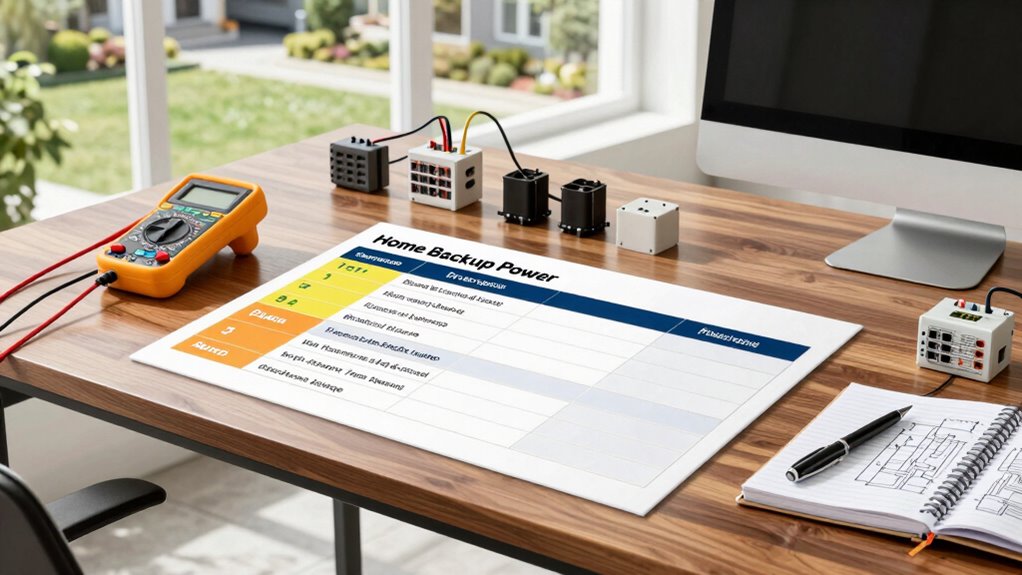

Start by listing essential appliances like your refrigerator, medical devices, and lights. Check each item’s power draw on labels or manuals. Add up these needs to see your total capacity, then prioritize the most crucial ones first. Power them sequentially, ensuring your generator isn’t overloaded. Regular maintenance and fuel checks are important for reliability. Following these steps helps you manage your backup power effectively—stick around to discover more tips for a safe, efficient setup.

Get school and study supplies delivered free — and shop member deals
- Fast, free delivery on millions of items
- Access to Prime Big Deal Days deals on October 6–7
- Prime Video, Amazon Music and more included
Key Takeaways
- List essential appliances by safety and household needs, focusing on refrigeration, medical devices, heating/cooling, and lighting.
- Check each appliance’s power consumption labels to determine individual energy requirements.
- Sum the power draw of prioritized items to ensure it does not exceed the generator’s capacity.
- Rank appliances from most critical (e.g., medical, refrigeration) to less essential, based on safety and comfort.
- Develop a step-by-step activation plan, starting with top priorities and adding appliances as capacity allows.
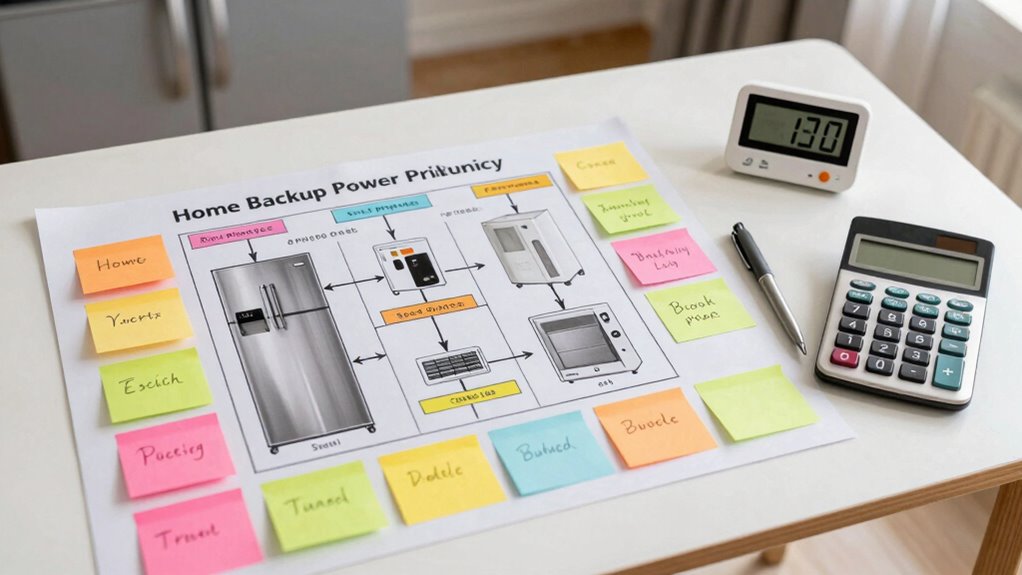
When a power outage occurs, knowing which items to power first can make all the difference in maintaining safety and comfort. Creating a home backup power priority list isn’t complicated, but it requires careful planning. Your goal is to guarantee critical needs are met first, especially during emergencies, without overloading your generator. To do this effectively, you need to understand your essential appliances and how to manage your generator’s capacity through proper generator maintenance and strategic decision-making.
Start by listing all the appliances and systems you’d want to keep running if the power goes out. Focus on essentials like refrigeration, heating or cooling systems, medical devices, and lighting. During emergency preparedness, it’s essential to identify what keeps your household safe and comfortable. Once you have that list, determine the power draw of each item. You can usually find this information on labels or in manuals. This step helps you avoid overloading your generator, which can damage it or cause safety hazards.
Next, prioritize these items based on necessity. For example, refrigeration is indispensable to prevent food spoilage, so it should be high on the list. Heating or cooling systems might be next, especially in extreme weather conditions, to maintain a safe environment. Medical devices, if used, are critical and should always be at the top of the list. Lighting and communication devices come after, as they improve safety and help you stay informed.
With your priorities set, you can now create a sequential plan for powering appliances. Start with the most essential items first—like your refrigerator, medical equipment, and essential lighting. Once these are running, you can add other appliances as your generator’s capacity allows. Remember, proper generator maintenance is key to guaranteeing it operates reliably during outages. Regularly check fuel levels, perform routine inspections, and keep it clean and serviced. This way, you prevent unexpected breakdowns and guarantee your backup power system is ready when needed. Additionally, understanding your generator capacity helps you make informed decisions about what to power during an outage.
As an affiliate, we earn on qualifying purchases.
Frequently Asked Questions
How Do I Determine the Total Power Capacity Needed for My Home?
To determine your home’s total power capacity, start by listing essential appliances and their power consumption, measured in watts. Consider energy efficiency to identify appliances that use less power, helping you optimize backup capacity. Add up the wattages of all items you want to power during an outage. This total gives you a clear idea of the backup power capacity needed, ensuring your system supports your essential needs effectively.
What Are the Best Types of Backup Power Sources for Homes?
Think of backup power sources as reliable friends in a storm. Generators, especially inverter types, shine with high fuel efficiency and low noise levels, making them ideal for home use. Solar panels paired with batteries offer silent, eco-friendly backup, though they depend on sunlight. Consider your needs and environment to choose the best, ensuring your home’s power stays steady without waking the neighborhood.
How Often Should I Test My Backup Power System?
You should test your backup power system at least once every three to six months. During these tests, check your battery maintenance to guarantee batteries are charged and connections are secure. Also, assess generator placement to confirm it’s in a well-ventilated, safe area. Regular testing helps identify issues early, ensuring your system works reliably during an outage, keeping your home protected when you need it most.
Can I Prioritize Appliances Differently During Power Outages?
Think of your home as a symphony, where you’re the conductor. During a power outage, you can prioritize appliances like a maestro, adjusting your power prioritization. Use appliance scheduling to guarantee essential devices, like refrigerators and medical equipment, get power first, while less critical ones wait. This flexible approach helps you tailor your backup power plan, keeping what matters most running smoothly during an outage.
What Safety Precautions Should I Take With Backup Generators?
You should always follow safety precautions with backup generators, starting with regular generator maintenance to guarantee it runs smoothly. Always operate the generator outdoors in a well-ventilated area to prevent carbon monoxide buildup, which can be deadly. Never run it inside your home or garage. Install carbon monoxide detectors nearby, and test them regularly. Proper maintenance and awareness of carbon monoxide safety help protect you and your family during outages.
portable power station for emergencies
As an affiliate, we earn on qualifying purchases.
As an affiliate, we earn on qualifying purchases.
Conclusion
By creating a clear backup power priority list, you’re taking control of your home’s safety and comfort during outages. Remember, plan ahead so you’re not caught off guard when the lights go out. Prioritize essentials, and you’ll be well-prepared for any situation. It’s better to be safe than sorry, after all. With a solid plan in place, you’ll weather the storm with confidence, knowing you’ve got your bases covered.
home surge protector with multiple outlets
As an affiliate, we earn on qualifying purchases.
As an affiliate, we earn on qualifying purchases.
refrigerator backup power supply
As an affiliate, we earn on qualifying purchases.
As an affiliate, we earn on qualifying purchases.
Halloween Picks
halloween
As an affiliate, we earn on qualifying purchases.