
Binging on Netflix taps into your brain’s reward system, making it tough to stop after one episode. When you watch, dopamine surges reinforce the behavior, especially with cliffhangers that trigger anticipation and curiosity. Streaming features like auto-play and recommendations keep the cycle going effortlessly. If you want to understand how these tricks keep you hooked and how to regain control, keep exploring what fuels this binge-watching habit.
Key Takeaways
- Cliffhangers and narrative strategies activate curiosity and anticipation, compelling viewers to watch “one more episode.”
- Dopamine release during binge-watching reinforces the behavior, making stopping difficult due to feelings of reward and relief.
- Streaming platform features like auto-play and personalized recommendations facilitate seamless viewing, encouraging continuous episodes.
- The brain’s reward system associates binge-watching with emotional relief, reinforcing neural pathways that drive habitual viewing.
- Recognizing automatic binge behaviors and implementing mindful viewing plans can help break the “one more episode” cycle.
Why Do We Keep Binge-Watching?
Have you ever wondered why it’s so hard to stop watching just one more episode? It’s because good shows masterfully use character development and narrative pacing to hook you. As characters evolve, you become emotionally invested, keen to see what happens next. The pacing keeps the story flowing smoothly, preventing pauses that might cause you to stop. When episodes end on cliffhangers or unresolved conflicts, your curiosity intensifies, compelling you to keep watching. These storytelling techniques create a sense of continuity and anticipation, making it difficult to break away. The more you connect with characters and get caught up in the story’s rhythm, the more your mind craves that next installment. Additionally, sustainable content creation techniques are increasingly being used to enhance viewer engagement over time, often leveraging insights from psychology research on how narratives influence our brains. Furthermore, understanding audience engagement strategies can help producers craft stories that are even more compelling, encouraging sustained viewing habits. This interplay between storytelling and neuroscience explains why binge-watching can feel both irresistible and difficult to resist. Moreover, the use of emotional triggers in storytelling intensifies viewers’ attachment and investment, making it even harder to stop watching.
How Does Dopamine Make Binge-Watching Hard to Quit?
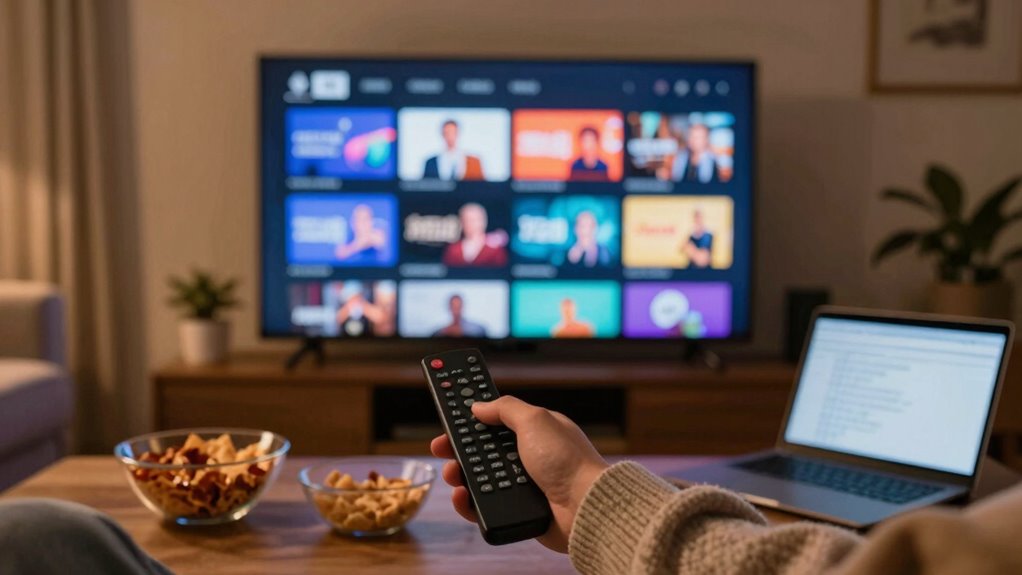
Dopamine, a chemical in your brain, plays a key role in making binge-watching so addictive. When you watch a new episode, your reward circuitry releases dopamine, reinforcing the behavior and making you want more. This surge not only creates pleasure but also influences emotional regulation, helping you temporarily escape stress or negative feelings. High refresh rates can make the viewing experience more seamless, further enhancing the pleasurable cycle. Over time, your brain begins to associate binge-watching with relief and reward, strengthening neural pathways that make it hard to stop. Each episode feeds the cycle, as dopamine levels spike again, encouraging you to keep going.
This biochemical process explains why breaking the habit feels difficult—your brain craves that dopamine hit, making it challenging to resist the urge for “just one more episode.”
What Do Cliffhangers Do to Our Brains?
When a show ends on a cliffhanger, your brain immediately seeks answers, triggering a powerful response. This moment heightens emotional engagement and intensifies narrative tension, making you enthusiastic to find out what happens next. A well-crafted cliffhanger can also tap into your desire for continuous storytelling, encouraging you to stay engaged over time. Your brain releases dopamine as it anticipates resolution, reinforcing the desire to keep watching. Cliffhangers tap into your natural curiosity and create a sense of urgency, making it hard to stop. They activate neural pathways associated with reward and expectation, compelling you to continue. This craving isn’t just about the story; it’s about the neurochemical response that keeps you hooked, leveraging neural pathways that reinforce your viewing habits. Additionally, understanding the brain’s reward system can help explain why repetitive exposure to cliffhangers leads to habitual binge-watching. Recognizing the influence of dopamine release can help viewers become more aware of their viewing patterns and set healthier boundaries. By understanding this neurochemical response, creators can craft narratives that effectively maintain audience interest.
How Streaming Platforms Make Bingeing Easy
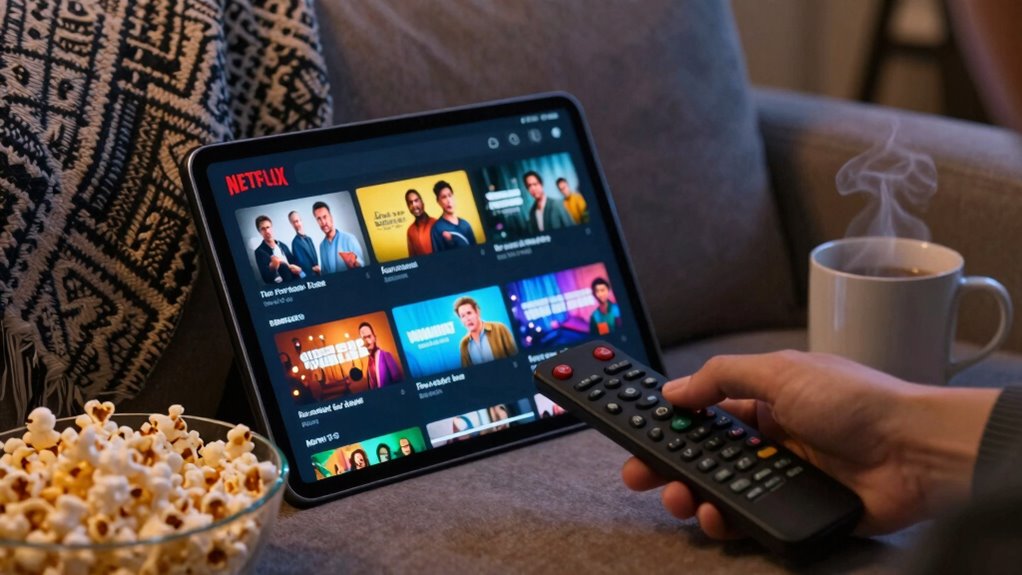
Streaming platforms have revolutionized the way you watch shows by removing the traditional barriers of scheduled TV and physical media. Their visual design is sleek, intuitive, and tailored to keep you engaged. The user interface simplifies navigation, making it easy to find, select, and resume shows without hassle. Features like auto-play and seamless episode progression encourage you to keep watching, often longer than intended. Recommendations are personalized based on your viewing habits, pulling you into a continuous binge cycle. Notifications and prompts subtly nudge you to start another episode. All these elements work together to create a frictionless experience, reducing the effort needed to continue watching and making it easier for you to get caught up in back-to-back episodes. Additionally, these platforms employ user-centered design principles that focus on keeping viewers engaged for extended periods, using psychological insights to foster habit formation and increased screen time. They also utilize behavioral cues that reinforce your viewing habits and foster a sense of ongoing engagement. Furthermore, the platforms often incorporate feedback loops, which provide subtle reinforcement to keep viewers hooked and returning for more viewing sessions. The use of visual cues such as progress bars and highlight reels further encourages continued watching by providing visual motivation.
When Does Binge-Watching Become a Problem?

Have you ever stayed up late, telling yourself just one more episode, only to realize hours have slipped away? Binge-watching becomes a problem when it starts affecting your life. You might experience: – Social isolation, missing out on interactions with friends and family – Sleep disruption, leading to fatigue and reduced focus – Declining mental health, feeling anxious or depressed – Neglecting responsibilities, causing stress and burnout. When you choose to prioritize screens over sleep and connection, binge-watching can harm your well-being. Practicing healthy viewing habits can help prevent these issues and maintain a balanced lifestyle. If you notice yourself pulling all-nighters or avoiding social plans, it’s a sign that your binge sessions are crossing into problematic territory. Recognizing these signs helps you regain control and protect your health.
Simple Ways to Watch Less and Enjoy More
To enjoy your favorite shows without overdoing it, start by setting clear limits on your viewing time. Establish viewing boundaries, such as deciding to watch only two episodes at a time or setting a specific end time. Incorporate mindful pauses between episodes to reflect on how much you’ve watched and whether you’re still enjoying it. These pauses help you stay aware of your habits and prevent automatic continuation. Use alarms or timers to reinforce your boundaries, making it easier to stick to your plan. Remember, the goal is to savor your shows rather than rush through them. Additionally, understanding your viewing habits can help you identify patterns and make healthier choices, which is a key aspect of media literacy and responsible consumption. Practicing mindfulness during your viewing sessions can further enhance your awareness and enjoyment, helping you stay present and intentional about your media use. Recognizing automatic behaviors can also help you develop strategies to break the cycle of binge-watching without awareness. Developing a media consumption plan can support you in creating healthier viewing routines that align with your overall well-being.
Frequently Asked Questions
Can Binge-Watching Affect Our Long-Term Memory?
Binge-watching can negatively affect your long-term memory by causing cognitive overload, which hampers memory consolidation. When you watch for hours without breaks, your brain struggles to process and store new information effectively.
This overload can impair your ability to remember details later. To protect your memory, take regular breaks, limit viewing time, and give your brain time to consolidate what you’ve watched.
How Does Social Influence Impact Our Binge-Watching Habits?
Social influence strongly impacts your binge-watching habits through peer pressure and the desire for social validation.
When friends or online communities discuss shows, you feel motivated to watch more to stay connected and avoid missing out. This pressure encourages you to keep watching episodes, reinforcing the behavior.
You seek validation by sharing your viewing experiences, which makes bingeing feel more rewarding and socially accepted.
Are Certain Genres More Addictive Than Others?
Some genres are more addictive because they foster stronger emotional attachment and engagement. For example, thrillers or soap operas often keep you hooked with suspense and relatable characters, making it hard to stop after just one episode.
While personal genre preference varies, these types tend to create a cycle of anticipation and reward, increasing the likelihood of binge-watching.
What Are the Psychological Effects of Binge-Watching Alone?
When you binge-watch alone, you might experience emotional regulation issues, feeling more anxious or lonely afterward. It can reduce mindful awareness, making it harder to stay present and aware of your feelings.
Prolonged solitude during binge sessions can also lead to increased stress or guilt. To counteract these effects, try setting time limits and practicing mindful awareness, so you stay connected to your emotions and maintain a healthier balance.
How Does Sleep Deprivation Relate to Extended Screen Time?
Extended screen time exposes you to blue light, which suppresses melatonin production and disrupts your circadian rhythm.
As a result, you may find it harder to fall asleep and experience poorer sleep quality.
Sleep deprivation then leads to fatigue, decreased focus, and mood swings.
To protect your sleep, limit screen use before bed, use blue light filters, and establish a consistent sleep schedule, especially after long binge-watching sessions.
Conclusion
Think of binge-watching as slipping into a cozy, endless night, where each episode is a flickering candle guiding you deeper into the darkness. While it feels comforting, remember that you hold the match to turn off the light whenever you choose. By controlling your viewing, you become the lighthouse keeper, shining your own beam of balance. So, take the reins and let your stories illuminate your life, not overshadow it.