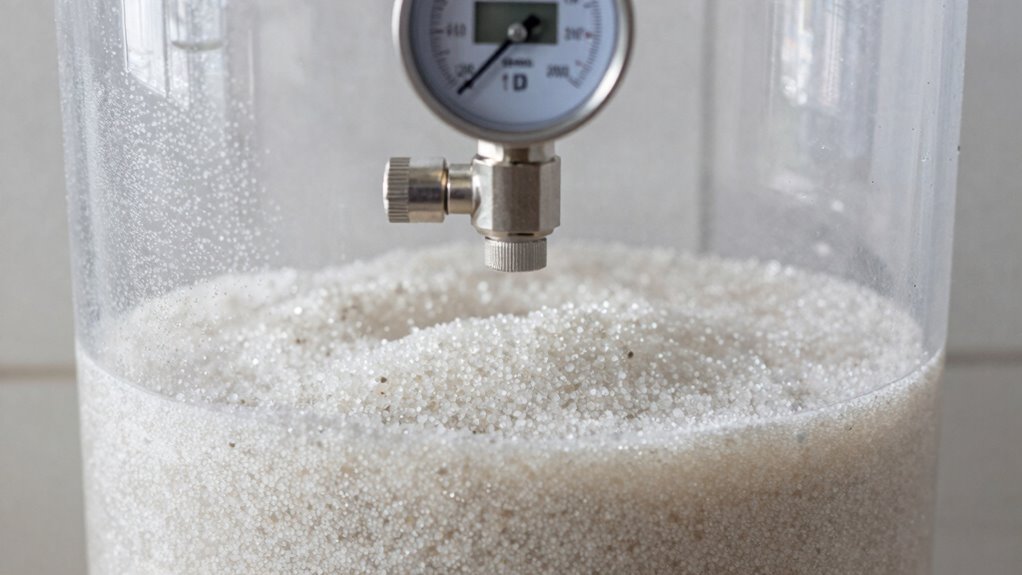

In water softening, “grains” measure how much mineral (calcium and magnesium) your system can remove before needing to regenerate. Think of it as your softener’s capacity: higher grains mean it can treat more hard water. It’s important to match your system’s grains to your water’s hardness level for effective performance. If you keep exploring, you’ll discover how understanding grains helps you maintain ideal water quality and system efficiency.
Key Takeaways
- Grains measure the capacity of a water softener to remove mineral content before needing regeneration.
- It indicates how much calcium and magnesium the system can treat per regeneration cycle.
- Higher grain ratings mean the softener can handle harder water with more minerals.
- The grain count helps determine when to regenerate the system for optimal performance.
- Understanding grains ensures proper sizing and maintenance of your water softener system.
Have you ever noticed spots on your dishes or a buildup on your faucets? If so, your water might be hard, meaning it contains high levels of minerals like calcium and magnesium. A water softener can help, but understanding what “grains” mean in this context is key. When you hear about a water softener’s capacity, it’s often measured in grains, which indicates how much hardness the system can handle before it needs regeneration. Think of grains as a way to quantify mineral removal—more grains mean the softener can treat more hard water before needing a reset.
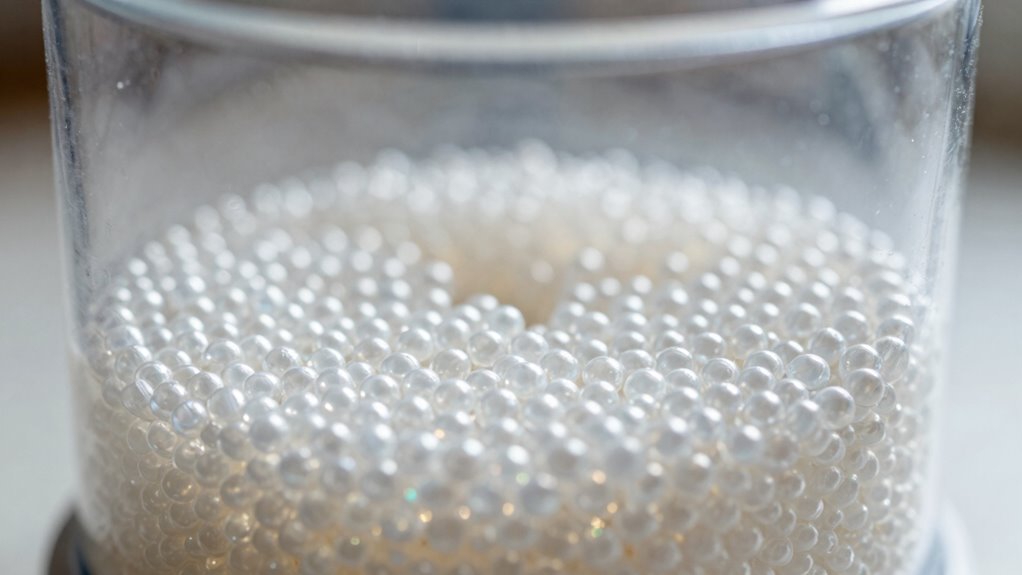
Different salt types play an essential role in the softening process, especially during resin regeneration. Most softeners use sodium chloride or potassium chloride to refresh the resin beads that trap minerals. Salt types vary in purity, with solar and rock salts being common options. Solar salt, which is highly refined, dissolves easily and produces less residue, making it a popular choice. Meanwhile, rock salt is less processed and might leave more impurities, requiring more frequent cleaning of your system. Using the right salt type ensures efficient resin regeneration, allowing your softener to maintain its capacity and performance.
Choosing the right salt type ensures efficient resin regeneration and optimal softener performance.
Resin regeneration is a pivotal process that restores the softener’s ability to remove minerals from your water. Over time, the resin beads become saturated with calcium and magnesium, reducing their effectiveness. During regeneration, a brine solution—made from your chosen salt—is flushed through the resin tank. This process replaces the accumulated minerals with sodium or potassium ions, effectively cleaning the beads so they can continue softening water. Proper resin regeneration is fundamental for maintaining the softener’s capacity, especially if you have a high flow rate or particularly hard water. When your softener reaches its grain capacity, it automatically triggers regeneration, but you can also manually initiate it if needed. Additionally, understanding how water hardness levels impact your softener’s performance can help you better manage its operation and maintenance.
Understanding grains and how they relate to salt types and resin regeneration helps you keep your water softener running smoothly. If you’re unsure about which salt to choose, consider the mineral content and your water hardness level. Regularly checking your softener’s grain capacity and ensuring proper resin regeneration prolongs its lifespan and keeps your water quality high. So, next time you notice spots or buildup, remember that managing salt types and resin regeneration ensures your water softener continues to do its job effectively, giving you clean, soft water without the hassle.
Frequently Asked Questions
How Often Should I Regenerate My Water Softener?
You should regenerate your water softener when the salt levels drop and the regeneration frequency increases, typically every 7 to 14 days. Keep an eye on the salt level in the brine tank and add salt as needed. Regularly check your system’s performance; if you notice hard water or soap scum, it’s time to regenerate. Proper maintenance guarantees your softener runs efficiently and prolongs its lifespan.
Can I Use Salt Substitutes in My Water Softener?
You can’t use salt substitutes in your water softener because they can damage the system and reduce softener efficiency. While salt alternatives might seem like a good idea, they often contain chemicals that interfere with resin regeneration. Stick to regular salt designed for softeners to guarantee ideal performance and longevity. Using the right salt keeps your softener running smoothly and prevents costly repairs down the line.
What’s the Difference Between Hard and Soft Water?
Hard water contains high mineral content, mainly calcium and magnesium, which can cause buildup and reduce soap’s effectiveness. Soft water, on the other hand, has low mineral levels thanks to water filtration through a water softener. This process removes minerals, making water gentler on your plumbing and appliances. So, the main difference is the mineral content, affecting how water interacts with your home and how easily it can be softened.
How Do I Know if My Softener Is Working Properly?
You can tell if your softener works properly by checking the water’s softness with water testing kits. Make sure your salt type is suitable—like sodium or potassium—and refill it regularly. If you notice soap doesn’t lather well or scale buildup appears, your system may need maintenance. Regular testing and proper salt use help guarantee your softener functions effectively, providing you with consistently soft, mineral-free water.
Are There Health Risks Associated With Water Softeners?
There are some health concerns linked to water softeners, especially if you have sodium restrictions, since softened water contains salt. Additionally, the environmental impact of salt discharge can affect local ecosystems. While generally safe for most people, it’s wise to monitor your water quality and consult with a health professional if you have health issues or concerns about salt intake. Consider alternatives if environmental impact or health risks worry you.
Conclusion
Now that you know what “grains” means on a water softener, you’re better equipped to choose the right system for your home. Remember, understanding this number is like having a map in unfamiliar territory—guiding you to clear, soft water. Don’t let the details drown you; instead, use this knowledge to make smart decisions. With the right softener, you’ll be sailing smoothly through chores, enjoying the benefits of softer water without any unexpected surprises.