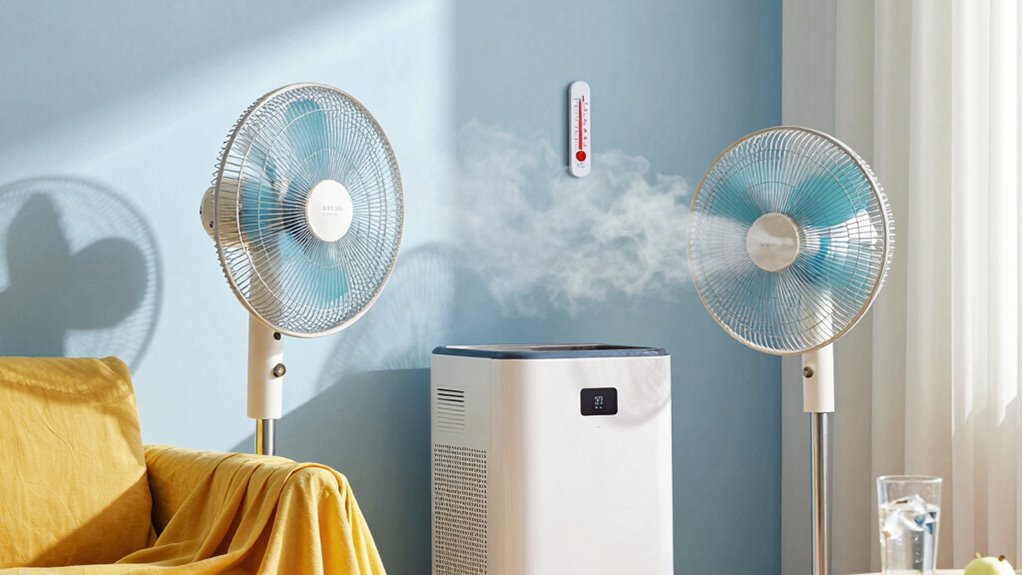

To prep for summer outages, invest in portable, battery-operated fans and keep extra batteries or power banks handy to stay cool in targeted areas. Wear lightweight, breathable clothing like moisture-wicking fabrics, and stay indoors during peak heat hours. Stay hydrated, create shaded outdoor spaces, and use cooling towels or neck gaiters for added relief. If you want practical tips to stay safe and comfortable, there’s more to contemplate in the full guide.
Key Takeaways
- Use portable, battery-operated fans to create personal cooling zones during power outages.
- Wear lightweight, breathable heat-resistant clothing to stay cool and prevent heat-related illnesses.
- Stay indoors during peak heat hours, and keep windows open for cross-breezes to improve airflow.
- Stock essential supplies like bottled water, cooling towels, and portable fans for effective heat management.
- Monitor weather forecasts regularly and plan outdoor activities accordingly to ensure safety during outages.
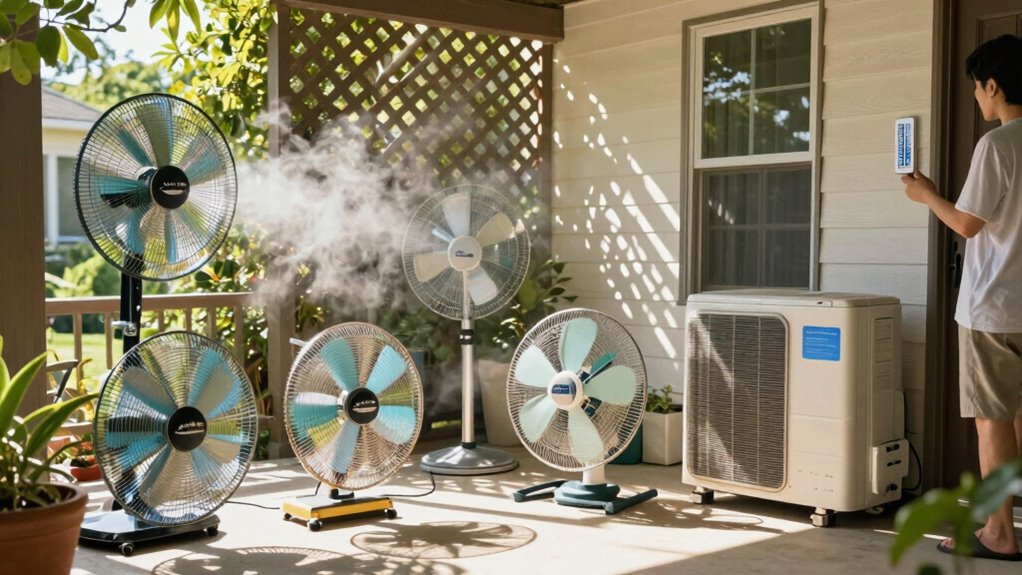
Are you ready to tackle the summer outage? Preparing for high temperatures and potential power disruptions requires a proactive approach. One of the most effective ways to stay cool and safe is by investing in portable fans. These compact, battery-operated devices can be easily moved from room to room, providing immediate relief where you need it most. Unlike traditional fans, portable units don’t rely solely on household electricity, making them invaluable during outages. Keep a few charged and ready to go, and consider extra batteries or portable power banks to ensure continuous operation. This way, even if the power grid goes down, you won’t be left in the heat. Additionally, having a collection of portable fans ensures you can create a personal cooling zone, especially in areas where heat tends to accumulate, like the kitchen or living room.
Alongside fans, wearing heat resistant clothing can make a significant difference in managing the summer heat, especially if you’re working outdoors or in environments where temperatures soar. Look for clothing made from lightweight, breathable materials like moisture-wicking fabrics or linen. These fabrics help keep sweat away from your skin and promote airflow, reducing the risk of heat exhaustion. Heat resistant clothing isn’t just about comfort; it’s about safety. When temperatures climb, your body’s ability to cool itself diminishes, and you need to take extra precautions. Covering your skin with protective, heat-resistant materials can prevent burns or heat-related illnesses. If your work involves handling hot equipment or being exposed to direct sunlight for extended periods, make sure your clothing provides adequate coverage without trapping heat. Incorporating cooling accessories like cooling towels or neck gaiters can further enhance your heat management strategy and prevent heat-related illnesses.
To maximize your summer outage prep, combine these clothing choices with a strategic cooling plan. Stay indoors during the hottest parts of the day, typically between noon and 3 p.m., when the sun’s rays are strongest. Use your portable fans to circulate air and create cross-breezes by opening windows on opposite sides of your home, if possible. Keep hydrated and wear lightweight, protective gear when you must be outside. Remember, prevention is key. Stock up on essentials like bottled water, cooling towels, and a well-stocked first aid kit. Prepare a shaded area outside with a canopy or umbrella if you need to work outdoors, and always check the weather forecast so you can adjust your plans accordingly. With thoughtful planning, you can handle the heat safely and comfortably, even during a summer outage.

Honeywell Home RTH9585WF1004 Wi-Fi Smart Color Thermostat, 7 Day Programmable, Touch Screen, Energy Star, Alexa Ready, Gray
COMFORT COMES IN YOUR COLOR. Personalize your Wi-Fi Smart Color Programmable Thermostat to fit your décor.
As an affiliate, we earn on qualifying purchases.
Frequently Asked Questions
How Can I Tell if My Fan Is Energy-Efficient?
You can tell if your fan is energy-efficient by checking its Energy Star label or comparing its wattage to similar models. An energy-efficient fan saves you money on electricity and requires less maintenance over time. Regularly clean the blades and motor to maintain peak performance, which also helps with energy savings. Look for fans with adjustable speeds and smart features, as they often use less power while providing better cooling.
What Are the Best Ways to Prevent Heat Stroke?
Think of your body as a delicate garden that needs constant tending. To prevent heat stroke, you must stay hydrated—drink water regularly and use effective hydration strategies. Seek shade or wear sun protection tips like wide-brimmed hats and sunscreen whenever you’re outdoors. Take breaks in cool, shaded areas, and listen to your body’s signals. These steps help you stay safe and keep your internal garden thriving during hot days.
How Long Does It Take to Cool a Room With Fans?
It typically takes about 15-30 minutes to cool a room with fans, depending on the ventilation techniques you use and the room size. To maximize cooling, guarantee proper fan maintenance, like cleaning blades and replacing filters. Position fans strategically to create cross-ventilation, drawing in cooler air and expelling hot air. Keep windows open during cooler parts of the day, and close them when outside temperatures rise to maintain a cooler indoor environment.
Are There Any Safe DIY Cooling Solutions?
You might worry DIY cooling isn’t safe, but homemade fans and simple methods can keep you cool without hazards. For example, place a bowl of ice in front of a fan to create a chilled breeze, or hang damp sheets in windows to cool incoming air. These DIY cooling tips are safe, cost-effective, and easy to try, helping you beat the heat without risking your safety.
What Should I Do if My Power Outage Lasts Several Days?
If your power outage lasts several days, you should focus on maintaining safety and staying informed. Gather emergency supplies like bottled water, non-perishable food, and a flashlight. Use alternative communication methods such as a battery-powered radio or cell phone, if available, to stay updated on outage progress and weather alerts. Keep cool by staying in shaded, ventilated areas and avoid opening your fridge or freezer unnecessarily.
Google Nest Thermostat - Smart Thermostat for Home - Programmable Wifi Thermostat - Charcoal
ENERGY STAR certified smart thermostat for home that helps you save energy and stay comfortable.Connectivity : Wi-Fi -...
As an affiliate, we earn on qualifying purchases.
Conclusion
As summer heats up, think of your home as a fortress against the sun’s relentless assault. By prepping your fans, cooling systems, and practicing heat safety, you’re arming yourself for the season ahead. Staying proactive is like planting seeds for peace of mind and comfort. So, take these simple steps now—your future self will thank you for avoiding the summer scramble and turning your home into a cool oasis amidst the scorching heat.

Amazon Smart Thermostat – Save money and energy - Works with Alexa and Ring - C-wire required
Smart upgrade - Amazon Smart Thermostat is an easy way to switch from a traditional thermostat and help...
As an affiliate, we earn on qualifying purchases.

ecobee Smart Thermostat Premium with Smart Sensor and Air Quality Monitor - Programmable Wifi Thermostat - Works with Siri, Alexa, Google Assistant, Black
Save up to 26% per year on heating and cooling costs. ENERGY STAR certified. Included SmartSensor (50 dollar...
As an affiliate, we earn on qualifying purchases.