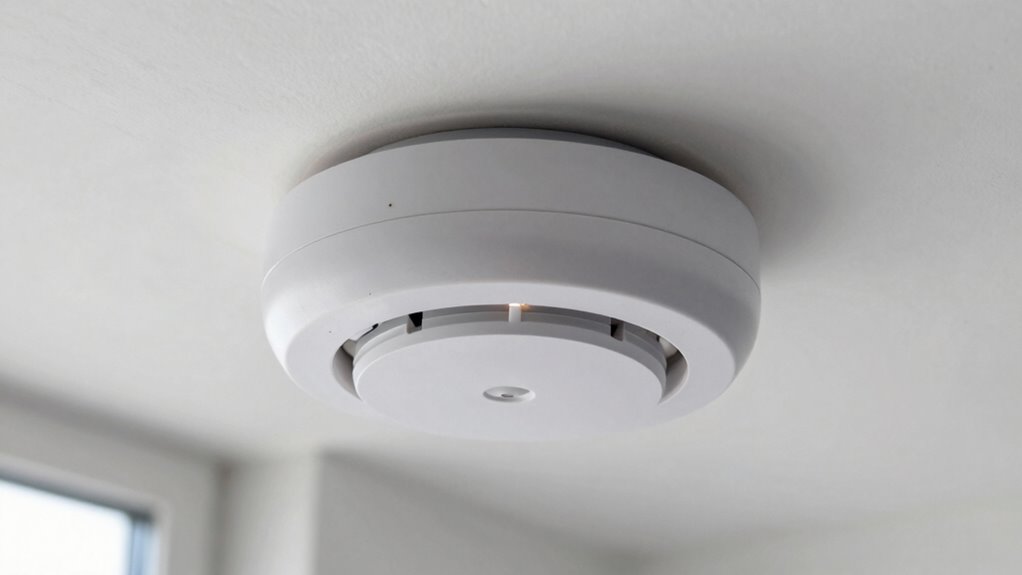

Your smoke alarm may go off for no reason mainly due to sensor malfunctions, dust buildup, humidity, or steam from showers and cooking. Bad batteries or placement near vents can also trigger false alarms. Over time, sensors can wear out, and environmental factors can interfere with proper detection. To keep your alarm working correctly, you’ll want to check these issues regularly. If you continue, you’ll discover how to prevent false alarms and keep your home safe.
Key Takeaways
- Dust, dirt, or insects inside the alarm can trigger false alerts by interfering with sensors.
- Environmental factors like humidity, steam, or cooking fumes near the detector cause false alarms.
- Improper placement close to kitchens, bathrooms, or vents increases the likelihood of false triggers.
- Sensor malfunctions or aging components over time can lead to false alarms if not regularly maintained.
- Weak or faulty batteries may cause alarms to chirp or activate without the presence of smoke.
What Are False Smoke Alarms and Why Do They Happen?
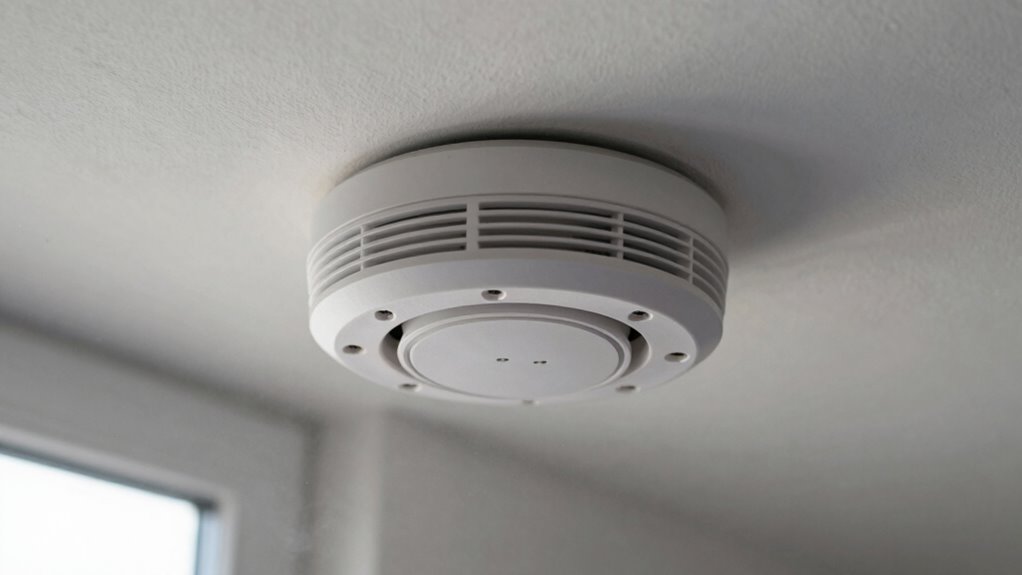
Have you ever experienced a smoke alarm going off for no apparent reason? These are known as false alarms, and they can be frustrating and confusing. False smoke alarms often happen due to issues with alarm maintenance or environmental factors that trigger the sensor without real fire. Poorly maintained alarms may develop dust buildup or corrosion, making them overly sensitive. Additionally, smoke alarms can mistake steam, pollen, or humidity for smoke, causing unnecessary alerts. To prevent this, regular fire safety checks and alarm maintenance are essential. Ensuring your smoke detectors are clean, functional, and correctly installed reduces false alarms. Keeping alarms in good shape not only maintains their reliability but also safeguards your home and loved ones effectively. Regularly testing alarms with quick‑tests like sensor calibration helps confirm they respond accurately to real smoke. Proper placement away from humidity sources like bathrooms can further reduce false triggers. Using airflow management techniques can also help minimize the chances of environmental factors setting off alarms unexpectedly. Moreover, selecting alarms with advanced sensing technology can improve discrimination between actual smoke and harmless particles. Regularly updating your alarms with the latest manufacturing standards can also enhance their accuracy and reliability.
Common Causes of False Smoke Alarms (Dust, Humidity, and More)

Many false alarms happen because environmental factors interfere with the smoke detector’s sensors. Dust, humidity, and steam are common culprits that can trigger alarms unexpectedly. Some fire alarm myths suggest that smoke detectors are highly sensitive to any airborne particles, but in reality, they’re designed to distinguish between real fires and harmless environmental changes. Humidity from showers or cooking can cause false alerts, while dust accumulation may block sensors or mimic smoke particles. These issues often lead to unnecessary alarms, fueling smoke detector myths that they are overly sensitive or unreliable. To prevent this, keep your detectors clean and properly maintained, and consider installing units that are less prone to environmental interference. Understanding how sensor technology works can help you choose the right detector for your home and reduce false alarms. This will help ensure your alarm only goes off when genuinely needed.
How Dust and Dirt Can Trigger Your Smoke Detector

Wondering why your smoke detector keeps going off unexpectedly? Dust and dirt buildup are common culprits that can cause false alarms. Over time, debris collects inside the smoke alarm, interfering with its sensors. Regular fire alarm maintenance, including cleaning your smoke detector, helps prevent this issue. Remember, proper smoke detector placement is vital; installing it too close to vents or fans can lead to dust accumulation. When dust settles on the sensing chamber, it can trigger a false alarm even without smoke present. To avoid unnecessary disruptions, gently vacuum or wipe the unit periodically, especially if it’s located in dusty areas. Additionally, understanding auditory processing disorder sound therapy techniques can help improve your environment by reducing background noise that contributes to dust attraction and buildup. Using air purifiers or filters can also help keep the air cleaner and reduce dust in your home. Incorporating reconditioning batteries in your maintenance routine can ensure all your home devices operate efficiently, further reducing the need for unnecessary replacements or repairs. Keeping your smoke detector clean ensures it functions correctly and reduces the chance of false alarms caused by dirt or dust. Additionally, understanding Gold IRA Markets can help investors diversify their retirement portfolios with precious metals, providing a safeguard against false alarms in financial planning. Being aware of essential oils for dust removal can also contribute to a cleaner environment around your smoke detector, reducing dust buildup and false alarms.
Managing Humidity and Steam to Prevent False Alarms
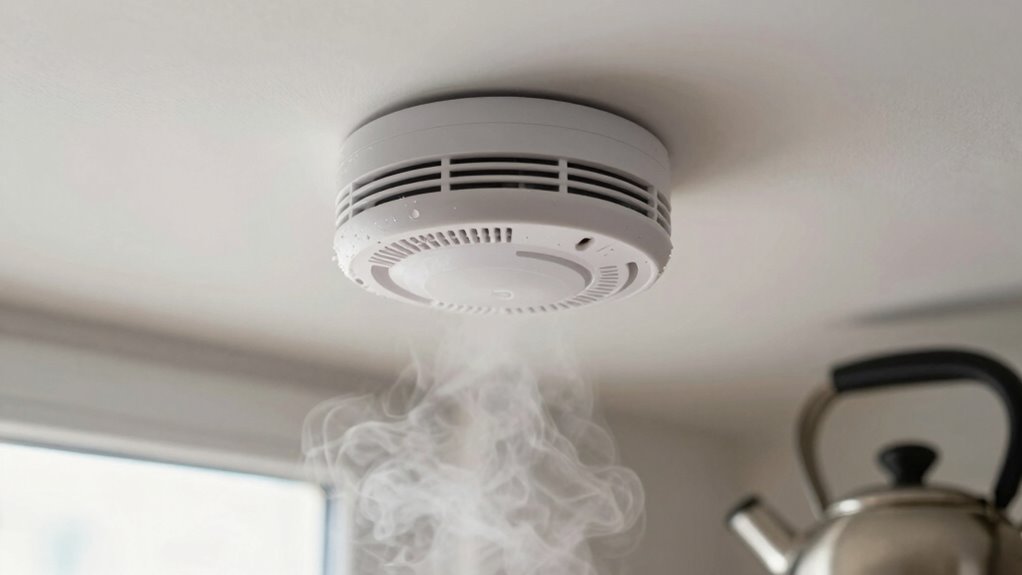
High humidity and steam from cooking or showers can easily trigger false alarms in your smoke detector. To improve fire safety and reduce false alerts, consider the placement of your detector. Install it away from bathrooms and kitchens where steam is common. Proper detector installation guarantees it isn’t exposed to excessive moisture, which can mimic smoke and cause unnecessary alarms. Using a dehumidifier or venting fans during hot showers or cooking can also help lower humidity levels. Regularly check that your smoke alarm is clean and free of moisture buildup. Additionally, understanding how at-home technology can affect your safety devices helps you better maintain their function. Knowing about sensor sensitivity can help you select the right detector for your home environment. Being aware of moisture interference can further assist in preventing false triggers. For example, installing a smart smoke detector with adjustable sensitivity settings can help tailor the device to your home’s specific conditions. Maintaining proper humidity levels and ventilation is essential to prevent steam-related false alarms and ensure your safety devices function correctly. By managing humidity and steam, you protect your home from false alarms and maintain reliable fire safety. Remember, a well-placed, properly maintained detector is key to effective fire prevention.
Battery Problems That Cause False Smoke Alarms

Even with proper placement and humidity control, your smoke alarm can still go off unexpectedly if its batteries are weak or faulty. Battery problems are a common cause of false alarms, especially when the power source becomes inconsistent. Regular fire alarm maintenance includes checking and replacing batteries to guarantee your smoke detector functions correctly. If you notice your alarm chirping or making strange noises, it’s time for smoke detector testing and battery replacement. Low or faulty batteries can trigger false alarms even when there’s no fire or smoke present. Always keep spare batteries on hand and follow the manufacturer’s instructions for testing your smoke alarm’s responsiveness. Battery health is a critical aspect of maintaining an effective detection system, and neglecting it can compromise your safety. Wave and wind can also influence sensor performance, so ensuring proper environmental conditions is important. Proper battery maintenance is a simple but essential step to prevent unnecessary alarms and ensure your safety, especially since environmental factors like air currents can sometimes cause false triggers. Additionally, ensuring the power supply is stable can help minimize false alarms caused by electrical issues.
Sensor Malfunctions and How They Lead to False Alarms
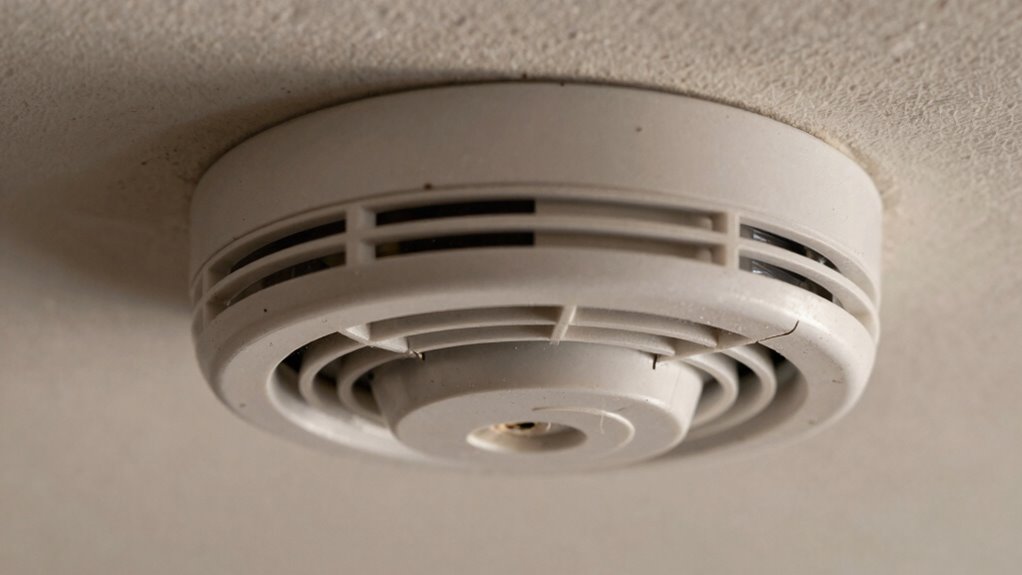
Sensor malfunctions can cause your smoke alarm to go off unexpectedly. Issues like incorrect sensitivity, dust buildup, or aging components often trigger false alarms. Understanding these problems helps you take the right steps to keep your alarm working properly. Regular maintenance and testing can also identify potential issues early, ensuring your alarm functions correctly when needed. Additionally, sensor malfunctions can sometimes be caused by environmental factors such as humidity or insects entering the device, which further complicate the detection process. Proper sensor calibration is essential for maintaining accurate responsiveness and reducing false alarms. Maintaining the sensor sensitivity through periodic checks can prevent many false alarms caused by environmental or component issues.
Sensor Sensitivity Issues
Sensor sensitivity issues can cause smoke alarms to go off unexpectedly, even when there’s no smoke or fire present. If your alarm is overly sensitive, it might react to steam, cooking fumes, or dust, leading to false alarms. Proper sensor calibration is vital to avoid this problem. Additionally, alarm placement plays a critical role; placing the sensor too close to kitchens or bathrooms increases the likelihood of false triggers.
| Issue | Effect | Solution |
|---|---|---|
| Overly sensitive sensor | False alarms from minor stimuli | Adjust sensor calibration |
| Poor placement | Triggered by steam or fumes | Relocate alarm to safer spot |
| Dust accumulation | Interferes with sensor function | Regularly check placement |
| Age of alarm | Reduced sensitivity or false alerts | Replace outdated units |
Dust and Debris Accumulation
Dust and debris can accumulate inside your smoke alarm over time, interfering with its sensors and causing false alarms. Regular alarm maintenance is essential to keep dust from building up and compromising fire prevention efforts. When dirt settles on the sensing chamber, it can trick the alarm into thinking there’s smoke present, even when there isn’t. This false triggering can lead to unnecessary panic and reduce your confidence in the device. To prevent this, routinely clean your smoke alarm using a soft brush or compressed air to remove dust and debris. Keeping your alarm clean ensures it functions correctly when it matters most. Proper alarm maintenance not only minimizes false alarms but also enhances your overall fire prevention strategy, helping protect your home and loved ones effectively.
Aging and Wear Effects
As smoke alarms age, their components can wear out, leading to malfunctions that cause false alarms. Over time, the sensors become less sensitive or develop faults, compromising fire safety. This wear and tear can cause your detector to misinterpret normal airborne particles as smoke, triggering unnecessary alarms. Regular detector maintenance helps identify these issues early. Consider the following factors:
| Factor | Effect on Smoke Alarm | Maintenance Tip |
|---|---|---|
| Sensor degradation | Increased false alarms | Replace alarms after 10 years |
| Circuit board wear | Reduced reliability | Schedule professional inspections |
| Power supply issues | Erratic operation | Check batteries and wiring regularly |
Understanding aging effects helps keep your fire safety reliable and prevents false alarms caused by worn components.
Tips to Prevent False Smoke Alarms and Maintain Your Detector

Regularly testing your smoke alarm and keeping it clean can substantially reduce false alarms. Proper maintenance guarantees your device functions correctly and enhances fire safety. Use a soft brush or vacuum attachment to remove dust and debris from the detector’s vents, preventing false triggers caused by particles. Keep your smoke alarm away from kitchens, bathrooms, or areas with high humidity, as moisture can interfere with alarm technology. Check the battery regularly, replacing it when needed, to prevent malfunctions. Ensure your alarm is up-to-date with the latest features that minimize false alarms, such as photoelectric sensors. Following these tips helps maintain reliable operation, reduces nuisance alarms, and keeps your home safe without unnecessary interruptions.
When Should You Replace Your Smoke Detector or Call a Professional?
You should consider replacing your smoke detector or calling a professional if it consistently chirps or fails to respond during tests, even after replacing the batteries. This indicates potential hardware failure or outdated technology. Regular fire alarm maintenance is essential to ensure your detector functions correctly. Follow a detector replacement schedule—typically every 8 to 10 years—since sensors can degrade over time. If your alarm is past its lifespan or shows signs of malfunction, don’t delay replacing it or seeking expert help. Proper maintenance and timely replacements keep your home safe and prevent false alarms or failures during emergencies. Remember, a well-maintained fire alarm system is your best defense against fire hazards.
Frequently Asked Questions
Can Pets Accidentally Trigger My Smoke Alarm?
Yes, pets can accidentally trigger your smoke alarm, especially if their behavior involves jumping or knocking objects near the alarm. To prevent false alarms, consider your alarm placement; avoid installing it near pet beds, litter boxes, or high-traffic pet areas. Pets may disturb the sensor or create enough airborne particles to set it off. Proper placement and understanding their behavior help keep your alarm from going off unnecessarily.
Do Certain Types of Smoke Detectors Have Fewer False Alarms?
Think of smoke detectors as guard dogs—some bark at everything, some only at real threats. Ionization alarms detect fast fires but can false alarm with cooking fumes, while photoelectric models are better at catching slow smoke without false alarms. Dual sensor alarms combine both techs, offering fewer false alarms and better safety. So, choosing a dual sensor smoke detector is like having a vigilant, discerning protector in your home.
How Does Temperature Fluctuation Affect Smoke Alarm Sensitivity?
Temperature fluctuations can impact your smoke alarm’s sensitivity by affecting its temperature sensitivity, causing false alarms or delayed responses. When temperatures rise or fall suddenly, it can throw off the alarm’s calibration, making it more prone to false alerts or less responsive to actual smoke. To prevent this, regularly check and calibrate your alarm, ensuring it operates correctly across temperature changes and maintains reliable detection.
Are There Specific Cleaning Products That Can Cause False Alarms?
Certain household cleaning products can cause false alarms because their chemicals react with the smoke detector’s sensors. Products with aerosols, strong fumes, or volatile chemicals like bleach or air fresheners can trigger false alarms. When you clean, avoid spraying or applying these near your smoke alarm. Instead, use gentle, non-abrasive cleaners and make sure proper ventilation to prevent chemical reactions that might set off false alarms.
Can Nearby Electrical Devices Interfere With Smoke Detector Operation?
Electrical interference and power surges can turn your smoke detector into a mischievous ghost, causing it to beep unexpectedly. When nearby electrical devices like microwaves, cordless phones, or chargers buzz and hum, they send invisible waves that disrupt your alarm’s sensors. These electrical gremlins trick your smoke detector into thinking there’s danger, making it go off for no reason. To keep it silent, consider installing noise filters or relocating sensitive devices away.
Conclusion
To keep your smoke alarm happy and false alarms at bay, stay vigilant like a trusty knight of old. Regularly clean the detector, check the batteries, and manage humidity levels. Don’t ignore persistent issues—it’s better to call a professional than risk missing a real warning. With simple care, your alarm will serve you faithfully, ensuring your home remains safe and sound—no more unwarranted chimes from your modern-day guardian.