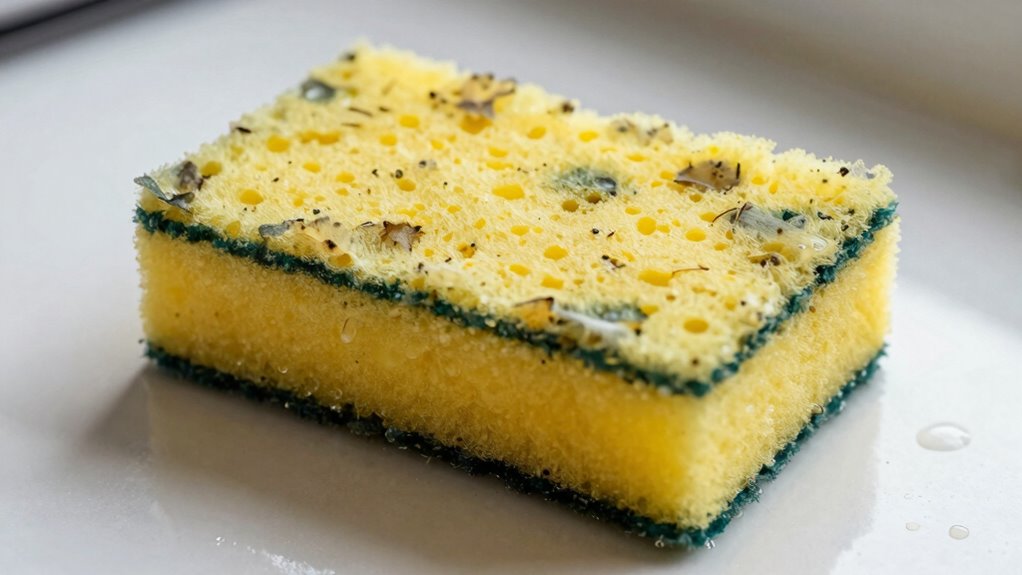
Your kitchen sponge can quickly become a science experiment filled with bacteria and mold. To fix this, replace it every 1-2 weeks, rinse thoroughly after use, and disinfect regularly by microwaving, soaking in vinegar, or using the dishwasher. Store it in a dry, ventilated area to prevent moisture buildup. Choosing hygienic materials and following a consistent cleaning routine can keep your sponge safe—continue exploring for more tips to stay germ-free.
Key Takeaways
- Regularly replace your sponge every 1-2 weeks to prevent bacterial and mold buildup.
- Disinfect sponges weekly using microwave, boiling, or soaking in vinegar or bleach solutions.
- Dry sponges thoroughly in a well-ventilated area to inhibit bacterial growth.
- Use hygienic materials like silicone or natural cellulose for easier cleaning and better sanitation.
- Store sponges in dry, ventilated spaces away from moisture to reduce bacterial proliferation.
When Should You Replace Your Kitchen Sponge? Signs to Watch For
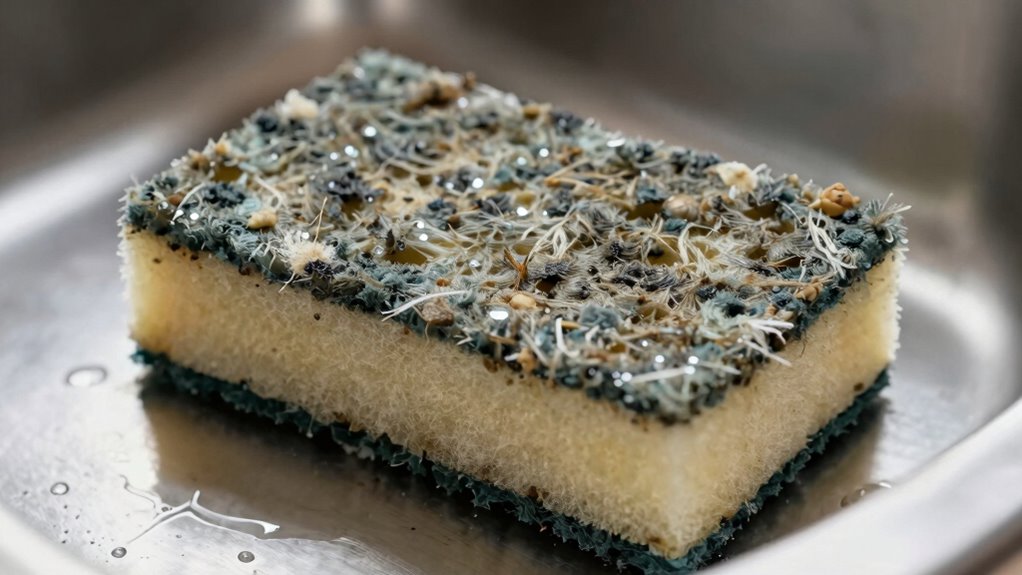
Knowing when to replace your kitchen sponge is essential for maintaining a clean and healthy kitchen. One clear sign is a persistent sponge odor that won’t go away, even after cleaning. If your sponge begins to smell sour or musty, it’s time for a replacement. Additionally, consider the replacement frequency; most sponges should be swapped out every one to two weeks, especially with regular use. Over time, bacteria and mold build up, making your sponge a breeding ground for germs. If your sponge looks frayed, stained, or develops a slimy texture, these are also signs it’s no longer effective or safe to use. Regularly replacing your sponge helps prevent bacterial growth and keeps your kitchen hygienic. European cloud innovation offers solutions to improve kitchen hygiene through advanced, sustainable materials and cleaning technologies. Incorporating materials with antimicrobial properties can further inhibit bacteria growth and extend sponge lifespan.
How Bacteria Grow in Your Sponge and Why It Matters
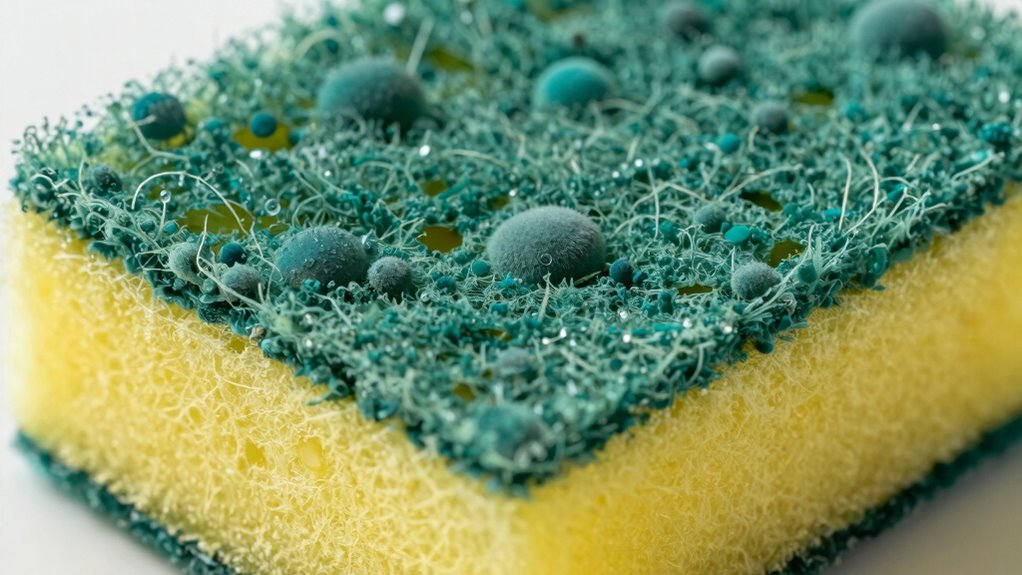
Bacteria thrive in your kitchen sponge because it provides the perfect moist, warm environment for them to grow. They often form bacterial biofilms—protective communities that cling to sponge surfaces—making cleaning more difficult. These biofilms shield bacteria from disinfectants and help them multiply rapidly. The sponge material durability also plays a role; softer sponges may break down faster, creating tiny crevices where bacteria can hide and thrive. Over time, bacteria can multiply to dangerous levels, increasing the risk of cross-contamination and foodborne illnesses. Regularly replacing your sponge and understanding biofilm formation can help prevent bacterial buildup. Additionally, understanding Free Floating bacteria can shed light on how some bacteria are more easily dislodged and eliminated through proper cleaning techniques. Recognizing bacterial persistence in sponges emphasizes the importance of thorough sanitation and timely replacement. Understanding how bacteria grow in your sponge highlights the importance of regular replacement and proper cleaning, especially considering the environmental conditions that promote bacterial growth. Keeping bacteria at bay isn’t just about hygiene—it’s about protecting your health every time you clean your dishes.
The Best Ways to Clean and Disinfect Your Kitchen Sponge

To keep your sponge clean and safe, you need effective disinfection methods that kill bacteria. Regular maintenance, like microwaving or soaking in bleach, helps prevent germs from spreading. Antimicrobial properties in certain sponges can further reduce microbial growth, making your cleaning routine more effective. Using sponges with advanced filtration systems can also help trap bacteria and prevent their proliferation on your kitchen surfaces. Incorporating hygienic practices such as air drying your sponge between uses can reduce moisture that promotes bacterial growth. Additionally, choosing proper cleaning techniques and replacing your sponge regularly and selecting antimicrobial varieties can further enhance your kitchen hygiene safety practices.
Effective Disinfection Methods
Keeping your kitchen sponge clean is essential for preventing germs from spreading in your home. To effectively disinfect, focus on methods that target bacteria on the sponge material and consider antibacterial coatings. Here are three proven techniques:
- Microwave Steam: Wet your sponge and microwave it on high for 1-2 minutes. The heat kills most germs without altering the sponge’s material.
- Bleach Solution: Soak your sponge in a mixture of ¾ cup bleach per gallon of water for 5 minutes, then rinse thoroughly.
- Vinegar Soak: Submerge your sponge in white vinegar for 5-10 minutes to disrupt bacterial growth and improve hygiene.
These methods enhance the sponge’s antibacterial properties, making your cleaning routine more effective.
Regular Sponge Maintenance
Wondering how to keep your kitchen sponge fresh and germ-free? Regular sponge maintenance is key. Understanding sponge composition helps you choose effective cleaning methods—most sponges are made of cellulose, synthetic fibers, or scrubbing pads, which can harbor bacteria if not cleaned properly. To boost germ resistance, rinse your sponge thoroughly after each use and squeeze out excess water. Disinfect it weekly using microwave heating, boiling, or soaking in vinegar or bleach solutions. Allow it to dry completely between uses to prevent mold growth. Replacing your sponge every few weeks also minimizes bacteria buildup. Proper care transforms your sponge from a germ hotspot into a hygienic cleaning tool. Effective cleaning methods are essential for maintaining a safe and bacteria-free kitchen environment, especially when you understand the material composition of your sponge.
Drying and Storing Your Sponge to Keep Germs at Bay

After washing your sponge, it’s essential to dry and store it properly to prevent germs from thriving. Proper storage and air drying are key. Here are three tips to keep your sponge germ-free:
Dry and store your sponge properly to prevent germs and extend its lifespan.
- Air dry thoroughly: Squeeze out excess water and let it sit in a well-ventilated area to dry completely. Ensuring your sponge is free of residual soap or debris also helps reduce bacterial presence bacterial growth. Regularly flipping the sponge during drying can also improve airflow and drying efficiency. Using a ventilated storage area can further enhance drying and inhibit bacteria. Incorporating proper ventilation in your storage area can significantly decrease humidity and bacterial development.
- Use proper storage: Store your sponge in a dry, open container or on a rack to promote airflow and prevent moisture buildup. Incorporating effective storage solutions can further inhibit bacterial development.
- Avoid damp environments: Keep the sponge away from sinks or enclosed spaces where it can stay damp longer, encouraging bacterial growth. Regularly replacing your sponge is also recommended to maintain hygiene preventing bacterial proliferation.
Microwave or Dishwasher: Which Sanitizing Method Works Best?

When it comes to sanitizing your sponge, you’ll want to compare how effective a microwave is versus a dishwasher. Microwaving can quickly kill germs with high heat, but a dishwasher’s cleaning cycle might remove more stubborn bacteria. Let’s explore which method truly keeps your sponge the cleanest. Additionally, using an air purifier in your kitchen can help reduce airborne bacteria and allergens, creating a healthier environment overall. Understanding kitchen hygiene practices can further enhance your sanitation efforts and prevent the spread of germs. Regularly replacing sponges and proper storage are also essential for maintaining optimal cleanliness, as some sponges may harbor bacteria despite cleaning efforts. Incorporating hygienic practices can significantly reduce the risk of bacterial buildup and ensure a safer kitchen.
Microwave Sanitization Efficiency
Microwave sanitization often proves to be quicker and more convenient than using a dishwasher, but its effectiveness depends on proper technique. To maximize efficiency, consider these key points:
- Ensure your sponge is microwave-safe and free of antibacterial coatings that might heat unevenly.
- Use a sponge material comparison: natural cellulose sponges heat more evenly than synthetic ones, improving sanitization.
- Cover the sponge with a paper towel to prevent splattering and ensure thorough heat distribution.
Microwaves kill bacteria effectively when the sponge is heated adequately, but uneven heating can leave germs behind. Proper technique guarantees the highest sanitization efficiency, making your sponge safer to use. Always check your sponge’s material and remove any antibacterial coatings before microwaving for the best results.
Dishwasher Cleaning Effectiveness
While both dishwashers and microwaves can sanitize sponges effectively, dishwashers often provide a more thorough and consistent cleaning process. Regularly running your sponge through a dishwasher helps break the bacteria growth cycle and maintains a healthier kitchen. Establishing a cleaning schedule ensures you don’t forget to sanitize, reducing the risk of germs spreading. The table below highlights key differences:
| Method | Bacteria Removal | Convenience | Effectiveness Over Time |
|---|---|---|---|
| Dishwasher | High | Moderate | Consistent |
| Microwave | Moderate | High | Variable |
| Hand Washing | Low | High | Inconsistent |
Choosing the right method depends on your routine, but dishwashers generally deliver superior long-term cleanliness.
Choosing the Most Hygienic Sponge Materials
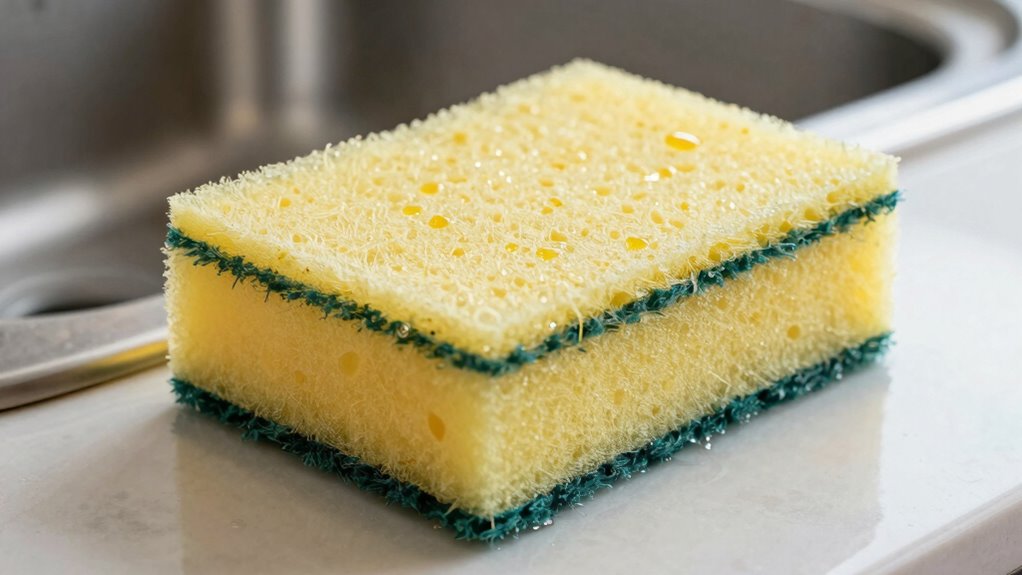
Choosing the most hygienic sponge materials is essential for preventing bacteria buildup and ensuring your kitchen stays clean. When selecting a sponge, consider these key factors:
- Material type – Natural cellulose sponges dry quickly and resist bacteria better than synthetic ones.
- Sponge durability – Durable materials last longer, reducing the need for frequent replacements and minimizing germ accumulation.
- Cleaning ease – Some materials are easier to sanitize, making maintenance simpler and more effective.
Your goal should be to pick a sponge that balances material selection with durability, so it withstands regular use without harboring bacteria. Avoid porous or easily torn options that trap grime. The right material choice helps keep your sponge hygienic and your kitchen cleaner.
Are There Safer Alternatives to Traditional Sponges?

If you’re concerned about bacteria buildup and want safer options, several alternatives to traditional sponges can help keep your kitchen cleaner. Biodegradable alternatives, such as bamboo scrubbers or plant-based cellulose sponges, break down naturally and reduce environmental impact. Additionally, look for cleaning tools made from antimicrobial materials, which inhibit bacterial growth on their surfaces. These materials, often infused with silver ions or other agents, can markedly reduce germs without frequent replacement. Silicone scrubbers are another safe choice; they’re durable, non-porous, and easy to sanitize. Switching to these safer alternatives minimizes the risk of harboring harmful bacteria, making your kitchen a healthier space. Choosing the right materials helps you maintain cleanliness without sacrificing safety or sustainability.
How Often Should You Disinfect Your Kitchen Sponge?

Ever wondered how often you should disinfect your kitchen sponge to keep bacteria at bay? The answer depends on your sponge’s sponge lifespan and whether it has antibacterial coatings. To minimize germs, disinfect your sponge:
- After 1-2 uses if you’re cleaning raw meat or poultry
- Weekly for routine maintenance, especially if it shows signs of wear
- Immediately if it develops a foul smell or visible mold
Disinfecting helps extend your sponge’s lifespan and keeps bacteria from multiplying. Many sponges now feature antibacterial coatings, but these aren’t foolproof, so regular disinfection remains essential. Remember, the more often you disinfect, the lower the risk of spreading germs. Keeping a clean sponge is a simple yet effective way to maintain a healthier kitchen environment.
Developing a Routine for a Germ-Free Kitchen Sponge

Creating a consistent routine for your kitchen sponge is essential to keep bacteria and germs at bay. Your sponge’s material—whether cellulose, microfiber, or synthetic—affects how often you should clean it. For example, cellulose sponges need more frequent cleaning than synthetic ones. Establish a cleaning frequency, such as microwaving your sponge daily or replacing it weekly, to prevent germ buildup. Use the table below to choose your sponge material and recommended cleaning routine:
| Sponge Material | Cleaning Frequency |
|---|---|
| Cellulose | Microwave daily or replace weekly |
| Microfiber | Rinse after each use, replace monthly |
| Synthetic | Dishwasher or soak weekly |
| Natural | Air dry after use, replace biweekly |
Sticking to this routine keeps your sponge hygienic and your kitchen safer.
Frequently Asked Questions
Can I Use Natural Remedies to Disinfect My Kitchen Sponge?
Yes, you can use natural disinfectants to clean your kitchen sponge and extend its longevity. Soak the sponge in a mixture of white vinegar or hydrogen peroxide for about five minutes to kill germs effectively. Lemon juice also works as a natural disinfectant. These remedies help eliminate bacteria, keeping your sponge cleaner and safer to use longer. Just remember to rinse thoroughly and let it dry completely between uses.
What Are the Environmental Impacts of Replacing Sponges Frequently?
Replacing sponges frequently can reduce bacteria buildup but impacts the environment. Opt for biodegradable options to minimize waste and guarantee they break down naturally. Check if your local recycling programs accept sponge materials, and recycle them properly when they reach the end of their life. This way, you lessen the negative environmental impact, promote sustainability, and help keep your home hygienic without contributing to landfill overflow.
How Does Sponge Material Affect Bacterial Growth Rates?
The material of your sponge directly affects bacterial growth rates through sponge porosity and bacterial adhesion. Higher porosity allows more moisture and nutrients to penetrate, promoting faster bacterial growth. Additionally, surfaces that facilitate bacterial adhesion provide a better environment for bacteria to cling and multiply. Choosing sponges with less porosity or antimicrobial properties can slow bacterial growth, keeping your sponge cleaner and reducing the risk of germs spreading.
Are Synthetic Sponges Safer Than Natural Ones?
Imagine a sponge sitting quietly in your sink—synthetic sponges are generally safer because they’re more durable and less prone to harboring bacteria than natural ones. While biodegradable options are eco-friendly, they may break down faster and require more frequent replacement. Synthetic sponges resist wear and last longer, reducing the risk of bacteria buildup. So, if safety and longevity matter, synthetic sponges tend to be the better choice for your kitchen.
What Are the Best Storage Conditions to Prevent Germ Buildup?
To prevent germ buildup, you should focus on moisture control and storage hygiene. After each use, squeeze out excess water and let your sponge air dry completely in a well-ventilated area. Store it in a dry, open container rather than a closed one to reduce humidity. Regularly disinfect your sponge by microwaving it damp for 1-2 minutes or replacing it frequently to maintain ideal hygiene and prevent bacteria growth.
Conclusion
Think of your sponge as the heart of your kitchen’s cleanliness—if you neglect it, germs will thrive like weeds. Regularly replacing, disinfecting, and drying your sponge keeps bacteria at bay and guarantees a healthier space for your family. With consistent care, your sponge can stay as safe as a well-guarded fortress. Remember, a clean sponge is the foundation of a truly hygienic kitchen—don’t let it become a science experiment.