To remove a stain without making it permanent, act quickly and identify the type of stain and fabric first. Use gentle cleaning methods like mild detergent or natural options, and always test on a hidden spot first. Blot, rinse with cold water, and avoid rubbing to prevent spreading. For stubborn or delicate stains, consider professional help. Continuing with proper steps can save your fabric—discover more tips below.
Key Takeaways
- Act quickly to prevent the stain from setting into the fibers.
- Test cleaning solutions on hidden fabric areas before applying broadly.
- Use gentle blotting techniques rather than rubbing to avoid spreading or embedding the stain.
- Apply suitable mild cleaning agents specific to the fabric and stain type.
- Rinse and blot thoroughly to remove residue, stopping as soon as the stain lifts.
Why Some Stains Become Permanent If You Wait Too Long

If you wait too long to address a stain, it can set and become permanent because the fibers in the fabric absorb the substance. Over time, chemical reactions occur within the fibers, causing the stain color to deepen or change, making it harder to remove. When a stain sits, the fabric’s fibers trap the liquid or substance, allowing the stain to bond more strongly and resist cleaning efforts. Additionally, fabric properties can influence how quickly a stain sets, emphasizing the importance of prompt action. The longer you delay, the more the stain’s chemical composition stabilizes, embedding itself into the material. This process reduces the likelihood of successful removal and often results in a visible, lasting mark. Recognizing how these chemical reactions work highlights the importance of acting swiftly to prevent stains from becoming permanent. Regular cleaning and understanding stain removal techniques can significantly improve your chances of success. Using appropriate cleaning agents promptly can also help break down the chemical bonds that cause stains to set. Moreover, understanding the role of temperature can help optimize stain removal efforts, as heat can sometimes set certain stains further.
Act Quickly to Prevent Stains From Setting

Acting quickly is essential to prevent stains from setting and becoming much harder to remove. The first step is stain recognition—identifying the type of stain, whether it’s from wine, grease, or ink. This helps you choose the right removal method. Next, perform fabric analysis to understand the material you’re treating; some fabrics are delicate and require gentle handling, while others can withstand more aggressive cleaning. The moment you notice a stain, blot (don’t rub) with a clean cloth or paper towel to lift excess liquid or residue. The faster you respond, the less time the stain has to penetrate fibers and set. Quick action minimizes bonding, making removal easier and reducing the risk of permanent damage to your fabric. Additionally, awareness of cloud services and their vulnerabilities emphasizes the importance of acting swiftly to prevent permanent damage in various situations. Using essential oils like lavender or tea tree might also help pre-treat certain types of stains, especially those caused by organic materials, before laundering. Being familiar with natural cleaning agents can further enhance your stain removal toolkit and promote eco-friendly practices. Moreover, understanding the barriers to creativity can inspire innovative approaches to stain removal by encouraging flexible thinking and problem-solving.
Identify Your Stain and Fabric Types

How can you effectively remove a stain if you don’t know what caused it or what fabric you’re dealing with? Start by checking the fabric labels on your clothing—they provide essential cleaning instructions and can prevent damage. Knowing the fabric type helps determine which stain chemicals are safe to use, as some materials like silk or wool require gentle treatment, while cotton can handle stronger solutions. Identifying the stain source is also key; for example, grease stains need different treatment than wine or ink. Take a moment to analyze the stain’s color, texture, and origin, then match it with suitable cleaning methods. Properly identifying both the stain and fabric ensures you choose the right approach, reducing the risk of permanent damage.
Start With Gentle Cleaning Methods First

Starting with gentle cleaning methods is essential because aggressive treatments can set the stage for permanent damage. Begin by using gentle detergents or natural remedies like diluted white vinegar or baking soda. These options are effective at breaking down stains without harming the fabric. Always start with the mildest approach, applying a small amount of your chosen solution to the stain and letting it sit for a few minutes. Gently blot or dab—avoid rubbing, which can spread the stain or embed it deeper. Patience is key; often, these mild methods are enough to lift the stain without risking permanent marks. Additionally, understanding fabric care guidelines can help you choose the safest cleaning method for your specific material. Learning about stain removal techniques can further enhance your chances of success without causing damage. Using proper stain treatment methods and tools can make a significant difference in preserving your fabric’s integrity. Employing preventive measures can also help avoid future stains and maintain your fabric’s appearance. Being aware of chemical interactions can help you choose the most compatible cleaning agents for your fabric type. If the stain persists, you can escalate to stronger treatments, but always prioritize gentle options first to protect your fabric.
Always Test Your Solution on a Hidden Spot First
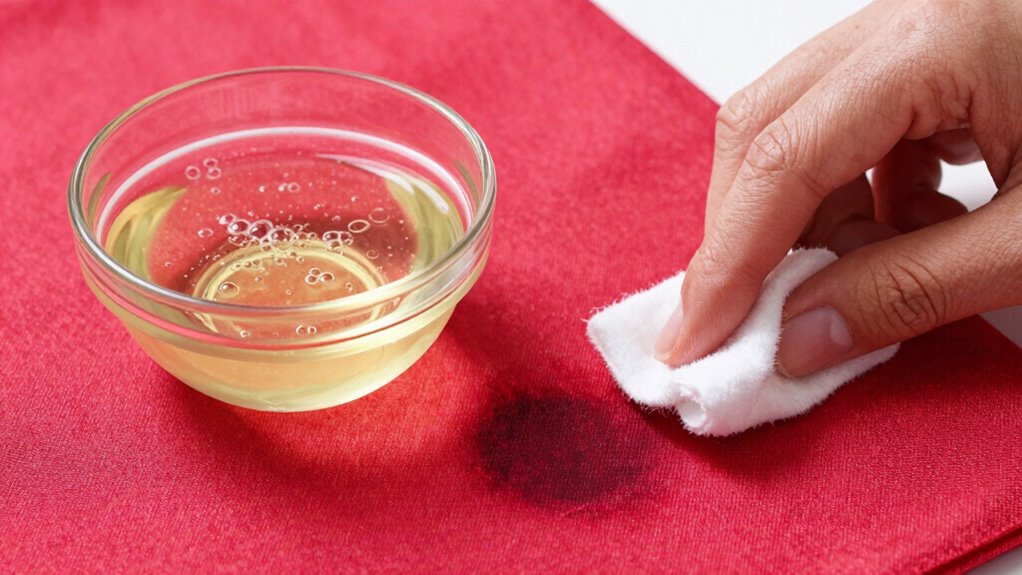
Before applying any cleaning solution directly to the stain, it’s essential to test it on a hidden area of the fabric first. This spot test helps prevent unwanted damage and boosts your stain awareness. Here’s why it matters:
- Protects your fabric from color fading or discoloration.
- Ensures the solution won’t cause fabric weakening or holes.
- Saves you time and frustration by avoiding worsening the stain.
- Considering the vacuum features to consider can also help ensure your cleaning approach is effective and safe.
Use Proper Techniques to Remove the Stain Effectively

Use proper techniques, like gentle blotting and appropriate tools, to remove the stain effectively without causing damage. Additionally, understanding the stain type can help determine the most effective removal method. Being aware of quality assurance principles can ensure your cleaning process is thorough and systematic, reducing the chance of residual marks. Implementing preventive measures can help avoid future stains and maintain your surfaces better.
Act Quickly and Carefully
When you notice a stain, responding promptly is crucial to prevent it from setting permanently. Acting quickly shows your commitment to stain prevention and proper fabric care, which preserves your belongings. To do this effectively, focus on these steps:
- Blot gently—avoid rubbing, which can spread the stain or damage fibers.
- Use the right cleaner—select a treatment suited for your fabric type and stain.
- Work from outside inward—this prevents the stain from spreading further.
Being careful and swift minimizes the risk of permanent damage. Remember, patience and proper technique are essential in stain removal. The faster you act, the better your chances of keeping your fabric looking its best without resorting to harsh treatments.
Test Before Applying Treatments
Always test a stain remover on a hidden or inconspicuous area of your fabric first, even if it’s specially formulated for your stain. Use a small test spot to see how the fabric reacts, verifying the treatment won’t cause discoloration or damage. Before applying any stain product, create a stain sample on a similar fabric or an unseen section of the garment. This step helps you gauge effectiveness and safety, preventing permanent damage. Remember, not all stains respond the same way to treatments, so testing minimizes risks. If the test spot shows no adverse effects, you can confidently proceed with cleaning. Taking these precautions ensures your stain removal process is effective without risking further harm to your fabric.
Use Proper Cleaning Techniques
Once you’ve confirmed that your stain remover is safe to use on your fabric, applying proper cleaning techniques guarantees the best chance of successful removal. Using proper techniques in stain removal minimizes damage and maximizes results. First, gently blot the stain—avoid rubbing, which can spread it or embed it deeper. Second, work from the outside of the stain inward to prevent spreading. Third, give the cleaning solution time to penetrate; let it sit briefly before blotting again. Remember, patience is key in stain removal. Additionally, understanding the importance of proper techniques can help you avoid common mistakes that lead to permanent staining. Being aware of cleaning appliance functions can also improve your overall stain removal strategy. Regular practice and visual and auditory cues can enhance your cleaning skills for better results. Moreover, familiarizing yourself with the types of stains and their specific removal methods can make your efforts more effective.
Rinse and Blot to Remove Residue Without Worsening

To effectively remove residue without making the stain worse, start by rinsing the affected area with cold water. This helps dilute the stain and loosen the particles. Use gentle blotting to absorb excess moisture, avoiding rubbing that could spread the stain or damage the fabric. Be patient and keep blotting until no more residue lifts. To highlight the importance of gentle blotting, consider this: proper cleaning techniques can further improve your chances of success and protect your fabric or surface from damage. Additionally, using appropriate cleaning tools can make the process more efficient and prevent accidental harm to delicate materials. Being mindful of safe cleaning practices ensures the longevity of your textiles and surfaces. For stubborn stains, applying a specialized cleaning solution designed for the specific fabric or surface can also enhance the effectiveness of your stain removal efforts.
Know When to Call in the Pros for Tough or Delicate Stains

If a stain seems severe or won’t come out easily, it’s time to think about calling in a professional. You should also evaluate whether your fabric can handle stronger cleaning methods without damage. Knowing these signs helps you avoid making the stain worse or harming your belongings.
Recognize Stain Severity
Knowing when a stain is beyond your DIY reach is essential to avoid making things worse. Recognizing stain severity helps you decide if professional help is needed. If the stain is:
- Deeply embedded or covers a large area, it’s likely severe enough to risk permanent damage.
- On delicate fabrics with high sensitivity, mishandling could ruin the material.
- Caused by substances like wine, ink, or grease, which tend to set quickly and stubbornly.
In these cases, attempting aggressive cleaning might worsen the stain or harm the fabric. When in doubt, accept that some stains require expert treatment. Properly evaluating stain severity saves your fabric’s integrity and prevents frustration. Always prioritize safety and fabric sensitivity over stubborn stains.
Assess Fabric Compatibility
When you identify that a stain might be too tough or risky for DIY treatment, evaluating your fabric’s compatibility becomes key. First, consider fiber sensitivity—delicate fabrics like silk or wool can be easily damaged by harsh cleaning agents or vigorous scrubbing. Next, assess dye stability; some fabrics may bleed or fade when exposed to certain stain removers. If you’re unsure about how your fabric will respond, it’s safer to call in the pros. Testing a small, inconspicuous area first helps determine whether the fabric can handle the treatment without discoloration or deterioration. Remember, understanding your fabric’s properties ensures you avoid making stains permanent or causing costly damage. When in doubt, professional cleaning offers the safest, most effective solution.
Tips to Prevent Future Stains From Becoming Permanent

To prevent stains from becoming permanent, it’s essential to act quickly and take proactive steps. Proper stain prevention and fabric care can save your clothes and furniture from lasting damage.
- Treat stains immediately—the faster you respond, the easier it is to remove them.
- Use the right cleaning agents—ensure they’re suitable for your fabric to avoid setting stains.
- Follow fabric care instructions—gentle washing and proper drying prevent fibers from absorbing stains deeper.
Common Mistakes That Make Stains Stick : and How to Avoid Them

Many common mistakes can cause stains to set deeper into fabrics, making them much harder to remove later. One mistake is rubbing the stain instead of blotting, which pushes the substance further into the fibers. Using the wrong stain removal tools, like harsh brushes or hot water, can also worsen the problem. Avoid delay; the longer you wait, the more likely the stain will set. Applying heat or aggressive scrubbing can lock the stain in place. To improve stain prevention, act quickly with appropriate tools such as clean cloths, cold water, and specialized stain removers. Being gentle and using suitable stain removal tools helps lift the stain without making it permanent. Recognizing these mistakes and avoiding them improves your chances of successful stain removal.
Frequently Asked Questions
Can Natural Remedies Effectively Remove All Types of Stains?
You can often use natural remedies for many stains, especially with a quick diy stain approach. However, they might not work on all types of stains, like stubborn or old ones. Commercial cleaners tend to be more effective for tough stains, but natural options are gentler and eco-friendly. It’s best to identify the stain and choose the appropriate method to avoid making it permanent.
How Do Different Fabric Weaves Affect Stain Removal?
You might think fabric weave pattern doesn’t matter, but it actually influences stain removal. Tightly woven fabrics, like satin or twill, resist absorption, making stains easier to lift without damage. Looser weaves, such as canvas or linen, trap more liquid and dirt, complicating cleaning. Understanding fabric texture helps you choose the right stain removal method—gentler for delicate weaves and more thorough for coarse ones—protecting your garment’s integrity.
Are There Eco-Friendly Stain Removal Options?
Yes, there are eco-friendly stain removal options you can try. You can use biodegradable detergents that break down naturally, reducing environmental impact. Additionally, plant-based solvents like vinegar or citrus extracts are effective at dissolving stains without harsh chemicals. These options are gentle on fabrics and safer for the planet. Just apply them directly to the stain, let sit, then wash as usual for eco-conscious stain removal.
What Are Some Common Household Items That Can Stain Furniture?
Think of household items like coffee, red wine, and tomato sauce as your mischievous friends, ready to leave their mark on your furniture. Common items like ink pens, makeup, and even certain cleaning chemicals can cause stains if you’re not careful. To prevent such mishaps, practice stain prevention and act quickly. Keep these items away from delicate surfaces, and always have a gentle stain removal method on hand to save your furniture.
How Does Age of a Stain Influence Removal Success?
As a stain ages, removal becomes more difficult because the stain’s fibers have absorbed the substance, making it harder to lift. Stain aging allows the stain to set deeper into the material, reducing your chances of successful removal. To improve your chances, act quickly, using appropriate cleaning methods before the stain becomes more ingrained. The sooner you address it, the easier it is to prevent permanent damage.
Conclusion
Remember, acting quickly is your best defense against permanent stains. Research shows that prompt treatment prevents fibers from setting the stain, making removal easier. Always test solutions first, and don’t be afraid to call in pros for tough spots. By staying proactive and cautious, you can keep your fabrics looking fresh. It’s a myth that all stains are permanent—timely care truly makes all the difference.