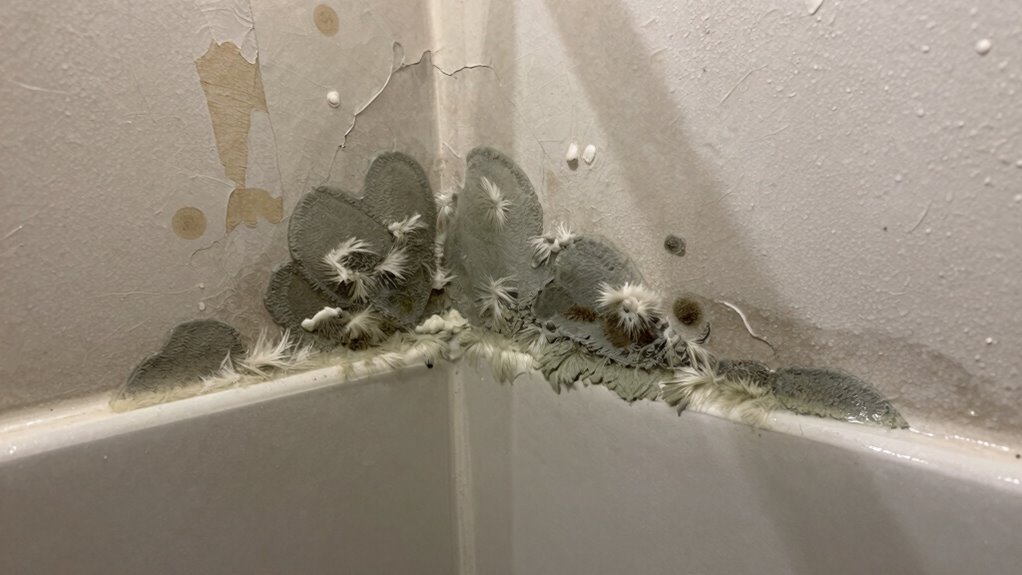

Mold and mildew keep coming back because underlying moisture issues, poor ventilation, and hidden leaks create the perfect environment for growth. Even after cleaning, if you don’t address excess humidity, condensation, or trapped moisture, mold spores will quickly reappear. Effective long-term control involves fixing leaks, reducing indoor humidity below 60%, improving airflow, and using mold-resistant products. To learn how to break this cycle and keep your home mold-free, keep exploring further.
Key Takeaways
- Persistent moisture sources like leaks or high humidity levels enable mold and mildew to reappear after cleaning.
- Poor ventilation traps humidity, creating ideal conditions for mold growth to return.
- Hidden moisture behind walls or under sinks often sustains mold, requiring thorough testing and repairs.
- Long-term prevention includes controlling indoor humidity below 60%, using mold-resistant paints, and maintaining proper airflow.
- Regular inspections, prompt leak repairs, and use of air purifiers help stop mold and mildew from recurring.
Why Does Mold Keep Coming Back After Cleaning?
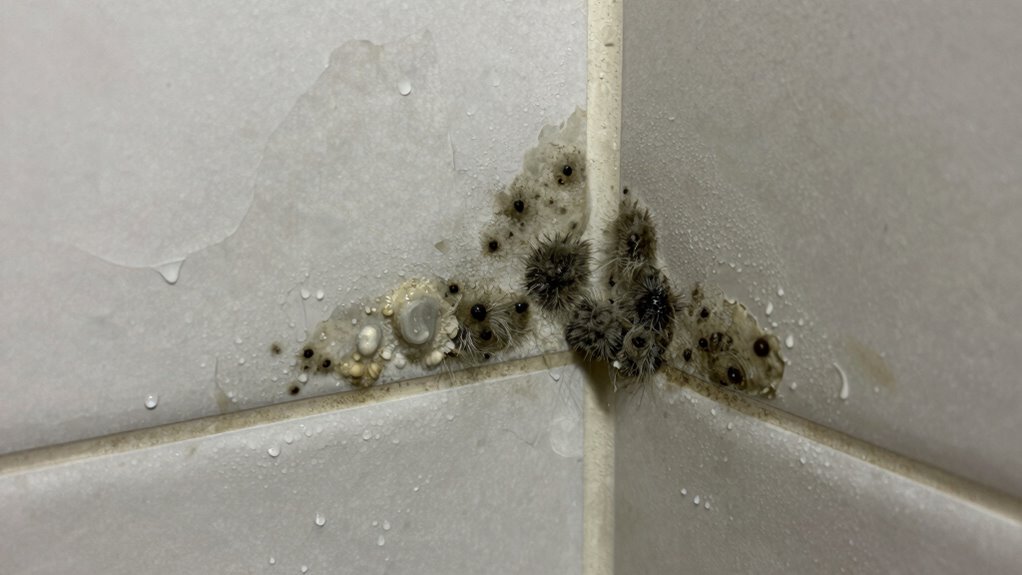
Even after you clean mold thoroughly, it often returns because the underlying moisture problem remains unresolved. Mold thrives in damp environments, so simply removing visible growth isn’t enough. Addressing air quality by using air purification systems that reduce airborne mold spores can further decrease the likelihood of recurrence. Additionally, applying mold resistant paint on walls and ceilings creates a barrier against moisture infiltration, making it harder for mold to re-establish. These measures address the root causes by controlling humidity and limiting mold’s ability to grow. For example, humidity levels should be monitored and maintained below 60% to prevent mold growth. Using dehumidifiers in problem areas can help sustain optimal moisture levels. Proper ventilation practices are also essential to reduce indoor humidity and prevent mold from returning. Regularly inspecting and maintaining building envelope integrity ensures that moisture does not seep through leaks or cracks, which is critical for long-term prevention. Remember, cleaning removes the current mold, but long-term prevention depends on moisture control and treatment options like air purification and mold resistant paint. Without tackling these underlying issues, mold is likely to come back repeatedly.
How Do Moisture Levels Fuel Mold and Mildew Growth?
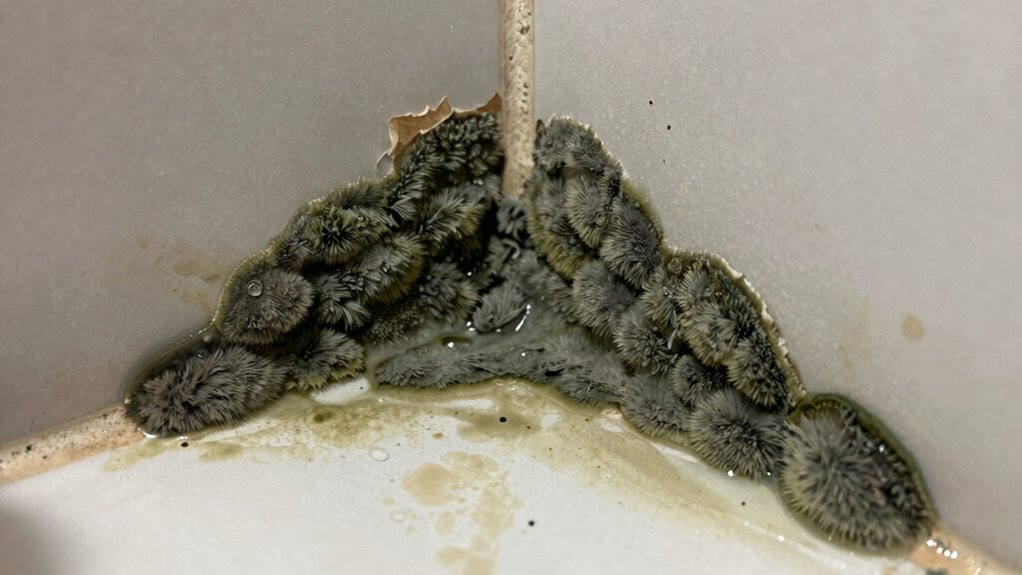
Moisture levels directly influence mold and mildew growth by providing the damp environment these fungi need to thrive. When moisture is high, mold spores settle and grow quickly, further degrading air quality. Implementing thorough testing processes can help identify hidden sources of moisture that contribute to mold proliferation. You can regulate this by managing humidity levels and fixing leaks promptly. Excess moisture creates ideal conditions for mold and mildew to spread, especially in areas like bathrooms, basements, or kitchens. Proper moisture control reduces the risk of persistent growth and improves indoor air quality. Keep humidity below 60%, use dehumidifiers, and ensure proper ventilation to prevent dampness. Additionally, understanding indoor air quality can help you detect and address mold issues early before they become severe. Regularly inspecting your environment for hidden moisture sources can further help prevent mold recurrence. Maintaining good ventilation practices is essential to keep indoor spaces dry and mold-free.
How Does Poor Ventilation Contribute to Persistent Mold?
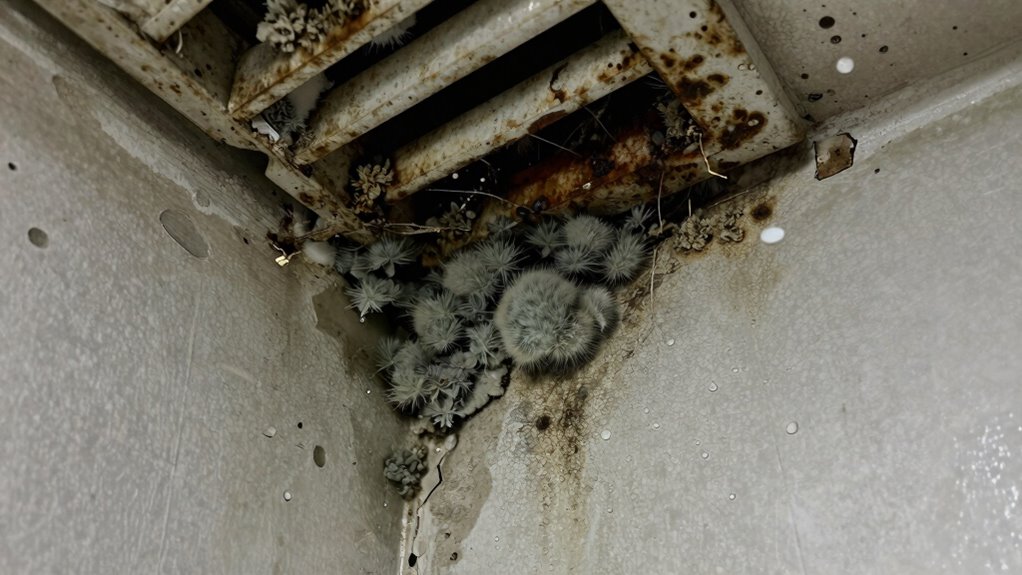
When your home lacks proper air circulation, moisture tends to stay trapped, creating ideal conditions for mold to thrive. Increased humidity levels make it harder for moisture to evaporate, feeding mold growth. Areas like corners and behind furniture often trap moisture, worsening the problem without good ventilation. Proper ventilation is essential for maintaining energy-efficient indoor environments and preventing mold recurrence. Additionally, air circulation helps to reduce humidity levels, making it less hospitable for mold spores to settle and grow. Ensuring proper filtration and airflow can significantly improve overall home health and inhibit mold development. Improving ventilation systems can also help remove excess moisture more effectively, further reducing mold risks.
Poor Air Circulation
Poor air circulation allows moisture to linger in indoor spaces, creating an ideal environment for mold to thrive. When air doesn’t move freely, humidity gets trapped, increasing the risk of mold growth on walls, ceilings, and other surfaces. Effective ventilation helps prevent moisture buildup and reduces mold’s chances to take hold. To combat this, improving ventilation is essential. You should focus on enhancing air circulation by opening windows, using fans, or installing exhaust vents. Good ventilation helps remove excess moisture and prevents it from settling, reducing mold’s chances to take hold. Without proper air circulation, moisture can accumulate unnoticed, fueling ongoing mold problems. Understanding heat distribution can also assist in managing indoor humidity levels that contribute to mold growth. Additionally, proper insulation can help maintain consistent temperatures and prevent condensation that encourages mold development. Implementing dehumidifiers can further control excess moisture, making the environment less hospitable for mold. Incorporating home security measures such as monitored alarms can also help protect your property from damage caused by persistent mold issues.
Increased Humidity Levels
Without proper ventilation, indoor spaces can quickly become humid, especially during activities like cooking, showering, or drying clothes. High humidity levels reduce air quality and make it easier for mold and mildew to thrive. Ensuring media literacy helps you recognize signs of poor ventilation and take appropriate action. To manage this, focus on:
- Improving airflow through vents or fans to enhance humidity control.
- Using dehumidifiers to remove excess moisture from the air.
- Opening windows regularly to allow fresh air in and reduce indoor humidity.
These steps help maintain ideal air quality, preventing mold spores from settling and growing. Poor ventilation traps moisture inside, leading to persistent mold issues.
Moisture Trapping Areas
Moisture tends to accumulate in specific areas of your home where ventilation is inadequate, creating ideal conditions for mold to thrive. Basement flooding, for example, introduces persistent moisture that’s hard to dry out completely, making it a prime mold trap.
Similarly, bathroom moisture from showers and baths often lingers if exhaust fans aren’t effective or missing altogether. Poor airflow prevents moisture from escaping, allowing it to settle on walls, ceilings, and floors.
Over time, these damp conditions promote mold growth, which can return even after cleaning. To break this cycle, guarantee proper ventilation in problem areas, fix leaks promptly, and use dehumidifiers when necessary.
Addressing these moisture trapping zones is key to preventing mold from becoming a recurring issue.
Why Do Hidden Leaks and Condensation Lead to Mold Rebound?
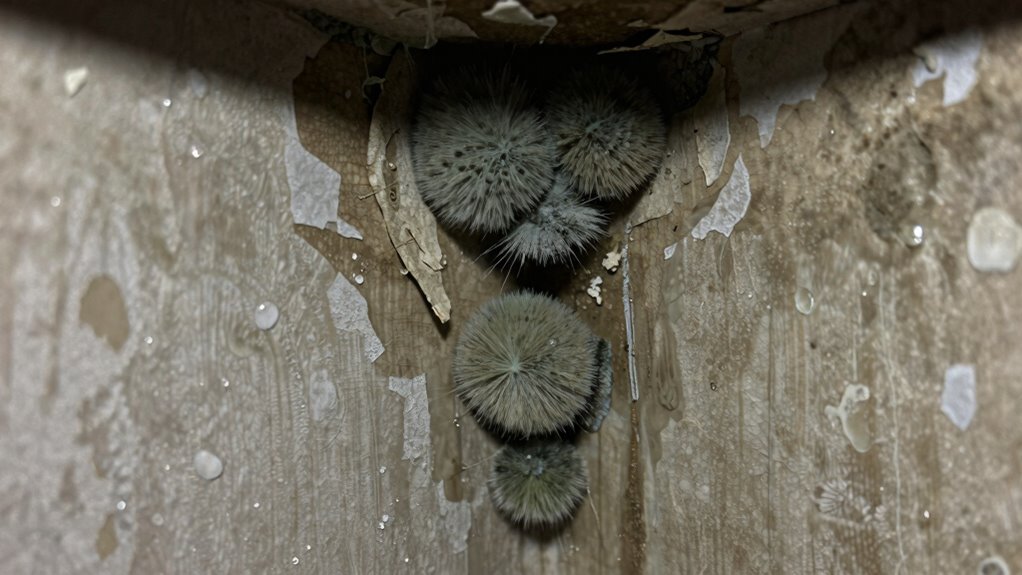
Hidden leaks and condensation create ideal conditions for mold to rebound because they often go unnoticed and keep surfaces damp over time. These issues provide persistent moisture that mold needs to thrive and reappear even after cleaning.
To prevent this, you should:
- Regularly inspect for hidden leaks behind walls or under sinks, where moisture can hide unnoticed.
- Address condensation issues by improving ventilation or using dehumidifiers in high-humidity areas.
- Fix any plumbing or roofing problems promptly to eliminate persistent moisture sources.
How to Clean and Remove Mold Effectively: Step-by-Step
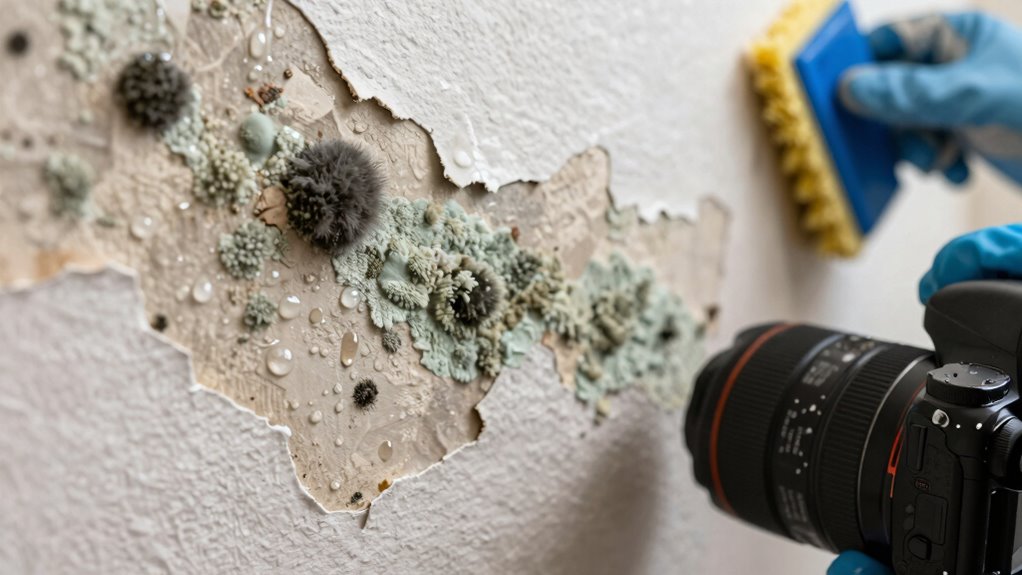
Cleaning and removing mold effectively requires a systematic approach to guarantee it doesn’t return. First, wear protective gear like gloves and a mask. Identify all affected areas and ventilate the space well.
Use appropriate cleaning solutions such as a mixture of soap and water, commercial mold removers, or a diluted bleach solution (1 cup bleach to 1 gallon water) for non-porous surfaces. Scrub thoroughly to remove mold and stains, ensuring you reach all crevices. Proper cleaning techniques are essential to prevent mold from reappearing. Incorporating air circulation improvements can further reduce moisture buildup that fosters mold growth.
For porous materials like drywall or carpet, consider discarding affected items to prevent regrowth. Rinse the area with clean water and dry completely. Ensuring proper air circulation after cleaning can help prevent mold from returning by reducing moisture buildup. Regularly checking and maintaining home ventilation can significantly reduce the likelihood of mold reoccurrence.
Preventing Mold Reappearance: Strategies That Work
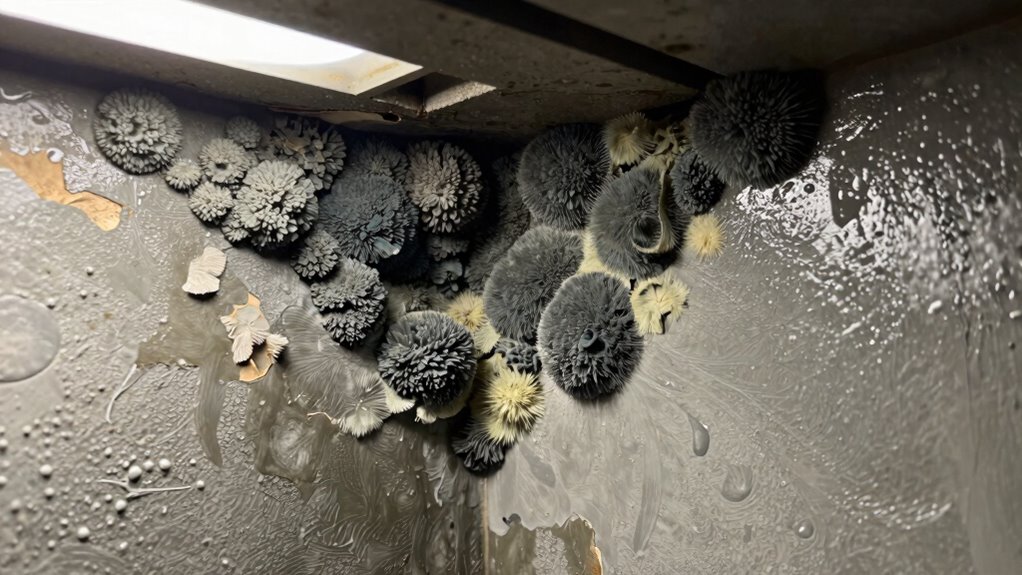
To prevent mold from coming back, it’s essential to control the environment and maintain proper ventilation. Using air purifiers helps remove airborne mold spores, reducing the chance of re-infestation. Applying mold-resistant paints on walls and ceilings creates a barrier that inhibits mold growth. Cherished traditions of proper ventilation strategies are vital, as they help circulate air and prevent moisture accumulation that promotes mold development. Additionally, incorporating moisture control methods such as vapor barriers and proper drainage can further reduce the risk of mold recurrence. Implementing smart home automation systems can also monitor humidity and moisture levels in real time, providing proactive alerts and adjustments to maintain optimal conditions.
Which Home Products Help Keep Mold Away Long-Term?
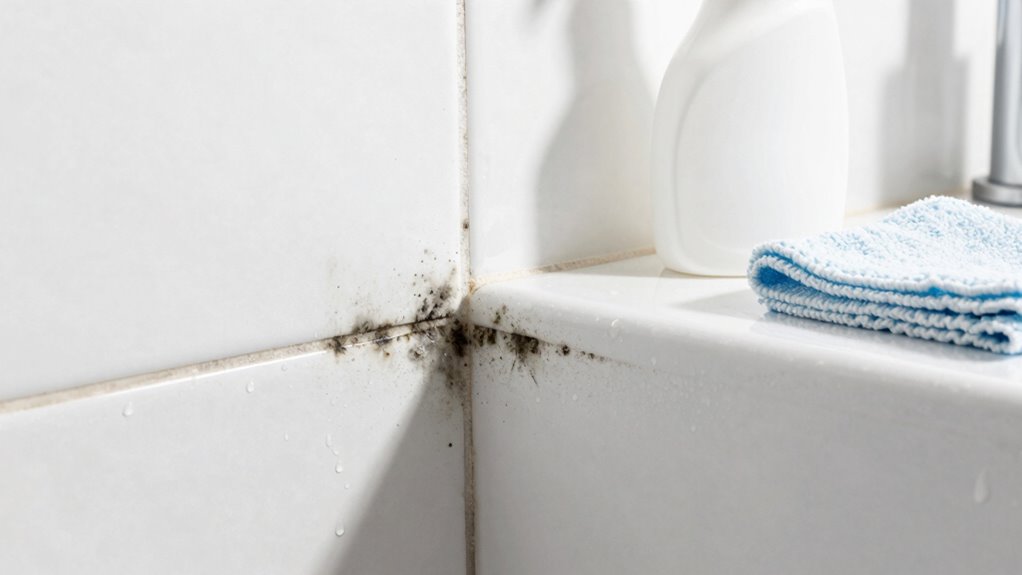
Using the right home products can considerably reduce the risk of mold returning over time. Air purifiers with HEPA filters help remove mold spores from the air, preventing them from settling and growing. Choose models designed to target mold and allergens for best results.
Additionally, applying mold-resistant paints on walls and ceilings creates a barrier that inhibits mold growth, especially in high-humidity areas like bathrooms and kitchens. These paints contain antimicrobial agents that keep mold at bay longer than standard paints.
Combining air purifiers with mold-resistant paints offers a proactive approach to maintaining a healthier home environment. Regular cleaning and proper ventilation further support these products’ effectiveness, helping you keep mold away long-term and protect your space from recurring issues.
When Should You Call Professionals for Severe Mold Problems?
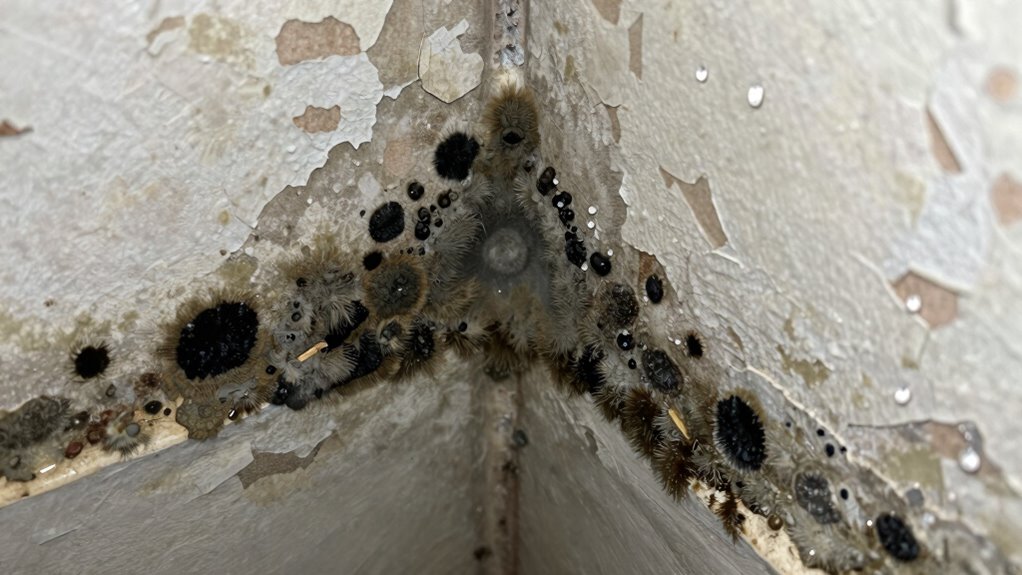
If you notice persistent mold signs or find it hard to eliminate mold despite cleaning efforts, it’s time to call in professionals.
Large contamination areas, especially those over ten square feet, also require expert intervention.
Ignoring these signs can lead to health issues and more costly repairs down the line.
Persistent Mold Signs
Persistent mold signs often indicate a serious problem that regular cleaning can’t fix. If you notice ongoing issues, it’s time to contemplate professional help. Here are key signs:
- You see visible mold colonies that keep coming back despite cleaning efforts.
- You notice a musty odor that lingers, suggesting airborne spores are spreading.
- You experience recurring allergy or respiratory symptoms, even after cleaning.
These signs point to a deeper problem, often involving hidden mold growth and airborne spores that spread mold beyond visible areas.
If mold persists despite your efforts, it’s likely a sign of an extensive contamination issue. Calling professionals ensures proper removal, preventing mold from returning and safeguarding your health.
Don’t ignore persistent signs—address them before they worsen.
Extensive Contamination Areas
When mold signs keep reappearing despite your cleaning efforts, it’s a clear signal that the contamination has spread beyond surface areas. You might notice persistent odors, discoloration, or health issues. At this stage, DIY remedies and mold resistant paints won’t cut it. Severe mold requires professional intervention. Imagine a situation like this:
| Surface Type | Extent of Damage | Recommended Action |
|---|---|---|
| Wall behind furniture | Deep-seated mold, visible growth | Call professionals immediately |
| Air ducts | Mold spores circulating | Seek expert cleaning and inspection |
| Hidden areas (attics, basements) | Widespread mold presence | Professional removal essential |
Ignoring extensive contamination risks health and structural damage. When in doubt, call in mold remediation specialists to ensure thorough removal and safe living conditions.
Tips to Maintain a Mold-Free Home Environment
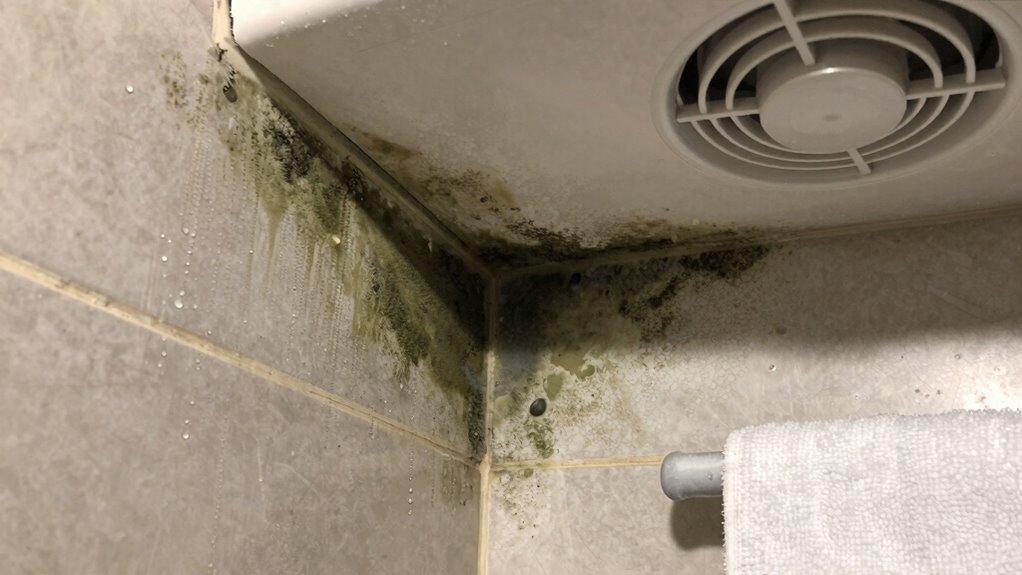
Keeping your home mold-free requires consistent effort and good habits. Regularly use air purifiers to filter out mold spores and improve indoor air quality. Applying mold-resistant paints on walls in high-humidity areas creates a protective barrier.
Additionally, follow these tips:
- Keep humidity below 60% using dehumidifiers or ventilation fans.
- Fix leaks promptly and dry out affected areas immediately.
- Clean surfaces regularly with mold-killing solutions, especially in bathrooms and kitchens.
Frequently Asked Questions
Can Certain Household Items Promote Mold Growth Even After Cleaning?
Yes, certain household items can promote mold growth even after cleaning. Cleaning products that aren’t mold-resistant may leave residues that encourage mold to return.
Household clutter, like fabric and paper, traps moisture and provides a perfect environment for mold to thrive.
To prevent this, use mold-inhibiting cleaning agents and keep your space organized and dry, reducing moisture and limiting mold’s ability to grow back.
Are Some Types of Mold More Likely to Return Than Others?
You might think all mold types are equally persistent, but some are more resilient due to their fungal resistance. Certain molds, like black mold or Aspergillus, are known for higher resilience, making them more likely to return after cleaning.
Their ability to withstand environmental changes and cleaning efforts means they can reappear quickly if conditions remain damp or poorly ventilated. Understanding mold resilience helps you target the right removal strategies.
How Does Climate Affect Mold Recurrence in Homes?
Climate directly impacts mold recurrence in your home by affecting humidity levels and ventilation effectiveness.
In humid climates, high humidity promotes mold growth, making it more likely to return.
Poor ventilation traps moisture, creating ideal conditions for mold to thrive again.
To prevent this, you should use dehumidifiers, ensure proper airflow, and keep humidity levels below 60%.
Regularly inspecting and maintaining your home’s ventilation helps control mold recurrence regardless of climate.
Can Mold Spores in the Air Cause Recurring Growth?
Did you know that airborne spores can travel up to 12 miles? Yes, mold spores in the air can cause recurring growth because they disperse easily through the air, settling in damp areas.
When spores land in favorable conditions, they germinate and form new mold colonies. To prevent this, you need good ventilation and moisture control, ensuring spores don’t settle and grow back.
What Are the Health Risks of Persistent Mold Exposure?
Persistent mold exposure can seriously affect your health. It may cause immune suppression, making you more vulnerable to infections.
You could also develop respiratory issues like coughing, wheezing, or asthma attacks. If you’re exposed regularly, these symptoms might worsen over time.
To protect yourself, eliminate mold growth promptly and improve ventilation. Taking these steps helps reduce health risks associated with ongoing mold exposure and keeps your respiratory system healthier.
Conclusion
So, next time mold creeps back, remember—your home’s just trying to keep its secret society alive. Cleaning alone isn’t enough; you’ve got to outsmart those sneaky spores by controlling moisture, fixing leaks, and giving ventilation a boost. Think of it as a game—win by playing smart. After all, mold’s not just a nuisance, it’s a tiny rebel refusing to accept your authority. Stay vigilant, or you’ll be the unwitting host for its comeback party.