
To understand water testing basics, you should focus on key parameters like hardness and chlorine levels. Hardness, caused by calcium and magnesium, affects taste and appliance lifespan, so measuring it helps determine if treatment is needed. Chlorine testing reveals if disinfection levels are safe and if additional filtration is necessary. Other important indicators include pH and contaminants. Exploring these tests helps you guarantee your water is safe, tastes good, and stays in top condition—more details are just ahead.
Key Takeaways
- Water testing identifies mineral content like calcium and magnesium to determine hardness levels.
- Chlorine testing ensures safe disinfection levels and improves water taste by monitoring residual chlorine.
- Measuring parameters such as pH, bacteria, nitrates, and contaminants provides a comprehensive water quality profile.
- Selecting appropriate testing equipment (test strips or digital meters) depends on accuracy needs and budget.
- Regular testing helps maintain water safety, appliance efficiency, and informs necessary treatment or filtration.
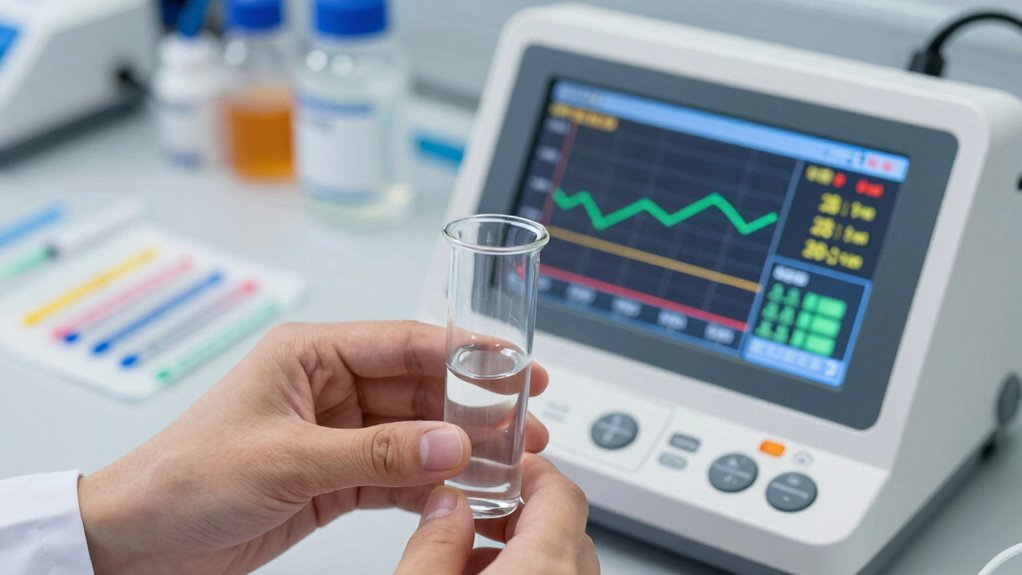
Have you ever wondered how you can guarantee your water is safe to drink or use? Ensuring water quality starts with understanding what to measure and how to do it effectively. One of the key aspects to consider is water mineral content, which includes elements like calcium, magnesium, and other dissolved minerals. These minerals influence water hardness, affect taste, and can impact appliances over time. To assess this, you need the right testing equipment types, which vary from simple test strips to sophisticated digital meters. Test strips are affordable and easy to use, providing quick results for hardness and other parameters, while digital meters offer more precise measurements, especially for specific minerals or contaminants. Choosing the right equipment depends on your needs, budget, and the level of detail you require.
Understanding water mineral content helps ensure safe, good-tasting water through appropriate testing equipment choices.
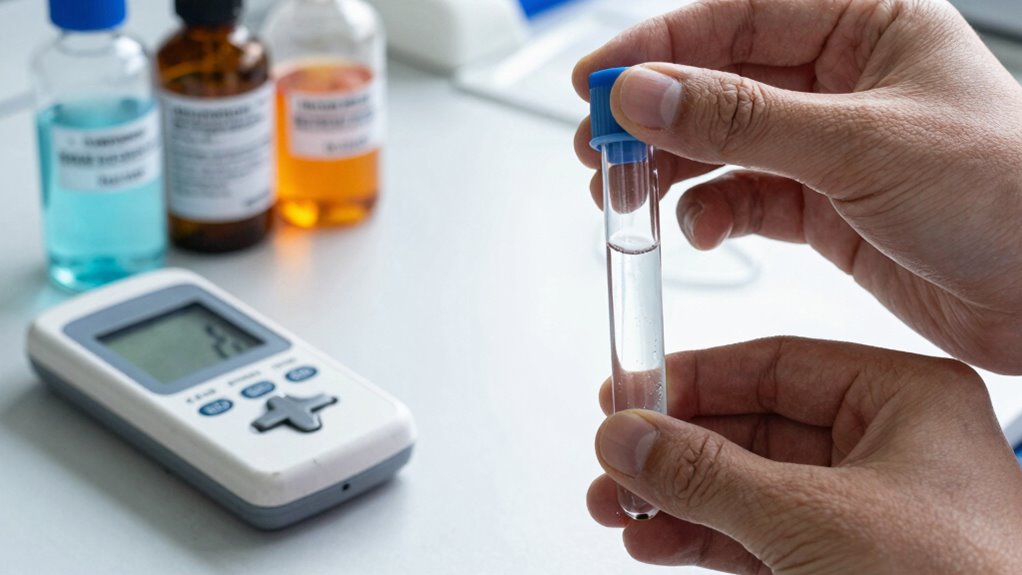
When testing for water mineral content, focus on hardness, which is primarily caused by calcium and magnesium ions. High hardness can cause scale buildup in pipes and appliances and may affect water’s taste. To measure hardness, either use test kits that change color based on mineral levels or digital testing devices that give a numerical readout. Regular testing helps you determine if your water needs treatment or if your current system is working properly. Keep in mind that the accuracy of your readings largely depends on the quality of your testing equipment. Proper calibration and following manufacturer instructions are essential to obtain reliable results.
Beyond mineral content, testing for other water quality indicators like chlorine levels is equally important. Chlorine is added in municipal water supplies to disinfect and kill harmful microorganisms. However, excess chlorine can cause unpleasant taste and odors, and in some cases, health concerns. Testing equipment types for chlorine range from test strips to digital meters, with the latter providing more exact measurements. Knowing your chlorine levels helps you decide if additional filtration or treatment is necessary to improve taste and safety.
In addition to minerals and chlorine, consider testing for pH, bacteria, nitrates, and other contaminants depending on your water source. Each parameter requires specific testing equipment types designed for accuracy and ease of use. For instance, bacterial testing often involves laboratory analysis, but there are home test kits available for preliminary checks. For comprehensive water testing, combining different equipment types can give you a complete picture of your water quality. This knowledge allows you to take appropriate measures, whether that’s installing filters, softeners, or other treatment systems to ensure your water remains safe and pleasant to use. Additionally, understanding your water’s water hardness can help you select the proper appliances and treatment methods to prevent damage and maintain efficiency.
Top picks for "water test basic"
Open Amazon search results for this keyword.
As an affiliate, we earn on qualifying purchases.
Frequently Asked Questions
How Often Should I Test My Water Quality?
You should test your water quality at least once every three to six months to guarantee safety and proper maintenance. Seasonal testing is especially important if you notice changes in taste, smell, or clarity. Regular water testing frequency helps catch issues early, such as high chlorine levels or hardness, so you can take corrective actions promptly. Stay proactive by scheduling tests periodically, adjusting for seasonal variations and your specific water usage needs.
What Is the Safest Way to Interpret Water Test Results?
Think of water test results as a treasure map guiding your water safety journey. To interpret them safely, trust accurate tests and understand their limits. Always compare your results with local safety standards, and if you’re unsure, consult a professional for clarity. Remember, precise test accuracy guarantees you make informed decisions, keeping your water clean and safe for everyone. Your vigilance safeguards your health, turning data into a clear path forward.
Can Water Testing Prevent Health Issues?
Yes, water testing can prevent health issues by identifying contaminant sources that cause waterborne illnesses. When you test your water regularly, you catch harmful bacteria, chemicals, or other pollutants early, reducing the risk of illness. By understanding the levels of chlorine, hardness, and other factors, you take action to improve water safety, protecting yourself and your family from potential health hazards caused by unsafe drinking water.
Are Home Testing Kits as Reliable as Lab Tests?
Home testing kits can be useful for quick, DIY testing, but they aren’t as reliable as professional analysis. While kits help you identify potential issues, lab tests provide more accurate, thorough results. If you’re concerned about water quality, it’s best to use DIY testing for initial checks and then get a professional analysis for confirmation and detailed insights. This approach ensures you protect your health effectively.
How Do Local Regulations Impact Water Testing Requirements?
Local regulations directly influence your water testing requirements by setting regulatory standards you must meet. You need to follow compliance procedures to guarantee your water quality aligns with these standards, which often specify testing frequency, parameters like chlorine and hardness, and reporting protocols. Staying informed about local regulations helps you avoid penalties, protects public health, and ensures your water supply remains safe and compliant with legal requirements.
Conclusion
Think of your water as a story waiting to be told. By understanding key tests like hardness and chlorine levels, you’re the author guiding it toward a healthy ending. Regular testing is your compass, pointing out the hidden chapters that need attention. Just like a good story needs clarity, your water needs monitoring to stay pure and safe. Stay vigilant, and your water will always tell a clear, invigorating tale.