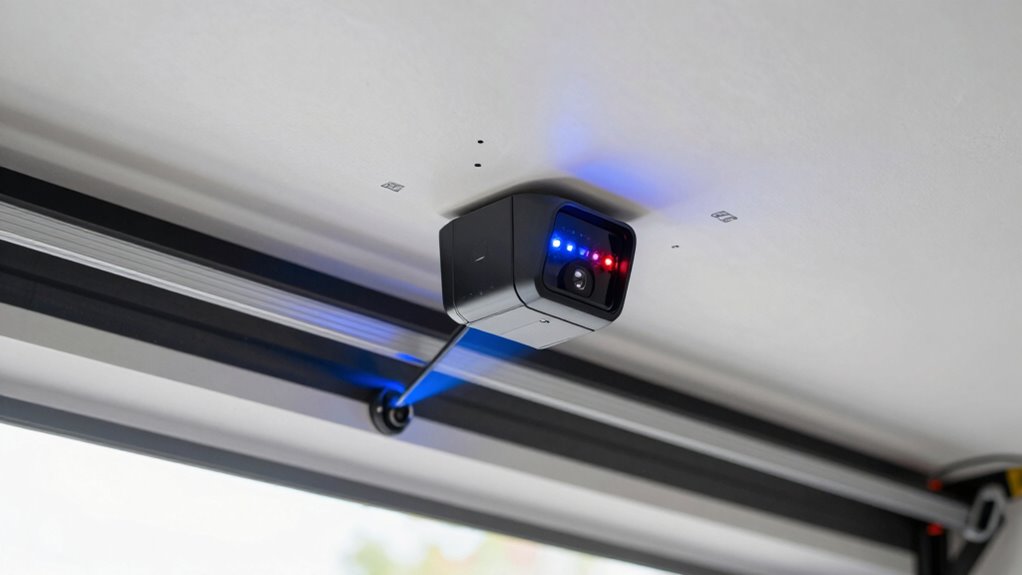

To guarantee garage door safety, regularly check that your sensors are properly aligned, clean, and unobstructed, as misaligned or dirty sensors can cause malfunctions or accidents. Be aware of pinch points where the door moves and keep hands clear to avoid injuries. Never bypass safety features like sensors or emergency stops. Following best practices and maintaining awareness of these safety measures keeps your operation secure—continue exploring for more essential tips to protect your home and loved ones.
Key Takeaways
- Properly align and regularly clean safety sensors to ensure reliable detection of obstructions and prevent accidents.
- Understand and avoid pinch points during garage door operation to prevent injuries from moving parts.
- Know how to manually disconnect and operate the door safely during power outages or emergencies.
- Never bypass safety sensors or disable safety features, as they are vital for preventing injury and damage.
- Follow best practices for sensor placement, maintenance, and emergency procedures to enhance overall garage door safety.
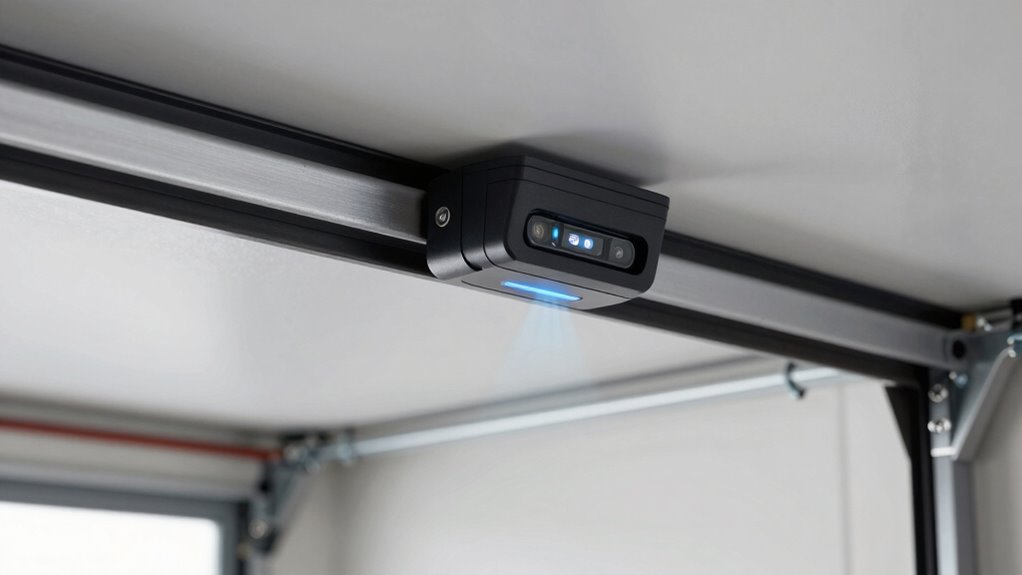
Garage door openers are convenient devices that make daily routines easier, but they can pose serious safety risks if not properly maintained. One of the most essential safety features is the sensor placement, which is designed to prevent accidents by detecting obstructions in the door’s path. Properly installed sensors should be positioned about 6 inches above the ground on either side of the door. You need to guarantee they are aligned directly facing each other and free of dirt or obstructions, as misaligned or dirty sensors can cause the door to malfunction or fail to recognize objects, creating a hazard. Regularly check and clean the sensors to keep them functioning properly. When sensors are correctly placed and working, they send an invisible beam that, if interrupted by an object or person, automatically stops or reverses the door’s movement. This safety feature is especially important in households with children or pets, as it considerably reduces the risk of injury or entrapment. Proper sensor placement and maintenance are crucial for ensuring the effectiveness of safety features.
In addition to sensor placement, understanding emergency procedures is essential for safe operation. If your garage door gets stuck or malfunctions, you should know how to manually disconnect the opener to prevent further damage or injury. Most openers have a release cord or lever, usually a red handle, that allows you to manually open or close the door. Before attempting to disconnect, guarantee the door is in a stable position to avoid it falling unexpectedly. Once disconnected, you can operate the door manually, but be cautious—garage doors are heavy, and improper handling can lead to injury. It’s also wise to familiarize yourself with emergency stop buttons or other safety controls on your garage door opener. These are designed to immediately halt the door’s movement in case of an emergency, whether it’s a malfunction or an unexpected obstacle. Regularly practicing these emergency procedures will prepare you to respond swiftly if a problem arises.
Maintaining a safety-first mindset is essential when dealing with garage door openers. Always verify that sensors are correctly placed and aligned, and keep them clean and unobstructed. Keep emergency procedures in mind and review them periodically so you can act quickly if needed. Never bypass safety features, even if they seem inconvenient, because they’re there to protect you and your loved ones. By following these best practices, you can enjoy the convenience of your garage door opener while minimizing the risk of accidents and injuries. Remember that understanding the power tool safety features and proper setup can help prevent many common hazards associated with garage door openers.
Frequently Asked Questions
How Often Should Garage Door Sensors Be Tested for Safety?
You should test your garage door sensors monthly to guarantee safety. During each test, check sensor calibration by closing the door and waving an object between the sensors; the door should reverse if the sensors detect an obstruction. If the sensors repeatedly fail to respond, consider sensor replacement. Regular testing keeps your garage door operating safely and helps you spot issues early, preventing accidents and ensuring smooth function.
Are There Specific Safety Features for Older Garage Door Openers?
Older garage door openers with vintage mechanisms often lack modern safety features, making them more vulnerable to outdated safety issues. You should consider installing additional safety devices, like sensors or smart safety systems, to enhance protection. Regularly inspect and maintain your garage door to identify pinch points or malfunctioning components. Upgrading to a newer model with built-in safety features is advisable for improved security and peace of mind.
Can DIY Repairs Compromise Garage Door Safety?
DIY repairs can definitely jeopardize your garage door safety if you’re not careful. Common DIY hazards include improper sensor calibration and mishandling pinch points, which can lead to malfunctions or injuries. Even if you’re handy, some issues require professional expertise to ensure safety features like sensors work correctly. Always prioritize safety, follow manufacturer instructions, and consider consulting a professional to avoid risking accidents or further damage.
What Are the Signs of a Malfunctioning Safety Sensor?
You’ll notice a malfunctioning safety sensor if your garage door won’t close, the lights blink, or there’s a persistent error message. Check for misaligned sensors, as they need to face each other directly. Also, inspect wiring issues like loose or damaged cables, which can disrupt signals. If these problems occur, it’s a clear sign you need to reorient the sensors or fix wiring issues to guarantee safe operation.
How Do I Prevent Children From Playing With the Garage Door?
To prevent children from playing with the garage door, you should implement child proofing measures like keeping the opener remote out of reach and installing safety sensors. Always supervise garage door use and teach kids about its dangers. Regularly check that safety features work correctly. These steps help guarantee your children stay safe and avoid accidents, giving you peace of mind during daily activities.
Conclusion
To keep your garage safe, always guarantee sensors are working properly and stay aware of pinch points. Regular maintenance and following best practices can prevent accidents. Did you know that over 30,000 injuries each year are caused by garage door accidents? By staying vigilant and following safety tips, you can protect your family and make your garage a safer place. Safety isn’t just a feature—it’s your responsibility.