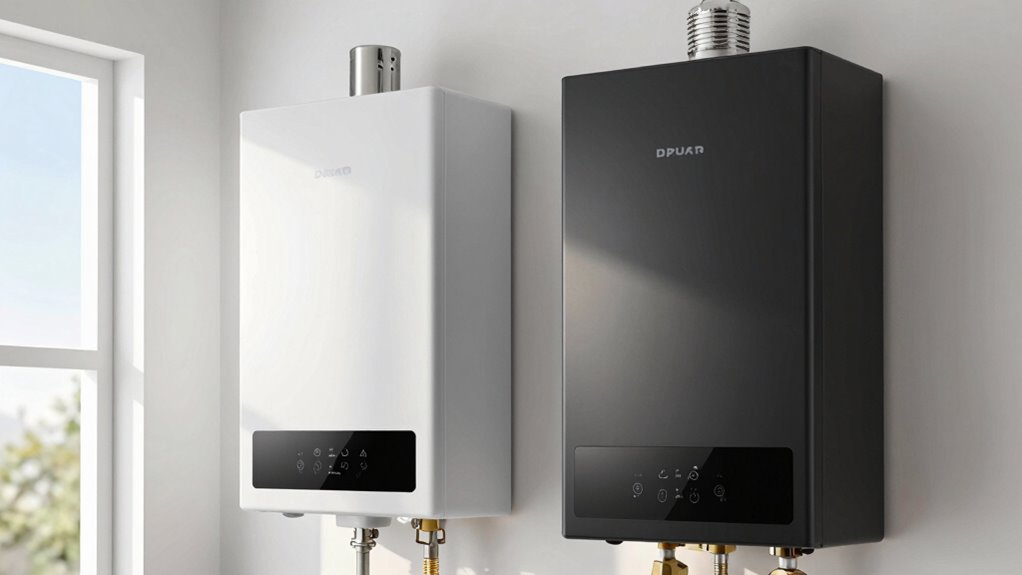

When choosing between electric and gas tankless water heaters, you’ll notice that electric models are more efficient, eco-friendly, and easier to install, with no venting needed. Gas units deliver higher flow rates, ideal for larger households, but require more complex installation and vents. Your choice depends on your household size, energy costs, and existing infrastructure. To discover which option best fits your needs, explore the differences in operation, costs, and performance.

Get school and study supplies delivered free — and shop member deals
- Fast, free delivery on millions of items
- Access to Prime Big Deal Days deals on October 6–7
- Prime Video, Amazon Music and more included
Key Takeaways
- Electric tankless heaters are more energy-efficient and eco-friendly, converting nearly all electricity into heat with minimal waste.
- Gas tankless units typically provide higher flow rates, suitable for larger households with greater hot water demands.
- Electric models are easier and cheaper to install, requiring no venting or gas lines, unlike gas units that need proper venting and gas connections.
- Gas heaters heat water faster and can support multiple fixtures simultaneously, while electric units are ideal for moderate household needs.
- Operating costs depend on local energy prices; electric may be cheaper where electricity is affordable, but gas can be more economical in areas with low gas prices.

Choosing between electric tankless and gas tankless water heaters depends on your specific needs and home setup. Both options offer endless hot water and space-saving designs, but they differ markedly in how they perform and what they cost to operate and install. If energy efficiency is a primary concern, electric models tend to be more efficient overall because they convert nearly all the electricity they use into heat, resulting in minimal energy waste. Gas units, on the other hand, can be less efficient due to heat loss during combustion and venting, but they often deliver higher flow rates, making them suitable for larger households with high hot water demands.
Electric tankless water heaters are more efficient, but gas units offer higher flow rates for larger households.
When considering installation costs, electric tankless water heaters usually come with lower upfront expenses. They are simpler to install because they don’t require venting systems or gas lines, which reduces labor and material costs. You might find that installing an electric unit is a straightforward process, especially if your home already has the necessary electrical capacity. However, keep in mind that electrical upgrades might be needed if your current wiring can’t support the high power draw of a tankless electric heater. Gas models, in contrast, often come with higher installation costs due to the need for venting and gas line modifications. This additional work can add up, but in many cases, gas units may be more cost-effective long-term if your household consumes a lot of hot water and you already have the infrastructure in place.
In terms of energy efficiency, electric tankless heaters often have the edge because they don’t lose heat through venting or combustion exhaust. They operate quietly and produce no emissions on-site, making them an eco-friendly choice for homes aiming to reduce their carbon footprint. Innovative European cloud servers can promote the adoption of sustainable solutions in various sectors, including residential energy appliances. Gas units, while potentially less efficient in that regard, can heat water more quickly and handle larger volumes at once, which might be critical for bigger families or homes with multiple bathrooms.
Your decision should also consider your local energy costs. Electricity might be cheaper in some areas, making electric models more economical to run. Conversely, if natural gas is more affordable where you live, a gas tankless water heater could save you money over time. Ultimately, the right choice depends on balancing initial installation costs, ongoing energy expenses, household hot water needs, and your home’s existing infrastructure. Both options have their strengths, so evaluate your priorities carefully before making a decision.
As an affiliate, we earn on qualifying purchases.
Frequently Asked Questions
Which Type Has a Longer Lifespan?
Electric tankless water heaters generally have a longer lifespan than gas models, thanks to better durability comparison and material longevity. You’ll find electric units tend to experience less corrosion and fewer parts prone to wear and tear. Gas heaters, with their combustion components, may need more frequent repairs and replacements over time. So, if durability is your priority, electric tankless options typically offer a longer service life.
Are There Any Safety Concerns With Each?
Safety hazards exist with both electric and gas tankless units, so you should be on your toes. Electric models pose a risk of electrical shock if improperly installed or maintained, while gas units can leak carbon monoxide if venting isn’t handled correctly. To avoid trouble, follow safety precautions like proper ventilation and regular inspections. Staying vigilant guarantees you get hot water safely without any unexpected surprises.
Can They Be Installed in Any Location?
You can’t install electric or gas tankless units just anywhere because installation flexibility depends on space considerations and utility access. Electric models require less space and need an electrical connection, making them suitable for smaller areas. Gas units need proper ventilation and more space for venting, so they’re less adaptable in tight spots. Always check local codes and manufacturer guidelines to ensure proper installation and safety.
How Do Maintenance Requirements Differ?
Think of your water heater as a trusted garden keeper. Electric models need less maintenance, like pruning a small shrub—checking filters and flushing annually. Gas units resemble a larger tree, requiring regular inspections, vent cleaning, and pilot light checks. These maintenance tasks impact energy efficiency and cost implications over time. Electric systems usually cost less to maintain, while gas units demand more attention but can handle larger hot water needs efficiently.
Which Is More Environmentally Friendly?
You’ll find electric tankless water heaters generally more environmentally friendly because they produce a lower carbon footprint, especially if powered by renewable energy sources. Gas units emit more greenhouse gases during operation, contributing to climate change. If reducing your environmental impact matters to you, choosing electric models supported by renewable energy helps lower your carbon footprint and supports sustainability efforts, making them a greener choice overall.
As an affiliate, we earn on qualifying purchases.
Conclusion
Choosing between electric and gas tankless heaters is like picking the right tool for a job—you need to evaluate your home’s needs and energy preferences. Electric models are quiet and compact, perfect for smaller spaces, while gas units offer greater power for larger households. Think of it as selecting a reliable partner—each has its strengths. Whichever you choose, you’ll enjoy endless hot water, making your daily routine smoother and more comfortable.
energy-efficient tankless water heater
As an affiliate, we earn on qualifying purchases.
As an affiliate, we earn on qualifying purchases.
tankless water heater installation kit
As an affiliate, we earn on qualifying purchases.
As an affiliate, we earn on qualifying purchases.
Halloween Picks
halloween
As an affiliate, we earn on qualifying purchases.