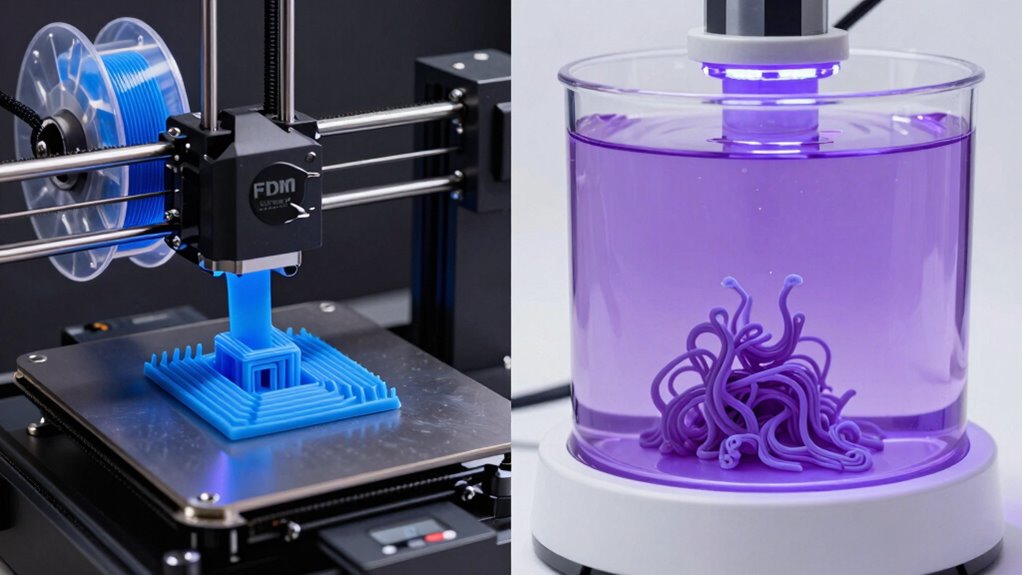

When comparing FDM and resin 3D printers for messiness, resin printers are generally more involved. They handle sticky liquid resins that require gloves, ventilation, and careful cleanup of excess material. FDM printers are cleaner, mainly needing wire filament replacement and surface cleaning. If you’re after an easier, less messy process, FDM might suit you better. Curious to explore more about the pros, cons, and tips? Keep going to get the full picture.

Get school and study supplies delivered free — and shop member deals
- Fast, free delivery on millions of items
- Access to Prime Big Deal Days deals on October 6–7
- Prime Video, Amazon Music and more included
Key Takeaways
- Resin printing involves handling sticky liquid resin and uncured material, making it messier than FDM filament changes.
- FDM printing is generally cleaner, with mess mainly during filament loading and removal.
- Resin post-processing requires washing parts in alcohol and UV curing, increasing cleanup complexity.
- FDM cleanup involves removing filament spools and cleaning the build plate, which is straightforward.
- Overall, resin printing is messier due to liquid resin handling, while FDM is simpler and less messy.
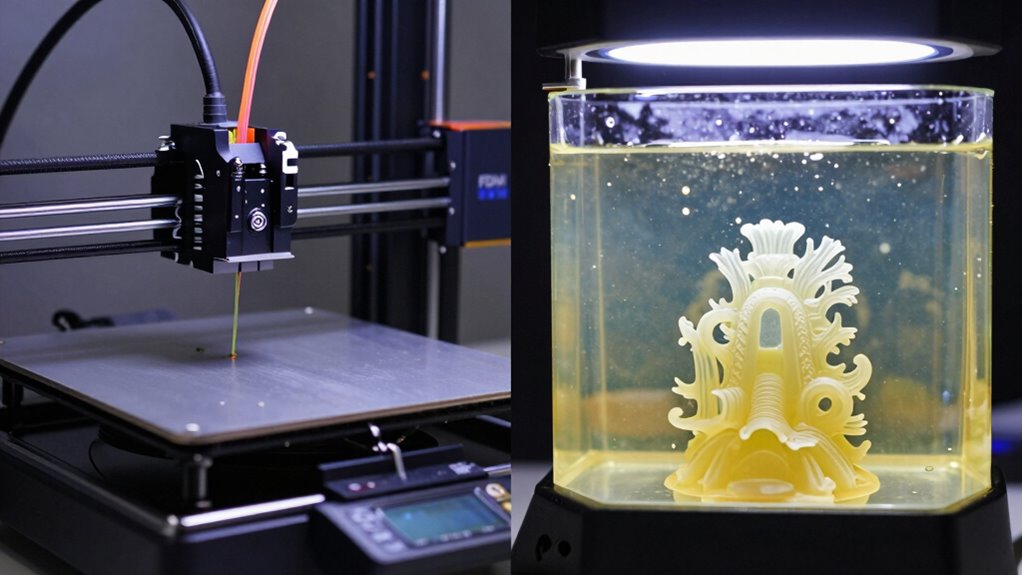
A 3D printer is a device that creates three-dimensional objects by adding material layer by layer based on digital designs. When you’re exploring different types of 3D printers, understanding the filament types and curing processes involved is essential, especially when comparing FDM (Fused Deposition Modeling) and resin printers. FDM printers use thermoplastic filaments like PLA, ABS, or PETG, which are heated and extruded through a nozzle to build objects. These filament types are widely available, affordable, and easy to work with, making FDM a popular choice for beginners. However, the process isn’t without mess; the filament extrusion can sometimes lead to stringing or oozing, and the heated bed may cause warping if not managed properly. Print quality** can vary significantly between the two methods, influencing your final results. On the other hand, resin printers utilize liquid photopolymer resins that harden when exposed to specific light sources, typically UV light. The curing process for resin involves exposing each layer to a light source to solidify the resin precisely, resulting in high-detail prints. Resin printing offers exceptional resolution, but it also introduces messiness—resins are sticky, and excess material can get everywhere if you’re not careful. Handling uncured resin requires gloves and proper ventilation, making cleanup** more involved than FDM printing.
In FDM printing, filament types influence not only the strength and flexibility of your prints but also the ease of use and cleanup. For example, PLA is biodegradable and less prone to warping, making it suitable for straightforward projects, while ABS demands a heated enclosure to prevent warping and emits fumes that require ventilation. The filament spool needs to be fed smoothly into the extruder, and any issues with filament quality can cause print failures. Conversely, resin printers demand meticulous attention during the curing process. After printing, you have to wash the resin parts in alcohol to remove uncured resin and then cure them under UV light for final strength. This extra step adds a layer of complexity but results in highly detailed, smooth surfaces.
Messiness in resin printing stems from handling liquid resin and managing uncured material, which can be sticky and difficult to clean without proper supplies. FDM printers tend to be messier during filament loading and removal, but cleanup is generally straightforward—just remove filament spools and clean the build plate. Resin printing’s curing process is more involved but offers superior detail and surface finish. Ultimately, your choice depends on your priorities: if you prefer a cleaner, simpler process with decent quality, FDM is suitable. If you want high precision and are okay with handling resin carefully, resin printers might be the way to go.
As an affiliate, we earn on qualifying purchases.
Frequently Asked Questions
How Long Does Each Printing Method Typically Last Before Maintenance?
You’ll find that FDM printers usually need maintenance after about 1,000 to 2,000 hours of use, with the print head lifespan being a key factor. Resin printers often require less frequent upkeep, but the resin tank durability can vary, typically lasting around 1,000 to 2,000 layers or several months. Regular cleaning and part replacements keep both types running smoothly and extend their lifespan.
Can FDM and Resin Printers Be Used Together for the Same Project?
Yes, you can use FDM and resin printers together for the same project, creating a hybrid print. This mixed material approach lets you combine the strengths of both, like using FDM for larger, structural parts and resin for fine details. Just make certain your design supports this process, and be prepared for added complexity in calibration and post-processing. Hybrid printing offers versatile results, expanding your creative possibilities.
What Are the Most Common Safety Hazards Associated With Each Type?
You face a minefield of hazards with FDM and resin printers. FDM risks include hot nozzle burns and fumes, so safety precautions like gloves and ventilation are essential. Resin printers pose chemical burns and inhalation dangers from toxic vapors, demanding proper gloves, masks, and hazard management. Staying vigilant with safety measures keeps your workspace safe, turning potential hazards into manageable challenges rather than accidents waiting to happen.
How Do Ambient Temperatures Affect Print Quality in FDM and Resin Printers?
Ambient temperatures profoundly impact your print quality in both FDM and resin printers. If temperature fluctuations occur, you might notice warping, layer separation, or curing issues. Maintaining stable conditions with proper humidity control helps guarantee consistent results. For FDM, keep the room warm and draft-free; for resin printers, avoid sudden temperature changes that can affect resin curing. Stable environments lead to cleaner prints and fewer troubleshooting headaches.
Are There Cost Differences in Supplies Over the Long Term?
Imagine your budget as a garden; over time, filament expenses for FDM printers grow like steady, predictable vines, while resin costs can spike like wildflowers in bloom. Long-term, filament tends to be cheaper and more consistent, but resin might require more frequent top-offs for intricate models. You’ll find that both supplies add up, but resin often demands a higher investment in materials, making it pricier over the long haul.
resin 3D printer cleaning supplies
As an affiliate, we earn on qualifying purchases.
As an affiliate, we earn on qualifying purchases.
Conclusion
Choosing between FDM and resin printers depends on your projects and preferences. FDM printers are more popular, making up about 70% of the market, and they typically produce messier prints due to filament buildup. Resin printers offer cleaner results but can be messier during resin handling. Ultimately, understanding the differences helps you decide which method suits your needs best. Whichever you pick, mastering your printer guarantees your creations come out perfect every time.
As an affiliate, we earn on qualifying purchases.
3D printer safety gloves and ventilation kit
As an affiliate, we earn on qualifying purchases.
As an affiliate, we earn on qualifying purchases.
Evergreen bestsellers Picks
bestsellers
As an affiliate, we earn on qualifying purchases.