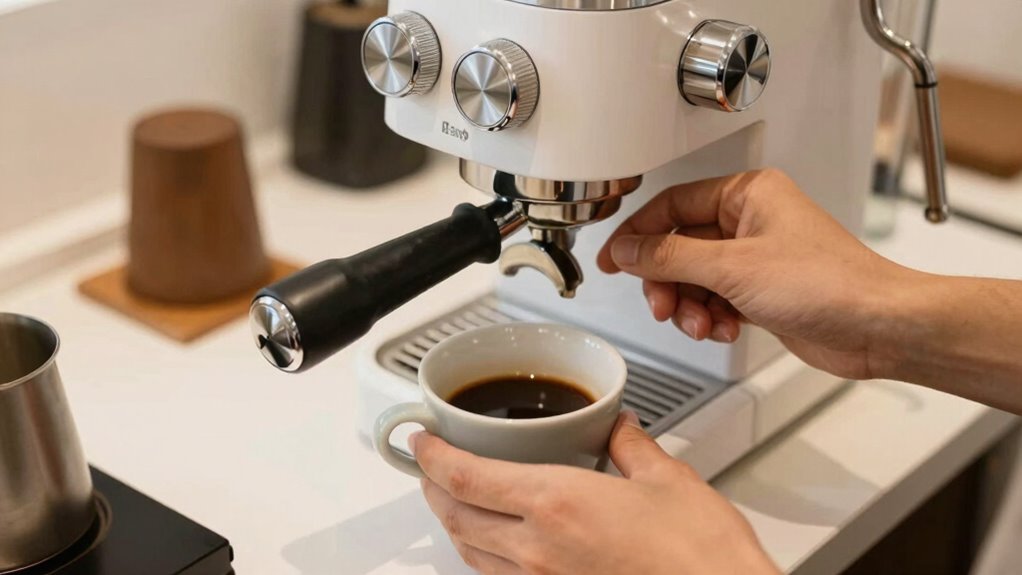

Dialing in your espresso is simple if you focus on small, deliberate tweaks to your grind size and tamp pressure. Start by adjusting the grind to get a flow that’s neither too fast nor too slow—aim for a texture like sugar. Then, apply even, firm pressure—about 30 pounds—to tamp the coffee flat. Making these small adjustments step-by-step helps you brew a balanced shot each time. Keep experimenting patiently, and you’ll soon master a consistent process that delivers great espresso every time.
Key Takeaways
- Focus on small adjustments to grind size and tamp pressure for better extraction without overcomplicating the process.
- Use a consistent routine to build confidence and improve shot quality over time.
- Aim for a grind texture like granulated sugar and tamp with about 30 pounds of pressure.
- Observe shot flow and taste; make one change at a time to fine-tune your espresso.
- Patience and attention to detail are key to dialing in great espresso without fuss or snobbery.

Dialing in your espresso is a vital step to unlocking its perfect flavor. It’s the process of fine-tuning your machine’s settings and your technique to get that ideal shot every time. The two key elements you need to focus on are grind size and tamp pressure. These might seem simple, but they’re the foundation of a great espresso, and small adjustments can make a huge difference.
Start with your grind size. Think of it as the foundation of your shot’s flavor and extraction. If the grind is too fine, water will struggle to pass through, resulting in a slow extraction that can taste bitter or overly strong. If it’s too coarse, water flows too quickly, leading to a weak, under-extracted shot that lacks richness. The goal is to find a grind that creates a balanced extraction, usually resembling the texture of granulated sugar. It’s a process of trial and error—adjust your grinder in tiny increments, pull a shot, and taste. If it’s too bitter or takes too long, coarsen the grind. If it’s too sour or flows too fast, make it finer. Remember, consistency here is key. Once you find the right grind size, it becomes your baseline for dialing in further. Fine-tuning your brew parameters can significantly improve your espresso quality.
Next, focus on tamp pressure. After dosing your coffee grounds into the portafilter, you need to apply even, firm tamp pressure to compact the coffee evenly. The goal isn’t necessarily to press as hard as you can, but to create uniform resistance so water flows through the coffee bed at a steady rate. Too little tamp pressure, and the water will channel through weak spots, leading to uneven extraction. Too much, and you risk over-compacting the grounds, which can cause a slow flow or bitter taste. Aim for about 30 pounds of pressure—enough to create a flat, level surface without excessive force. Use a consistent technique each time you tamp, applying steady pressure and a gentle twist to ensure the bed is even. This consistency ensures your shots are more predictable and easier to dial in.
Once you’ve adjusted your grind size and tamp pressure, pull a shot and evaluate the results. Look at the color, flow rate, and taste. If it’s not quite right, tweak one variable at a time—maybe a slightly finer grind or a firmer tamp—and try again. The process may take a few shots, but patience and attention to detail will help you develop a personalized, reliable routine. Dialing in your espresso isn’t about perfection on the first try; it’s about understanding how small changes affect the final cup and refining your process until you consistently get that rich, balanced shot you’re after.
Frequently Asked Questions
Can I Dial in My Espresso Without Professional Equipment?
Yes, you can dial in your espresso without professional equipment. Start by calibrating your grinder to get consistent grind size, then focus on applying the right tamping pressure to guarantee even extraction. Experiment with grind settings and tamping until your shots are balanced, with good crema and flavor. With patience and practice, you’ll improve your espresso quality, even without fancy gear.
How Long Does It Typically Take to Dial in a New Grinder?
Think of dialing in your grinder like tuning a musical instrument—expect some trial and error. It usually takes about 15-30 minutes to achieve proper grinder calibration, depending on your equipment and skill level. During this time, you’ll adjust grind size and dose to find that sweet spot for espresso consistency. Patience is key; with each tweak, you’ll get closer to perfecting your shot.
What Are Common Signs of an Over-Extracted Shot?
If your shot tastes bitter or has a flavor imbalance, it’s likely over-extracted. You’ll notice a harsh, astringent taste that masks the coffee’s natural flavors. This often happens when the extraction is too long or the grind is too fine. To fix it, try shortening the shot time or adjusting the grind coarser. Keep experimenting until the flavors are balanced and the bitterness diminishes.
Is It Necessary to Measure Every Variable Precisely?
You don’t need to measure every variable precisely, but precision adjustments are key to achieving flavor consistency. Small tweaks in grind size, tamp pressure, or dose can make a big difference. Focus on understanding how your espresso changes with these adjustments, rather than obsessing over perfect numbers. With practice, you’ll develop an intuitive sense for dialing in your shot, ensuring consistent flavor without the need for exact measurements every time.
How Often Should I Re-Dial My Espresso Setup?
You should re-dial your espresso setup whenever your shots start to taste off or your grinder calibration shifts. Focus on maintaining tamping consistency and regularly adjusting your grind size to keep extraction balanced. Usually, it’s good to verify every few days or after changing beans. Keep an eye on shot timing and flavor, and re-dial as needed to ensure your espresso stays flavorful and well-extracted.
Conclusion
Think of dialing in your espresso like tuning a vintage radio—you might need to adjust the knobs a few times before everything sounds just right. With patience and a little experimentation, you’ll find that perfect harmony of flavor and aroma. Remember, every shot is a new station waiting to be discovered. So, keep tweaking, stay curious, and soon you’ll be tuning into espresso bliss every morning. Happy dialing!