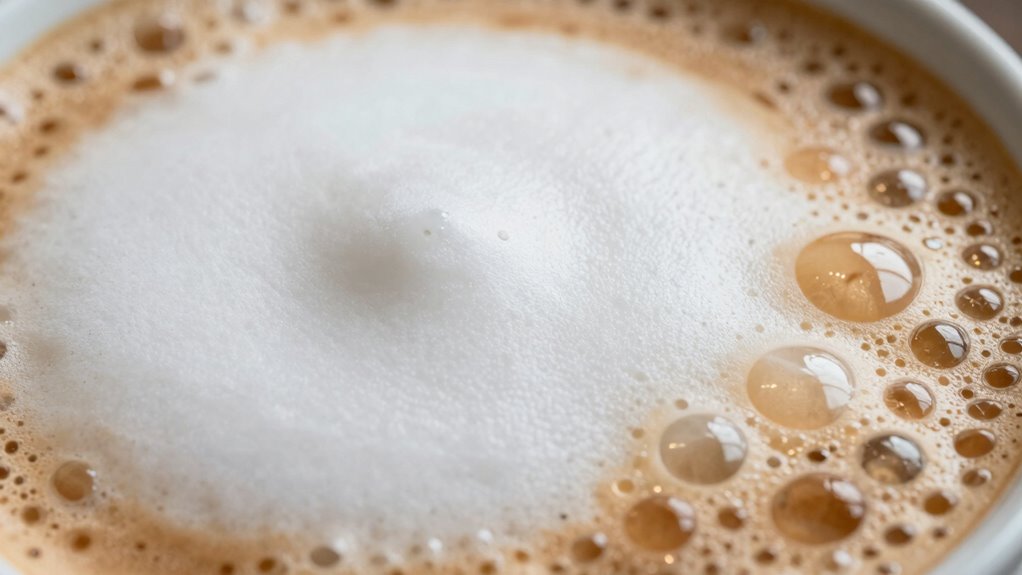

When frothing milk, you want microfoam—tiny, velvety bubbles that blend smoothly into the milk, giving it a glossy, creamy texture ideal for latte art and tasting great. Big bubbles happen if you introduce too much air too quickly, creating rough, large bubbles that quickly burst and make the surface uneven. Mastering the technique guarantees your milk is silky and perfect, so keep going to discover how to perfect your frothing skills and produce consistent microfoam.

Prime made for students and young adults
- Fast, free delivery for dorm and study essentials
- Prime Video and Amazon Music included
- Member-only deals
Key Takeaways
- Microfoam consists of tiny, velvety bubbles that create a smooth, glossy surface, ideal for latte art and texture.
- Big bubbles form when too much air is introduced quickly, resulting in rough, uneven, and unstable foam.
- Proper steaming technique involves gentle, controlled air incorporation and positioning of the wand just below the milk surface.
- Microfoam enhances both visual appeal and mouthfeel by blending seamlessly into the coffee, unlike large bubbles that create a coarse texture.
- Mastering microfoam requires patience and attention to detail, ensuring consistent, high-quality milk frothing results.
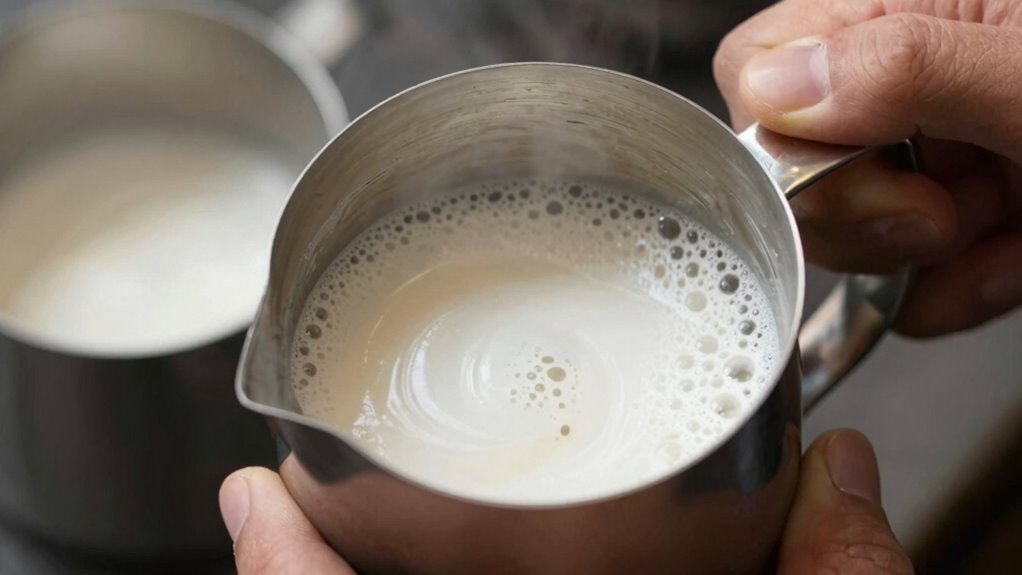
Have you ever wondered what makes a perfectly frothy cappuccino or latte? The secret lies in mastering milk frothing, especially understanding the difference between microfoam and big bubbles. When you’re creating latte art or aiming for that silky milk texture, the quality of your foam makes all the difference. Microfoam, which is fine, velvety, and dense, is what gives your drinks that smooth, glossy finish. Big bubbles, on the other hand, tend to produce a rougher, less appealing surface, and can ruin the visual and textural appeal of your beverage.
Microfoam creates smooth, glossy coffee finishes; big bubbles result in rough, unappealing textures.
To achieve the ideal milk texture, you need to focus on producing microfoam. This type of foam is made up of tiny bubbles that blend seamlessly into the milk, resulting in a creamy, uniform surface. When you pour microfoam into your espresso, it flows smoothly, allowing you to craft intricate latte art designs that stand out. The secret to creating this microfoam is controlling your steam wand’s position and temperature. Keep the tip just below the milk’s surface to introduce air gradually, then submerge it deeper to heat the milk evenly. This process allows you to incorporate just enough air to create that fine, velvety foam without large, disruptive bubbles.
Conversely, big bubbles form when too much air is introduced too quickly or if the milk isn’t textured properly. These bubbles are larger, more unstable, and tend to burst quickly, leaving behind a frothy, uneven surface. This results in poor milk texture and makes it difficult to do detailed latte art. Large bubbles also give the milk a rough, less appealing look and feel, detracting from the overall quality of your coffee.
Getting the hang of microfoam takes practice, but once you master it, you’ll notice a significant difference in your coffee presentation and taste. The goal is to create a silky, shiny milk that integrates seamlessly with your espresso, making your drinks not only delicious but visually stunning. Remember, the key is patience and attention to detail—control your steam wand, keep the milk at the right temperature, and aim for those tiny bubbles that create perfect microfoam. With time, your latte art will become more intricate, and your milk texture will elevate your coffee game to professional levels.
As an affiliate, we earn on qualifying purchases.
Frequently Asked Questions
Can I Use Almond or Soy Milk for Microfoam?
Yes, you can use almond or soy milk for microfoam, but your results depend on the plant-based alternatives’ milk composition. Almond milk often produces lighter, less stable foam, while soy milk typically creates richer, creamier microfoam. To improve frothing, choose unsweetened, full-fat versions, and steam them carefully. Keep in mind, different brands and formulations may behave differently, so experiment to find the best option for your preferred microfoam.
How Does Fat Content Affect Milk Frothing Quality?
Higher milk fat improves froth stability, making your milk foam creamier and more durable. When fat content is low, the foam tends to be less stable and may collapse quickly. You’ll notice richer froth with whole milk or milk with higher fat levels, while skim or plant-based milks with less fat produce lighter, less stable foam. Adjusting fat content helps you achieve the desired texture and longevity in your milk froth.
What’s the Ideal Temperature for Steaming Milk?
Think of your milk as a delicate symphony; the perfect temperature is 150°F, where flavor and texture harmonize. You control this with precise temperature control, ensuring your milk doesn’t overheat or underperform. When you reach this ideal, you’ll achieve consistent frothing, with microfoam that’s smooth and velvety. Keep a thermometer handy, and watch your frothing consistency improve, creating coffee drinks that delight every time.
Can I Re-Froth Milk if It Doesn’t Turn Out Right?
Yes, you can re-froth milk if it doesn’t turn out right. To do this, first, gently reheat the milk if needed, then use re-frothing techniques like swirling or tapping the pitcher to correct milk texture. This helps break down big bubbles and create a smooth, velvety microfoam. Practice patience and adjust your technique until you achieve the desired consistency, perfect for your coffee.
Does the Type of Milk Frother Impact Foam Consistency?
Your choice of frother types dramatically impacts foam texture, turning your coffee game from ordinary to extraordinary. Different frothers create vastly varied foam consistencies—manual, steam wand, or electric all produce unique results. If you want silky microfoam or big, fluffy bubbles, picking the right frother is key. So, yes, the frother type directly shapes your foam’s perfection, making your latte art dreams come true or fall flat.
espresso machine with steam wand
As an affiliate, we earn on qualifying purchases.
As an affiliate, we earn on qualifying purchases.
Conclusion
Now that you know the difference between microfoam and big bubbles, you might wonder if creating microfoam truly makes your drinks better. Some say it’s just about aesthetics, but science shows microfoam actually enhances flavor and texture, making each sip richer. So, next time you froth milk, remember—it’s not just about looks but about revealing the full potential of your coffee. Give it a try and see how microfoam can elevate your brewing game!
milk frothing pitcher for latte art
As an affiliate, we earn on qualifying purchases.
As an affiliate, we earn on qualifying purchases.
As an affiliate, we earn on qualifying purchases.
Fall Picks
fall essentials
As an affiliate, we earn on qualifying purchases.