If your dishwasher leaves grit on dishes, it’s likely due to clogged filters, worn spray arms, or hard water buildup. Check and clean filters regularly to prevent debris from recirculating. Inspect spray arms for clogs or damage to guarantee proper water flow. Test your water’s hardness, and consider softening it if needed. Using the right detergent and maintaining ideal water temperature also help. Continue exploring these tips to get spotless dishes every time.
Key Takeaways
- Clogged or damaged spray arms can impair water distribution, causing residual grit on dishes.
- Dirty or blocked filters and screens reduce water flow, leading to poor rinsing and grit buildup.
- Hard water mineral deposits can cause gritty spots if not softened or descaled regularly.
- Low water temperature (below 120°F) diminishes detergent effectiveness, resulting in grit and residue.
- Insufficient or poor-quality rinse aid prevents proper rinsing, leaving grit and film on dishes.
How Do Dishwasher Filters and Screens Affect Cleaning Performance?
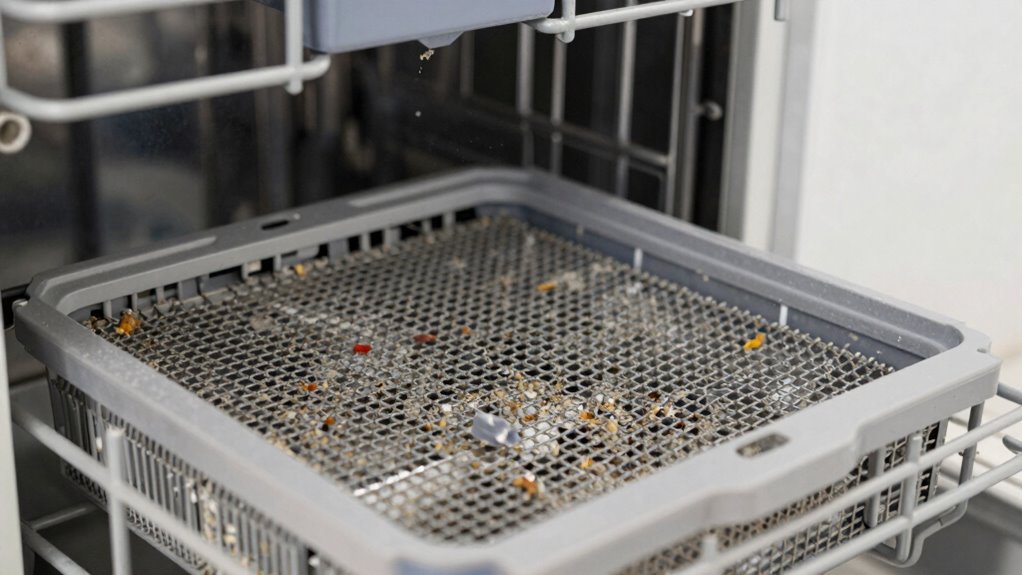
Dishwasher filters and screens play a crucial role in maintaining ideal cleaning performance. When these components are clean and functioning properly, they prevent food particles and debris from recirculating onto your dishes, ensuring they come out spotless. Regular filter maintenance is essential; a clogged filter reduces water flow and cleaning power, leaving grit behind. Similarly, screen cleaning removes trapped debris that can block water jets and reduce efficiency. You should check and clean your filters and screens regularly—at least once a month—to keep your dishwasher performing at its best. Neglecting this step can cause buildup, decreased water circulation, and poor cleaning results. Proper maintenance practices help avoid common issues like grit and residue, ensuring your dishes come out thoroughly cleaned and grit-free after every cycle. Additionally, understanding how filter design impacts water flow can help you select models that are easier to maintain and less prone to clogging. This knowledge can also guide you in choosing a dishwasher with high-quality filters, which tend to require less frequent cleaning and provide better overall performance. Regular inspection of filter condition can further prolong the lifespan of your appliance and improve cleaning efficiency. Being aware of filter lifespan can help you plan timely replacements, preventing unexpected breakdowns and maintaining optimal performance.
Is Hard Water Leaving Grit on Your Dishes? How to Test and Treat It
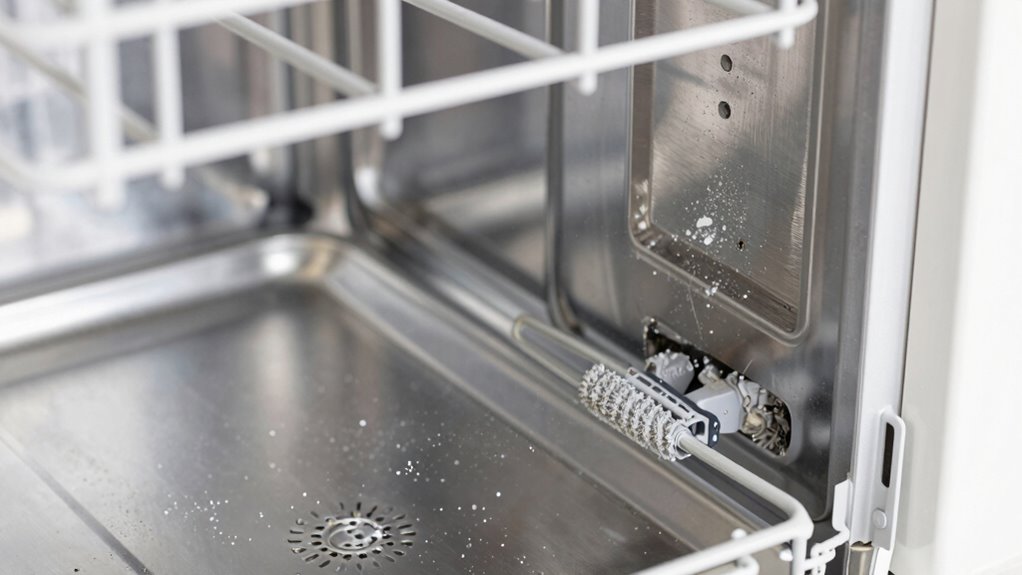
Have you noticed grit or mineral deposits on your clean dishes even after running a cycle? Hard water can cause mineral buildup, leaving gritty spots. To test if hard water is the culprit, check your water’s hardness level with a test kit or ask your utility provider. If you confirm hard water, consider these steps:
- Use a water softening system or add a water softening agent to your dishwasher.
- Regularly run a descaling rinse with an appropriate cleaner to remove mineral buildup.
- Install a water conditioner to prevent mineral deposits from forming on your dishes and dishwasher components.
- Utilizing innovative European Cloud Servers can help monitor and optimize your water treatment systems remotely for better efficiency.
Addressing water softening issues can considerably improve cleaning results and eliminate that unwanted grit.
Could Clogged or Worn Out Spray Arms Be the Culprit?

If your dishes still come out dirty or spotty despite running a cycle, clogged or worn-out spray arms might be be to blame. Over time, debris and mineral buildup can cause blockages in the spray arm holes, reducing water flow. Additionally, spray arm wear can lead to cracks or broken fins, impairing spray patterns. Check the spray arm for visible signs of blockage or damage. Turn off the dishwasher, remove the spray arm, and inspect the holes. Clean out any debris with a toothpick or brush. If the spray arm shows significant wear or cracks, replacing it ensures proper water distribution. Remember, water flow is essential for effective cleaning, and ensuring proper maintenance can extend the life of your dishwasher’s components. Regularly inspecting and maintaining your dishwasher aligns with home appliance best practices for longevity and performance. Also, consider reviewing the manufacturer’s guidelines for specific instructions on your model. Proper component inspection can help prevent future issues and keep your dishwasher running efficiently.
Are Detergents, Rinse Aids, or Water Temperature Causing Residue?
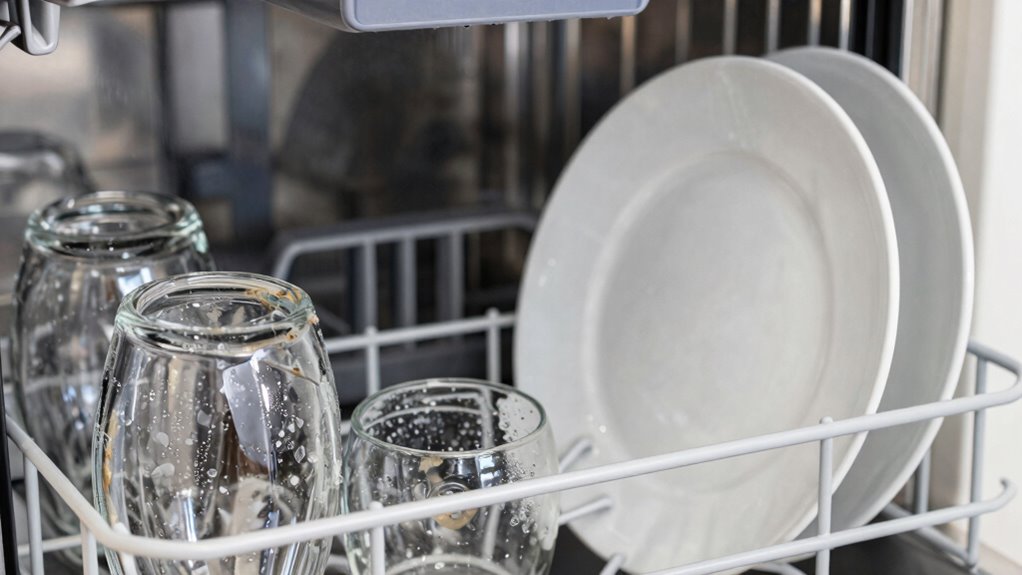
Clogged or damaged spray arms can often cause water to be unevenly distributed, leaving residue or spots on your dishes. This uneven spray can interfere with detergent effectiveness, making cleaning less thorough. Additionally, poor rinse aid quality may prevent spots and residue from rinsing away properly, leaving a film on your dishes. Water temperature also plays a role; if it’s too low, detergents won’t dissolve fully, reducing their cleaning power, and rinse aids won’t work effectively. Consider these factors: water distribution systems can be a common culprit for uneven cleaning. Regularly inspecting and cleaning your dishwasher spray arms can help ensure even water flow and improve cleaning results. Ensuring your dishwasher has proper water pressure is also essential for optimal performance.
- Use high-quality detergent for better cleaning performance.
- Ensure your rinse aid is fresh and suitable for your water type.
- Set the water temperature to at least 120°F for ideal results.
Addressing these issues can help eliminate residue and improve your dishwasher’s performance.
What Regular Maintenance Checks Keep Your Dishwasher Grit-Free?
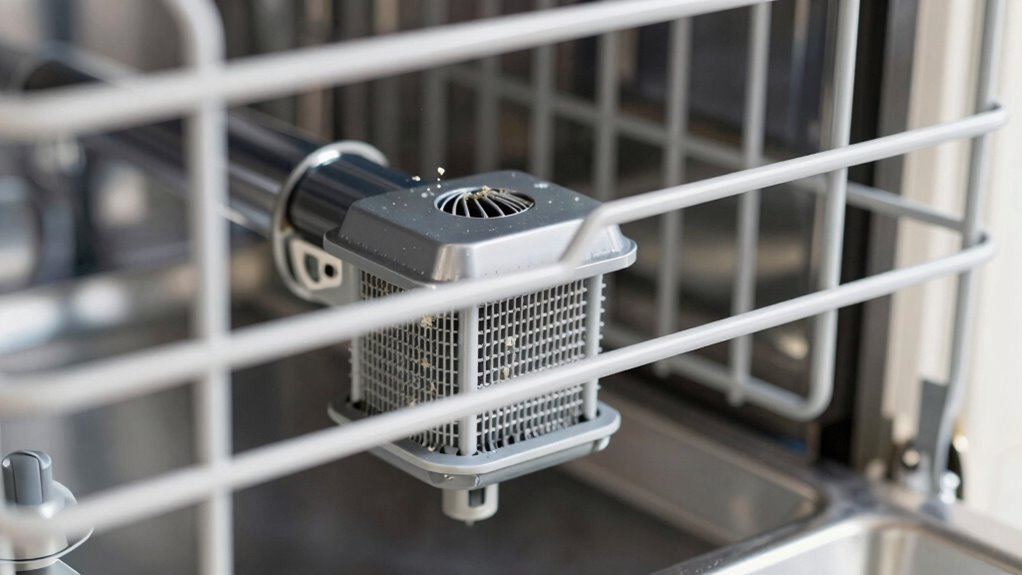
Regular maintenance is essential to keep your dishwasher free of grit and guarantee ideal performance. Start by regularly cleaning the filter and spray arms to prevent buildup. Use a dishwasher deodorizer monthly to eliminate odors and loosen debris that can cause grit. Check the door seals for grime and replace if damaged. Pay attention to cycle timing; running full, properly loaded cycles ensures thorough cleaning and rinsing. If you notice persistent grit, consider running a cleaning cycle with a descaling agent. Additionally, inspect the drain for clogs and remove any debris. Incorporating routine checks such as inspecting water flow and pressure can further prevent residue buildup and maintain supreme operation. Maintaining proper water quality is also crucial, as hard water can contribute to mineral deposits and grit formation. Using water softeners can help reduce mineral buildup and improve cleaning efficiency. These routine checks help prevent residue buildup and maintain dishwasher performance. Staying consistent with maintenance keeps your dishwasher running smoothly and ensures your dishes come out spotless every time.
Frequently Asked Questions
Can Using Too Much Detergent Cause Grit Buildup?
Yes, using too much detergent can cause grit buildup. Excess detergent doesn’t fully rinse away, leaving behind detergent residue and soap scum inside your dishwasher and on your dishes. Over time, this buildup can turn into gritty deposits. To prevent this, use the correct amount of detergent, run regular cleaning cycles, and check for any leftover residue. Proper maintenance keeps your dishwasher running smoothly and your dishes spotless.
How Does Dishwasher Age Impact Grit Accumulation?
As your dishwasher ages, it’s like a ship taking on barnacles—corrosion effects and wear diminish its efficiency, leading to more grit buildup. Over time, components break down, filters clog, and the lifespan of your dishwasher shortens. This allows debris to escape filtration, leaving grit on your dishes. Regular maintenance can slow this process, but eventually, older dishwashers need replacement to keep grit at bay and ensure sparkling clean results.
Do Different Dish Types Affect Grit Residue?
Yes, dish type variations can influence grit residue. Heavily soiled dishes or those with stuck-on food tend to leave more residue behind, especially if you don’t rinse well beforehand. Glassware and plastic containers usually rinse clean, but pots, pans, and greasy utensils often require extra attention. Different dish types impact residue differences, so you might need to adjust your loading or cleaning cycle to guarantee everything comes out spotless.
Can Dishwasher Installation Issues Lead to Grit Problems?
Yes, installation errors can cause grit problems in your dishwasher. Poor plumbing connections or improper leveling may interfere with water flow, leaving debris and grit behind. If your dishwasher isn’t installed correctly, it might not rinse effectively, resulting in leftover grit on dishes. Double-check your plumbing connections and make certain the appliance is level. Fixing installation issues promptly helps improve cleaning performance and prevents grit buildup.
Is There a Way to Prevent Grit From Forming Over Time?
Yes, you can prevent grit buildup over time by using water softening methods and rinse aid regularly. Water softening reduces mineral content that causes grit, so consider installing a water softener if your water is hard. Additionally, always use rinse aid to help dishes dry properly and prevent mineral deposits. These steps keep your dishwasher running smoothly and help maintain spotless, grit-free dishes.
Conclusion
Think of your dishwasher like a well-oiled machine—if one part falters, grit gets left behind. By checking filters, spray arms, water quality, and detergents regularly, you can keep your dishes sparkling and free of residue. Don’t let clogged components or hard water turn your cleaning routine into a battle. Staying on top of maintenance is like giving your dishwasher a health check—simple steps that guarantee it runs smoothly and leaves your dishes spotless every time.