

Your circadian rhythm, your body’s internal clock, naturally causes you to wake up at the same time each day, influenced by your sleep cycles and environmental cues like light. If you go to bed and wake up around the same hours, your internal processes become aligned, making morning awakening consistent. Disruptions or habits can reinforce this pattern. If you want to learn how to reset or improve your sleep, there’s more you should know.
Key Takeaways
- Your circadian rhythm naturally promotes wakefulness at consistent times due to internal biological clocks.
- Sleep cycles and internal hormone fluctuations can cause brief awakenings at the same points each night.
- Light exposure, especially morning sunlight, helps reinforce your regular wake-up time through hormonal signaling.
- Environmental cues and habitual routines entrain your sleep-wake patterns, making you wake at the same time consistently.
- Sleep disruptions or disorders may cause your internal clock to favor waking at specific hours regularly.
What Are Sleep Cycles and How Do They Affect Your Waking Patterns?

Have you ever wondered what happens in your brain while you sleep? Your sleep isn’t just a single state; it’s made up of several stages forming sleep architecture. These stages include light sleep, deep sleep, and REM sleep, which occur in cycles that repeat throughout the night. Each cycle lasts about 90 minutes, and during REM cycles, your brain becomes highly active, similar to wakefulness. These cycles influence how rested you feel and can affect your waking patterns. When your sleep architecture is disrupted, you might wake up feeling groggy or unrefreshed. Recognizing the importance of sleep cycles can help you optimize your sleep quality and waking times. Understanding your sleep cycles helps explain why waking at certain times can feel more natural and invigorating, aligning with your body’s internal rhythms. Disruptions to sleep cycle patterns, such as irregular sleep schedules or stress, can lead to more frequent awakenings and poorer sleep quality. Being aware of your sleep architecture can also aid in developing better sleep habits and routines.
How Your Body’s Internal Clock (Circadian Rhythm) Influences Wake-Up Times

Your body’s internal clock, known as the circadian rhythm, plays a crucial role in determining when you feel alert or sleepy each day. It regulates hormone production, especially melatonin, which signals your body it’s time to rest. As evening approaches, melatonin levels rise, making you feel sleepy; in the morning, they drop, waking you up. This cycle influences your natural wake-up times, aligning with environmental cues like light. Free Floating is a term often used to describe the flexibility and adaptability of these rhythms in response to lifestyle changes. Understanding circadian rhythm regulation can help you optimize your sleep patterns for better health. Here’s a quick look at how your circadian rhythm works:
| Time of Day | Hormone Activity | Effect on Wakefulness |
|---|---|---|
| Morning | Melatonin decreases | Feeling alert |
| Afternoon | Cortisol peaks | Increased energy |
| Evening | Melatonin increases | Sleepiness |
| Night | Hormone levels stabilize | Deep sleep |
Your internal clock guides hormone regulation, shaping your sleep-wake schedule seamlessly.
Why Do I Keep Waking Up at the Same Time Every Night?

Ever notice waking up at the same time each night and wondering why it happens? Your sleep architecture, which includes various sleep stages and dream phases, can explain this pattern. During the night, your body cycles through lighter and deeper sleep stages, often causing brief awakenings. These awakenings may be linked to shifts between REM (dream) phases and non-REM sleep. Sometimes, your body becomes more sensitive to internal signals, like hormone fluctuations or stress, making you wake up at specific times. Additionally, natural circadian rhythms can make certain hours more prone to awakening. If these awakenings become consistent, it’s often because your internal clock has established a routine, or your sleep architecture aligns with specific biological processes that trigger wakefulness at the same time each night. Recognizing sleep cycles can help you understand why these patterns occur and how to address them. Knowing about sleep regulation can also assist in managing these recurring awakenings effectively, especially when considering biological rhythms that influence sleep timing. This understanding emphasizes how internal biological processes can synchronize with external factors, reinforcing these nightly wake-up times.
How Lifestyle Habits Can Make Your Wake-Up Time Stick

Establishing a consistent bedtime routine helps your body know when to wind down and wake up at the same time each day. Limiting screen exposure before sleep reduces distractions and signals your brain that it’s time to rest. Incorporating mindfulness or relaxation techniques before bed can further support your circadian rhythm and improve sleep quality inner wisdom. Using at‑home sleep-tracking devices can also help you monitor and adjust your habits for better sleep consistency. Additionally, understanding your natural sleep cycles can empower you to optimize your rest patterns for improved overall health. Incorporating sleep environment adjustments, such as optimal lighting and noise control, can further enhance your sleep quality. To enhance comfort and reduce disturbances, consider setting up your virtual reality environment in a way that minimizes physical discomfort and distractions during relaxation routines.
Consistent Bedtime Routine
Creating a consistent bedtime routine can considerably improve your ability to wake up at the same time each morning. Good sleep hygiene starts with establishing bedtime consistency, signaling your body when it’s time to wind down. When you stick to the same schedule, your body’s internal clock adjusts, making it easier to wake up refreshed. Avoid irregular sleep times, as they can disrupt your circadian rhythm and make wake-up times unpredictable. A routine that includes relaxing activities before bed—like reading or gentle stretching—helps reinforce your sleep habits. Over time, this consistency trains your body to anticipate sleep and wakefulness, reducing the chances of waking up at odd hours. Prioritizing sleep hygiene creates a solid foundation for waking up at the same time every day. Additionally, understanding circadian rhythm can help you optimize your sleep schedule for better consistency and wake-up times. Being aware of your internal clock can guide you to develop habits that support regular sleep patterns, leading to more restful nights and easier mornings. Incorporating knowledge about sleep cycles can further enhance your ability to wake up naturally and feeling refreshed, especially when aligned with your body’s natural sleep architecture.
Limiting Screen Exposure Before Sleep
Limiting screen exposure before sleep is essential for maintaining a consistent wake-up time because the blue light emitted by devices can interfere with your body’s natural sleep signals. To improve your sleep environment, avoid screens at least an hour before bed. Instead, try dream journaling to process your thoughts and relax your mind. Here’s how you can shift your habits:
| Tip | Benefit |
|---|---|
| Turn off devices early | Reduces blue light exposure |
| Use dim lighting | Promotes melatonin production |
| Read a book | Creates a calming pre-sleep routine |
| Keep screens out of the bedroom | Strengthens sleep environment |
| Practice relaxation techniques | Enhances sleep quality |
Making sure your sleep environment is optimized can further support your sleep consistency. These small changes reinforce your sleep routine, helping your wake-up time become more consistent. Additionally, maintaining a proper sleep environment can help regulate your circadian rhythms and support restful sleep.
Environmental Factors That Disrupt or Reinforce Your Sleep Schedule
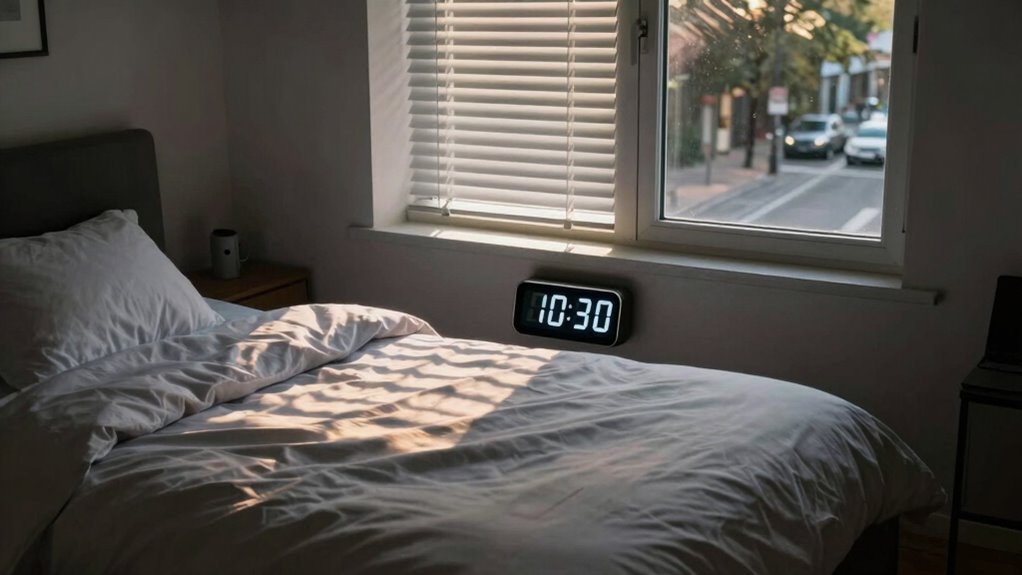
Your sleep schedule can easily be affected by light exposure and noise levels in your environment. Bright screens before bed or inconsistent lighting can make falling asleep harder. Using smart lighting that adjusts to natural circadian rhythms can help reinforce your sleep routine. Additionally, air quality plays a role in restful sleep, as poor indoor air can cause discomfort or breathing issues that disturb your rest. Employing air quality monitors can help you keep track of pollutants and allergens that impact sleep quality. Maintaining proper ventilation can also help improve sleep quality. Loud noises can wake you up during the night. Being mindful of these factors helps reinforce your sleep routine and improves overall rest.
Light Exposure Patterns
Light exposure plays a crucial role in regulating your sleep patterns, as it influences your body’s internal clock, or circadian rhythm. Proper light exposure patterns help reinforce healthy sleep/wake cycles, especially through morning sunlight. When you get natural light early in the day, it signals your brain to stay alert and suppress melatonin production, making it easier to fall asleep at night. Conversely, exposure to artificial light at night can delay sleep onset. To optimize your sleep, consider these factors: 1. Aim for morning sunlight exposure within the first hour after waking. 2. Limit screen time and artificial light in the evening. 3. Maintain consistent light exposure patterns daily, even on weekends. Consistent light exposure patterns help reinforce your circadian rhythm and improve sleep quality. Additionally, understanding your light exposure habits can help identify disruptions to your sleep schedule and guide adjustments. Regular light-dark cycles are essential for maintaining your body’s natural rhythms and overall sleep health.
Noise and Distractions
Noise and distractions in your environment can considerably disrupt your sleep schedule, making it harder to fall asleep or stay asleep throughout the night. Sudden sounds, like sirens or loud neighbors, cause sleep interruptions that can wake you multiple times.
Using white noise can help mask these disruptions, creating a consistent background sound that reduces the impact of unexpected noises. This steady noise helps your brain focus less on environmental disturbances, promoting deeper sleep.
Distractions such as electronic devices or talking nearby also interfere with your sleep cycle, especially if they cause you to ruminate or become alert. Minimizing these distractions and incorporating white noise when necessary can reinforce your sleep patterns, leading to fewer awakenings and more restorative rest.
Signs That Your Wake-Ups Might Be a Sleep Disorder

If you frequently wake up feeling unrefreshed or find yourself tossing and turning throughout the night, these could be signs of a sleep disorder. Disruptions in your sleep stages might prevent you from reaching restorative deep sleep, leaving you exhausted. Pay attention to your dreams during sleep analysis; frequent nightmares or vivid dreams can signal underlying issues.
Additionally, waking up consistently at the same time, despite attempts to change your schedule, may indicate a sleep disorder. Consider these signs:
- Repeatedly waking up during the night without explanation
- Experiencing loud snoring or gasping for air, which may point to sleep apnea
- Having difficulty falling asleep or staying asleep, despite feeling tired
Recognizing these signs can help identify a sleep disorder early.
Practical Tips to Reset Your Sleep Schedule and Stop Waking Up at the Same Time

Resetting your sleep schedule can be challenging, but with intentional adjustments, you can stop waking up at the same time each morning. Start by establishing consistent bedtime rituals, such as reading or gentle stretches, to signal your body it’s time to sleep.
Establish consistent bedtime rituals to signal your body it’s time to sleep.
Pay attention to your sleep environment—keep your room cool, dark, and quiet to promote restful sleep. Avoid screens and caffeine close to bedtime, as they can disrupt your circadian rhythm.
Set a regular wake-up time, even on weekends, to reinforce your new schedule. Over time, these small changes help your body adjust, making it easier to fall asleep and wake up at desired times.
Patience and consistency are key to resetting your sleep patterns effectively.
Frequently Asked Questions
Can Stress or Anxiety Cause Me to Wake up at the Same Time Nightly?
Yes, stress and anxiety can cause you to wake up at the same time nightly. Stress-related awakenings often occur because your mind stays active, making it hard to stay asleep.
Anxiety-induced insomnia can also disrupt your sleep cycle, leading to consistent early awakenings. When your worries dominate your thoughts, you might find yourself waking up at the same time each night, making restful sleep difficult.
Does Age Affect the Consistency of My Wake-Up Times?
Did you know that over 60% of adults experience changes in sleep patterns as they age? Age can definitely affect the consistency of your wake-up times because circadian rhythms shift, and hormonal changes occur.
These biological adjustments may cause you to wake up earlier or at irregular times. Staying consistent with sleep routines and managing stress can help mitigate some age-related disruptions in your sleep schedule.
How Do Medication and Supplements Impact Sleep Patterns?
Medication and supplements can markedly impact your sleep patterns. Some medications may cause side effects like insomnia or drowsiness, disrupting your usual wake-up times.
Supplements, like melatonin or herbal remedies, can boost sleep quality if they’re effective for you, but their efficacy varies. Always consult your healthcare provider to understand how these options might influence your sleep, ensuring you choose safe and effective solutions tailored to your needs.
Can Dreaming Influence Why I Wake up at Specific Times?
They say, “Dreams are the whispers of your subconscious,” and they can influence your waking times.
Dream symbolism often occurs during REM cycles, which are lighter sleep stages, making you more likely to wake up.
If you notice waking at specific times, it might relate to recurring dreams or emotional processing during REM.
Paying attention to your dreams can reveal underlying stress or unresolved issues affecting your sleep.
What Role Do Hydration Levels Play in Waking During the Night?
Hydration levels considerably influence your nighttime awakenings. When your hydration balance is off, electrolyte levels can become imbalanced, causing disruptions in your sleep.
You might wake up feeling thirsty or cramped due to low electrolyte levels. To reduce nighttime awakenings, stay well-hydrated during the day, but avoid overhydration close to bedtime.
Maintaining a proper hydration balance helps keep your sleep cycles steady and minimizes interruptions.
Conclusion
By understanding your sleep cycles and internal clock, you can start to break free from those nightly repeats. Imagine your sleep as a gentle river, flowing naturally, guided by your habits and environment. When you tune into your body’s signals and adjust your routines, you’ll find the currents smoother, helping you wake refreshed, not stuck in the same time loop. Embrace these changes, and let your nights become peaceful, restorative journeys.