
To improve your sleep environment, keep your room cool between 60–67°F and adjust bedding for the season. Block out light with blackout curtains or a sleep mask and limit blue light from screens before bed. Reduce noise with soundproofing, white noise, or earplugs. Stick to a consistent schedule, even on weekends, and gradually shift sleep times if needed. Managing these factors can make a big difference in your sleep quality—exploring these tips can help you wake refreshed.
Key Takeaways
- Maintain room temperature between 60–67°F (15–19°C) for optimal comfort and sleep quality.
- Use blackout curtains, sleep masks, and dim lighting to promote melatonin production and signal bedtime.
- Reduce noise with soundproofing, white noise machines, or earplugs to ensure uninterrupted sleep.
- Establish a consistent sleep schedule, going to bed and waking up at the same times daily to regulate circadian rhythms.
- Adjust bedding and room environment seasonally to optimize temperature, light, and comfort for restful sleep.
How Temperature Affects Your Sleep Quality

Temperature plays a crucial role in determining how well you sleep. If your room is too hot or cold, you might experience sleep deprivation, making it harder to fall asleep or stay asleep through the night.
Optimal sleep depends on maintaining the right room temperature for restful nights.
A comfortable temperature helps regulate your body’s core temperature, promoting deeper, more restorative sleep. When your environment isn’t ideal, you may find yourself tossing and turning, which disrupts your REM cycles—key for dream therapy and emotional processing. Additionally, temperature regulation is essential for maintaining optimal sleep patterns and overall health. Proper temperature control can also help mitigate disturbances caused by temperature fluctuations, which can fragment sleep and reduce its quality. Using smart thermostats can provide precise temperature adjustments that support better sleep environments.
Maintaining a cool, consistent temperature supports your overall sleep quality and helps prevent disturbances caused by temperature fluctuations. Proper temperature control is a simple yet powerful step toward better sleep, and incorporating sleep-friendly environment features like blackout curtains or breathable bedding can further enhance your rest.
How Light Regulates Your Sleep and Wake Cycles

Light exposure directly influences your sleep and wake cycles by controlling melatonin production. Darkness helps your body produce melatonin, making it easier to fall asleep. Additionally, fostering a digital-friendly environment can support healthy sleep habits by reducing screen time before bed. Understanding these effects can help you optimize your environment for better sleep quality. Incorporating light regulation strategies can further enhance your circadian rhythm and overall sleep health. Proper light management is essential for maintaining a balanced sleep-wake cycle and improving overall well-being. Being aware of natural light patterns can help you synchronize your sleep schedule with the environment and home lighting practices can be tailored to support your sleep goals.
Melatonin and Light Exposure
Our bodies rely on the natural rhythm of light and dark to regulate sleep and wake cycles, with melatonin playing a central role. Exposure to light influences your circadian rhythm by signaling your brain when to wake and when to sleep. Bright light during the day helps reinforce this cycle, while insufficient light can disrupt it. Artificial light, especially blue light from screens, can suppress melatonin production, making it harder to fall asleep. Light therapy is a technique that uses controlled light exposure to reset your circadian rhythm, especially helpful for shift workers or those with circadian rhythm disorders. To visualize this process, consider: – Morning sunlight boosting alertness – Evening screens delaying sleep – Melatonin suppression by blue light – Light therapy resetting your clock – Consistent light exposure aligning your sleep schedule Youngster Choice Additionally, maintaining appropriate light levels in your sleep environment can help support your body’s natural circadian rhythm and improve overall sleep quality. For example, light exposure patterns throughout the day are crucial for maintaining a healthy sleep-wake cycle. Recognizing how light intensity impacts your melatonin levels can further help optimize your sleep environment.
Darkness Promotes Sleep
Darkness plays a crucial role in signaling your body that it’s time to sleep, helping to regulate your internal clock. A dark sleep environment enhances the darkness benefits, making it easier for your body to produce melatonin, the hormone that promotes sleep. When your surroundings are dim, your brain recognizes that it’s night and shifts into sleep mode. Bright lights or exposure to artificial illumination can disrupt this process, delaying sleep onset and reducing sleep quality. Creating a dark, quiet, and comfortable sleep environment supports your circadian rhythm, ensuring you fall asleep faster and enjoy deeper rest. Incorporating Free Floating elements like blackout curtains or sleep masks can further improve darkness levels, enhancing your sleep quality. Emphasizing darkness benefits helps you establish a consistent sleep pattern, leading to more restorative sleep and better overall health.
Morning Light Reset Rhythms
Since your body naturally responds to the rise and fall of daylight, exposure to morning light plays a vital role in regulating your sleep and wake cycles. Morning light helps reset your circadian rhythms, signaling your brain that it’s time to wake up. When you get sunlight early in the day, it suppresses melatonin production, making you feel alert. This alignment helps guarantee you fall asleep easily at night. To maximize these benefits, imagine: – Stepping outside or near a window shortly after waking – Allowing natural light to enter your bedroom – Spending 20-30 minutes in morning sunlight – Using light therapy lamps if natural light is limited – Maintaining consistent morning exposure daily. Incorporating morning light into your routine supports healthier sleep patterns and enhances overall well-being. Consistent light exposure further reinforces your body’s natural sleep-wake cycle, promoting better rest and alertness throughout the day. Additionally, light regulation is essential for maintaining overall circadian health, which can be supported by understanding the influence of sleep environment factors. Recognizing the importance of light timing can help optimize your circadian rhythm and improve your sleep quality. Engaging in morning light exposure can also boost mood and energy levels, contributing to overall mental health.
How to Use Light to Sleep Better and Wake Up Refreshed
You can improve your sleep by managing light exposure through simple techniques like dimming lights before bed and ensuring your room stays dark at night.
In the morning, get exposure to natural light to help wake your body naturally.
These strategies reset your internal clock, making it easier to fall asleep and wake up feeling refreshed.
Light Dimming Techniques
Using light strategically can substantially improve your sleep quality and help you wake up feeling refreshed. Light dimming techniques are essential for creating a calming bedroom environment and optimizing bedroom lighting control.
When you dim the lights before bed, you signal to your brain that it’s time to wind down. Consider these strategies:
- Use dimmable lamps or smart lighting systems
- Install blackout curtains to block outside light
- Set timers to gradually lower brightness
- Avoid screens close to bedtime
- Use warm, soft-colored bulbs for a cozy atmosphere
These methods help reduce blue light exposure and promote melatonin production, making it easier to fall asleep and wake up refreshed.
Proper bedroom lighting regulation is key to establishing a healthy sleep environment, ensuring your body transitions smoothly from wakefulness to rest.
Morning Light Exposure
Morning light exposure can markedly influence your sleep patterns and overall restfulness. Bright natural light in the morning helps regulate your internal clock, making it easier to wake up refreshed. To maximize benefits, spend at least 20 minutes outside or near a window soon after waking. Use sleep tracking apps to monitor your sleep quality and identify patterns. Consider dream journaling to reflect on sleep quality and how morning light impacts your dreams. Imagine this scene:
| Morning Light Effect | Your Response |
|---|---|
| Brightens your mood | Feel more energized |
| Regulates sleep cycle | Fall asleep faster tonight |
| Enhances alertness | Stay focused during the day |
| Reinforces routine | Sleep better over time |
Consistently exposing yourself to morning light helps set a healthy sleep-wake cycle, leading to better mornings. Understanding circadian rhythms further emphasizes the importance of morning light exposure for maintaining a balanced sleep pattern.
Sleep Environment Darkness
Creating a dark sleep environment is essential for restorative rest, especially since light exposure can interfere with melatonin production. Proper bedroom lighting boosts sleep hygiene and helps you fall asleep faster while waking refreshed. Using blackout curtains can eliminate outside light sources that disrupt your sleep cycle, ensuring a more consistent rest pattern. To achieve darkness, consider these tips:
- Use blackout curtains to block outside light entirely
- Turn off or cover electronic devices with indicator lights
- Opt for dim, warm lighting before bed to signal your body it’s time to wind down
- Avoid using bright screens at least an hour before sleep
- Use a sleep mask if light still seeps in around your room
- Incorporating light management techniques can further optimize your sleep environment by controlling exposure to artificial light sources.
How to Reduce Noises That Disrupt Your Sleep

Noises can easily disturb your sleep and make it harder to get a restful night. To block out disruptive sounds, consider using white noise machines or fans to create a consistent background sound that masks sudden noises. Additionally, soundproofing techniques can significantly reduce external noise infiltration, further enhancing sleep quality. Earplugs are another effective solution; they can markedly reduce noise levels and help you stay asleep. When choosing earplugs, find a pair that fits comfortably without causing pain or discomfort. Keep in mind that some sounds, like loud traffic or sirens, may require additional measures, such as home automation or soundproofing, or relocating your bedroom. Creating a quiet environment minimizes interruptions and promotes deeper, more restorative sleep. Using sleep environment modifications can further optimize your surroundings for restful sleep. Incorporating acoustic treatments can also help absorb sound waves, reducing echo and noise reflection in your room. Experiment with different tools to find what works best for your sleeping habits and environment, and consider noise reduction strategies to enhance overall sleep comfort.
How to Set Your Bedroom Temperature for Better Sleep
Setting your bedroom temperature just right can improve your sleep quality considerably. The ideal range is typically between 60 and 67 degrees Fahrenheit, but comfort varies for each person.
Keep in mind that your body’s natural sleep cycles also influence how temperature affects your rest.
Ideal Temperature Range
Maintaining the right bedroom temperature is essential for quality sleep, as temperatures that are too hot or too cold can disrupt your rest. The ideal range is typically between 60-67°F (15-19°C), promoting comfort regardless of sleep posture.
Your bedding materials play a role; lightweight, breathable fabrics like cotton help keep you cool, while flannel adds warmth in colder months. Consider how your sleep posture affects heat retention—sprawling positions may require cooler settings, while curled-up ones might need a bit more warmth.
To visualize the environment:
- Soft, breathable sheets
- Light comforters or duvets
- Temperature-regulating pillows
- Fans or heaters for adjustments
- Dark, insulated curtains for temperature control
Finding the right balance ensures your body stays comfortable, aiding deeper, restorative sleep.
Adjusting for Comfort
To achieve better sleep, you need to actively adjust your bedroom temperature to suit your comfort preferences. Your sleep posture and mattress comfort influence how temperature feels, so find a balance that supports relaxation. Use the table below to identify your ideal setup:
| Sleep Posture | Mattress Comfort |
|---|---|
| On your back | Firm mattress for support |
| On your side | Medium firmness for pressure relief |
| Stomach sleeper | Soft mattress for flexibility |
| Shift positions | Adjustable bedding helps |
| Sensitive to temperature | Breathable covers aid comfort |
Adjust the thermostat accordingly, and consider bedding layers to fine-tune your comfort. Small changes can enhance your sleep environment, helping you fall asleep faster and stay asleep longer.
Temperature and Sleep Cycles
Since your body naturally cools down during sleep, adjusting your bedroom temperature to align with your sleep cycles can considerably improve rest quality. Achieving ideal thermal comfort enhances sleep insulation, helping you stay asleep longer and wake refreshed.
To set the right temperature, aim for a cool environment between 60-67°F (15-19°C). Consider these factors:
- Use a thermostat to maintain consistent temperature
- Opt for breathable bedding materials
- Keep windows slightly open for fresh air
- Use a fan or air conditioner if needed
- Avoid overheating by dressing in lightweight sleepwear
Balancing temperature ensures your body doesn’t work harder to regulate heat, promoting deeper, uninterrupted sleep. Proper sleep insulation through temperature control supports your body’s natural cooling process, leading to better sleep cycles.
Tips for Using Light and Temperature to Improve Your Sleep Environment
Creating the right sleep environment involves paying close attention to light and temperature, as both substantially influence your ability to fall asleep and stay asleep.
To optimize light, dim the lights an hour before bed and consider blackout curtains to block outside illumination. Use warm, soft lighting if you need to read or unwind.
Temperature plays a critical role; keep your room cool, ideally around 60-67°F (15-19°C). Adjust your bedding materials to match the temperature—breathable sheets and a suitable sleep position can improve comfort.
For example, sleeping on your back with light, natural fabrics helps regulate heat and reduces overheating.
Small adjustments to lighting and temperature create a sleep-friendly environment that promotes deeper, more restorative rest.
How to Keep Your Sleep Environment Quiet and Peaceful
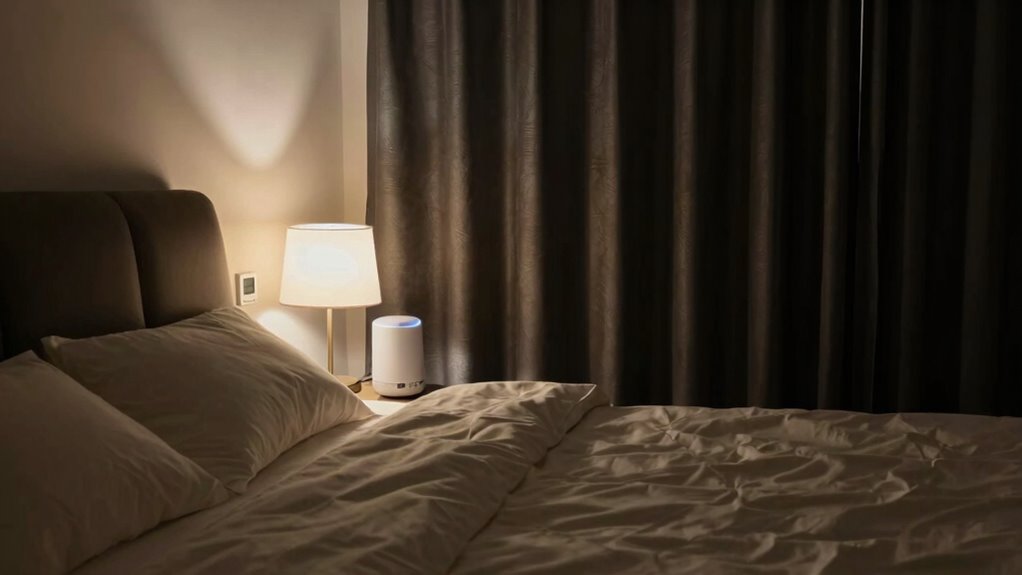
Maintaining a quiet and peaceful sleep environment is essential for restorative rest. You can achieve this by applying soundproofing techniques to minimize outside noise and using bedroom aromatherapy to promote relaxation.
Creating a peaceful sleep space with soundproofing and calming scents promotes restorative rest.
Here are some ways to create a tranquil space:
- Install weatherstripping or acoustic panels on windows and walls
- Use heavy curtains or blackout blinds to block sound
- Place soft rugs or carpets to absorb noise
- Incorporate calming scents like lavender or chamomile through diffusers
- Keep electronic devices away or turn off notifications
These strategies help reduce disruptions, creating a serene atmosphere.
Combining soundproofing with soothing aromas enhances your sleep quality, ensuring you wake up refreshed and ready for the day.
How to Maintain a Consistent Sleep Schedule
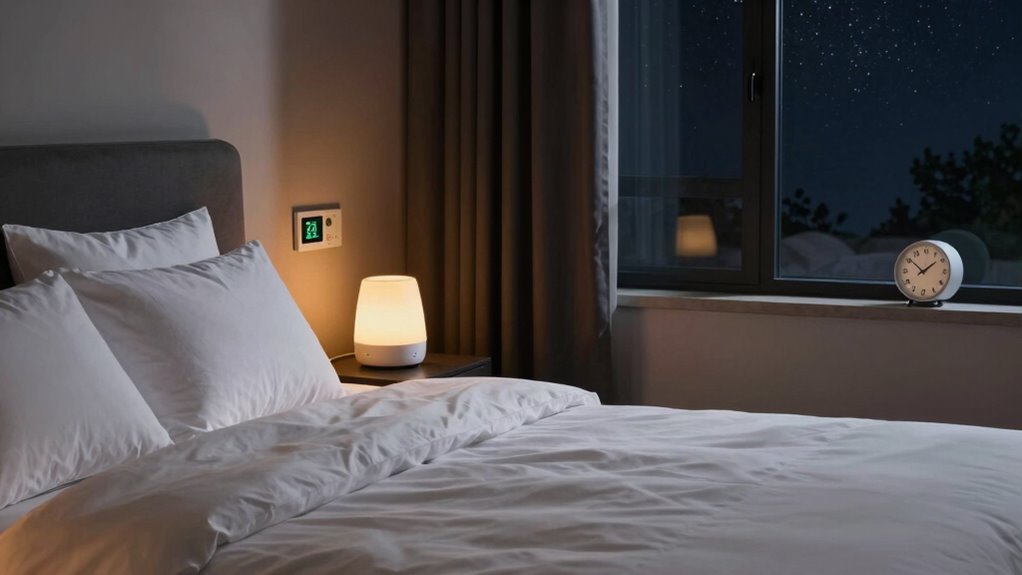
After establishing a peaceful sleep environment, the next step is to develop a consistent sleep schedule. Good sleep hygiene involves going to bed and waking up at the same times every day, even on weekends. This consistency helps regulate your internal clock, promoting circadian alignment.
When your body knows when to sleep and wake, you’ll fall asleep faster and experience more restorative rest. Avoid irregular bedtimes, and try to keep your schedule steady, even during busy periods. If you need to shift your sleep times, do so gradually—around 15 to 30 minutes at a time.
Maintaining a regular schedule reinforces your body’s natural rhythms, making it easier to fall asleep and wake feeling refreshed. Consistency is key to long-term sleep quality.
Adjusting Your Sleep Environment for Different Seasons
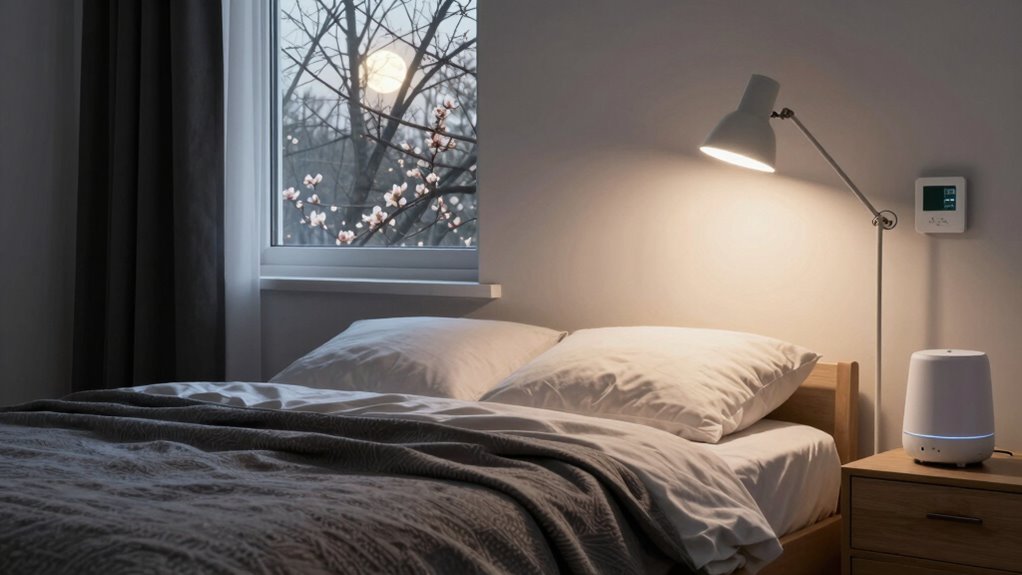
As the seasons change, so do the conditions that affect your sleep environment, making it vital to adapt your setup accordingly. During colder months, switch to seasonal bedding like flannel sheets or heavier blankets to stay warm.
In warmer seasons, opt for lightweight, breathable fabrics such as cotton or linen. Your sleep position might also shift; sleeping on your back can help evenly distribute warmth, while a side or fetal position can conserve heat.
Consider the room’s temperature and adjust your bedding layers accordingly. Adding or removing blankets ensures comfort without overheating or chilling.
Keep in mind, proper seasonal bedding and mindful sleep positioning create an ideal environment that aligns with seasonal changes, promoting restful sleep throughout the year.
Troubleshooting Common Sleep Environment Problems
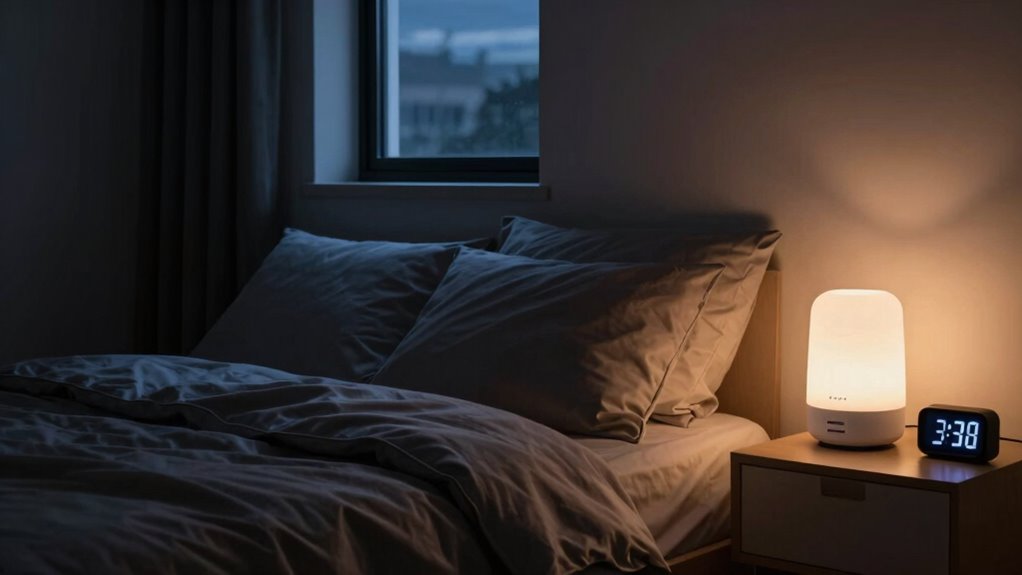
Even with thoughtful seasonal adjustments, sleep environment problems can still interfere with restful sleep. If you wake up feeling uncomfortable, consider your sleep position and whether it’s putting strain on your body.
Adjust your bedding materials—opt for breathable sheets if you overheat or layered blankets if you’re cold. Poor sleep position can cause aches, so try different arrangements to find what supports your spine and joints.
Noise and light disturbances often wake you up; using blackout curtains or white noise machines can help. Also, evaluate your mattress and pillows for comfort and support.
Frequently Asked Questions
How Does Humidity Affect Sleep Quality?
Humidity levels directly impact your sleep quality by affecting moisture control in your sleeping environment. If humidity is too high, you may feel damp, sticky, and uncomfortable, disrupting your rest.
On the other hand, low humidity can cause dry skin and throat irritation, making it harder to fall asleep. Maintaining balanced humidity levels helps you stay comfortable, promotes better moisture regulation, and ensures a more restful, uninterrupted sleep.
Can Air Quality Influence Sleep Disturbances?
Air quality can definitely influence your sleep disturbances, especially if you’re exposed to air pollution. Poor air quality can cause respiratory issues, making it harder to breathe comfortably, which disrupts your sleep.
Breathing issues, coughing, and congestion can all lead to frequent awakenings, reducing sleep quality. To improve your rest, guarantee good ventilation, minimize exposure to pollutants, and consider air purifiers that help filter out harmful particles.
What Role Does Mattress Material Play in Sleep Comfort?
Your mattress material plays a vital role in sleep comfort by providing proper support and aligning your spine. Bedding materials like memory foam or latex conform to your body, reducing pressure points.
While innerspring offers bounce and support. Choosing the right mattress support and quality bedding materials guarantees you stay comfortable throughout the night, helping you fall asleep faster and wake up feeling refreshed.
Your sleep quality depends on the right combination of support and material.
How Do Electronic Devices Impact Sleep Environment?
Electronic devices impact your sleep environment by increasing screen time, which exposes you to blue light. This light suppresses melatonin production, making it harder for you to fall asleep and disrupting your sleep cycle.
To improve your sleep, avoid screens at least an hour before bed, or use blue light filters. Reducing device use helps your body prepare for restful sleep, enhancing overall sleep quality.
Are There Recommended Scents to Improve Sleep Environment?
Think of your sleep space as a calming garden, and the scents as gentle blooms. To improve your sleep environment, try lavender or chamomile—they’re known for aromatherapy benefits that promote relaxation.
When selecting scents, opt for pure essential oils and avoid overpowering fragrances. Use a diffuser or a few drops on a pillow to create a soothing atmosphere, helping you drift into restful sleep effortlessly.
Conclusion
So there you have it—master the perfect sleep environment, and you’ll be snoozing like royalty. Ignore these tips, and you’ll be tossing and turning, counting sheep that never arrive. Who knew that temperature, light, noise, and timing were so essential? But hey, if you prefer a nightly dance with insomnia, maybe just leave everything as is. For everyone else, follow these simple rules and finally enjoy the sweet dreams you’ve been missing.