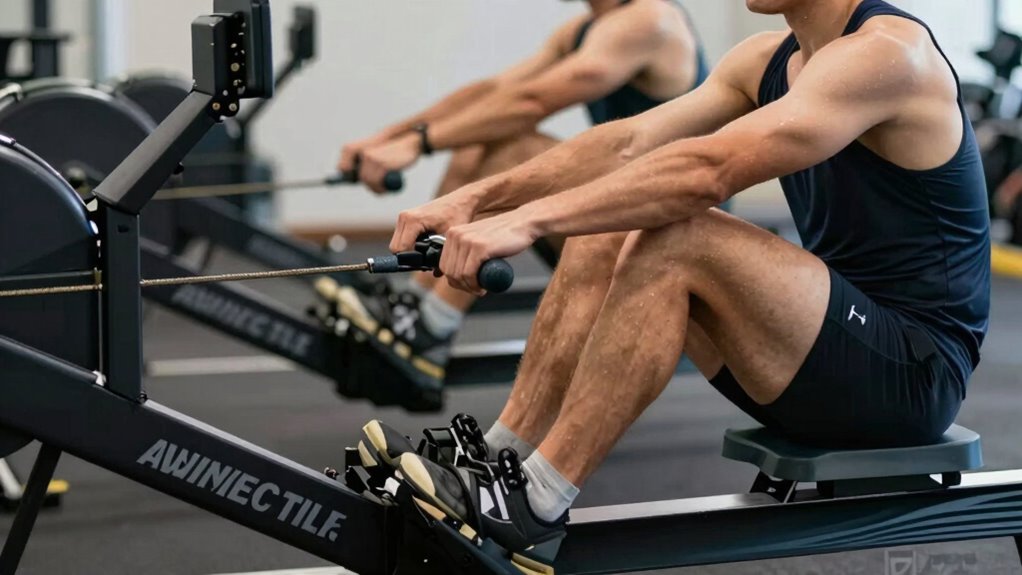
To master the rowing stroke, focus on the four parts: setup, drive, finish, and recovery. Start with a proper posture, sitting upright with relaxed shoulders and engaged core. During the drive, push with your legs, lean back slightly, then pull the handle towards your chest. At the finish, extend fully and control your movement, then smoothly slide back in the recovery phase. Paying attention to these steps will improve your form and performance—keep going to learn more.
Key Takeaways
- The stroke consists of four phases: catch, drive, finish, and recovery, each requiring proper form and timing.
- Proper posture involves sitting upright with a straight back, relaxed shoulders, and engaged core throughout the stroke.
- During the drive, push with the legs, lean back slightly, and pull the handle toward the lower chest smoothly.
- The finish involves fully extending the legs, pulling the handle in, then preparing to recover with controlled movement.
- During recovery, extend arms forward, lean slightly, bend knees, and maintain a steady breathing rhythm to reset for the next stroke.
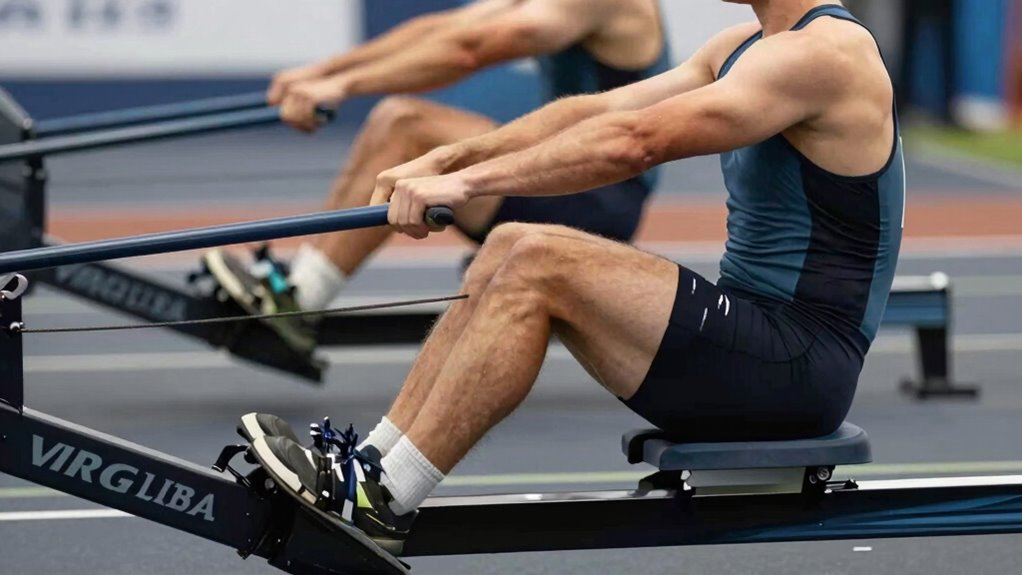
Have you ever wondered how to get the most out of your rowing machine workout? Mastering the technique is essential, and understanding the four-part stroke can make all the difference. The first part of a proper rowing stroke is the catch, where you position yourself at the front of the machine. Here, proper posture is key. Sit upright with your back straight, shoulders relaxed, and core engaged. Your arms should extend forward, gripping the handle lightly, but not overly tight. As you prepare to pull, focus on your breathing rhythm—inhale deeply as you set up, ensuring your lungs are filled with enough air to sustain the effort. Maintaining a steady breathing pattern helps you stay relaxed and oxygenate your muscles effectively throughout the workout.
Next, you pull through the drive phase. This begins with your legs pushing off powerfully against the footrests, driving your legs straight while keeping your core tight. As your legs extend, start to lean back slightly at the hips, engaging your back muscles. Your arms should bend naturally, pulling the handle toward your lower chest. At this point, your breathing should be steady, with a controlled exhale as you exert force through the drive. Remember, maintaining proper posture during this phase prevents unnecessary strain and maximizes efficiency. Keep your shoulders down and relaxed—don’t hunch or shrug—and avoid overextending your back. The power in this phase comes predominantly from your legs, with your arms and back providing support and control.
As you reach the finish, your legs are fully extended, and you’ve pulled the handle into your body. This is the peak of the stroke, requiring a brief pause to prepare for the recovery. During this shift, keep your core engaged and your back straight. Your breathing should slow slightly as you prepare to return to the catch position. The recovery phase is just as important as the drive; it involves extending your arms forward, leaning your torso slightly forward from the hips, and then bending your knees to slide back to the starting position. During this phase, focus on a smooth, controlled movement and maintain a consistent breathing rhythm—inhale as you recover—so you can be ready for the next powerful drive. Additionally, paying attention to your contrast ratio can help optimize your visual setup for watching instructional videos or tracking your workout data effectively.

Rowing Machines for Home, MOSUNY Magnetic Rowing Machine, 16-Level Adjustable Resistance, 350 lb Weight Capacity, Upgraded Dual Slide Rails with Data Display Screen
16-Level Powerful Magnetic:MOSUNY rowing machine is equipped with a high-quality magnetic control system and an upgraded 16-level adjustable…
As an affiliate, we earn on qualifying purchases.
As an affiliate, we earn on qualifying purchases.
Frequently Asked Questions
How Can I Prevent Common Rowing Form Injuries?
To prevent common rowing form injuries, focus on maintaining an ergonomic posture throughout your workout. Keep your back straight, engage your core, and avoid overreaching. Proper technique reduces strain on your shoulders, back, and knees. Listen to your body and start with lighter resistance to build strength gradually. Consistently practicing injury prevention tips guarantees you stay safe, comfortable, and able to enjoy the benefits of rowing long-term.
What Are the Best Drills to Improve Stroke Efficiency?
Ever wondered how to perfect your stroke? Focus on technique drills that target stroke anatomy, like pause drills, where you hold each phase briefly, or catch drills to refine your timing. These drills help you develop muscle memory and improve efficiency. Incorporate them into your routine regularly, and you’ll notice smoother, more powerful strokes. Isn’t it time to take your rowing to the next level?
How Do I Adjust the Machine for Different Body Sizes?
To adjust the machine for different body sizes, start with ergonomic adjustments. Move the seat forward or backward to make sure your legs extend comfortably without overreaching, and sit tall with your hips against the seat. Adjust the foot straps snugly to secure your feet, and set the handle height so your arms can extend fully without strain. Proper seat positioning helps you maintain correct form and maximize efficiency.
What Is the Ideal Stroke Rate for Beginners?
For beginners, an ideal stroke cadence is around 20 to 24 strokes per minute, allowing you to focus on proper form and breathing. Use pacing strategies like starting slow and gradually increasing your cadence as you get comfortable. Keep your movements smooth and controlled, ensuring you’re not rushing through the stroke. This steady pace helps build endurance and technique without overexerting yourself early on.
How Can I Maintain Motivation During Long Rowing Sessions?
Think of your motivation as a steady flame that needs nurturing. To stay inspired during long rowing sessions, use motivation strategies like setting small goals and tracking progress. Focus on building mental resilience by practicing mindfulness and positive self-talk. Remember, each stroke brings you closer to your fitness goals. Keep your eyes on the horizon, and you’ll find the strength to push through even the toughest rows.
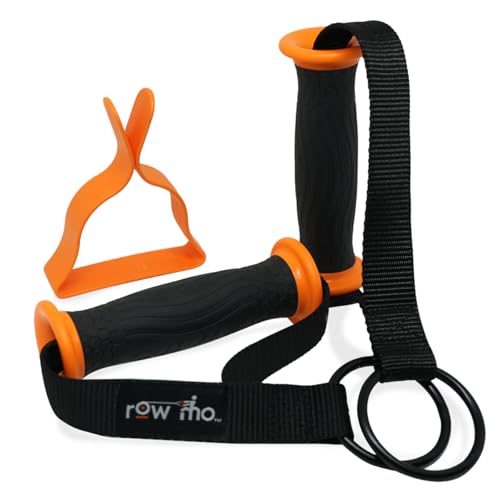
RowMo Grip System for Concept 2 Rowing Machine, Ergonomic Handles with Straps, Black and Orange
ENHANCED ROWING EXPERIENCE: RowMo Handles transform your Concept 2 rowing machine with oar-like movements and full range of…
As an affiliate, we earn on qualifying purchases.
As an affiliate, we earn on qualifying purchases.
Conclusion
Now that you understand the four-part stroke, you’re ready to take your rowing to the next level. Focus on perfecting each phase, stay consistent, and listen to your body. With dedication, you’ll see improvements in strength and endurance. Are you willing to commit to mastering this technique and revealing your full potential? Remember, every powerful stroke brings you closer to your fitness goals. Keep rowing, and enjoy the incredible journey ahead.

YPOO Rowing Machine for Home, 350 LB Capacity, 16-Level Silent Resistance, Magnetic Rowing Machines for Home Foldable, Full-Body Workout Compact Rowing Machine for Cardio & Strength with APP Support
【Power & Silent Magnetic Resistance】Enjoy powerful and quiet workouts with the YPOO Magnetic Rowing Machine. Featuring 99 lbs…
As an affiliate, we earn on qualifying purchases.
As an affiliate, we earn on qualifying purchases.

Indoor Rowing: Your Complete Guide to Training, Programming, and Workouts
As an affiliate, we earn on qualifying purchases.
As an affiliate, we earn on qualifying purchases.