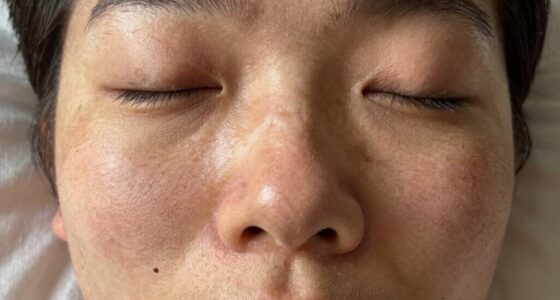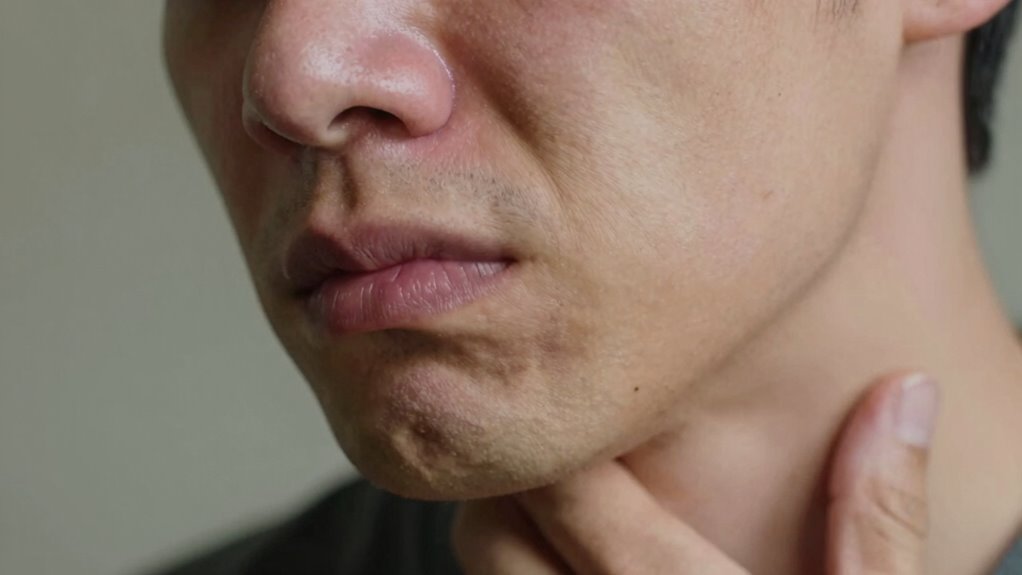

A tight jaw often comes from muscle tension caused by stress, teeth grinding, or jaw disorders like TMJ. You might notice discomfort, clicking, headaches, or difficulty opening your mouth fully. Gentle exercises, massage, and managing stress can help loosen your jaw. If your symptoms persist or worsen, seeing a professional is important. Keep exploring these causes and solutions to better understand how to ease your tight jaw.
Key Takeaways
- Muscle tension from stress, grinding, or clenching often causes jaw tightness.
- TMJ disorders can lead to stiffness, clicking, and limited jaw movement.
- Gentle jaw exercises and massage help relax and loosen tight muscles.
- Managing stress and avoiding teeth grinding reduces jaw muscle overuse.
- Seek professional help if symptoms persist or worsen beyond a few days.
What Causes a Tight Jaw and How Do You Recognize It?

Have you ever noticed your jaw feeling stiff or tense without knowing why? This sensation often results from jaw muscle tension, which can develop due to stress, grinding, or jaw clenching. One common cause is TMJ disorder, a condition affecting the temporomandibular joint, leading to pain and tightness. When your jaw muscles become overworked or strained, they tighten, making it difficult to open or close your mouth comfortably. You might also feel clicking or popping sounds in your jaw or experience headaches and ear discomfort. Recognizing these signs early helps you understand that your tight jaw isn’t just a muscle issue but could be related to TMJ disorder or other underlying causes. Paying attention to these symptoms is the first step toward relief.
How Can You Tell If Your Jaw Is Tight and When to Seek Help?

You can tell your jaw is tight if you notice persistent discomfort, difficulty opening or closing your mouth, or a feeling of stiffness in the jaw muscles. Jaw pain and facial tension may become more noticeable, especially after stressful periods or jaw clenching. Pay attention to signs like clicking sounds or limited movement, which indicate ongoing tightness. Seek help if your symptoms worsen or persist beyond a few days. Understanding the causes of jaw tightness can help you address underlying issues effectively. Being aware of symptoms of TMJ disorder is also crucial for early diagnosis and management. Additionally, being informed about treatment options can guide you toward appropriate care and relief. Remember, impactful quotes about health and resilience can provide motivation during recovery.
What Are Simple Exercises to Loosen Your Jaw?

To help loosen a tight jaw, several simple exercises can be effective when done regularly. One effective method is using massage techniques—gently massaging your jaw muscles in circular motions can relieve tension and improve circulation. Incorporate stretching exercises by opening your mouth wide, then slowly closing it, repeating this several times to stretch the jaw muscles gently. You can also try side-to-side jaw movements or moving your jaw forward and backward. These exercises help reduce stiffness and increase flexibility. Additionally, paying attention to your sleep environment and reducing stress can contribute to less muscle tension. Ensuring a balanced lifestyle by managing stress and getting adequate rest is essential for overall muscle relaxation. Incorporating outdoor activities into your routine can also help alleviate muscle tension by promoting relaxation and reducing stress levels. Maintaining proper posture throughout the day can prevent unnecessary strain on your jaw muscles. Be consistent with your routine, performing these movements daily for best results. Remember to stay relaxed during exercises, avoiding any pain or discomfort. Additionally, practicing relaxation techniques can further ease muscle tension. Regularly practicing these simple techniques can make a noticeable difference in easing jaw tightness over time.
How Do Stress and Teeth Grinding Make Your Jaw Tight?

Stress and teeth grinding often contribute to jaw tightness by causing your jaw muscles to stay tense and overworked. When you’re stressed, your body releases hormones that heighten muscle tension, especially in the jaw area. Teeth grinding, or bruxism, occurs unconsciously, often during sleep, which worsens this tension and leads to persistent tightness. Improving stress management techniques, like deep breathing or meditation, can help reduce muscle strain. Additionally, practicing good sleep hygiene—such as maintaining a regular sleep schedule and avoiding caffeine before bed—can lessen nighttime grinding. These habits not only promote relaxation but also decrease the likelihood of jaw overuse. Managing stress and sleep quality are essential steps to prevent or relieve jaw tightness caused by these factors.
When Should You See a Professional for Persistent Jaw Tightness?

Persistent jaw tightness warrants professional attention when it doesn’t improve with home remedies or worsens over time. If you notice ongoing muscle tension that persists despite rest, it’s time to consult a healthcare provider. Seek help if your jaw feels consistently stiff, painful, or if you experience difficulty opening or closing your mouth. Persistent tension can interfere with jaw relaxation, leading to discomfort or even jaw joint issues. A professional can evaluate if underlying conditions like temporomandibular joint disorder (TMD) or muscle strain are contributing. They may recommend therapies such as physical therapy, stress management, or medications to reduce muscle tension. Understanding Deaf Vibes and how auditory processing influences muscle tension can also be beneficial in comprehensive treatment. When choosing a vacuum cleaner to ease cleaning and reduce stress, considering vacuum features to consider can help ensure you select a model that minimizes physical strain. Additionally, understanding anatomy of the jaw muscles can aid in recognizing early signs of tension. Addressing persistent jaw tightness early can prevent further complications and restore proper jaw function.
Frequently Asked Questions
Can Diet Affect Jaw Tension or Tightness?
Yes, your diet can impact jaw tension due to nutritional factors. Poor diet lacking in essential minerals like magnesium and calcium may increase muscle tightness, including your jaw. Conversely, eating a balanced diet rich in nutrients can promote muscle relaxation and reduce tension. Staying hydrated and avoiding excessive caffeine or processed foods also helps prevent muscle tightness. So, your diet plays a significant role in managing jaw tension effectively.
Are There Natural Remedies for Recurring Jaw Tightness?
For recurring jaw tightness, try some simple, natural remedies. You could focus on stress reduction techniques like meditation or deep breathing to ease tension. Herbal remedies such as chamomile or valerian root might also help relax your jaw muscles. Regular gentle jaw stretches and warm compresses can further soothe soreness. These natural methods can provide relief without harsh chemicals, helping you feel more comfortable and calm.
How Does Posture Influence Jaw Muscle Health?
Your posture directly impacts your jaw muscle health. Poor posture, like slouching or forward head position, strains your neck and jaw muscles, leading to tightness. By practicing posture correction, you keep your head aligned, reducing tension. This promotes muscle relaxation, easing jaw discomfort. Staying mindful of your posture throughout the day helps prevent muscle overuse, ensuring your jaw stays relaxed and healthy.
What Role Do Sleep Habits Play in Jaw Tightness?
Some might think sleep habits don’t affect jaw tightness, but they do. Poor sleep quality and restless sleep can increase muscle tension, leading to a tight jaw. Prioritize restful sleep by establishing a consistent bedtime, avoiding screens before bed, and managing stress. These habits help relax your jaw muscles, reduce tension, and improve overall comfort, making it easier to wake up without jaw pain or stiffness.
Can Medication Side Effects Cause Jaw Muscle Tightness?
Yes, medication effects can cause jaw muscle tightness. Some drugs, especially certain antidepressants or stimulants, may lead to muscle tension as a side effect. Muscle relaxants are usually prescribed to ease this tension, but they can sometimes have the opposite effect. If you notice your jaw tightness worsens after starting medication, talk to your doctor. They might adjust your dosage or suggest alternative treatments to help relieve the tension.
Conclusion
If your jaw feels tight regularly, don’t ignore it—about 10% of people experience jaw tension daily, impacting their comfort and daily life. Recognizing the signs early and practicing simple exercises can make a big difference. Managing stress and avoiding habits like teeth grinding also help. If the tightness persists beyond a few weeks, seeing a professional is key. Taking action now can prevent more serious issues down the road and keep your jaw relaxed.