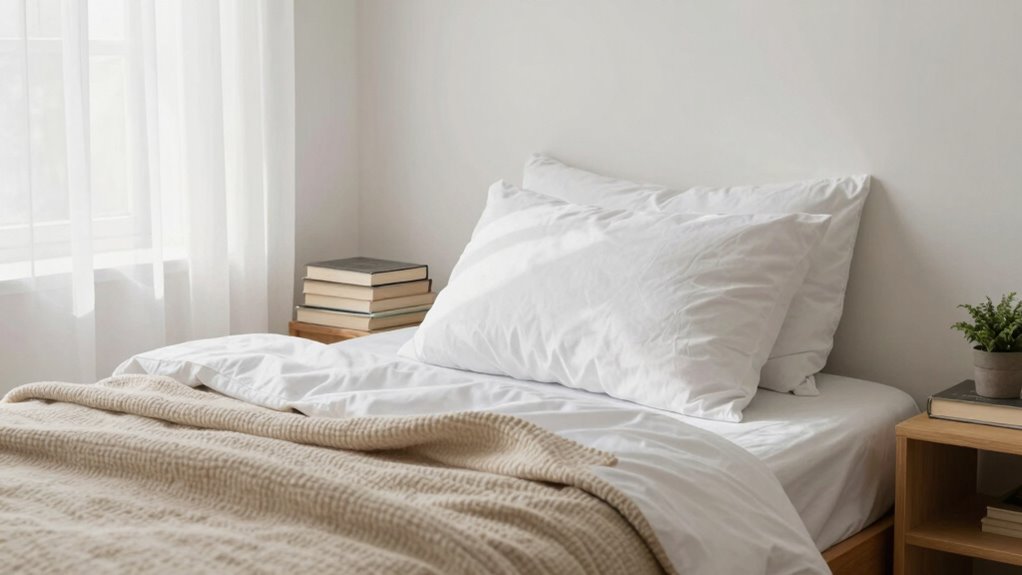

You can improve your sleep setup easily by decluttering your space to remove distractions and using natural light to help regulate your circadian rhythm. Keep your room cool, dark, and well-ventilated by blocking out light sources and opening windows when possible. Use household objects to create white noise or calm sounds, and establish a relaxing pre-sleep routine like gentle stretches or deep breathing. Small, intentional changes make a big difference—explore more tips to enhance your sleep environment.

Prime made for students and young adults
- Fast, free delivery for dorm and study essentials
- Prime Video and Amazon Music included
- Member-only deals
Key Takeaways
- Declutter and organize your sleep space to reduce distractions and create a calming environment.
- Use household items like fans or cushions to generate white noise and improve comfort.
- Maximize darkness with dark cloths or blackout curtains made from existing materials.
- Establish a consistent bedtime routine to reinforce healthy sleep patterns without extra purchases.
- Improve air quality and ventilation by opening windows or using natural methods to promote relaxation.
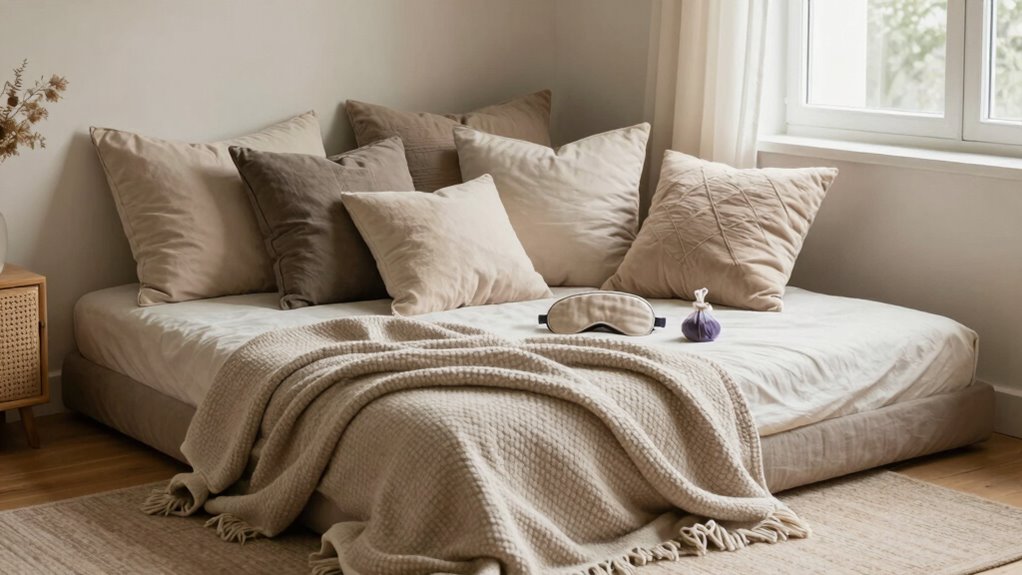
Getting a good night’s sleep doesn’t require expensive gadgets or fancy equipment. Instead, focus on optimizing your sleep environment to make it as comfortable and calming as possible. Start by clearing your space of clutter and anything that might cause distraction or stress. Your bed should be inviting, with clean, comfortable sheets that suit your preferences. If you don’t have a proper mattress, try using extra blankets or layers to improve comfort. Keep the room cool, ideally between 60-67°F, since a slightly lower temperature can help you fall asleep faster and stay asleep longer. Darkness is equally important, so block out any light sources—use blackout curtains or even a makeshift cover from a dark cloth. If noise is an issue, consider using a fan or creating a white noise environment with household objects. These simple adjustments can profoundly improve your sleep environment without spending a dime.
Once your environment is set, turn your attention to relaxation techniques that prepare your mind and body for sleep. Instead of rushing into bed after a hectic day, create a calming pre-sleep routine. Practice deep breathing exercises, where you inhale slowly through your nose, hold for a few seconds, then exhale steadily through your mouth. This helps reduce stress and signals your body that it’s time to wind down. Progressive muscle relaxation is another effective technique; tense each muscle group for a few seconds, then release, gradually relaxing your entire body. Mindfulness meditation, even for just five minutes, can help quiet racing thoughts and improve your overall sleep quality. Avoid screens at least an hour before bed, as the blue light from phones and computers interferes with melatonin production, which is essential for sleep. Instead, read a book, listen to calming music, or engage in gentle stretching to ease your body into rest. Creating an environment that supports air quality and proper ventilation can also contribute to better sleep, as fresh air helps regulate indoor conditions and promote relaxation. Additionally, paying attention to sleep hygiene and consistent routines can reinforce healthy patterns. Incorporating natural light during the day can help regulate your circadian rhythm and improve sleep quality over time. Maintaining a comfortable sleep environment also involves reducing exposure to indoor pollutants and ensuring good ventilation, which can have a positive impact on your sleep quality.
You don’t need costly gadgets or fancy equipment to build a sleep setup that promotes restful nights. Simple changes to your sleep environment—like controlling light, temperature, and noise—and adopting effective relaxation techniques can make a profound difference. By creating a space that feels safe and relaxing, and by calming your mind before bed, you set yourself up for more restorative sleep. Remember, consistency is key; sticking to a regular bedtime and incorporating these habits into your routine will help reinforce healthy sleep patterns over time. You have everything you need within your reach—just a little intentional effort—and you’ll find yourself drifting into better sleep with less stress and more ease.
As an affiliate, we earn on qualifying purchases.
Frequently Asked Questions
How Can I Improve My Sleep Environment on a Tight Budget?
You can improve your sleep environment on a tight budget by using affordable lighting options like dim lamps or soft LED bulbs to create a calming atmosphere. Try making a DIY blackout curtain using old sheets or blankets to block outside light. Keep your room cool and clutter-free, and consider adding relaxing scents like lavender with DIY sachets. These simple, inexpensive changes can help you sleep better without spending much.
Are Natural Remedies Effective for Better Sleep?
Yes, natural remedies like herbal infusions and aromatherapy benefits can effectively improve sleep. You might try chamomile or lavender teas before bed, which are known for their calming effects. Aromatherapy with essential oils like lavender or cedarwood can also promote relaxation. Incorporating these simple, natural solutions into your nightly routine can help you fall asleep faster and enjoy more restful, deeper sleep without needing expensive products.
How Does Room Temperature Affect Sleep Quality?
You’ll find that room temperature plays a big role in your sleep comfort. When you maintain ideal conditions, typically between 60-67°F, temperature regulation becomes easier, helping you fall asleep faster and stay asleep longer. Too hot or cold disrupts rest, making you restless and less refreshed. Adjusting your environment slightly can improve your sleep quality considerably, ensuring you wake up energized and ready to face the day.
Can Sleep Position Influence Sleep Quality?
Yes, your sleep position can influence sleep quality. Choosing a sleep posture that supports proper spinal alignment helps reduce discomfort and prevents aches. For instance, sleeping on your back with a pillow under your knees maintains natural spinal curves, while side sleeping with a pillow between your legs promotes better spinal alignment. Avoid positions that twist or strain your neck or spine, as they can lead to restless sleep and soreness.
What Daily Habits Promote Better Sleep Naturally?
Wondering how to improve your sleep naturally? Focus on good sleep hygiene by establishing a consistent bedtime, avoiding screens before sleep, and limiting caffeine. Incorporate relaxation techniques like deep breathing or meditation to calm your mind. These daily habits create a peaceful pre-sleep routine, helping you fall asleep faster and enjoy more restorative rest. Stay committed, and you’ll discover a simple, effective path to better sleep without spending a dime.
As an affiliate, we earn on qualifying purchases.
Conclusion
By blending basic boundaries with calming comforts, you can craft a cozy, clutter-free sleep sanctuary. Simplify your space, silence distractions, and set a soothing scene that signals sleep is near. Remember, a restful retreat isn’t about expensive extras but creating calm from clutter. With mindful modifications and minimal fuss, you’ll master the art of a peaceful, perfect pillow time—proving that simplicity truly sustains sweet, sound sleep.
As an affiliate, we earn on qualifying purchases.
As an affiliate, we earn on qualifying purchases.
Halloween Picks
halloween
As an affiliate, we earn on qualifying purchases.