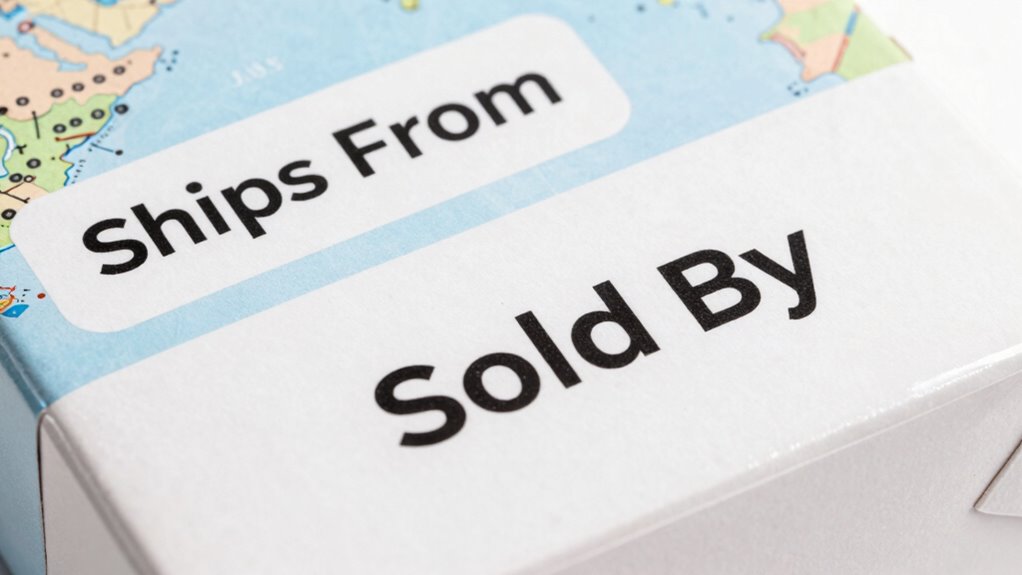

“Ships From” shows where the product is actually sent from, affecting delivery time and costs, while “Sold By” indicates who is responsible for the sale, impacting trust and seller reputation. They can be different entities, which can cause delays or surprises. Knowing both helps you make smarter choices about delivery expectations and seller reliability. If you want to understand how these labels influence your shopping experience, there’s more to uncover.

Prime made for students and young adults
- Fast, free delivery for dorm and study essentials
- Prime Video and Amazon Music included
- Member-only deals
Key Takeaways
- “Ships From” indicates the product’s shipping origin, affecting delivery time and customs fees, while “Sold By” identifies the seller or merchant responsible for the sale.
- “Sold By” reflects the seller’s reputation and trustworthiness, regardless of the product’s shipping location.
- The two labels can refer to different entities; a product might be sold by one seller but shipped from another country.
- Understanding both helps set realistic expectations for delivery speed, costs, and seller reliability.
- Discrepancies between “Ships From” and “Sold By” can impact satisfaction, highlighting the importance of knowing both details before purchasing.

When shopping online, understanding the difference between “Ships From” and “Sold By” can help you make informed purchasing decisions. These labels often appear on product pages and can influence your expectations about delivery times, costs, and overall seller reliability. “Ships From” indicates the shipping origin — the location where the item is dispatched, which can profoundly affect delivery speed and shipping fees. If the product ships from overseas, it might take longer to arrive and could incur higher customs fees. Conversely, items shipping from a domestic warehouse usually arrive faster and with fewer surprises. Recognizing the shipping origin helps you set realistic expectations about when you’ll receive your order and how much it will cost to get to you. Additionally, understanding shipping origin can help you determine the potential for delays or additional charges during transit.
The “Sold By” label refers to the seller or the merchant responsible for listing and selling the product. This could be the marketplace platform itself or a third-party seller. When you see “Sold By,” it’s a direct indicator of the seller’s reputation, which is vital for trustworthiness. A seller with a strong reputation typically has positive reviews, prompt customer service, and a history of fulfilling orders accurately. Knowing who is selling the product allows you to evaluate their credibility and decide whether to proceed with the purchase. If the “Sold By” is a well-known, reputable company, you’re more likely to receive quality customer support and to have your issues resolved quickly if something goes wrong.
It’s common to encounter situations where the “Sold By” and “Ships From” are different. For instance, a marketplace might sell a product from a third-party seller, but the item ships directly from a warehouse in a different country. This distinction is key because it can influence your buying decision. Even if a seller has a good reputation, if the shipping origin is far away, you might experience delays or additional customs charges. Conversely, a seller with a less stellar reputation may still ship from a local warehouse, ensuring quicker delivery.
Frequently Asked Questions
Can “Ships From” and “Sold By” Be the Same Entity?
Yes, “ships from” and “sold by” can be the same entity. When the seller handles the shipping origin, they often are both the seller and the shipper. This means the seller’s identity matches the shipping origin, making it clear who’s responsible for the product and its delivery. However, sometimes a third-party seller ships from a different location, so these two details may differ.
How Do Shipping Origins Affect Delivery Times?
Shipping origins directly influence delivery times because warehouse locations determine how long it takes for your order to reach you. If your item ships from a distant warehouse, you might experience shipping delays due to longer transit times. Choosing sellers with warehouses closer to you can help reduce delivery times and avoid unexpected shipping delays. Always check the shipping origin before purchasing to ensure faster, more reliable delivery.
Are There Differences in Return Policies Based on “Ships From”?
Yes, return policy differences often depend on the shipping origin impact. If an item ships from a different country or region, the return process might be more complex, with longer wait times or additional fees. You should check the specific return policies based on the shipping origin, as they can vary markedly. Knowing where the item ships from helps you understand potential return restrictions and the overall process.
Does “Sold By” Indicate Who Is Responsible for Customer Service?
You might think “sold by” always indicates who handles customer service, but that’s not always true. Sometimes, the seller listed is responsible for customer service and accountability, while other times, the marketplace or platform takes charge. It’s essential to check the specific seller’s policies because “sold by” doesn’t automatically mean they’re responsible for customer service. Always verify seller accountability to avoid confusion or unmet expectations.
Can the “Ships From” Location Impact Import Taxes or Customs?
Yes, the “ships from” location can impact import taxes and customs fees. When you order from a seller, the package’s origin determines how customs authorities assess duties. If it ships from a country with high import taxes, you’ll likely pay more in customs fees. Be aware that shipping from certain locations may also cause delays or additional charges, so always check the “ships from” info before purchasing.
Conclusion
Now that you know the difference between “ships from” and “sold by,” you can shop smarter and avoid confusion. Do you really want to end up surprised by unexpected shipping costs or delays? Understanding these terms helps you make better decisions and get what you expect. So next time you shop online, ask yourself: are you considering where it ships from or who’s actually selling it? Stay informed, and shop confidently.
Fall Picks
fall essentials
As an affiliate, we earn on qualifying purchases.