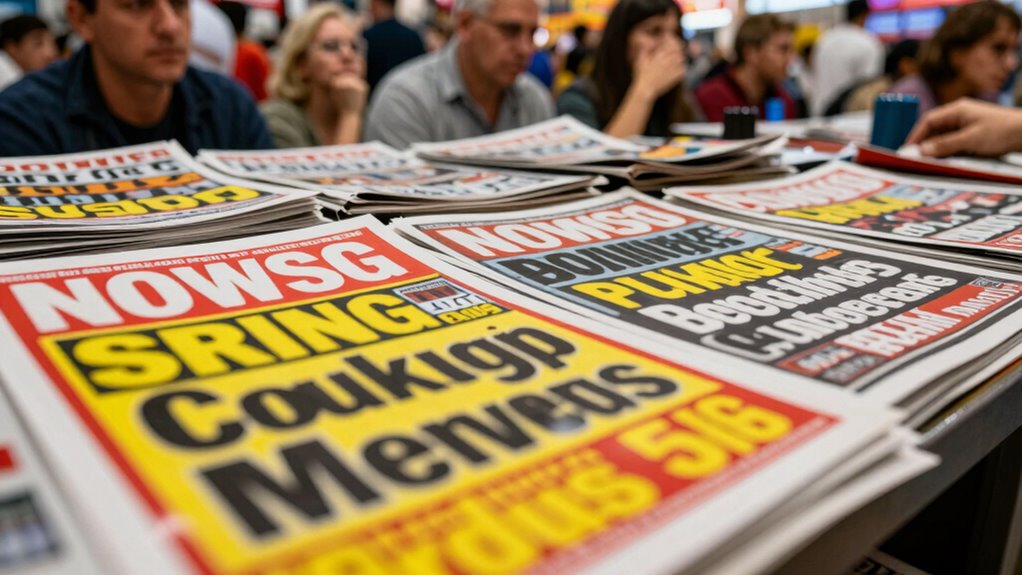

Manipulative headlines cleverly tap into your emotions, cognitive biases, and natural instincts to influence your thoughts without you noticing. They evoke strong feelings like fear, curiosity, or outrage, making you act impulsively. By exploiting mental shortcuts and biological responses rooted in evolution, they bypass rational analysis. Understanding these tactics helps you stay alert. If you keep exploring, you’ll discover how to spot and counter these manipulative tricks more effectively.
Key Takeaways
- Manipulative headlines use emotional triggers like fear or curiosity to bypass rational analysis and influence perceptions.
- They exploit cognitive biases such as urgency and confirmation bias to prompt immediate, unthinking reactions.
- Sensational language reinforces pre-existing beliefs, making headlines more convincing and harder to resist.
- Awareness of these tactics helps smart readers critically evaluate headlines before reacting.
- Biological and evolutionary responses to emotional triggers make resisting manipulation more challenging.

Manipulative headlines are crafted to influence your emotions and perceptions, often leading you to click without fully considering their true intent. These headlines tap into emotional triggers that resonate on a subconscious level, making it difficult to resist the urge to engage. Whether it’s fear, curiosity, anger, or excitement, these emotional triggers are powerful tools that publishers and marketers use to steer your attention. They exploit your natural inclinations, often bypassing rational thought and appealing directly to your feelings. This is where cognitive biases come into play — mental shortcuts that shape how you interpret information. Headlines that evoke a sense of urgency, for example, trigger your bias toward immediate action, convincing you that missing out is a bigger threat than it actually is. Similarly, sensational phrases activate your confirmation bias, reinforcing pre-existing beliefs and making you more likely to accept the headline’s message without skepticism. Recognizing these content manipulation tactics can help you become a more discerning reader. Being aware of cognitive biases and how they’re exploited can further empower you to critically evaluate headlines before reacting. Understanding the role of psychological triggers in headline design can further help you see through these manipulative tactics. These triggers are often rooted in evolutionary responses that have been shaped by biology to prioritize emotional reactions over rational analysis, making it even more challenging to resist their influence. Recognizing these strategies isn’t enough; you need to actively question what you see, understanding that manipulative headlines are designed to exploit your emotional triggers and cognitive biases for profit or influence.
Thinking, Fast and Slow
A good option for a Book Lover
As an affiliate, we earn on qualifying purchases.
As an affiliate, we earn on qualifying purchases.
Frequently Asked Questions
How Can I Recognize Manipulative Headlines Quickly?
You can recognize manipulative headlines quickly by spotting clickbait tactics and sensational language. Look for exaggerated claims, emotional triggers, or promises that seem too good to be true. Pay attention to headlines that use all caps, excessive punctuation, or vague wording. If a headline aims to provoke strong emotional reactions or feels overly dramatic, it’s likely trying to manipulate your perception and lure you into clicking without providing real value.
Are There Specific Words That Indicate Manipulation?
Yes, certain linguistic cues and emotional triggers indicate manipulation. Look for sensational words like “shocking,” “amazing,” or “urgent,” which aim to provoke strong emotions. Manipulative headlines often use exaggerated language or superlatives like “best,” “worst,” or “unbelievable.” These cues are designed to trigger emotional responses, making you click without thinking critically. Recognizing these indicators helps you stay cautious and avoid falling for manipulative tactics.
Do Manipulative Headlines Influence All Reader Types Equally?
Manipulative headlines are like sirens, tempting different reader types with their allure. You might notice that some readers with high skepticism see through the tricks, while others are drawn in regardless. The headline’s aesthetics and emotional pull often sway even the sharpest minds. So, no, manipulation doesn’t influence all reader types equally; your skepticism and the headline’s design determine how deeply you’ll fall under its spell.
Can Manipulation Be Used Ethically in Headlines?
Yes, manipulation can be used ethically in headlines if you consider ethical considerations and prioritize honesty. You should aim to inform rather than deceive, respecting your reader’s skepticism. By crafting headlines that accurately reflect the content and avoid sensationalism, you foster trust and credibility. When you balance persuasion with integrity, manipulation becomes a tool for engaging your audience without compromising ethical standards or exploiting reader skepticism.
What Psychological Tricks Do Manipulative Headlines Employ?
Manipulative headlines use psychological tricks like emotional appeals and fear tactics to grab your attention. They target your emotions, making you feel curiosity, anger, or anxiety, which pushes you to click. Fear tactics create a sense of urgency or danger, making you act quickly without thinking critically. These strategies manipulate your feelings, steering your reactions and decisions, often without you realizing how they’re influencing your perceptions.

The Critical Media Literacy Guide: Engaging Media and Transforming Education (Brill Guides to Scholarship in Education, 2)
As an affiliate, we earn on qualifying purchases.
As an affiliate, we earn on qualifying purchases.
Conclusion
Now that you’re aware of manipulative headlines, you can navigate the news like a savvy sailor steering through a stormy sea. These headlines are like sirens — tempting you to plunge in without thinking. But with your newfound awareness, you’re equipped to spot the whirlpools of deception before they pull you under. Keep your compass steady, question what you see, and sail confidently toward the truth, avoiding the hidden rocks of manipulation.

The Phisherman's Guide to Online Dating: How to spot Catfish, click-bait, and other fishy things
As an affiliate, we earn on qualifying purchases.
As an affiliate, we earn on qualifying purchases.

Big Bad Bias Book: A Field Guide to Over 200 Cognitive Biases That Shape How We Think, Decide, and Behave
As an affiliate, we earn on qualifying purchases.
As an affiliate, we earn on qualifying purchases.