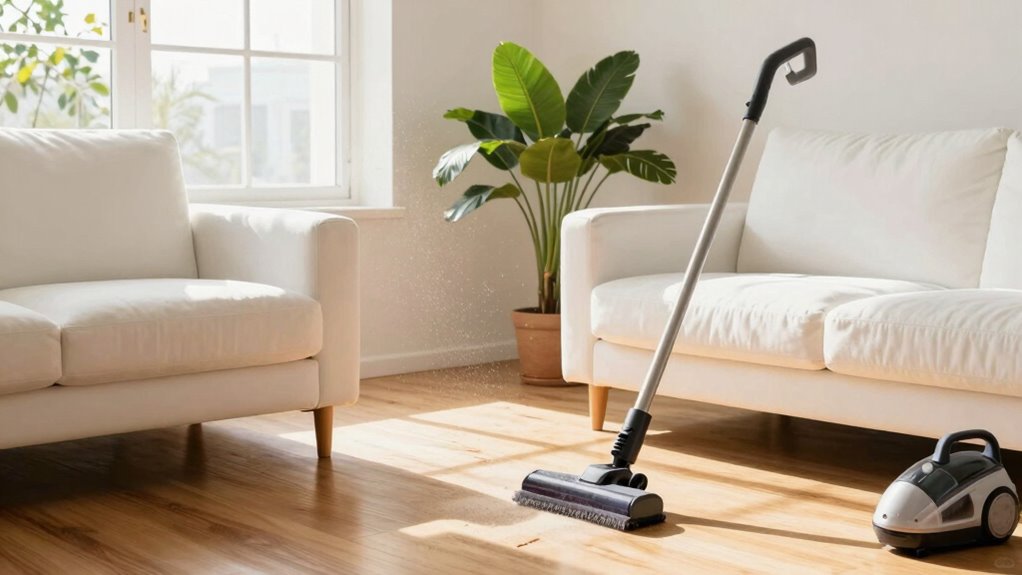

Dust comes from both natural sources like dirt, pollen, and fibers, and human activities such as movement and cleaning. Pet dander, fabrics, and outdoor dust tracked inside also add to the buildup. When you walk, vacuum, or open windows, you stir and introduce more particles into the air. To keep dust at bay longer, you need smarter cleaning and better air control—stick around to discover simple tips to make it easier.
Key Takeaways
- Natural activities and human movements constantly generate and disturb dust, increasing indoor particle levels.
- Pet dander, a persistent indoor source, easily becomes airborne and settles on surfaces, contributing to dust buildup.
- Outdoor dust enters homes through open windows and doors, adding to indoor dust sources.
- Activities like walking on carpets or cleaning disturb settled dust, releasing it into the air.
- Inadequate ventilation and lack of air filtration allow airborne dust and pet dander to linger longer indoors.
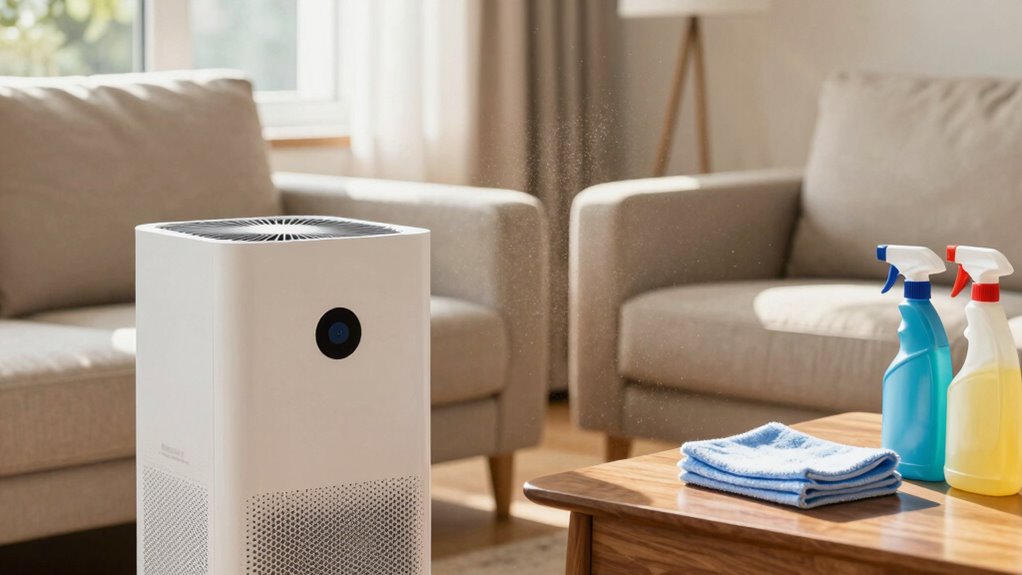
Dust sources come from a variety of natural and human activities that release tiny particles into the air. These airborne particles include everything from dirt and pollen to microscopic fibers, all of which settle on surfaces and contribute to the dust you see and breathe. One of the most common and persistent contributors is pet dander. If you have pets, their skin flakes, fur, and saliva become airborne particles that settle throughout your home, sticking to furniture, carpets, and bedding. This dander is lightweight and easily becomes airborne, especially when you vacuum or simply move around.
Pet dander from animals easily becomes airborne, settling on furniture, carpets, and bedding, contributing significantly to indoor dust.
You might notice that your cleaning efforts seem to only temporarily reduce dust. That’s because these airborne particles are constantly being released into the air from everyday activities. For example, when you walk across carpets, you disturb settled dust, releasing pet dander and dirt back into the air. Even opening windows or doors can let in dust from outside, adding to what’s already inside. In addition, fabrics like curtains, upholstery, and bedding trap airborne particles, and they release them when disturbed, making your home feel dustier even after cleaning.
Understanding that pet dander is a vital source helps you realize why dust accumulates quickly in homes with animals. It’s not just about surface dirt; it’s about microscopic particles that linger in the air and settle everywhere. Regular vacuuming with a HEPA filter can help trap these airborne particles, but it’s also essential to maintain good airflow and air filtration systems. Using an air purifier equipped with a HEPA filter can greatly diminish the amount of airborne pet dander and dust, especially in bedrooms and common areas. Consistently washing bedding, curtains, and upholstery also minimizes sources of pet dander and other airborne particles.
Additionally, air quality management plays a crucial role in reducing dust buildup. You should also pay attention to humidity levels because dry air allows airborne particles to stay suspended longer. Keeping humidity around 40-50% helps reduce dust and pet dander from becoming airborne as easily. Remember, dusting with a damp cloth traps particles better than dry dusting, which can just stir them up into the air. Regular cleaning routines, combined with good ventilation and air filtration systems, can make a noticeable difference. It’s not just about cleaning more, but about cleaning smarter—targeting the sources of airborne particles like pet dander, and reducing their presence in your indoor environment. That way, you’ll breathe easier and keep dust buildup under control more effectively.

MOOKA Air Purifiers for Home Large Room up to 1076ft², H13 True HEPA Air Filter Cleaner, Odor Eliminator, Remove Smoke Dust Pollen Pet Dander, Night Light, B-D02L White
- Large Coverage Area: Covers up to 1076 ft² with 6 air changes/hr
- True HEPA Filtration: Captures pet dander, smoke, dust, and odors
- Quiet and Energy Efficient: Operates at 20dB, energy-saving brushless motor
As an affiliate, we earn on qualifying purchases.
As an affiliate, we earn on qualifying purchases.
Frequently Asked Questions
How Often Should I Replace My Air Filters?
You should replace your air filters every 1 to 3 months for ideal HVAC maintenance. Regularly changing filters helps maintain a healthy filter lifespan, preventing dust buildup and ensuring your system runs efficiently. If you have pets, allergies, or live in a dusty environment, consider replacing filters more frequently. Keeping track of filter changes keeps your air quality high and saves you money on energy bills.
Do Houseplants Increase Indoor Dust Levels?
Houseplants can increase indoor dust levels because plant allergens and soil particles can disperse dust into the air. While they add beauty and improve air quality, dust dispersal from plants might make your home dustier if not maintained properly. Regularly dust and wipe leaves, choose low-dust plants, and avoid overwatering to minimize dust accumulation and keep your indoor environment clean and healthy.
Can Pet Grooming Reduce Indoor Dust?
Did you know that pet hair can contribute up to 30% of indoor dust? Pet grooming routines help reduce this markedly by removing loose fur and dander before they settle on surfaces. Regular grooming minimizes pet hair dispersal, which in turn lowers dust levels in your home. So, by keeping your pet well-groomed, you’re actively controlling dust and creating a cleaner, healthier indoor environment.
Are Air Purifiers Effective Against Dust?
Yes, air purifiers are effective against dust. They offer benefits like improved air quality and reduced airborne particles, which help lessen dust accumulation. Look for models with high dust filtration efficiency, such as HEPA filters, to maximize their benefits. Regularly running an air purifier in your space can considerably lower dust levels, making your environment cleaner and healthier.
What Are the Best Cleaning Tools for Dust Removal?
The best cleaning tools for dust removal include a vacuum with attachments and microfiber cloths. Use vacuum attachments to reach tight corners, vents, and upholstery, ensuring you pick up hidden dust. Microfiber cloths are excellent for dusting surfaces, as they trap dust particles effectively without spreading them around. Combine both tools regularly to keep your home dust-free, and you’ll notice less accumulation over time.
As an affiliate, we earn on qualifying purchases.
Conclusion
Now that you know the endless sources fueling your dust problem, you’ll realize your home is practically a dust magnet! No matter how often you clean, dust seems to appear out of nowhere, like a sneaky ninja. But don’t despair—armed with this knowledge and simple tips, you can finally tame the dust chaos. Say goodbye to the never-ending battle and reclaim your clean sanctuary. Dust doesn’t stand a chance against your newfound cleaning superpowers!
air quality monitor with humidity control
As an affiliate, we earn on qualifying purchases.
As an affiliate, we earn on qualifying purchases.
dusting cloths for furniture and fabrics
As an affiliate, we earn on qualifying purchases.
As an affiliate, we earn on qualifying purchases.