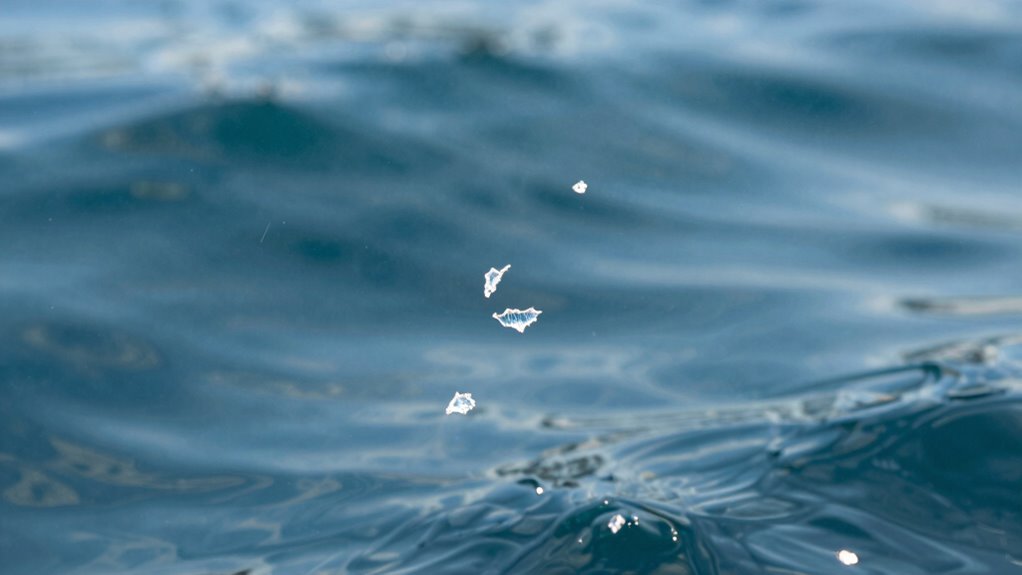

Microplastics are tiny plastic particles less than five millimeters that come from larger plastic items breaking down through physical, chemical, or biological processes. They’re released into water, air, and soil by sources like tire wear, synthetic clothing fibers, and waste breakdown. These microplastics travel via water currents and wind, spreading across oceans and land. To understand how they impact ecosystems and what you can do to help, keep exploring this topic further.

Prime made for students and young adults
- Fast, free delivery for dorm and study essentials
- Prime Video and Amazon Music included
- Member-only deals
Key Takeaways
- Microplastics are tiny plastic particles less than five millimeters in size, originating from the breakdown of larger plastics.
- They form through physical, chemical, and biological processes that fragment items like bottles, bags, and fishing gear.
- Main sources include tire wear, synthetic clothing fibers, packaging waste, and microbeads in personal care products.
- Microplastics spread via water currents, carried by rivers, oceans, and wind, reaching remote environments and accumulating in zones like gyres.
- They pose risks to ecosystems and human health through ingestion by wildlife and contamination of seafood and water supplies.
As an affiliate, we earn on qualifying purchases.
What Are Microplastics and Why Do They Matter?
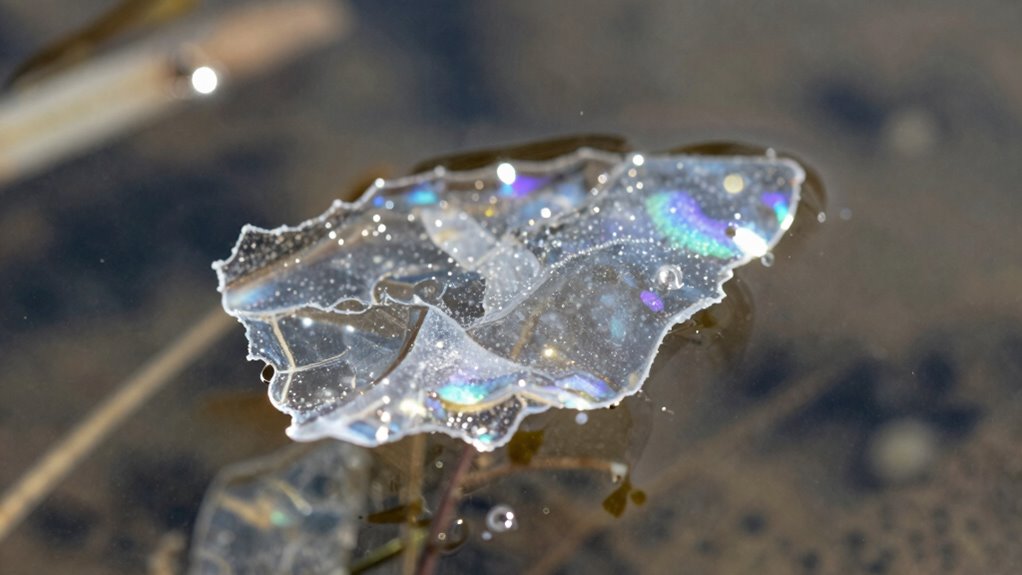
Have you ever wondered what microplastics are and why they pose such a concern? Microplastics are tiny plastic particles less than five millimeters in size, often resulting from the breakdown of larger plastics. They can infiltrate water, soil, and air, impacting ecosystems and human health. Addressing this issue requires strong environmental policy that limits plastic production and waste. Your awareness as a consumer also matters—choosing reusable products and reducing single-use plastics can make a difference. When policies prioritize reducing microplastic pollution, it helps create a safer environment. Educating yourself and others about the origins and dangers of microplastics increases awareness and supports efforts for change. Recognizing how plastic debris disintegrates over time highlights the importance of waste management and reduction strategies. Additionally, advances in sound healing science offer potential innovative approaches to mitigate some environmental stressors that contribute to pollution, including microplastics. Understanding microplastic sources can help target efforts to reduce their presence in the environment.
reusable shopping bags eco-friendly
As an affiliate, we earn on qualifying purchases.
As an affiliate, we earn on qualifying purchases.
How Are Microplastics Generated and Released Into the Environment?
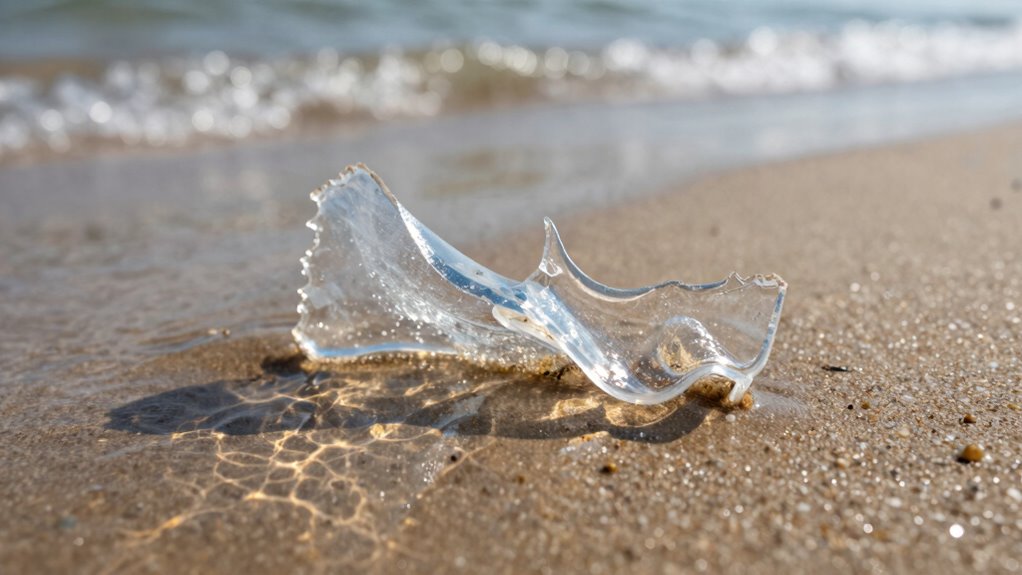
Microplastics are generated and released into the environment primarily through the breakdown of larger plastic items and direct human activities. During microplastic formation, larger plastics like bottles, bags, and fishing gear fragment into tiny particles due to physical, chemical, and biological processes. This continual degradation causes plastics to become microplastics, which then enter ecosystems. Additionally, activities such as dumping waste, industrial processes, and the wear of synthetic textiles contribute directly to environmental release. When plastics break down or are improperly disposed of, microplastics are released into waterways, soil, and the air. These particles are lightweight and persistent, allowing them to spread easily across different environments. Understanding how microplastics form and are released helps highlight the importance of reducing plastic waste to protect ecosystems. Microplastic formation is a complex process influenced by various environmental factors that accelerate fragmentation.
As an affiliate, we earn on qualifying purchases.
What Are the Main Sources of Microplastics in Water, Air, and Soil?
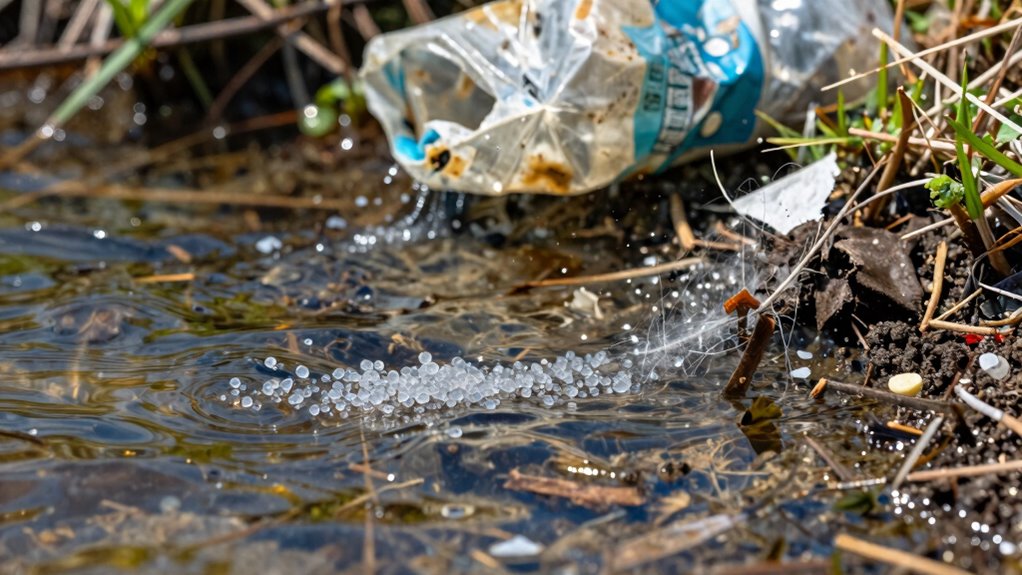
You’ll find that tire wear and road runoff constantly release microplastics into water and soil. Synthetic clothing detergents shed tiny fibers that end up in air and waterways, while packaging and industrial waste contribute markedly to environmental contamination. Understanding these main sources helps you see how microplastics spread across different environments. Additionally, European cloud servers play a crucial role in monitoring and managing pollution data to support sustainable solutions. Recognizing how environmental contamination occurs from diverse sources underscores the importance of comprehensive monitoring systems. Moreover, microplastic pollution can be exacerbated by urbanization and increased plastic consumption worldwide.
Tire Wear and Roads
As vehicles travel along roads, tire wear releases tiny particles that can easily become microplastics, contaminating water, air, and soil. These tire particles are shed from the rubber as tires wear down from friction, especially on rough surfaces. Over time, they become part of road dust, which can be carried away by wind or washed into waterways during rain. This process contributes markedly to microplastic pollution, as these particles are small enough to be ingested by aquatic life and enter the food chain. Roads act as a major source because they continuously generate tire particles through everyday driving. You might not see it, but every mile driven releases microplastics into the environment, affecting ecosystems far beyond the road itself. Understanding microplastic sources can help inform strategies to reduce their spread. Additionally, proper road maintenance and the development of alternative tire materials could play a role in minimizing tire particle shedding. Implementing regulations and standards for tire manufacturing may also help reduce the amount of microplastic debris generated during tire use.
Synthetic Clothing Detergents
Synthetic clothing detergents are a significant source of microplastics that pollute water, air, and soil. When you wash synthetic clothing, tiny fibers shed from the fabric and enter the environment. These fibers are often made of plastic, like polyester or nylon, and are released through detergent ingredients designed to clean synthetic fibers effectively. Proper disposal and awareness of privacy policy can help reduce unintended environmental impacts. Additionally, understanding the microplastic pollution process is crucial for developing effective mitigation strategies. Imagine the process:
| Source | Microplastic Type | Impact |
|---|---|---|
| Synthetic clothing | Microfiber fibers | Water and soil contamination |
| Detergent ingredients | Plastic-based particles | Airborne microplastics |
| Washing machines | Shed fibers and particles | Ecosystem disruption |
You might not see these fibers, but they’re everywhere, infiltrating ecosystems through everyday laundry routines. Recognizing environmental contamination as a widespread issue underscores the importance of reducing microplastic release from household sources.
Packaging and Industrial Waste
Packaging and industrial waste are major contributors to microplastic pollution in water, air, and soil. When plastics from packaging break down or are improperly disposed of, tiny microplastics enter ecosystems. Many companies now seek biodegradable alternatives to reduce environmental impact, but widespread use isn’t yet standard. Packaging regulations can help curb microplastic pollution by enforcing limits on plastic content and encouraging sustainable materials. Industrial processes also release microplastics through the abrasion of synthetic materials and degradation of plastic products. These particles can travel long distances, contaminating water sources, air, and soil. To effectively address this issue, you can support policies promoting biodegradable alternatives and stricter packaging regulations. Your choices and advocacy play a role in reducing the spread of microplastics from packaging and industrial waste.
microplastic pollution water test kit
As an affiliate, we earn on qualifying purchases.
As an affiliate, we earn on qualifying purchases.
How Do Microplastics Travel Through Water and Air?
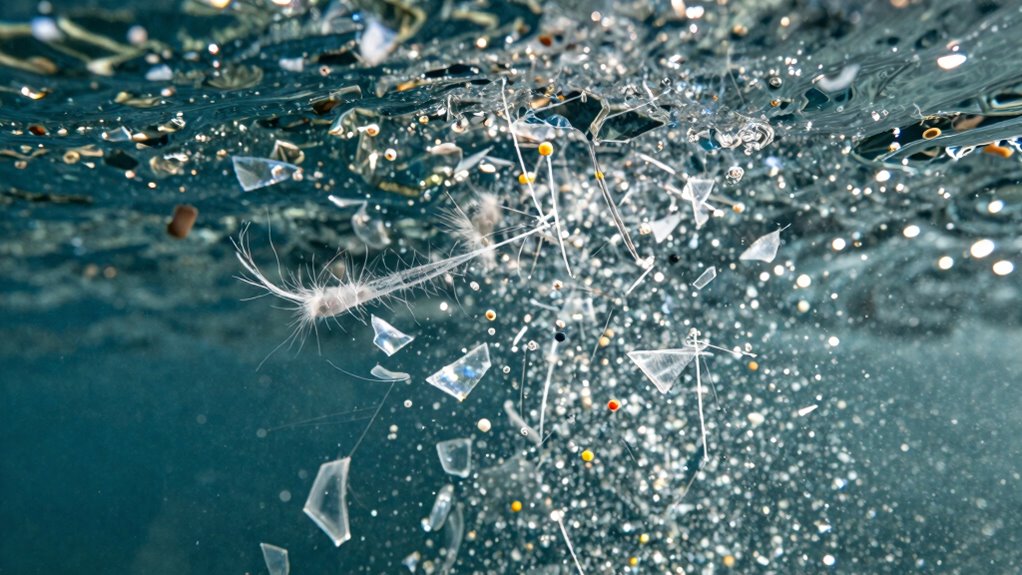
Microplastics travel through water and air by hitching rides on natural currents, wind, and other environmental forces. In water, they move via waterborne pathways, carried by streams, rivers, and ocean currents that disperse them widely. These microplastics can be transported over long distances before settling or breaking down further. In the air, microplastics are dispersed through airborne transport, often lifted by wind from landfills, urban areas, or stormwaters. Once airborne, they can travel vast distances before settling onto surfaces or back into water bodies. This movement allows microplastics to reach remote environments, making their spread a global issue. Both waterborne pathways and airborne transport play critical roles in distributing microplastics across ecosystems worldwide. Understanding transport mechanisms is essential for developing effective strategies to mitigate their spread. Additionally, environmental dispersal can be influenced by human activities, increasing the reach of microplastics beyond local sources. Factors like climate change can further amplify their distribution by altering weather patterns and environmental conditions. The role of natural forces in dispersal emphasizes the complexity of controlling microplastic pollution on a global scale.
How Do Ocean Currents Distribute Microplastics Globally?
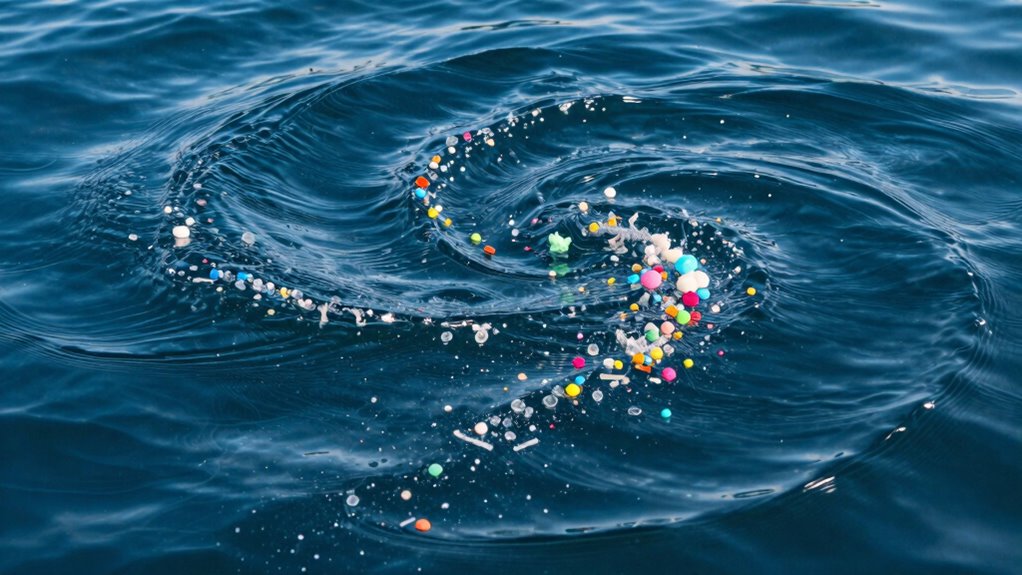
Ocean currents carry microplastics across vast distances, spreading them far from their original sources. As they flow, these currents create specific zones where microplastics tend to accumulate. Understanding these patterns helps you see how microplastics reach even the most remote parts of the world’s oceans. Mastering time zones with our ultimate world clock tool can also help track the movement of ocean currents over time. Additionally, local attractions near coastlines can influence the distribution and concentration of microplastics in certain areas. Recognizing the role of sound design in environmental awareness campaigns can further enhance public understanding of pollution impacts. The interaction of ocean currents with marine ecosystems further complicates the dispersal and impact of microplastics across different habitats, emphasizing the importance of environmental monitoring for effective mitigation efforts.
Ocean Currents Transport
Since ocean currents constantly move vast amounts of water across the globe, they play a crucial role in dispersing microplastics. These powerful currents carry tiny plastic particles far from their original sources, enabling plastic dispersion across oceans. As ocean currents flow, they pick up microplastics from coastal areas, rivers, and the floating debris, transporting them into open waters. Warm and cold currents work together to spread microplastics over large distances, often crossing entire ocean basins. This movement makes microplastics a truly global issue, as they don’t stay localized but instead circulate widely. By moving microplastics across vast areas, ocean currents ensure that plastic pollution reaches remote zones and accumulates in regions far from human activity, amplifying their environmental impact worldwide. Understanding ocean circulation is essential for grasping how microplastics spread globally.
Microplastics Accumulation Zones
Have you ever wondered where microplastics tend to gather in the vast oceans? These accumulation zones, like the Great Pacific Garbage Patch, form because ocean currents, such as gyres, trap microplastics over time. Urban runoff markedly contributes to this buildup, carrying plastics from land into waterways that feed into the ocean. Once in these zones, microplastics become concentrated, making them more accessible to marine wildlife. Fish and other animals often ingest these tiny particles, mistaking them for food, which can harm their health and enter the food chain. The combination of ocean currents, urban runoff, and wildlife ingestion creates hotspots where microplastics accumulate, posing a serious threat to marine ecosystems and highlighting the importance of reducing plastic pollution at its source.
How Do Synthetic Fibers and Personal Care Products Spread Microplastics?
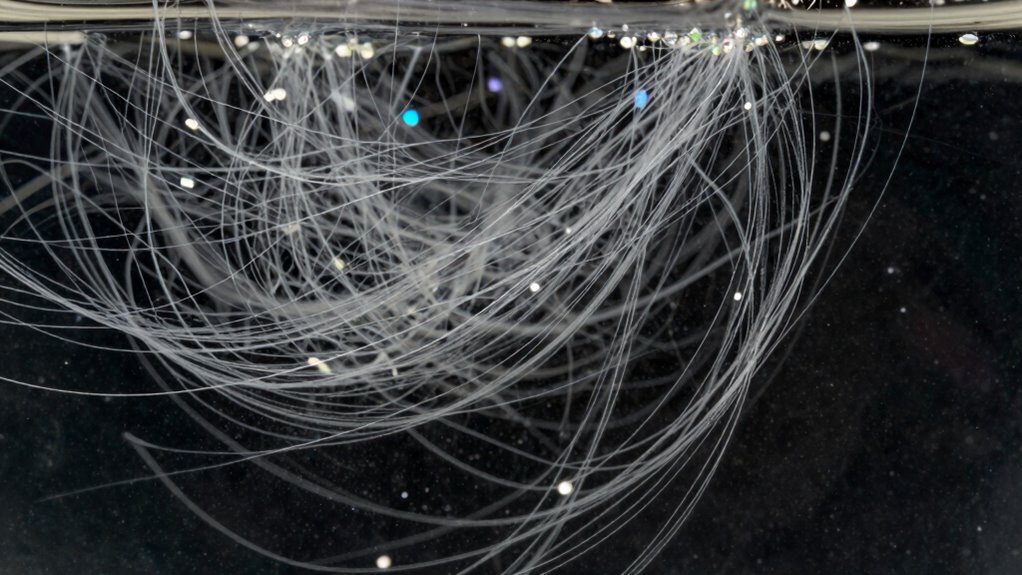
Synthetic fibers from clothing and textiles shed tiny plastic particles during everyday use, especially through washing. These microplastics enter water systems and spread widely. Personal care products also contribute, as microbeads and exfoliants contain synthetic plastics that rinse down drains. To imagine this, think of:
- Washing synthetic clothes releasing microfibers into wastewater.
- Laundry filters catching some fibers but not all.
- Personal care products washing off skin and entering sewage.
- Microplastics passing through treatment plants into rivers and oceans.
These processes continually disperse synthetic fibers and microbeads, increasing microplastic presence in the environment. As a result, everyday activities like laundry and bathing unintentionally become sources of microplastics, spreading them far beyond their origin.
What Impact Do Microplastics Have on Marine Life and Humans?
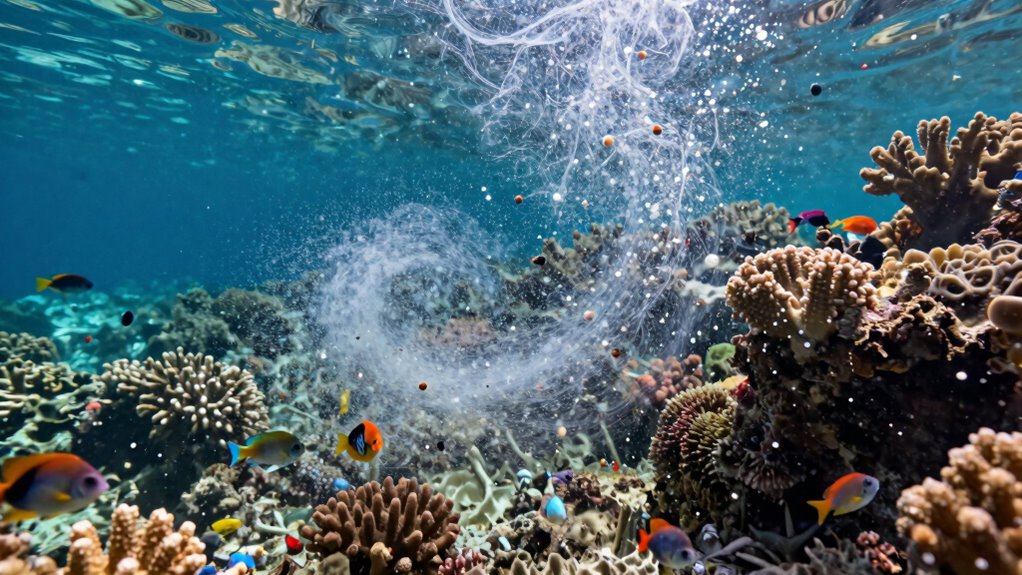
Microplastics pose serious threats to marine life and humans alike by contaminating ecosystems and food sources. When marine animals ingest microplastics, they experience physical harm and may transfer toxic chemicals to their bodies, a process called toxic chemical transfer. These chemicals, often added during manufacturing or absorbed from the environment, can accumulate up the food chain, affecting larger predators and us. Consider the following:
| Microplastic Ingestion | Toxic Chemical Transfer | Human Exposure |
|---|---|---|
| Alters feeding habits | Causes cellular damage | Contaminates seafood |
| Impairs reproductive health | Disrupts hormones | Risks health issues |
| Leads to starvation | Impacts immune systems | Potential disease transfer |
How Can We Reduce Microplastic Pollution?
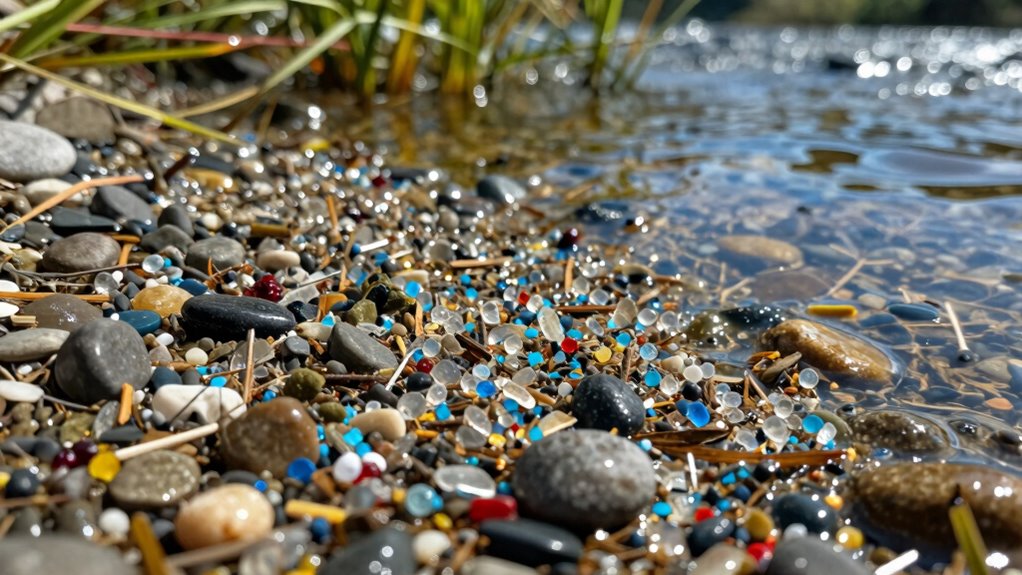
To effectively reduce microplastic pollution, you can start by making simple changes in your daily habits and supporting policies that limit plastic use. Improving microplastic filtration in washing machines and wastewater treatment plants helps catch tiny particles before they reach waterways. Increasing consumer awareness encourages responsible choices, like avoiding single-use plastics and choosing eco-friendly products. Here are four ways you can make a difference:
Reduce microplastic pollution by improving filtration, supporting bans, choosing eco-friendly products, and participating in cleanup efforts.
- Use microfiber filters on laundry machines
- Support bans on plastic bags and straws
- Choose products with minimal plastic packaging
- Participate in local cleanup initiatives
Your choices can markedly reduce microplastic pollution and prevent these particles from spreading further. Small, consistent actions add up, making a real difference for marine life and the environment.
Frequently Asked Questions
How Do Microplastics Affect Freshwater Ecosystems Differently From Marine Environments?
You’ll find that microplastics impact freshwater ecosystems differently than marine environments. In freshwater systems, microplastics contribute to freshwater pollution, affecting water quality and harming aquatic life. They can clog fish gills, disrupt plant growth, and interfere with species reproduction, causing significant ecosystem impacts. Unlike oceans, freshwater bodies often have less volume to dilute these plastics, making their effects more concentrated and immediate, which can threaten the health of entire aquatic ecosystems.
Can Microplastics Be Broken Down Naturally Over Time?
Microplastics can undergo natural breakdown, but it’s a slow process. You might wonder about biodegradation potential—certain microbes and environmental conditions can help facilitate natural breakdown over time. However, most microplastics resist rapid decomposition, persisting in ecosystems for years. While some types may biodegrade gradually, don’t rely on natural processes alone for full removal. You should focus on reducing plastic use and preventing microplastic pollution before they linger longer.
What Are the Health Risks of Ingesting Microplastics for Humans?
Ingesting microplastics poses serious health implications for you. These tiny particles can accumulate in your digestive system, potentially causing inflammation, tissue damage, or disrupting your hormones. The ingestion risks extend to exposure to harmful chemicals attached to microplastics, which may lead to long-term health issues like developmental problems or immune system effects. It’s essential to minimize your microplastic exposure to protect your overall health and well-being.
Are There Effective Methods to Remove Microplastics From Water Sources?
You can effectively remove microplastics from water sources using advanced filtration technologies like membrane filters and activated carbon. These methods trap tiny particles before they reach your water supply. Additionally, bioremediation methods, which use specific microorganisms to break down plastics, show promise. Combining these approaches enhances cleanup efforts, making water safer and reducing environmental impact. Stay informed about new innovations to protect your water sources from microplastic contamination.
How Do Microplastics Accumulate in the Food Chain?
Microplastics accumulate in the food chain through bioaccumulation pathways, where they build up in organisms over time. You’ll find trophic transfer mechanisms at work as predators ingest contaminated prey, passing microplastics up the food chain. When you consume seafood, you might unknowingly intake these particles. To reduce this, support policies that limit plastic waste and choose sustainably sourced seafood, helping break the cycle of microplastic accumulation.
Conclusion
To protect our planet, imagine microplastics as tiny invaders drifting through rivers, skies, and seas, quietly infiltrating every corner of nature. You hold the power to stop their spread by choosing sustainable products, reducing plastic use, and supporting clean-up efforts. Picture vibrant coral reefs and clear waters thriving again, free from the invisible threat. Together, we can turn the tide against microplastics and preserve the beauty of our world for generations to come.
Columbus Day / Indigenous Peoples' Day Picks
long weekend sales
As an affiliate, we earn on qualifying purchases.