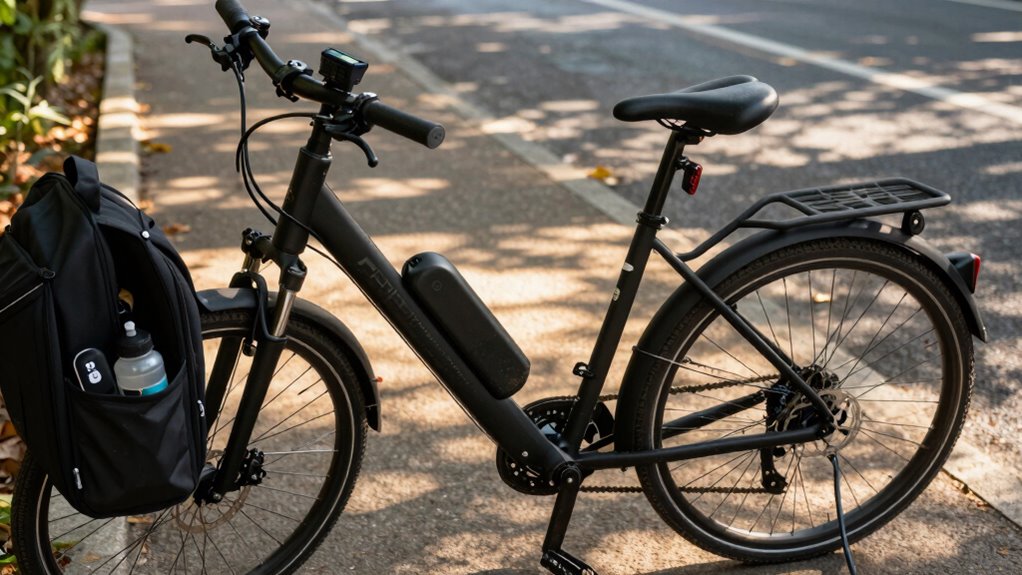

Your e-bike’s range drops due to battery wear, rider habits, and maintenance issues. Frequent fast accelerations, heavy loads, and riding into wind or hilly terrain drain your battery faster. Poorly maintained tires or components increase resistance, making your motor work harder. Cold weather also cut efficiency, reducing distance. By understanding these factors, you can take steps to extend your range. Keep going to discover more tips for optimizing your e-bike’s performance.

Prime made for students and young adults
- Fast, free delivery for dorm and study essentials
- Prime Video and Amazon Music included
- Member-only deals
Key Takeaways
- Battery aging and capacity loss lower maximum range over time.
- Rider behaviors like abrupt acceleration and high assist modes increase power consumption.
- Poor bike maintenance, such as under-inflated tires and dragging brakes, reduces efficiency.
- Environmental factors like wind, hills, and cold weather demand more motor energy.
- Real-world conditions and riding habits often result in shorter distances than advertised.
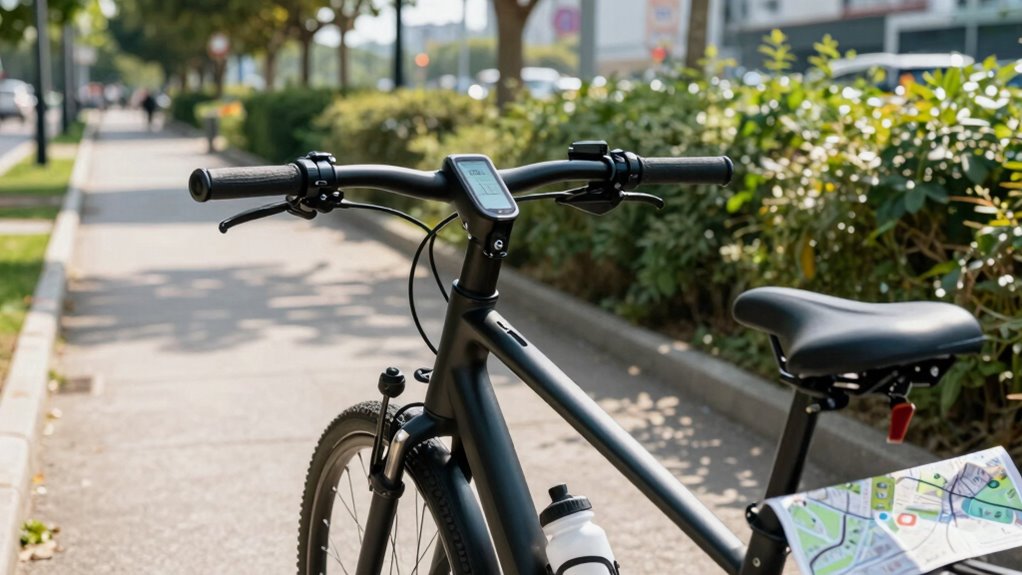
Many e-bike owners are surprised to discover that the advertised range often doesn’t match real-world performance. This gap is usually due to a combination of factors, with battery degradation and rider behavior playing crucial roles. Over time, your battery’s ability to hold a charge diminishes, especially if you don’t maintain it properly. Frequent charging to full and discharging to very low levels accelerate battery wear, reducing its capacity and, consequently, your miles per charge. Even if your e-bike is relatively new, exposing the battery to extreme temperatures or neglecting to follow manufacturer guidelines can cause premature degradation. As the battery ages, it simply can’t deliver the same amount of energy as when it was new, leading to noticeable drops in range.
Your riding habits also have a considerable impact on how far your e-bike can go. If you tend to accelerate abruptly, ride at high speeds, or carry heavy loads regularly, you’ll drain the battery faster. These behaviors demand more power from the motor, which in turn shortens your range. Conversely, smooth, steady pedaling and moderate speeds conserve energy, allowing you to maximize each charge. Additionally, frequent use of pedal assist modes at higher settings can quickly deplete the battery, especially if you’re climbing hills or riding against the wind. It’s essential to be mindful of your riding style; small adjustments like easing off the throttle, maintaining steady speeds, and avoiding sudden accelerations can make a noticeable difference in extending your range.
Another often overlooked factor is the condition of your bike and its components. Worn or under-inflated tires increase rolling resistance, requiring more effort from the motor and draining the battery faster. Poor bike maintenance, such as dragging brakes or loose chains, also forces your motor to work harder. All these elements combined can considerably cut into your e-bike’s range, even if your battery is relatively healthy. Proper tire maintenance and regular inspections can help preserve battery life and ensure efficient riding.
Finally, environmental conditions like wind, temperature, and terrain shape your actual riding distance. Riding into a headwind or on hilly terrain forces the motor to work harder, reducing your miles per charge. Cold weather especially impacts battery efficiency, making it essential to keep your battery warm and charged in cooler months. Understanding these factors helps you set realistic expectations and adopt riding practices that preserve your battery life and maximize your e-bike’s range.
As an affiliate, we earn on qualifying purchases.
Frequently Asked Questions
How Does Rider Weight Affect E-Bike Range?
Your rider weight directly impacts your e-bike’s range because heavier weights require more power to maintain speed and climb hills. As a result, increased rider weight can reduce bike performance and drain the battery faster. If you’re carrying extra weight, expect to see fewer miles per charge. To maximize range, consider reducing weight where possible and riding more efficiently, especially on challenging terrains or longer trips.
Do Different Terrains Significantly Impact Battery Life?
Different terrains can considerably impact your e-bike’s battery life. When you ride on rough or hilly surfaces, your motor works harder, reducing efficiency and draining the battery faster. To minimize this, keep your tire pressure ideal, which improves motor efficiency and reduces resistance. Smooth, flat terrains help conserve energy, extending your ride. So, choosing the right terrain and maintaining proper tire pressure will help maximize your e-bike’s range.
Can Weather Conditions Reduce E-Bike Mileage?
Weather impact definitely reduces your e-bike mileage. Cold temperatures cause battery efficiency to drop, leading to fewer miles per charge. Conversely, hot weather can also drain your battery faster due to increased energy use for cooling systems. Temperature effects are significant, so when planning your ride, consider weather conditions. Keep your battery warm in winter and avoid high heat, to maximize range and avoid unexpected stops.
Does Using Pedal Assist vs. Throttle Change Range?
Switching between pedal assist and throttle mode is like choosing your ride’s heartbeat. Pedal assist relies on your input, stretching your battery’s life like a well-tuned engine, giving you more miles. Throttle mode, however, is a heavy foot pressing down, draining power faster like a sprint at full speed. So, if you want to extend your journey, pedal assist is your best bet for conserving energy and cruising further.
How Often Should I Calibrate My E-Bike Battery?
You should calibrate your e-bike battery every 3 to 6 months to maintain ideal performance. Regular calibration helps address battery degradation and ensures accurate readings for range estimation. Good charging habits, like avoiding overcharging or deep discharges, also extend your battery’s lifespan. By calibrating regularly and following proper charging practices, you’ll maximize your e-bike’s range and keep the battery healthy over time.
As an affiliate, we earn on qualifying purchases.
Conclusion
So, next time you’re marveling at your e-bike’s impressive range, remember: it’s not just the hills or wind that steal your miles. It’s also the tiny details—your weight, the temperature, even that extra snack you snuck on. Ironically, the very things you think won’t matter might be the biggest range killers. Turns out, keeping your battery happy isn’t about avoiding the big stuff; it’s about mastering the little ones. Happy riding—and maybe pack a little lighter!
As an affiliate, we earn on qualifying purchases.
electric bike battery capacity monitor
As an affiliate, we earn on qualifying purchases.
As an affiliate, we earn on qualifying purchases.
Halloween Picks
halloween
As an affiliate, we earn on qualifying purchases.