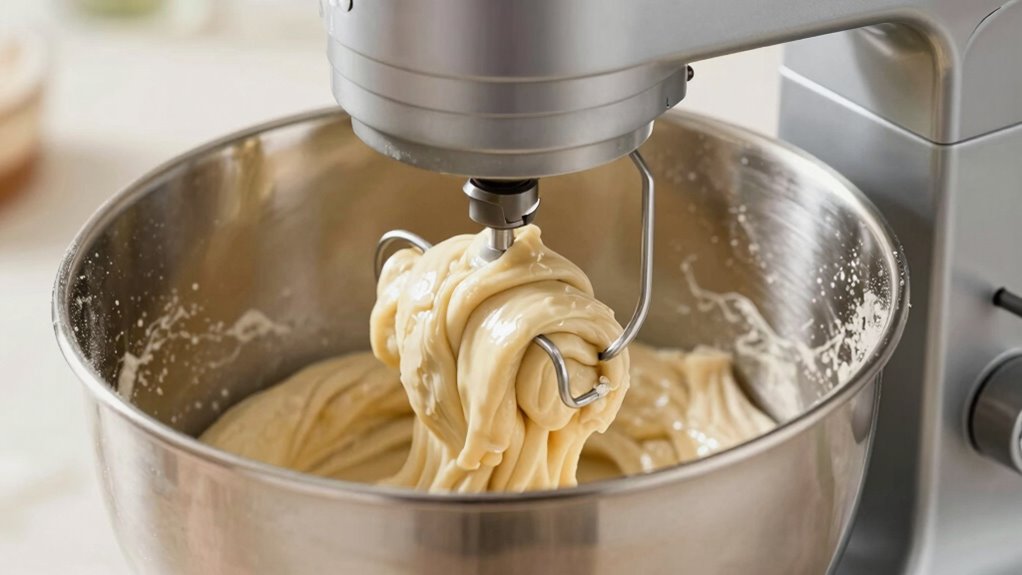

When your dough climbs the hook in a stand mixer, it’s a sign that the gluten network is active and trapping gas from fermentation. Proper yeast activation and good gluten development make the dough elastic and resilient, causing it to stretch and push upward. Factors like the quality of flour, temperature, and kneading time influence this process. Keep exploring, and you’ll understand how to control dough behavior for perfect baked goods.
Key Takeaways
- Yeast fermentation produces CO₂, which inflates the dough and causes it to climb the hook.
- Proper gluten development from kneading creates an elastic network that pushes the dough upward.
- Active yeast and warm liquids accelerate fermentation, promoting dough movement and climbing.
- High-quality flour with sufficient protein strengthens gluten, enhancing dough elasticity and climbability.
- Consistent timing and process control ensure balanced gluten formation and optimal dough climbing behavior.
Using a stand mixer can make preparing dough much easier and more efficient, especially when you’re dealing with large batches or sticky ingredients. One of the most common questions bakers have is why their dough tends to climb up the hook during mixing. The answer lies in the process of yeast activation and gluten development. When you start mixing, yeast begins to ferment, producing carbon dioxide that helps the dough rise. Proper yeast activation is essential because it kickstarts this fermentation process, creating the gas pockets that make your dough airy and light. If the yeast isn’t activated correctly—say, if the liquid is too cold or the yeast is expired—you might not see the dough climb as expected, or it might not develop the right structure.
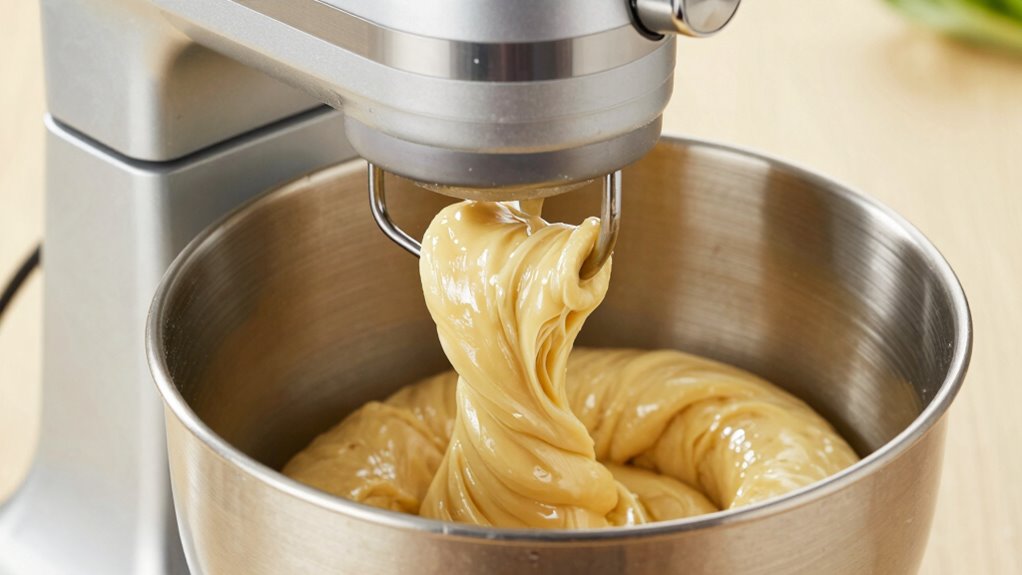
As the mixer runs, the dough starts to come together, and gluten development kicks into gear. Gluten is a network of proteins that forms when water interacts with flour’s glutenin and gliadin proteins. As you knead, either by hand or with a mixer hook, these proteins align and form a stretchy, elastic matrix. This gluten network traps the carbon dioxide produced by yeast, giving the dough its rise and structure. When you use a stand mixer, the dough often climbs up the hook because the motor is kneading and stretching the gluten strands efficiently. The more the gluten develops, the more cohesive and elastic the dough becomes, which is why it can climb and stretch up the hook during mixing. Additionally, the high-quality flour with sufficient protein content supports strong gluten formation, contributing to this climbing behavior.
The movement of the dough climbing the hook also indicates that the gluten network is forming well. As the mixer kneads, the dough becomes shiny and smooth, signaling that gluten has developed enough to hold gas bubbles. This is a good sign that your dough is on its way to becoming airy and well-structured. If the dough climbs excessively, it’s often because the gluten development is happening rapidly—sometimes due to over-kneading or high gluten content in the flour. Conversely, if it doesn’t climb much, it could mean the gluten hasn’t formed enough, or the yeast activation was insufficient, resulting in a denser final product.
Getting the timing right between yeast activation and gluten development is key. Warm water helps activate yeast quickly, while the right flour provides enough protein for gluten formation. When these elements come together at the right moment, your dough will climb confidently up the hook, signaling that it’s ready for the next steps. By understanding these processes, you can better control your dough’s consistency, ensuring a perfect rise and structure in your baked goods. Proper gluten development and yeast activation work together to create a well-structured dough that climbs efficiently during mixing.

K45DH Coated Dough Hook for KitchenAid Mixer, Attachment for Kitchen Aid K45 K45SS KSM90 KSM150 Tilt-Head Stand Mixers, 4.5/5.0 Quart Bowel
🍐【Compatible】K45, K45SS, KN15E1X, KSM75, KSM85PS, KSM88PSQ, KSM90, KSM95, KSM96, KSM97, KSM100, KSM103, KSM105, KSM110, KSM120, KSM150, KSM150A, KSM151PS,…
As an affiliate, we earn on qualifying purchases.
As an affiliate, we earn on qualifying purchases.
Frequently Asked Questions
How Do I Prevent Dough From Climbing the Hook?
To prevent dough from climbing the hook, focus on adjusting dough hydration and mixing techniques. If your dough is too wet, it’s more likely to cling and climb. Try reducing the water slightly or adding flour gradually. Also, use slow mixing speeds initially, then increase gradually, and scrape down the bowl often. These steps help maintain proper consistency and prevent the dough from climbing, making mixing smoother and more efficient.
What Type of Flour Causes More Dough Climbing?
Think of high-protein flour like a powerful magnet for dough climbing; it pulls more vigorously on the hook. Bread flour, with its higher gluten development and protein content, causes more dough to climb because it creates stronger gluten networks. If you want less climbing, opt for lower-protein flours like all-purpose or pastry flour, which develop less gluten, making the dough more manageable and less likely to cling to the hook.
Can I Stop Dough From Sticking to the Bowl?
Yes, you can stop dough from sticking to the bowl by adjusting dough hydration and gluten development. Use a slightly lower hydration level if it’s too sticky, or lightly oil the bowl’s sides before mixing. Proper gluten development helps the dough hold together better, reducing sticking. Avoid over-flouring, as it can alter hydration and texture. Keep an eye on dough consistency to ensure it’s manageable without sticking excessively.
Does the Speed Setting Affect Dough Climbing?
Speed settings substantially influence dough climbing. When you make speed adjustments, you control the mixing techniques, which directly impact how dough interacts with the hook. Faster speeds can create vigorous vortexes, causing dough to climb, while slower speeds offer gentle, controlled mixing. To prevent climbing, start slow, then gradually increase speed as needed. Play with speed adjustments to perfect your technique and maintain a smooth, steady dough consistency.
How Long Should I Knead Dough Before It Climbs the Hook?
You should knead the dough for about 8-10 minutes before it starts climbing the hook. During this time, monitor the dough’s hydration level—if it’s too sticky, add a little flour; if it’s too dry, incorporate a splash of water. Mixing duration is key; as the dough develops gluten, it becomes elastic and climbs less. Trust your mixer and dough’s texture rather than sticking rigidly to time.

King Arthur 100% Organic Bread Flour, Unbleached, 5 lb (Pack of 1) – Non-GMO Project Verified, No Preservatives
High Protein Flour: 12.7% protein – a full point more than other national brands, King Arthur flour ensures…
As an affiliate, we earn on qualifying purchases.
As an affiliate, we earn on qualifying purchases.
Conclusion
Now that you know why your dough climbs the hook, you’re well on your way to baking perfection. Remember, just like a seasoned baker from the Old West might say, “Patience and practice turn a simple mix into a masterpiece.” Keep an eye on your dough’s consistency, and don’t be afraid to adjust as needed. With a little experience, you’ll master the art quicker than a cowboy roping a runaway steer. Happy baking!

Fleischmann's Yeast, Active, Dry, 0.75-Ounce Packet (Pack of 9)
Highly stable and valued for its consistent performance since 1945
As an affiliate, we earn on qualifying purchases.
As an affiliate, we earn on qualifying purchases.

2-Pack CBK-110KP Kneading Paddle for Cuisinart Bread Maker Machine – Fits Model CBK-110 & CBK-110P1 Bread Machine Paddle Replacement
Perfect Fit: Compatible with cuisinart bread maker paddle model CBK-110, CBK-110P1
As an affiliate, we earn on qualifying purchases.
As an affiliate, we earn on qualifying purchases.