
Your water heater’s safety valve helps prevent dangerous pressure buildup inside the tank by releasing water when pressure reaches about 150 psi. It might drip occasionally when water heats up, which can be normal, but persistent or heavy drips could mean it’s malfunctioning or clogged. Regularly testing and maintaining the valve guarantee it works properly. Understanding why it drips and when to check it is key to keeping your water heater safe—more details await to help you stay protected.
Key Takeaways
- The safety valve prevents pressure buildup by releasing water when internal pressure reaches about 150 psi.
- Dripping can be normal due to thermal expansion or system pressure fluctuations.
- Regular testing and maintenance ensure the valve functions properly and prevent potential hazards.
- Persistent or excessive dripping indicates a malfunction or mineral buildup needing inspection or replacement.
- Proper regulation of system pressure minimizes unnecessary drips and maintains safe water heater operation.
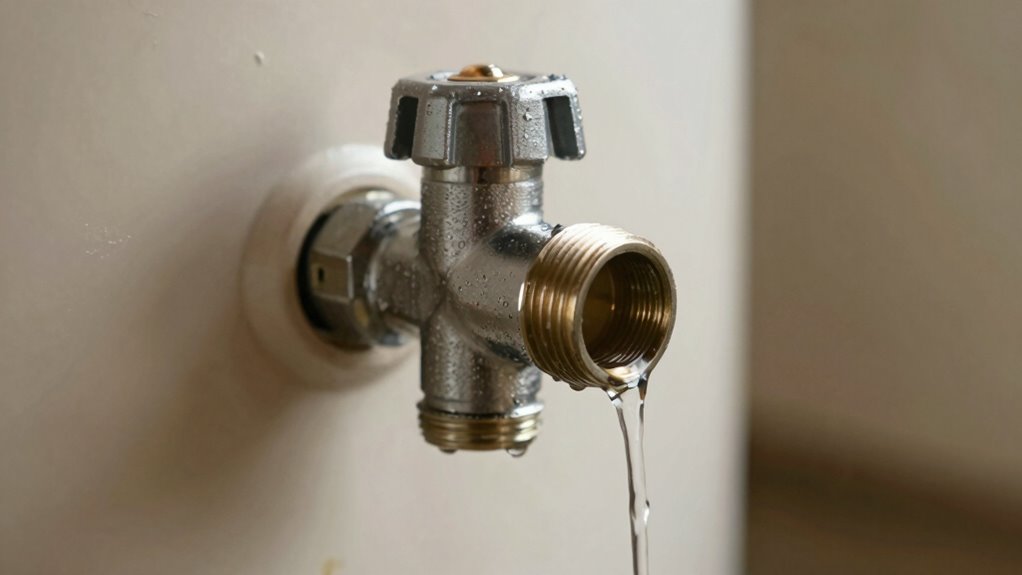
A water heater safety valve is a essential component that helps prevent dangerous pressure buildup inside your water heater. When the internal temperature or pressure gets too high, this valve automatically releases water to lower the pressure, protecting you from potential tank explosions or damage. Understanding how this pressure relief valve works and why it sometimes drips can help you keep your water heater functioning safely and efficiently.
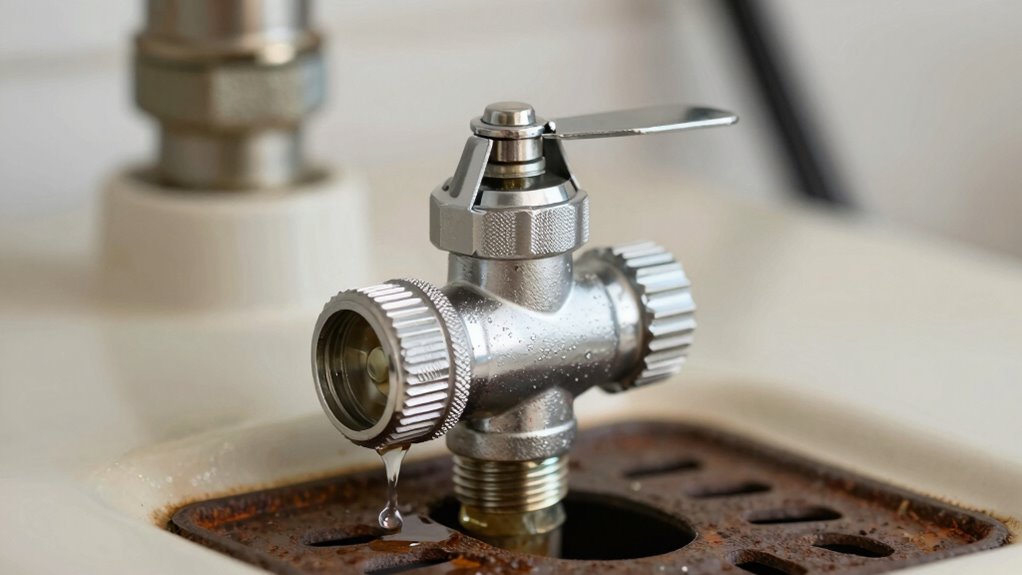
The primary role of the pressure relief valve is to act as a safeguard. It’s designed to open when the internal pressure reaches a set limit, usually around 150 psi, or if the water temperature gets dangerously hot. This safety feature ensures that excess pressure doesn’t cause your tank to rupture or burst. Over time, however, you might notice the valve dripping or leaking. This isn’t always a cause for alarm, but it’s an important sign that you should inspect and maintain the valve regularly.
Valve maintenance is essential because a stuck or faulty pressure relief valve can compromise your water heater’s safety. If the valve is clogged with mineral deposits or debris, it might open unnecessarily or fail to open when needed. Regularly testing the valve by lifting the test lever allows you to see if it releases water freely. If water continues to drip after testing, or if the valve doesn’t release water when you lift the lever, it’s time to replace it. Keeping the valve clean and free of obstructions helps ensure it functions correctly when you need it most.
Sometimes, the valve drips because of normal thermal expansion. As water heats up, it expands, and some models are designed to relieve this pressure by dripping a small amount of water. If you notice a steady drip, but the water temperature is within normal range and the valve isn’t hot to the touch, it’s often a sign that the valve is doing its job. However, persistent or excessive dripping indicates that there may be a problem, such as excessive pressure buildup inside the tank, or that the valve is worn out and needs replacing. Additionally, pressure fluctuations within the system can cause the valve to drip intermittently, which is usually normal if the system is functioning correctly.

Hapivida Water Heater Pressure Relief Valve, Brass Safety Check Valve
- Pressure Relief Safety Device: Ensures water heater safety from overpressure
- Built-in Check Valve: Prevents backflow and energy loss
- Forged Brass Construction: Durable, corrosion-resistant for long-term use
As an affiliate, we earn on qualifying purchases.
As an affiliate, we earn on qualifying purchases.
Frequently Asked Questions
How Often Should I Test My Safety Valve?
You should test your safety valve about once a year to guarantee proper pressure relief and valve maintenance. To do this, lift the test lever briefly and then release it; you should hear a discharge of water. If it doesn’t work or drips continuously, it’s time to replace the valve. Regular testing helps prevent dangerous pressure buildup, keeping your water heater safe and functioning properly.
Can a Dripping Safety Valve Cause Water Damage?
Yes, a dripping safety valve can cause water damage if the leak persists. When the pressure relief valve malfunctions, it releases water to prevent dangerous pressure buildup, but constant dripping can lead to water damage around your water heater. This ongoing leak might also indicate a pressure issue or valve malfunction, so it’s vital to address it promptly to prevent further damage and guarantee your system’s safety.
What Is the Typical Lifespan of a Safety Valve?
The typical lifespan of a safety valve is about 5 to 10 years. You should regularly perform pressure relief and valve maintenance to guarantee it functions correctly. Over time, corrosion or mineral buildup can cause it to fail or drip unnecessarily. Keep an eye on it, and replace the valve if it’s leaking or hasn’t been checked in several years to avoid potential safety hazards.
Should I Replace My Safety Valve After It Drips?
Yes, you should replace your safety valve if it drips regularly. Dripping indicates that the pressure relief valve is releasing excess pressure, which could signal a malfunction or the need for better valve maintenance. Ignoring this can be dangerous, risking water damage or tank failure. Replace the valve promptly to ensure safety and proper functioning. Regularly check the pressure relief valve to maintain your water heater’s safety and efficiency.
Are Safety Valves Universal or Specific to Water Heater Models?
Think of safety valves like keys that fit specific locks; they aren’t universal. You must check manufacturer compatibility to guarantee the valve matches your water heater model. When installing, follow precise procedures to ensure proper functioning. Using an incompatible valve can lead to leaks or safety issues. Always consult your water heater’s manual or a professional to find the right safety valve, ensuring your system remains safe and reliable.

DearChan 98209800 High Flow Manual Relief Valve/Air Relief Manual Valve Assembly with Pressure Gauge, Replacement for Pool and Spa Filter (1 PACK-98209800)
- High Flow Relief Valve: Suitable for various pool filters
- Compatible Models: Fits multiple filter model numbers
- Stable Performance: Ensures accurate pressure readings
As an affiliate, we earn on qualifying purchases.
As an affiliate, we earn on qualifying purchases.
Conclusion
Remember, your safety valve is like a vigilant guardian, protecting your water heater from dangerous pressure buildup. If it drips, don’t ignore it—think of it as a warning sign flashing like a red stoplight. Regularly check and maintain this crucial safety feature to keep your home safe and your water heater working smoothly. Treat it with care, and it’ll continue to be your silent protector, quietly keeping chaos at bay like a steady lighthouse in a storm.

Camco Automatic Temperature and Pressure Relief Valve with Extension Probe and Lever | Features an All Brass Body with a Stainless Steel Pressure Spring | (10473)
- Protection for Water Heaters: Prevents excess temperature and pressure
- Easy Connection: ¾-inch NPT connection for RV and home heaters
- Compact Size: 1 3/16-inch shank, 4-inch probe
As an affiliate, we earn on qualifying purchases.
As an affiliate, we earn on qualifying purchases.

Rheem PROTECH PT16830C Brass Drain Valve for Water Heaters – Full Flow Replacement, 3/4" NPT, OEM Factory Authorized
- Functionality: Enables water heater draining for maintenance
- Replacement Compatibility: OEM replacement for Rheem, Ruud, Richmond
- Universal Fit: Compatible with most major water heater brands
As an affiliate, we earn on qualifying purchases.
As an affiliate, we earn on qualifying purchases.