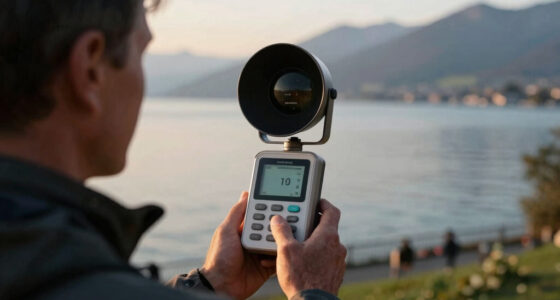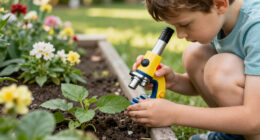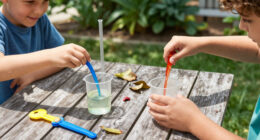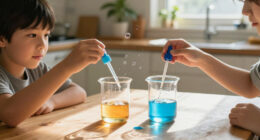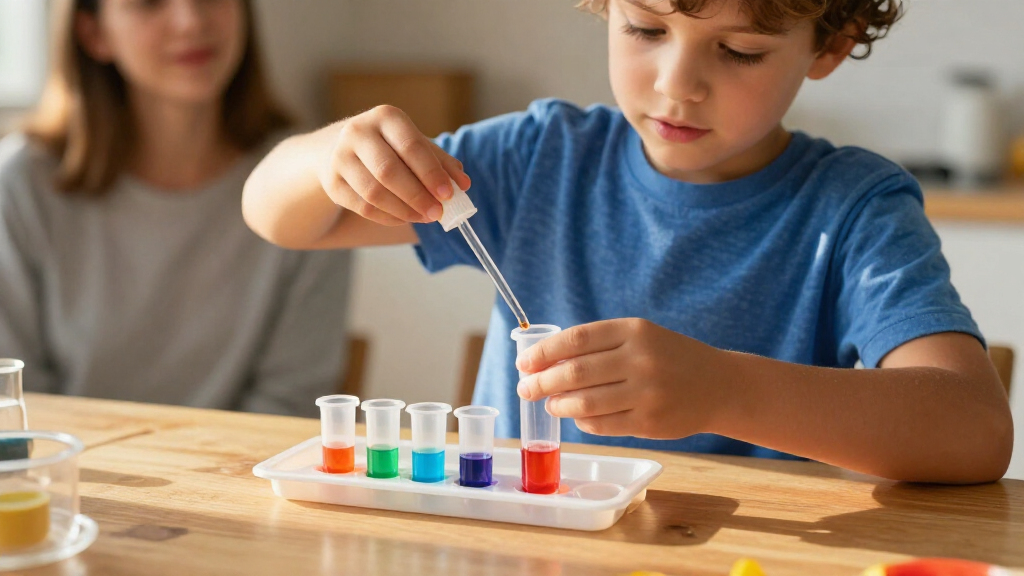

Choose a science experiment kit that fits your child’s age and interests, then set it up and complete one experiment safely. This guide is for parents and caregivers working with children who are new to hands-on science. Allow about 30-90 minutes, including setup and cleanup; follow the kit’s stated time if it differs.

Prime made for students and young adults
- Fast, free delivery for dorm and study essentials
- Prime Video and Amazon Music included
- Member-only deals
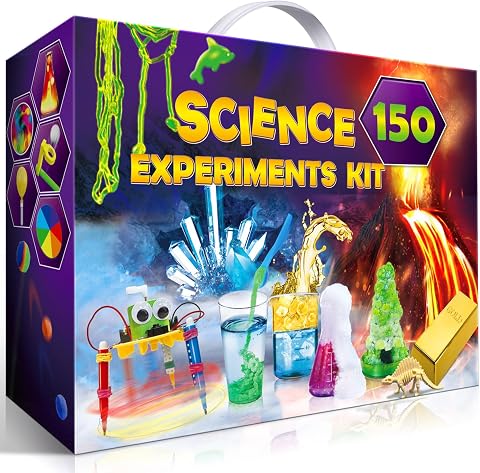
UNGLINGA 150-Experiment Science Kit for Kids
- ✔ Brand: UNGLINGA
- ✔ Experiment count: 150 listed
- ✔ Recommended age: 8 years and up
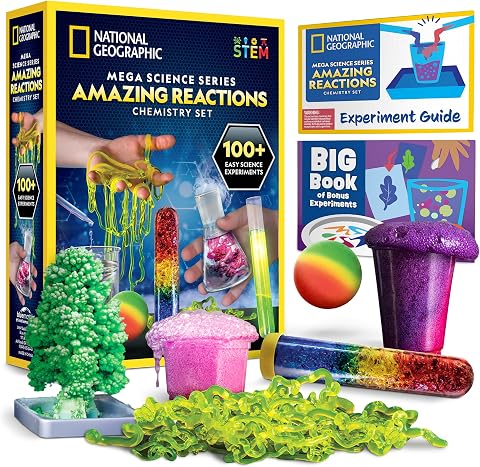
National Geographic Amazing Chemistry Set for Ages 8+
- ✔ Brand: Blue Marble
- ✔ Sub-brand: National Geographic
- ✔ Age range: 8 years and up

PW Glow-in-the-Dark Science Experiments Kit for Kids Ages 8–12
- ✔ Brand: PW
- ✔ Description age range: 8–12 years
- ✔ Conflicting recommended age field: 12 months–3 years
Difficulty: Beginner | Time: 30-90 minutes, depending on the experiment
What You’ll Need
Tools & Materials:
- A science experiment kit with its instruction booklet and all listed components
- Safety glasses if required by the kit
- A stable, well-lit work surface
- Paper towels and a bowl or tray for spills
- A timer, measuring cup, or other household items only if the booklet requests them
Knowledge:
- Ability to read and follow the kit’s age rating and instructions
- Basic supervision appropriate to the child’s age and the materials used
Read the entire experiment before opening chemicals, heating materials, or mixing components. Use only the materials and quantities named in the instructions. Do not substitute household chemicals or food containers for lab equipment.
UNGLINGA 150-Experiment Science Kit for Kids
When we want one kit to move beyond a single chemistry theme, UNGLINGA is the most flexible starting point in this group. Its 150 listed experiments cover chemistry, physics, earth science, and surface tension, giving families more ways to follow a child’s changing interests than the narrower National Geographic chemistry set or PW’s glow-centered chemistry and physics activities. The illustrated manual and included tools and materials support guided projects, and goggles add a practical lab-style touch.That breadth comes with a planning tradeoff: some experiments need common household items, so the number printed in the title should not be read as 150 fully self-contained activities. Compared with National Geographic, UNGLINGA describes more topic variety, while National Geographic makes the split between supplied experiments and bonus projects explicit. The product information describes child-friendly materials but gives limited detail on which supplies are allocated to each activity. We’d choose this kit for a family comfortable checking instructions and gathering occasional extras; families seeking a tightly defined set of ready-to-go chemistry experiments may prefer the clearer supplied-material count in the National Geographic set.
Pros:
- Lists 150 activities across several science areas.
- Includes experiment tools and materials.
- Illustrated step-by-step guide supports guided projects.
- Some activities use common household items, which can make it easier to continue experimenting between kit projects.
Cons:
- Some experiments require household items not included.
- The product details do not specify the supplied materials for each activity.
Best for: Families with children aged eight and up who want a broad set of science topics and do not mind gathering occasional household supplies.
Not ideal for: Buyers who want every activity’s required materials clearly supplied and itemized in the kit.
Bottom line: Choose UNGLINGA when subject variety matters most and you are comfortable supplementing the kit with household supplies.
“Choose UNGLINGA when subject variety matters most and you are comfortable supplementing the kit with household supplies.”
National Geographic Amazing Chemistry Set for Ages 8+
For a child drawn to reactions, crystals, and recognizable lab equipment, this set makes the most focused case. It includes materials for 15 experiments and a guide to 85 more activities using common household items. Test tubes, beakers, and pipettes give the supplied projects a more deliberate chemistry-workbench feel than the broader UNGLINGA kit, whose appeal is its spread across science topics. The named examples, including crystal growing and chemical reactions, help families see what kind of exploration to expect.The total of more than 100 ideas needs context: only 15 are described as using included materials, while the additional 85 rely on things found at home. That makes this a good option for a household that enjoys extending projects with familiar supplies, but less convenient if you expect a large number of fully stocked experiments. PW offers a more visually distinctive glow theme, though its supplied materials are less clearly detailed; National Geographic is easier to assess on that point. Its narrower chemistry emphasis is also a limitation if your child wants earth science or a wider rotation of topics.
Pros:
- Includes materials for 15 experiments and a guide to 85 additional activities.
- Provides test tubes, beakers, and pipettes for hands-on chemistry.
- Features crystal-growing and chemical-reaction activities.
- The activity guide offers ways to continue with household supplies.
Cons:
- The 85 additional activities require common household items.
- The kit is focused on chemistry rather than a broad range of science topics.
Best for: Children aged eight and up who are especially interested in chemistry tools, crystal growing, and reactions.
Not ideal for: Families looking for a wide range of science subjects or a large number of activities with all materials included.
Bottom line: Pick National Geographic for a chemistry-first experience with lab-style tools, provided you are happy to supply materials for many of the bonus activities.
“Pick National Geographic for a chemistry-first experience with lab-style tools, provided you are happy to supply materials for many of the bonus activities.”
PW Glow-in-the-Dark Science Experiments Kit for Kids Ages 8–12
PW gives this comparison its clearest visual hook: glowing slime and luminous reactions are intended to make chemistry and physics activities feel especially immediate. More than 15 projects and a full-color illustrated manual could suit a child who is more motivated by an intriguing result than by a general survey of science. Compared with National Geographic, PW trades chemistry tools such as beakers and pipettes for a glow-centered theme; compared with UNGLINGA, it offers a more focused activity identity rather than the broadest subject mix.There are two practical uncertainties to weigh. The listed components specify an instruction manual but do not detail the experiment materials, leaving buyers unsure how much is ready to use upon opening the box. The age information is also inconsistent: the title and description target ages 8–12, while the recommended-age field says 12 months–3 years. That mismatch makes PW harder to recommend confidently than the two kits whose age fields agree with their descriptions. We would consider it when the visual theme is the main attraction, but check the current product information and materials list before buying. Skip it if age certainty and a clearly itemized supply set are priorities.
Pros:
- Offers more than 15 chemistry and physics activities.
- Glow-in-the-dark theme includes examples such as glowing slime and luminous reactions.
- Full-color illustrated manual supports step-by-step activities.
- Designed for independent activity or use with an adult.
Cons:
- The included components list names a manual but does not detail experiment materials.
- Age guidance conflicts between ages 8–12 and 12 months–3 years.
Best for: Children in the stated 8–12 age range who are particularly drawn to glowing effects and guided chemistry or physics activities.
Not ideal for: Buyers who need unambiguous age guidance or want a detailed list of included experiment materials.
Bottom line: PW is the most distinctive pick for glow-themed experiments, but verify the age guidance and included materials before choosing it over the better-documented alternatives.
“PW is the most distinctive pick for glow-themed experiments, but verify the age guidance and included materials before choosing it over the better-documented alternatives.”
As an Amazon Associate we earn from qualifying purchases.
Before You Start
Check the kit label for the recommended age, required adult supervision, safety warnings, and any materials you must supply. Choose a first experiment with a short, clear procedure and a visible result. Keep food and drinks off the work surface, tie back long hair, and keep younger children and pets away from the materials. If the kit includes a chemical, read its handling and disposal directions before starting.
Step-by-Step Instructions
Step 1: Choose a kit that fits the child
Match the kit’s age range to the child who will use it, and choose a subject that interests them, such as plants, magnets, simple machines, or crystals. Read the box and product details to check the number of experiments, adult supervision level, included materials, and anything you need to provide. Pick a kit with clear instructions and one experiment the child can complete with your help.
Tip:For a first kit, favor experiments with a short setup and an observable result. A large number of experiments does not help if the first activity needs supplies you do not have.
Check: You have a kit suited to the child’s age, know what the first experiment involves, and have confirmed any extra supplies are available.
Step 2: Read the safety and disposal directions
Open the booklet and read the warnings, equipment list, steps, and cleanup directions for the experiment you selected. Identify whether it uses liquids, powders, heat, sharp tools, or small parts. Put on any protective gear named in the instructions, and follow the stated adult supervision requirements.
Tip:Do not taste or directly smell experiment materials. Keep them away from eyes and skin, and follow the booklet if contact occurs.
Check: You can explain the main safety rules, know which materials will be used, and know how the finished materials should be discarded or stored.
Step 3: Prepare the workspace and supplies
Clear a stable surface near a sink, cover it with a washable mat or tray, and gather every listed supply before beginning. Place the booklet where both of you can read it without reaching across the experiment. Move food, drinks, clutter, and unrelated items away from the work area. Set out paper towels and a timer if needed.
Tip:Keep kit components in their labeled containers until a step calls for them. Mixing up similar-looking parts can change the result.
Check: The workspace is clear, all required items are within reach, and there is room to perform the experiment without crowding.
Step 4: Make a prediction together
Read the experiment’s question or goal aloud. Ask the child what they think will happen, then write or draw the prediction in a notebook. Keep the prediction simple, such as which object will move faster or what color will appear. Explain that a different result is still useful because it gives you something to investigate.
Check: You have recorded a prediction before changing or combining any materials.
Step 5: Follow the experiment steps in order
Complete one booklet instruction at a time. Have the child handle only the parts they can safely manage, while you measure, pour, heat, or use tools when the instructions or age rating call for adult help. Use the stated amounts and wait times. Pause to check the next step before adding anything.
Tip:Do not skip waiting periods or add extra ingredients to make a result appear faster. Those changes can affect the outcome.
Check: You have completed each listed step in sequence, used the specified amounts, and observed the experiment without an unexpected spill or unsafe contact.
Step 6: Observe and record the result
Look closely at what changed and compare it with the prediction. Record what you can see, such as a color change, movement, bubbles, growth, or a change in shape. If the experiment includes measurements, write down the numbers and units. Ask the child to describe the evidence before discussing why it may have happened.
Tip:Describe observations plainly. “The water turned blue” records what happened; “the water liked the powder” guesses at a cause.
Check: Your notes show the observed result, and you can compare it with the prediction or the outcome described in the booklet.
Step 7: Clean up and put materials away
Use the booklet’s cleanup directions to dispose of liquids, powders, and other materials. Do not pour anything down a drain unless the instructions say to do so. Wipe the surface, wash reusable equipment as directed, close containers, and wash hands with soap and water. Store the kit somewhere dry and out of reach of young children.
Tip:Keep any item marked for reuse with the kit instead of discarding it. Check that lids are secure before storing containers.
Check: The materials have been handled as directed, the workspace is clean, hands are washed, and reusable parts are ready for storage.
Common Mistakes to Avoid
- Starting before checking the full experiment and supply list. — Read the procedure, warnings, and cleanup directions first; gather all required items before opening materials.
- Using different amounts or changing the order of steps. — Follow the booklet exactly, including measurements and wait times, so the observation matches the intended experiment.
- Choosing a kit based only on its theme or number of activities. — Check age guidance, supervision needs, included components, and extra supplies before buying or starting.
- Treating an unexpected result as proof the experiment failed. — Record what happened, check measurements and sequence, and compare the observation with the booklet’s expected result.
Troubleshooting
Problem: A listed component or household supply is missing.
Solution: Pause before starting. Check the packaging and booklet for where the component is stored, then contact the kit maker or obtain the exact household item listed. Do not substitute a different chemical or tool.
Problem: The expected change does not appear.
Solution: Check that you used the correct materials, quantities, order, and wait time. Record the result. If the booklet allows repeating the experiment, start over with clean equipment and measure carefully.
Problem: A spill or accidental skin or eye contact occurs.
Solution: Stop the experiment and follow the kit’s safety directions for the material. Rinse skin or eyes as directed by the label or booklet, keep the product packaging available, and contact a medical professional or local poison advice service if the instructions call for help or symptoms occur.
What Success Looks Like
The child and adult complete one experiment in the booklet’s stated order, follow its safety and cleanup directions, and record what they observed. Success means the procedure was carried out safely and the result was documented, even if it differs from the prediction or expected outcome.
Next Steps
Store the notebook with the kit so you can compare results across experiments. Before choosing another activity, check which components remain and whether any supplies need replacement. Let the child explain what they observed, then choose a related experiment or repeat the same one while changing only a variable the booklet allows.
Frequently Asked Questions
What age should a child be to use a science experiment kit?
Use the age range printed on the kit as your starting point. Some activities need an adult to measure, pour, or handle tools even when a child can take part in the observations.
Can we replace a missing ingredient with something similar?
Only replace a household item if the booklet names an alternative. Do not swap chemicals or add unlisted ingredients; they may change the result or create a safety risk.
What should we do if the experiment gives a different result?
Write down what happened and check the measurements, materials, order, and timing. A different result can still be useful evidence. Repeat only if the instructions allow it and you can reset the experiment safely.
How should we dispose of leftover experiment materials?
Follow the kit’s cleanup and disposal directions for each material. If the booklet does not say how to handle a substance, keep it contained and contact the kit maker for guidance before discarding it.