
Choosing a science experiment kit is less about finding the one with the biggest experiment count and more about matching the activities to a child’s interests and the adult help available. The National Geographic Science Magic Kit leans on variety and presentation, mixing science demonstrations with activities designed to feel like tricks. The Thames & Kosmos Kids First Chemistry Set focuses on chemistry, using illustrated instructions to guide young experimenters through a more coherent set of activities.

Prime made for students and young adults
- Fast, free delivery for dorm and study essentials
- Prime Video and Amazon Music included
- Member-only deals
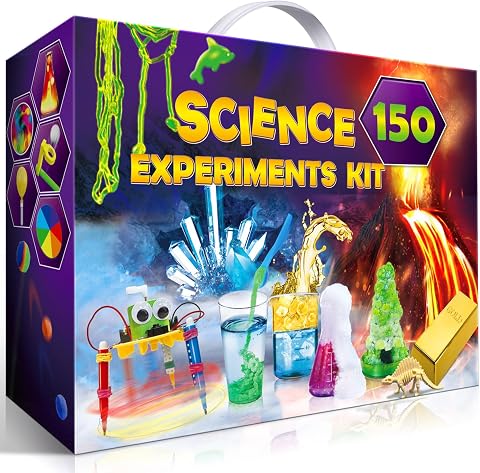
UNGLINGA 150-Experiment Science Kit for Kids
- ✔ Brand: UNGLINGA
- ✔ Number of experiments: 150
- ✔ Recommended age: 8 years and up
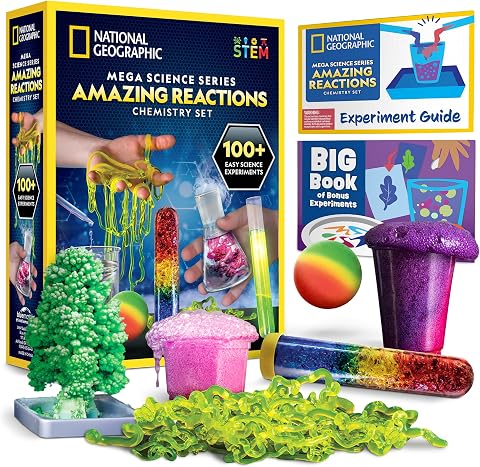
National Geographic Amazing Chemistry Set for Ages 8+
- ✔ Brand: Blue Marble
- ✔ Sub-brand: National Geographic
- ✔ Age range: 8 years and up

PW Glow-in-the-Dark Science Experiments Kit for Kids Ages 8–12
- ✔ Brand: PW
- ✔ Product title age range: 8–12 years
- ✔ Separate recommended-age field: 12 months–3 years
That makes the real choice breadth versus structure. Families looking for several kinds of hands-on science may prefer National Geographic; those who want a gentler, more systematic start with chemistry may get more from Thames & Kosmos. Both are best treated as adult-supported activities, especially when a child is young or handling liquids and small parts.
At a Glance
| Criteria | National Geographic Science Magic Kit | Thames & Kosmos Kids First Chemistry Set | Winner |
|---|---|---|---|
| Experiment variety | Mix of science-themed activities and demonstrations | A set of chemistry activities built around a focused subject | A |
| Learning focus | Broad, playful exposure to science ideas | More consistent introduction to basic chemistry | B |
| Instructions and independence | Designed to make activities engaging; adult help may be needed | Illustrated, step-based guidance supports following a sequence | B |
| Age and adult support | Better suited to children ready to follow steps with supervision | A child-friendly entry point, with adult supervision still recommended | Depends |
| Repeat play and materials | Some activities use up materials; demonstrations can be repeated selectively | Consumable materials limit some repeats; concepts can be revisited | Tie |
| Gift appeal and engagement | Magic-style framing can make science feel like a performance | A strong fit for children who enjoy mixing, observing, and asking why | Depends |
| Value for money | Better fit if variety matters more than a structured chemistry course | Better fit if chemistry focus and guided learning justify the spend | Depends |
UNGLINGA 150-Experiment Science Kit for Kids
For families who want a sampler of science rather than a single-theme box, UNGLINGA offers the widest stated range in this lineup. Its projects cover chemistry, physics, earth science, and surface tension, so children can move between different kinds of questions instead of repeating one style of activity. The illustrated, step-by-step manual gives that variety a usable structure, and the kit is described as including tools and materials, including child-friendly lab tools and goggles.The headline count of 150 should be read alongside the supply details. Some experiments use common household items, so the activity total does not mean every project can be started with only what is in the box. Even so, compared with National Geographic’s 15 supplied chemistry experiments and 85 household-item ideas, UNGLINGA gives us the broadest mix of subjects in one kit. PW’s glowing theme is more distinctive for a particular kind of activity, but it does not offer the same stated cross-topic coverage or detailed materials list.This is our strongest choice when variety matters more than a tightly focused chemistry set. Families should expect to check the manual for any at-home supplies a chosen project needs. Children eight and up are the stated audience, and an adult can help select activities and gather materials. If the goal is specifically crystal growing or glowing reactions, the other two kits are more directly tailored.
Pros:
- 150 stated experiment ideas across chemistry, physics, earth science, and surface tension.
- Includes science tools and materials, with goggles noted among the child-friendly tools.
- Illustrated step-by-step manual supports guided activities.
- Some projects use common household items, extending the range of activities.
Cons:
- Some experiments require household items that are not included.
- The breadth may be less appealing than a focused chemistry or glow-in-the-dark theme.
Best for: Families with children ages 8 and up who want to explore several science topics and have an adult available to help gather household supplies.
Not ideal for: Buyers looking for a chemistry-only kit, a fully specified list of materials for every project, or activities for children younger than eight.
Bottom line: Choose UNGLINGA for the broadest stated mix of science subjects, provided we are comfortable checking for household supplies as we go.
“Choose UNGLINGA for the broadest stated mix of science subjects, provided we are comfortable checking for household supplies as we go.”
National Geographic Amazing Chemistry Set for Ages 8+
When we want an experiment kit centered on chemistry, this set has the clearest fit. It supplies materials for 15 experiments and includes test tubes, beakers, and pipettes, giving children equipment associated with practical lab work. The activities include chemical reactions and crystal growing, so the tools connect naturally to the subject rather than serving as a generic assortment.The guide adds 85 more activity ideas using common household items, bringing the stated total to more than 100. That is useful for families who want a longer runway, but it should not be confused with 100 fully supplied experiments. In this respect it is similar to UNGLINGA, whose projects can also call for household items. UNGLINGA ranks ahead for subject range and its stated included tools and materials; National Geographic is the more focused choice when chemistry equipment and crystal growing are the priority.Its compact listed dimensions and 1.8-pound weight may also suit families who want a contained set to store between activities. The main limitation is the divide between the 15 supplied experiments and the larger set of household-item ideas. Compared with PW, the included chemistry tools are described more specifically, though PW may appeal more to children drawn to luminous reactions. We would choose this set for a child ready to follow chemistry activities, with an adult helping source supplies for the bonus projects.
Pros:
- Materials are included for 15 chemistry experiments.
- Test tubes, beakers, and pipettes provide hands-on lab-style tools.
- The guide adds 85 activity ideas using common household items.
- Activities include chemical reactions and crystal growing.
Cons:
- The 85 additional activities require household items.
- Its chemistry focus offers less subject variety than UNGLINGA.
Best for: Families with children ages 8 and up who want hands-on chemistry activities, especially chemical reactions and crystal growing with lab-style tools.
Not ideal for: Buyers who want every activity fully supplied in the box, a wide range of science subjects, or activities for younger children.
Bottom line: Pick this set when chemistry tools and crystal growing matter more than a broad mix of science topics or fully supplied activities throughout.
“Pick this set when chemistry tools and crystal growing matter more than a broad mix of science topics or fully supplied activities throughout.”
PW Glow-in-the-Dark Science Experiments Kit for Kids Ages 8–12
PW is the most theme-led pick in this comparison: it puts glowing slime and luminous reactions at the center of more than 15 chemistry and physics activities. That can make it an engaging choice for a child who is especially curious about glow-in-the-dark effects. A full-color illustrated manual is described as guiding children step by step, with activities intended to build observation, logical thinking, and problem-solving.Its focused appeal differs from UNGLINGA’s broad science sampler and National Geographic’s lab-tool-centered chemistry set. PW may be the easiest choice to explain to a child who wants luminous experiments, but the listing gives us less information about what the box contains: the included-components field names an instruction manual without detailing experiment materials. That makes it harder to compare the practical readiness of its activities with the other kits, which describe tools or materials.There is also an unresolved age mismatch. The product title targets ages 8–12, while the recommended-age field says 12 months to 3 years. That discrepancy is significant for a science kit and should be checked against the current product packaging or listing before purchase. We would consider PW for its distinctive glow theme only if the intended age and supplied materials are confirmed; families wanting clearer scope should look to National Geographic for specified chemistry tools or UNGLINGA for broader subject coverage.
Pros:
- More than 15 stated chemistry and physics activities.
- Glowing slime and luminous reactions give the kit a distinct theme.
- Full-color illustrated manual offers step-by-step guidance.
- Activities are intended to encourage observation, logical thinking, and problem-solving.
Cons:
- The listed included components name an instruction manual but do not detail experiment materials.
- Age information conflicts: the title says 8–12, while a field says 12 months–3 years.
- The focused glow theme offers less topic variety than UNGLINGA.
Best for: A child drawn specifically to glow-in-the-dark effects and guided chemistry and physics activities, once the age guidance and included materials have been confirmed.
Not ideal for: Buyers who need consistent age guidance, a clearly detailed materials list, or a broad selection of science topics.
Bottom line: Choose PW for its luminous activity theme only after confirming the intended age range and which experiment materials come in the box.
“Choose PW for its luminous activity theme only after confirming the intended age range and which experiment materials come in the box.”
As an Amazon Associate we earn from qualifying purchases.
Key Differences
The clearest difference is how each kit organizes curiosity. National Geographic gives children more kinds of science experiences, which can help when their interests are broad or still developing. Thames & Kosmos narrows the subject to chemistry and makes the experiments feel like steps in a learning path. That focus is a meaningful advantage for a child who likes observing changes and wants to understand what happened, though it offers less variety for a child who wants to switch topics often.
Neither kit removes the need for an adult. The right amount of independence depends on the child’s reading ability, patience, and comfort with handling materials. A grown-up who can read instructions, prepare the workspace, and discuss results can make either kit more rewarding. For repeat use, judge the value by the activities the child will actually do: consumables can run out, while the ideas and demonstrations may remain useful for conversation or simple variations.
Detailed Comparison
Experiment variety (National Geographic Science Magic Kit wins — moderate)
National Geographic wins, with activities spanning more than one science theme and a presentation built around surprising demonstrations. The gap is moderate: this variety helps an undecided child stay interested, but a larger mix does not automatically provide deeper learning. Thames & Kosmos gives up breadth for a more consistent chemistry experience.
Learning focus (Thames & Kosmos Kids First Chemistry Set wins — moderate)
Thames & Kosmos wins by keeping attention on chemistry rather than moving among different kinds of science activities. The gap is moderate for a child who wants to learn about reactions, mixtures, and observation; it matters less to a child who mainly wants a fun activity. National Geographic trades a clear subject path for a broader introduction.
Instructions and independence (Thames & Kosmos Kids First Chemistry Set wins — moderate)
Thames & Kosmos has the edge when a child benefits from illustrated, sequential guidance through experiments. The difference is moderate, not a promise of solo use: younger children may still need help reading, measuring, and managing materials. National Geographic’s performance-oriented activities can be engaging, though a parent may need to provide more context between demonstrations.
Age and adult support (minor difference)
This is a tie in practical terms: neither kit should be chosen on the assumption that a young child can safely use it without an adult. The best fit depends on the child’s age, reading skills, and ability to follow directions, as well as the supervision available. Check the current package age guidance and contents before buying, since kit versions can change.
Repeat play and materials (minor difference)
Neither has a clear overall win. Some experiment supplies are consumed, so repeated use depends on what remains and whether replacement materials are appropriate. Children can revisit observations and concepts even when a specific activity cannot be repeated exactly. Check the kit contents and consider how many activities rely on one-time materials before treating the experiment count as lasting value.
Gift appeal and engagement (moderate difference)
The winner depends on the child. National Geographic’s science-magic framing may catch the attention of a child drawn to surprising demonstrations; Thames & Kosmos may appeal more to a child who enjoys following a process and seeing what changes. The difference is moderate for motivation, because a kit that matches a child’s style is more likely to leave the shelf.
Value for money (moderate difference)
There is no universal winner without comparing the exact prices and included materials. National Geographic is stronger value when a child will use the range of activities. Thames & Kosmos earns its cost when chemistry and guided instruction are the main draw. Pay more only for a clear match to the child’s interests, not a larger activity count alone.
National Geographic Science Magic Kit: Pros and Cons
Pros:
- Broader mix of science-themed activities
- Magic-style demonstrations can make science feel playful
- Good option when a child’s interests are not yet focused
Cons:
- Less concentrated chemistry learning
- Some activities may require more adult explanation
- Consumable materials can limit exact repeats
Thames & Kosmos Kids First Chemistry Set: Pros and Cons
Pros:
- Focused chemistry theme supports a more coherent learning experience
- Illustrated steps help children follow an experiment sequence
- Good fit for children who enjoy mixing, observing, and asking questions
Cons:
- Narrower subject range than a multi-theme kit
- Adult supervision remains necessary
- Some activities may depend on materials that are used up
Who Should Choose What
Choose National Geographic Science Magic Kit if:
- Choose National Geographic if your child enjoys surprising demonstrations and wants several kinds of science activities.
- Choose National Geographic if you are unsure which science topic will hold your child’s attention and variety is the priority.
Choose Thames & Kosmos Kids First Chemistry Set if:
- Choose Thames & Kosmos if your child is especially curious about chemistry and likes following illustrated steps.
- Choose Thames & Kosmos if you want experiments to build around one subject rather than sample several themes.
Skip both if: Skip both if you need a kit a young child can use entirely alone, or if the listed experiments and materials do not match the child’s age, interests, or available adult support.
Value for Money
Paying more is worthwhile only when the extra cost buys the kind of experience the child will use. For a child who likes chemistry and benefits from a guided sequence, Thames & Kosmos can justify a higher price than a broad kit. For a child who wants to sample different science activities, National Geographic may deliver better value even if its individual lessons are less focused. Compare the current prices, included supplies, and the number of activities that can be repeated; prices and kit contents vary by retailer and edition.
Final Verdict
For a child with a clear interest in chemistry, choose Thames & Kosmos Kids First Chemistry Set: its focused subject and guided experiments make it the stronger learning choice. For a child who wants variety or is still discovering which science topics are exciting, choose National Geographic Science Magic Kit. The deciding factor is whether your child will benefit more from breadth or a chemistry path. In either case, plan to participate and check the current age guidance and materials before starting.
Frequently Asked Questions
Which kit is better for a child who is new to science experiments?
Thames & Kosmos is a better fit if the child likes clear steps and chemistry. National Geographic is a better fit if variety and surprising demonstrations are more motivating. For either kit, adult support can help a beginner follow the instructions and make sense of results.
Can children use these experiment kits without adult supervision?
Do not assume so. Follow the age guidance on the current package, review each activity and its materials, and supervise as appropriate for the child’s reading skills and experience. Adult help can also make the experiments more informative.
Which kit offers better value?
National Geographic is likely the better value when a child will use activities across several themes. Thames & Kosmos is likely the better value when chemistry is the main interest and the guided format will be used. Compare the current price and included supplies for the edition you plan to buy.
Are the experiments reusable?
Some activities may be repeated, while others use supplies that run out. The exact balance depends on the kit edition and experiment. Check the listed contents before buying, and remember that children can revisit the observations and concepts even when they cannot repeat an activity in exactly the same way.