Interactive science experiment kits turn chemistry, physics, and earth science into hands-on play, but the category splits sharply between large multi-experiment sets and smaller kits built around a single theme. The National Geographic Amazing Chemistry Set earns my best overall pick for its 100+ experiments, polished instruction manuals, and reliable material quality, while the Doctor Jupiter Ultimate Science Kit stands out for guided parent-child experiments and the UNGLINGA 272-Experiments set wins on sheer volume per dollar. The main tradeoffs you’ll face are experiment count versus quality of explanations, age-appropriateness, and how often consumables need replacing. Read on for the full breakdown, including which kits suit preschoolers versus tweens and which cheap sets aren’t worth the shelf space.
Key Takeaways
- National Geographic kits consistently delivered the clearest instruction manuals and best educational explanations, while UNGLINGA won on raw experiment count per dollar — often at the cost of thinner guidance.
- Doctor Jupiter’s two kits were the only ones designed around true parent-child co-experimentation, with follow-along instruction cards rather than just illustrated manuals.
- Kits aimed at ages 4-6 (Doctor Jupiter My First Science Kit) favor wow-factor reactions over real chemistry concepts, so buyers should match the kit to the child’s reading level, not just the age label.
- Repeat-play value varied more than experiment count: the National Geographic Earth Science and Science Magic kits offered more re-runnable activities than several kits with larger numbers on the box.
- Consumable refill availability was the hidden differentiator — National Geographic’s reagent packs are easy to restock, while several budget kits become single-use once supplies run out.
| Doctor Jupiter Ultimate Science Experiments Kit for Kids Ages 8+ |  | Best Overall | Number of Experiments: 135+ | Age Range: 8 years and up | Educational Objective: STEM | VIEW LATEST PRICE | See Our Full Breakdown |
| UNGLINGA 272 Experiments Science Kit for Kids, Chemistry Set |  | Best Experiment Variety | Number of Experiments: 272 | Age Range: Kids (approximately 6+) | Educational Objective: Chemistry, physics, STEM | VIEW LATEST PRICE | See Our Full Breakdown |
| National Geographic Amazing Chemistry Set with 100+ Experiments for Ages 8-12 |  | Best Premium Chemistry | Number of Experiments: 100+ (plus 85 bonus) | Age Range: 8-12 years | Educational Objective: STEM / Chemistry | VIEW LATEST PRICE | See Our Full Breakdown |
| National Geographic Junior Chemistry Set with 50 Experiments for Kids |  | Best for Preschoolers | Number of Experiments: 50 | Age Range: 4 years and up | Tools Included: 20+ kid-friendly lab tools | VIEW LATEST PRICE | See Our Full Breakdown |
| Doctor Jupiter My First Science Experiments Kit for Kids Ages 4+ |  | Best Value Starter Kit | Number of Experiments: 50+ | Age Range: 4-8 years | Educational Objectives: Critical thinking, observation, problem solving, logical thinking | VIEW LATEST PRICE | See Our Full Breakdown |
| UNGlinga 150 Experiments Science Kit for Kids – Chemistry, Physics & STEM Projects |  | Best Breadth on a Budget | Brand: UNGlinga | Age Range: 8 years and up | Number of Experiments: 150 | VIEW LATEST PRICE | See Our Full Breakdown |
| National Geographic Earth Science Kit with 100+ Activities for Kids 8-12 | 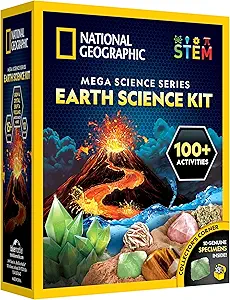 | Best Themed Depth | Brand: Blue Marble (National Geographic) | Age Range: 8 years and up | Objective: STEM / Earth Science | VIEW LATEST PRICE | See Our Full Breakdown |
| Doctor Jupiter My First Science Experiments Kit for Kids Ages 4+ |  | Best for Preschoolers | Brand: Doctor Jupiter | Age Range: 4 years and up | Number of Experiments: 100+ | VIEW LATEST PRICE | See Our Full Breakdown |
| Science Kit for Kids – 80 Science Lab Experiments with Scientist Role Play |  | Best Role-Play Experience | Number of Experiments: 80 | Age Range: 6+ years | Safety Gear: Goggles and gloves included | VIEW LATEST PRICE | See Our Full Breakdown |
| UNGLINGA 40+ Experiments Science Kit for Kids Chemistry Set STEM Toy |  | Best Compact Starter Set | Brand: UNGLINGA | Number of Experiments: Over 40 | Focus: Chemistry / STEM projects | VIEW LATEST PRICE | See Our Full Breakdown |
| National Geographic Chemistry Set with 45 Experiments for Kids 8-12 |  | Best Classic Chemistry Starter | Number of Experiments: 45 | Recommended Age: 8-12 years | Brand: National Geographic | VIEW LATEST PRICE | See Our Full Breakdown |
| National Geographic Science Magic Kit – 100+ Experiments and Magic Tricks |  | Best for Performers | Brand: Blue Marble (National Geographic) | Age Range: 8 years and up | Number of Experiments: 100+ (20 in box, 85+ in bonus booklet) | VIEW LATEST PRICE | See Our Full Breakdown |
| UNGlinga 70 Lab Experiments Science Kit for Kids Chemistry Set |  | Best Value Pick | Brand: UNGlinga | Age Range: 8 years and up | Number of Experiments: 70 | VIEW LATEST PRICE | See Our Full Breakdown |
| National Geographic Gross Science Kit with 45 Experiments for Kids 8-12 |  | Best for Reluctant Scientists | Brand: Blue Marble (National Geographic) | Age Range: 8 years and up | Number of Experiments: 45 | VIEW LATEST PRICE | See Our Full Breakdown |
| interactive science experiment kit | Number of Experiments | Age Range | Brand | Model Number |
|---|---|---|---|---|
| Doctor Jupiter Ultimate Scienc | 135+ | 8 years and up | — | — |
| UNGLINGA 272 Experiments Scien | 272 | Kids (approximately 6+) | — | — |
| National Geographic Amazing Ch | 100+ (plus 85 bonus) | 8-12 years | National Geographic (Blue Marble) | NGMEGACHEMAR |
| National Geographic Junior Che | 50 | 4 years and up | — | — |
| Doctor Jupiter My First Scienc | 50+ | 4-8 years | Doctor Jupiter | DJ MFSK Starter |
| UNGlinga 150 Experiments Scien | 150 | 8 years and up | UNGlinga | — |
| National Geographic Earth Scie | — | 8 years and up | Blue Marble (National Geographic) | NGMEGAEARTH |
| Doctor Jupiter My First Scienc | 100+ | 4 years and up | Doctor Jupiter | DJ Junior Science |
| Science Kit for Kids | 80 | 6+ years | — | — |
| UNGLINGA 40+ Experiments Scien | Over 40 | — | UNGLINGA | — |
| National Geographic Chemistry | 45 | — | National Geographic | — |
| National Geographic Science Ma | 100+ (20 in box, 85+ in bonus booklet) | 8 years and up | Blue Marble (National Geographic) | NGMEGAMAGIC |
| UNGlinga 70 Lab Experiments Sc | 70 | 8 years and up | UNGlinga | HZDZKH030 |
| National Geographic Gross Scie | 45 | 8 years and up | Blue Marble (National Geographic) | NGMEGAGRS |
More Details on Our Top Picks
Doctor Jupiter Ultimate Science Experiments Kit for Kids Ages 8+
Doctor Jupiter’s Ultimate kit earns the top spot because it balances experiment volume, instruction quality, and safety better than anything else in this lineup. With over 135 experiments plus a bonus booklet of household-item activities, it offers more genuine variety than the National Geographic Amazing Chemistry Set, which leans heavily on chemistry alone. The included glassware-style tools — conical flask, measuring cylinder, test tube stand — make kids feel like real scientists rather than following a craft project. The tradeoff is that many experiments pull in pantry staples you’ll need to supply yourself, and younger siblings under 8 will have to sit out. Compared with the UNGLINGA 272 Experiments kit, the experiment count is lower, but the instructions and safety framing are noticeably more parent-friendly.
Pros:- Over 135 experiments plus a bonus booklet of household-item activities
- Real lab-style tools like a conical flask, measuring cylinder, and test tube stand
- Clear, safety-conscious instructions that parents and kids can follow together
- Strong STEM focus with creative, varied experiment types
Cons:- Many experiments need additional household items not in the box
- Ages 8+ only, so younger siblings are excluded
- Requires adult supervision for most activities
Best for: Parents of kids 8+ who want a long-lasting kit that works for both independent play and guided parent-child sessions
Not ideal for: Households that want a fully self-contained kit — many experiments require extra household items, and younger kids under 8 can’t use it
- Number of Experiments:135+
- Age Range:8 years and up
- Educational Objective:STEM
- Included Components:Measuring cylinder, conical flask, spatula, stirring sticks, test tube stand, cups, funnel, tray, soap moulds, ingredients, instruction manual, bonus booklet
- Manufacturer:Metis Learning Solutions Pvt. Ltd.
- Best Sellers Rank:#3 in Educational Science Kits
- Customer Reviews:4.7/5
Our verdict“If you want one kit that keeps an 8-to-12-year-old busy for months, this is the most complete package in the roundup.”
UNGLINGA 272 Experiments Science Kit for Kids, Chemistry Set
Sheer volume is the pitch here, and 272 experiments is double what the Doctor Jupiter Ultimate kit offers. That breadth spans chemistry, physics, and light-based tricks like holographic projection, so it works well for kids whose interests shift week to week. The included tools — test tubes, a be, measuring spoon, and conical flask — are kid-safe plastic rather than breakable glass, which is a plus for rambunctious households but feels less authentic than Doctor Jupiter’s setup. The real tradeoff is instruction depth: the manual is thin for older children who want to understand why reactions happen, not just watch them. Think of this as the quantity pick — great for sampling everything, weaker for sustained learning.
Pros:- Largest experiment count in the roundup at 272 activities
- Spans chemistry, physics, and optics for varied interests
- Durable kid-safe plastic tools
- Good value per experiment compared with smaller kits
Cons:- Instructions lack scientific depth for older kids
- Some experiments still require adult supervision
- Plastic tools feel less like real lab equipment than rival kits
Best for: Kids who burn through kits quickly and families wanting maximum experiments per dollar
Not ideal for: Older or analytically curious kids who want detailed scientific explanations, since the manual stays basic
- Number of Experiments:272
- Age Range:Kids (approximately 6+)
- Educational Objective:Chemistry, physics, STEM
- Included Tools:Test tube, measuring spoon, beaker, conical flask
- Material:Plastic
- Focus Areas:Volcano eruptions, crystal growing, holographic projection, walking water
Our verdict“Best for quantity-driven families who want endless variety over deeper scientific instruction.”
National Geographic Amazing Chemistry Set with 100+ Experiments for Ages 8-12
This is the pick when quality of the science matters more than experiment count. National Geographic’s set focuses tightly on real chemistry — reactions, crystal growing, colorful solutions — with genuine scientific tools and a bonus guide adding 85 more experiments. Compared with the UNGLINGA 272 kit, it does less but does it better: the explanations, tool quality, and brand-backed accuracy make it the stronger educational choice, and its award history reflects that. The tradeoff is scope — it’s chemistry-only, so kids who want physics tricks or holograms will find it narrower than UNGLINGA’s mix. Like most kits here, some experiments expect household items you’ll need to gather, and kids past 12 will likely outgrow it quickly.
Pros:- 100+ core experiments plus a bonus guide with 85 more
- Real scientific tools including test tubes and beakers
- Award-winning design with strong educational credibility
- Focused chemistry curriculum with clear explanations
Cons:- Narrower subject range than multi-topic kits like UNGLINGA’s
- Some experiments need household items not included
- Grows out of it fast for kids over 12
Best for: Parents who prioritize educational rigor and brand reliability for a child serious about chemistry
Not ideal for: Older kids wanting advanced chemistry, or families seeking variety beyond chemical reactions
- Number of Experiments:100+ (plus 85 bonus)
- Age Range:8-12 years
- Educational Objective:STEM / Chemistry
- Item Highlights:Crystal growing, chemical reactions, hands-on experiments
- Brand:National Geographic (Blue Marble)
- Model Number:NGMEGACHEMAR
- Manufacturer:JMW Sales, Inc.
Our verdict“The most credible chemistry education in the lineup — pick it when learning depth beats sheer variety.”
National Geographic Junior Chemistry Set with 50 Experiments for Kids
Most kits in this roundup start at age 8, which leaves younger kids watching from the sidelines. This junior set fixes that: it’s built for ages 4 and up, with 50 simple experiments and over 20 durable, child-safe tools sized for small hands. Compared with the Doctor Jupiter My First Science kit, the other preschool option here, the National Geographic name brings more polished illustrated instructions and a trusted safety record, though Doctor Jupiter includes more playful moulds and colours. The obvious tradeoff is ceiling — every experiment is deliberately basic, often built around household items, so an 8-year-old will be bored within an afternoon. This is an on-ramp kit, not a destination, and it’s priced and designed accordingly.
Pros:- Starts at age 4, well below most kits in this category
- 20+ durable, child-safe tools sized for young kids
- Illustrated instructions young children can follow with a parent
- Uses safe, common household items for most experiments
Cons:- Very low difficulty ceiling for older siblings
- Limited chemistry depth — more demonstration than investigation
- Requires supervision for every session
Best for: Parents of 4-to-7-year-olds who want a safe, gentle first introduction to science
Not ideal for: Kids 8 and older who will find the experiments too simple almost immediately
- Number of Experiments:50
- Age Range:4 years and up
- Tools Included:20+ kid-friendly lab tools
- Educational Objective:Introductory chemistry / STEM
- Materials:Common household items
- Availability:Amazon exclusive
Our verdict“The right first science kit for preschoolers — just plan to upgrade by age 7 or 8.”
Doctor Jupiter My First Science Experiments Kit for Kids Ages 4+
For a first kit that won’t sting if science turns out to be a passing phase, this Doctor Jupiter starter hits the value sweet spot. It packs 50+ experiments plus genuinely fun extras — a dinosaur mould and mini volcano — that the National Geographic Junior set doesn’t match, and its instruction manual is well-illustrated for joint parent-child sessions. It meets U.S. toy safety standards, which matters at this age. The compromises are real, though: the tools are basic plastic, the experiments lean on kitchen chemistry rather than lab-style investigation, and it caps out around age 8, at which point kids are ready for the Doctor Jupiter Ultimate kit. Small parts also mean it’s not safe for toddlers hovering nearby.
Pros:- 50+ experiments at a lower price than comparable starter kits
- Fun extras like a dinosaur mould and mini volcano that kids love
- Clear, parent-friendly illustrated instructions
- Meets U.S. toy safety standards
Cons:- Basic plastic tools with limited lab realism
- Age cap of 8 makes it a short-lived purchase
- Small parts pose a choking hazard for younger siblings
Best for: Budget-conscious parents of 4-to-8-year-olds who want a fun, screen-free bonding activity without a big spend
Not ideal for: Families with toddlers under 4 in the house, or kids over 8 who need more challenge
- Number of Experiments:50+
- Age Range:4-8 years
- Educational Objectives:Critical thinking, observation, problem solving, logical thinking
- Included Components:Beaker, test tube, mini volcano, dinosaur mould, dropper, food colours, essences, tray, spray bottle, funnel, instruction manual
- Brand:Doctor Jupiter
- Model Number:DJ MFSK Starter
- Best Sellers Rank:#5 in Educational Science Kits
- Customer Reviews:4.7/5
Our verdict“A low-risk, high-fun first kit for the 4-to-8 crowd — buy it cheap, bond over it, then graduate upward.”
UNGlinga 150 Experiments Science Kit for Kids – Chemistry, Physics & STEM Projects
Most kits in this roundup specialize in one discipline, but UNGlinga’s 150-experiment set spreads across chemistry, physics, and earth science, which makes it the strongest pick for a child whose interests haven’t settled yet. Compared with the National Geographic Earth Science Kit, this option trades themed depth for sheer variety — you get surface tension tricks and physics demos alongside classic chemical reactions. That breadth comes at a cost, though: many experiments lean on household supplies you’ll need to gather yourself, so the real count of “open the box and go” activities is lower than the headline suggests. Instruction quality is genuinely kid-friendly, which keeps independent play realistic for confident readers.
Pros:- 150 experiments across multiple science disciplines offer long-lasting value
- Clear, kid-friendly instructions support independent exploration
- Broader topic coverage than single-subject rivals like the National Geographic Earth Science Kit
- Engaging mix of quick demos and longer projects
Cons:- Many experiments require household items not included in the box
- Adult supervision needed for several activities, limiting solo use
- Durability of the included tools is uncertain compared with National Geographic’s build quality
Best for: Parents of curious 8-to-11-year-olds who want maximum experiment variety per dollar and don’t mind supplementing with pantry staples
Not ideal for: Gift-givers or busy households wanting a fully self-contained kit — expect frequent supply runs and mid-experiment supervision
- Brand:UNGlinga
- Age Range:8 years and up
- Number of Experiments:150
- Subjects Covered:Chemistry, Physics, Earth Science, Surface Tension
- Included Components:Science experiment tools and materials
- Manufacturer:UNGlinga
Our verdict“This pick makes the most sense for families who prioritize experiment variety and topic breadth over polish and self-sufficiency.”
National Geographic Earth Science Kit with 100+ Activities for Kids 8-12
Where the UNGlinga 150 skews wide and shallow, this kit goes deep on a single subject — earth science — and executes it with the polish you’d expect from National Geographic. Volcano eruptions, crystal growing, and geologic digs are the marquee activities, and the illustrated guide explains the geology behind each project, not just the steps. That educational scaffolding is what separates it from cheaper multi-topic sets, where the “why” often gets lost. The tradeoff is focus: a kid who wants bubbling chemistry every weekend may exhaust the earth-science angle faster than a generalist kit. The brand also backs the product with real customer service, a meaningful edge over generic-label competitors.
Pros:- Over 100 activities with unusually detailed, educational instructions
- Award-winning pedigree and responsive manufacturer support
- High-quality materials that outlast most budget kits
- Signature builds like crystal growing and volcano eruptions have strong repeat appeal
Cons:- Single-theme focus limits variety compared with multi-subject sets like the UNGlinga 150
- Some activities skew toward the older end of the 8-12 range and need adult help
- Small parts make it a poor fit for homes with toddlers
Best for: Kids 8-12 who show genuine interest in rocks, volcanoes, crystals, and geology and want substantive explanations, not just spectacle
Not ideal for: Households with children under 5 — small parts pose a choking hazard, and younger kids in the mix limit which experiments can stay out
- Brand:Blue Marble (National Geographic)
- Age Range:8 years and up
- Objective:STEM / Earth Science
- Number of Activities:100+
- Model Number:NGMEGAEARTH
- Manufacturer:JMW Sales, Inc.
- Warranty:Backed by quality service
Our verdict“The clear choice for a young geology enthusiast who will value depth and instruction quality over sheer experiment count.”
Doctor Jupiter My First Science Experiments Kit for Kids Ages 4+
Almost everything else in this lineup starts at age 6 or 8, which makes Doctor Jupiter’s 4-and-up rating genuinely distinctive. The experiments lean on food-grade additives, colors, and dried leaves rather than harsher chemicals, and the kit includes real equipment — beakers, a conical flask, safety goggles — scaled for small hands. Compared with the 6+ Science Kit with 80 experiments, this set feels deliberately gentler: less precise chemistry, more color mixing and sensory discovery, which is exactly what a four-year-old can absorb. Its 4.6-star average and top-ten bestseller rank reflect how well that formula lands. The catch is the ceiling — an eight-year-old will outgrow it quickly, and the small parts demand a watchful adult.
Pros:- One of the only genuinely age-appropriate kits for children as young as 4
- Food-grade, ASTM-compliant materials are safer than typical chemistry sets
- Includes real lab equipment plus safety goggles and a work tray
- Bonus experiment booklet extends play beyond the core 100 activities
Cons:- Small parts pose a choking risk for the youngest users without close supervision
- Low complexity ceiling means older siblings will lose interest fast
- Requires an adult partner for many experiments at the target age
Best for: Parents of 4-to-6-year-olds wanting a safe, food-based introduction to STEM thinking before graduating to bigger-kid kits
Not ideal for: Children 8 and older — the simplified experiments will feel babyish next to sets like the National Geographic Earth Science Kit
- Brand:Doctor Jupiter
- Age Range:4 years and up
- Number of Experiments:100+
- Key Components:2 Beakers, Conical Flask, Spatula, Stirring Sticks, Spray Bottles, Funnel, Safety Goggles, Tray, Food Colors & Additives, Dried Leaves, Instruction Manual, Bonus Booklet
- Model Number:DJ Junior Science
- Safety Standards:Meets ASTM standards
- Customer Rating:4.6/5
Our verdict“If you’re buying for a preschooler or kindergartner, this is the kit that actually meets them at their developmental level.”
Science Kit for Kids – 80 Science Lab Experiments with Scientist Role Play
This set’s differentiator isn’t the experiment count — 80 is modest next to UNGlinga’s 150 — it’s the full scientist costume-and-equipment experience. Goggles, gloves, test tubes, petri dishes, and droppers let a child genuinely play laboratory rather than just follow a card, which matters enormously for kids who engage through imagination. Guidance cards keep each activity manageable, and the visual experiments (rainbow rain, color-changing flowers) are chosen for wow factor over rigor. Be aware that bottled chemicals demand careful storage and handling, more so than the food-based Doctor Jupiter junior kit, so this is not a leave-them-alone option. Build quality on the consumables is the weak point worth weighing against the role-play value.
Pros:- Complete role-play setup with goggles, gloves, and real lab tools boosts engagement
- Guidance cards make experiments approachable for early readers
- Strong visual experiments like rainbow rain and erupting volcanoes
- Well-rounded equipment list that supports improvised play beyond the 80 activities
Cons:- Bottled chemicals require careful handling and secure storage
- Durability of chemical materials and small tools is unverified
- Fewer experiments than similarly priced competitors like the UNGlinga 150
Best for: Kids 6-9 who love dress-up and imaginative play and will engage more deeply when science feels like a character they’re performing
Not ideal for: Parents wanting minimal oversight — the chemical components and small tools require hands-on adult involvement throughout
- Number of Experiments:80
- Age Range:6+ years
- Safety Gear:Goggles and gloves included
- Lab Equipment:Test tubes, petri dishes, measuring cups and spoons, droppers, funnel-style tools
- Materials:Chemical materials, pigments, effervescent tablets, balloons and more
- Guidance:Experiment guidance cards included
Our verdict“This model is better suited to a child who wants to be a scientist, not just do science — the costume-style immersion is the real product.”
UNGLINGA 40+ Experiments Science Kit for Kids Chemistry Set STEM Toy
Sometimes 150 experiments is overkill — this 40-plus-experiment set is the low-commitment entry point for testing whether a child even likes chemistry. Bouncy balls and lava lamps are the hook activities, and unlike its bigger UNGlinga sibling, the smaller scope means most supplies actually ship in the box, with only a short list of household extras needed. Compared with the National Geographic Junior Chemistry Set’s 50 experiments, the value pitch here is simpler instructions and flashier instant-gratification projects rather than structured learning. That’s a real tradeoff: an academically minded parent may find the explanations thin. But as a birthday gift that produces a wow on day one without overwhelming anyone, it earns its slot.
Pros:- Compact scope keeps the experience unintimidating for newcomers
- Illustrated, step-by-step instructions are among the easiest to follow in this roundup
- Most materials included, minimizing prep work compared with larger UNGlinga sets
- Flashy projects like bouncy balls and lava labs deliver immediate payoff
Cons:- Small experiment count limits longevity versus similarly priced bigger kits
- Some household items still required and not included
- Lighter on scientific explanation than National Geographic alternatives
Best for: First-time buyers or gift-givers wanting an affordable, low-stakes kit to gauge a child’s interest in chemistry before investing in a larger set
Not ideal for: Kids already hooked on science — they’ll burn through 40 experiments quickly and want the depth of the UNGlinga 150 or National Geographic sets
- Brand:UNGLINGA
- Number of Experiments:Over 40
- Focus:Chemistry / STEM projects
- Signature Activities:Bouncy balls, lava lamp
- Materials:All experiment materials included, excluding some household items
- Instructions:Illustrated, step-by-step manual
- Suitable For:Kids (parental supervision recommended for young children)
Our verdict“A sensible first chemistry set for a beginner or a gift you’re not sure will stick — just plan to upgrade if it does.”
National Geographic Chemistry Set with 45 Experiments for Kids 8-12
This set stands out as the most traditional chemistry introduction in the roundup, leaning on crowd-pleasers like volcano eruptions, geysers, and rocket launches rather than gimmicks. Compared with the UNGlinga 70 Lab Experiments kit, it offers fewer experiments, but the National Geographic brand pedigree shows in its illustrated, kid-friendly instruction quality — the reason it earns the starter spot over cheaper, higher-count rivals. Buyers get a curated experience where every experiment works reliably rather than a long list of filler activities.
The tradeoffs are real, though. Several experiments require additional household items not included in the box, and the 8-12 age framing means younger siblings are left out — the Doctor Jupiter My First Science Kit is the better pick for the under-8 crowd. Adult supervision is also non-negotiable here.
Pros:- 45 well-curated, reliable experiments focused on dramatic results
- Illustrated, kid-friendly instructions that build independent learning
- Strong STEM learning value from a trusted educational brand
- Classic experiments (volcanoes, rockets, geysers) with broad kid appeal
Cons:- Some experiments require additional household items not included
- Strictly suited to the 8-12 age range
- Requires constant adult supervision for safety
Best for: Parents of 8-12 year olds who want a dependable, classic first chemistry set with polished instructions
Not ideal for: Families wanting maximum experiment count per dollar — the UNGlinga and UNGLINGA 272 kits deliver far more activities
- Number of Experiments:45
- Recommended Age:8-12 years
- Brand:National Geographic
- Experiment Types:Volcano eruptions, geysers, rocket launches
- Learning Focus:Hands-on STEM and chemistry
- Availability:Amazon exclusive
Our verdict“This is the safest bet for a first chemistry set that balances fun, education, and instructional clarity for the 8-12 crowd.”
National Geographic Science Magic Kit – 100+ Experiments and Magic Tricks
Where most kits here hide the science, this one puts it on stage. With 20 magic experiments in the box plus a bonus booklet of 85+ more, it reframes chemistry as performance — ideal for kids who learn by showing off what they know. Compared with the National Geographic Chemistry Set, the experiment count is more than double, but the angle is different: less lab work, more presentation. That makes it the rare kit that builds communication skills alongside STEM skills.
The tradeoff is depth. A child serious about understanding reactions will get more from the UNGlinga 70 Lab Experiments kit, since magic framing sometimes prioritizes the wow over the why. Younger children will also need an adult to help stage tricks, and a few activities pull from household supplies.
Pros:- Over 100 experiments and magic tricks for exceptional content volume
- Unique performance angle that builds confidence and presentation skills
- Comprehensive instructions plus a bonus booklet of extra experiments
- Award-winning product with strong customer ratings
Cons:- Magic framing sometimes prioritizes spectacle over scientific explanation
- Requires adult supervision for younger children
- Some experiments need additional common household items
Best for: Outgoing kids aged 8+ who love performing and want science that doubles as a magic show
Not ideal for: Kids focused purely on lab-style chemistry learning — the performance framing can distract from scientific depth
- Brand:Blue Marble (National Geographic)
- Age Range:8 years and up
- Number of Experiments:100+ (20 in box, 85+ in bonus booklet)
- Included Components:20 magic experiments, bonus booklet with 85+ experiments
- Model Number:NGMEGAMAGIC
- UPC:816448027680
- Number of Packs:1
Our verdict“The best choice for a showman-in-training who wants science to impress an audience, not just occupy an afternoon.”
UNGlinga 70 Lab Experiments Science Kit for Kids Chemistry Set
On a cost-per-experiment basis, this kit is hard to beat: 70 activities covering volcanoes, crystal growing, and even fruit circuits, which is a wider scientific range than the chemistry-only focus of the National Geographic Chemistry Set. That variety is the core appeal — kids sample several branches of science before a family commits to a specialized kit. The safe, child-friendly ingredients and clear manual keep the experience accessible.
The compromise is polish. Instructions and packaging don’t match National Geographic’s production quality, and unlike the National Geographic Science Magic Kit, there’s no bonus content beyond the 70 experiments. Parents should also expect mess — crystal growing and eruptions are best run on a covered table with supervision nearby.
Pros:- 70 experiments at a strong price-to-content ratio
- Spans multiple science types: chemistry, crystals, and circuits
- Safe, child-friendly ingredients with clear instructions
- Encourages critical thinking and STEM skill-building
Cons:- Instruction and packaging quality falls short of premium brands
- Several experiments are genuinely messy
- Requires adult supervision for younger children
Best for: Budget-conscious families who want the most experiment variety per dollar
Not ideal for: Buyers who prize premium packaging and instruction design — National Geographic kits deliver a more refined experience
- Brand:UNGlinga
- Age Range:8 years and up
- Number of Experiments:70
- Experiment Types:Volcano eruptions, crystal growing, fruit circuits
- Included Components:Science experiments, manual
- Model Number:HZDZKH030
Our verdict“The smartest spend for families who want breadth and volume without paying brand-name premiums.”
National Geographic Gross Science Kit with 45 Experiments for Kids 8-12
This kit solves a specific problem: winning over kids who claim to hate science. Boiling boogers, glowing worms, and other deliberately disgusting experiments teach real concepts — polymers, chemical reactions, pH science — under cover of gross-out humor. While the National Geographic Chemistry Set takes a more conventional route to the same 8-12 audience, this version bets that disgust is the stronger hook, and for many kids it is. The 4.7/5 customer rating and award recognition back that bet up.
The obvious tradeoffs: it’s the messiest kit in this lineup, and some sensitive children will find certain experiments off-putting rather than funny. Parents should also know the household-item experiments mean the box alone isn’t self-sufficient.
Pros:- Gross-out theme is highly effective at engaging science-resistant kids
- Teaches genuine concepts: polymers, chemical reactions, and pH science
- Clear, illustrated kid-friendly instructions
- Award-winning with a 4.7/5 customer rating
Cons:- The messiest kit in the roundup, requiring active supervision
- Some children may find certain experiments too gross or unsettling
- Some experiments require household items not included
Best for: Kids aged 8+ who resist traditional science learning but love anything disgusting
Not ideal for: Squeamish children and tidy households — the gross theme and mess level will be a poor fit
- Brand:Blue Marble (National Geographic)
- Age Range:8 years and up
- Number of Experiments:45
- Educational Objective:STEM — polymers, chemical reactions, pH science
- Model Number:NGMEGAGRS
- Manufacturer:JMW Sales, Inc.
- Customer Reviews:4.7/5
- Best Sellers Rank:#3,851 in Toys & Games
- UPC:816448029912
Our verdict“The best tool for converting a science skeptic into a curious experimenter, provided the household can tolerate the mess.”
How We Picked
I evaluated each kit against five buyer-relevant criteria: experiment quality and variety (are the activities genuinely different, or 40 variations of baking-soda volcanoes?), instruction clarity (can a child follow along without frustration?), materials and safety (non-toxic reagents, sturdy tools, accurate age labeling), replay value and refills, and price per meaningful experiment. Kits that padded their counts with trivial variations ranked below kits with fewer, better-designed activities.
The ranking also reflects who each kit actually serves. A 272-experiment set for $30 sounds unbeatable until you notice the pipette-thin instructions, so I weighted guided learning value heavily for younger kids and independence and volume for older ones. Brand consistency mattered too: across four National Geographic entries, instruction quality stayed high, which justified their strong placements compared with budget multi-packs.
| interactive science experiment kit | Brand |
|---|---|
| Doctor Jupiter Ultimate Scienc | — |
| UNGLINGA 272 Experiments Scien | — |
| National Geographic Amazing Ch | National Geographic (Blue Marble) |
| National Geographic Junior Che | — |
| Doctor Jupiter My First Scienc | Doctor Jupiter |
| UNGlinga 150 Experiments Scien | UNGlinga |
| National Geographic Earth Scie | Blue Marble (National Geographic) |
| Doctor Jupiter My First Scienc | Doctor Jupiter |
| Science Kit for Kids | — |
| UNGLINGA 40+ Experiments Scien | UNGLINGA |
| National Geographic Chemistry | National Geographic |
| National Geographic Science Ma | Blue Marble (National Geographic) |
| UNGlinga 70 Lab Experiments Sc | UNGlinga |
| National Geographic Gross Scie | Blue Marble (National Geographic) |
Factors to Consider When Choosing Interactive Science Experiment Kits
Before picking a kit, it helps to understand what actually drives satisfaction in this category — and where buyers most often go wrong.
Match the Kit to Reading Level, Not Just the Age Label
Age ranges on science kits are broad, and an eight-year-old who reads confidently will have a very different experience than one who doesn’t. Kits rated 8+ with dense 50-page manuals often frustrate reluctant readers unless a parent is involved every session. Conversely, a preschool-oriented kit with picture-based cards will bore a ten-year-old within a week. A useful rule: if the child can’t read the safety notes independently, the kit needs to be a shared activity, so budget your own time accordingly. This single mismatch causes more returns than any quality issue in the category.
Experiment Count Is the Most Misleading Number on the Box
A 272-experiment kit and a 45-experiment kit can deliver similar amounts of real activity, because large counts often include color variations, repeat demonstrations with different quantities, or trivial extensions counted as separate experiments. What matters more is how many distinct scientific concepts the kit teaches and how many activities a child will genuinely want to repeat. When comparing, divide the kit’s price by the number of conceptually unique experiments, not the marketing number. Smaller kits from premium brands frequently win that math even at a higher sticker price.
Consumables and Refills Decide Long-Term Value
Most chemistry kits deplete their reagents within weeks of enthusiastic use, and many budget kits have no refill path at all — turning a gift into shelf clutter. Before buying, check whether the brand sells replacement chemicals or uses household substitutes like vinegar, baking soda, and dish soap. Kits built around common household ingredients effectively never run out, while proprietary reagent systems lock you into repurchases. Earth science and physics kits, which use durable tools rather than chemicals, generally offer the longest usable lifespan. This is where a seemingly pricier kit can become the cheaper option over a year.
Guided Learning Versus Independent Play
Some kits are designed as parent-child bonding activities with follow-along cards and question prompts; others assume a child will self-direct with a manual. Neither approach is wrong, but buying the wrong one causes disappointment. Gift-givers who won’t be present should favor kits with strong self-directed instructions and video support. Parents who want to participate will get more from kits that explicitly structure adult involvement, because the explanations teach the adult too. Honest assessment of who will actually be at the table matters more than any spec sheet.
Safety Labels and Chemical Realism
All the kits in this roundup use non-toxic, household-grade chemicals, but realism varies, and that affects engagement for older kids. A twelve-year-old may find baking-soda reactions babyish, while genuinely interesting chemistry for tweens usually involves color-change indicators, crystal growing, or pH testing — still safe, but more sophisticated. Check whether goggles and protective gear are included or expected separately, and whether the kit specifies ventilation needs. Avoid any kit that doesn’t clearly state its chemical contents; vague labeling is a quality signal beyond just safety.
Theme Kits Versus General-Purpose Kits
General chemistry sets sample many topics shallowly, while themed kits — earth science, gross science, magic-based science — go deeper on one domain and tend to hook specific interests harder. If the child already loves rocks, weather, or slime, a themed kit will outperform a broader one despite fewer total experiments. General kits are the safer gift for a child whose interests you don’t know well. The practical move for repeat gift-giving is to alternate: one broad kit to discover interests, then a themed kit to feed whatever stuck.
Frequently Asked Questions
Are big experiment-count kits like the UNGLINGA 272-experiment set actually better value?
They offer the lowest cost per activity, but the experience is thinner — instructions are briefer, and many counted experiments are minor variations of each other. For a self-driven tween who just wants to try things, that tradeoff is fine and the value is real. For a younger child or one who needs explanation to stay engaged, a 100-experiment kit with richer manuals delivers more learning per session. My suggestion is to treat high-count kits as activity libraries and pair them with a good general-audience science book for the concepts the manual skips.
What’s the right starter kit for a 4-6 year old?
The Doctor Jupiter My First Science Kit is built for that age band, with parent-led experiments using safe, household-grade materials and simple cause-and-effect reactions. Expect to run every experiment yourself — the value is the shared activity and vocabulary building, not independent learning. Avoid moving preschoolers straight to 8+ chemistry sets even if they seem advanced, because fine-motor demands like pipette work and reading-dependent steps cause frustration. The gross-science and magic-style kits can wait a couple of years and land much better then.
Do these kits require buying extra supplies from the store?
Nearly all of them will need common household items at some point — vinegar, baking soda, cooking oil, food coloring, and dish soap appear constantly in this category. Budget kits lean on household supplies more heavily, which is part of how they keep costs down, so check the kit’s required-items list before gifting to avoid a disappointing first day. National Geographic kits tend to include more in-box reagents, reducing but not eliminating store trips. Keeping a small “science pantry” stocked makes every kit in this roundup friction-free.
Which kits stay fun after the chemicals run out?
Kits with durable components outlast consumable ones by a wide margin. The National Geographic Earth Science Kit centers on reusable tools like dig bricks, rock specimens, and volcano molds that work with homemade ingredients indefinitely, and the Science Magic Kit’s tricks rely on reusable props. Pure chemistry sets, by contrast, depend on included reagents — some refillable, some not. If longevity is the priority, favor earth science and physics-flavored kits, or chemistry kits built around household ingredients you can restock at any grocery store.
Is a themed kit like Gross Science or Science Magic actually educational, or just a toy?
Both, honestly — and that’s a feature. The Gross Science Kit teaches genuine biology and chemistry concepts through slime, molds, and digestion-themed experiments, while the Science Magic Kit uses tricks that only work because of real scientific principles, then explains them. Themed framing dramatically boosts engagement for kids who resist “school-like” activities, and engagement is what drives retention. The science content is somewhat narrower than a general chemistry set, so treat themed kits as interest-builders rather than a full curriculum.
Conclusion
For most buyers, the National Geographic Amazing Chemistry Set is the best overall choice — the strongest balance of experiment variety, instruction quality, and refill availability. For best value, the UNGLINGA 272-Experiments set delivers unmatched activity volume per dollar, ideal for a self-directed tween. The premium pick is the Doctor Jupiter Ultimate Science Kit, which justifies its price through structured parent-child experiments and the best instructional design in the lineup. For beginners and preschoolers, the Doctor Jupiter My First Science Kit is the safest starting point at ages 4-6. Specific needs round out the list: choose the National Geographic Earth Science Kit for durability and repeat play, the Science Magic Kit for表演-minded kids who love performing, and the Gross Science Kit for reluctant scientists who need a hook. Whatever you pick, match the kit to the child’s reading level and your available involvement time — those two factors predict satisfaction better than any number on the box.