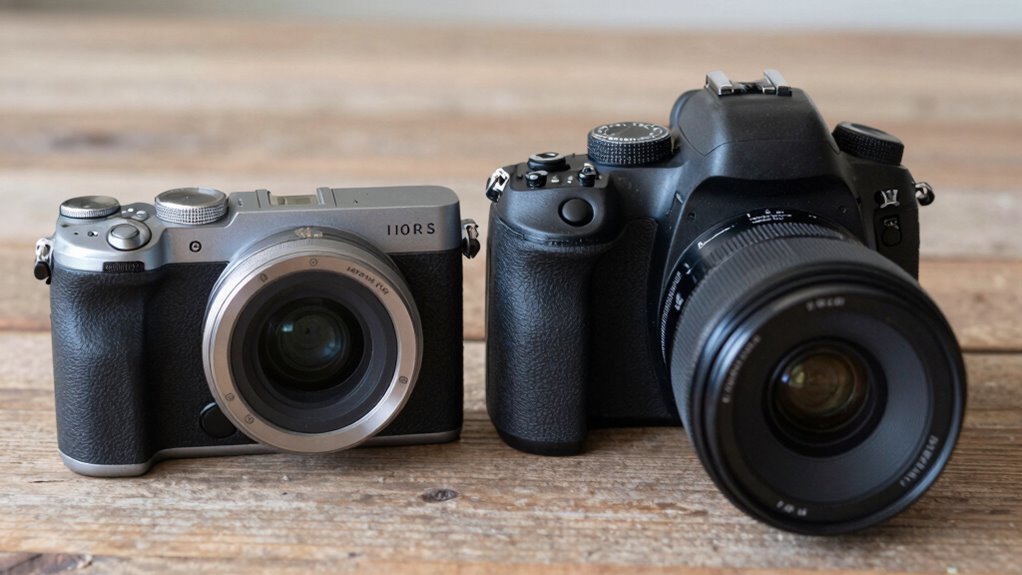

When choosing between mirrorless and DSLR cameras, consider that mirrorless models now offer image quality and autofocus speeds comparable to DSLRs, thanks to technological advances. Mirrorless cameras are lighter and more compact, making them easier to carry around, while DSLRs often have longer lens options and a proven track record for fast action shots. To understand which suits your style best and discover more about each option, keep exploring their features and benefits.
Key Takeaways
- DSLRs typically have larger sensors offering superior image quality and depth of field control.
- Mirrorless cameras are more compact, lightweight, and easier to carry, ideal for portability.
- DSLR autofocus speeds are generally faster, making them suitable for action and sports photography.
- Modern mirrorless models now match or surpass DSLR autofocus performance with advanced on-sensor technology.
- Both camera types are evolving, so choosing depends on your priorities like size, image quality, and shooting style.
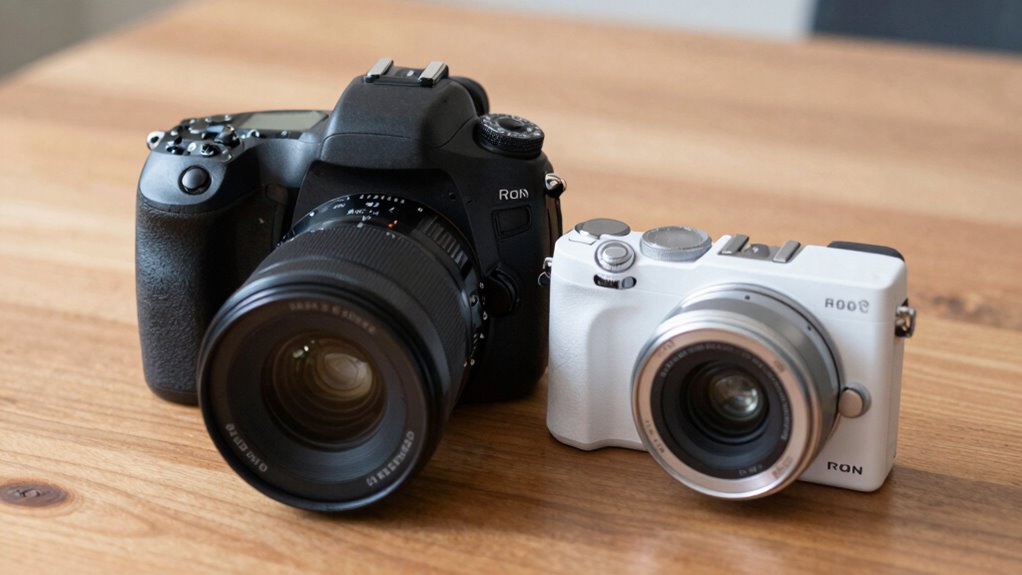
Choosing between mirrorless and DSLR cameras can feel overwhelming, especially with so many options available. To make the right choice, it’s helpful to understand how these cameras differ, particularly in terms of sensor size and autofocus speed. Sensor size plays a fundamental role in image quality, especially in low-light conditions. DSLRs typically feature larger sensors, like full-frame or APS-C, which allow you to capture more detail and produce better depth of field. Mirrorless cameras often have smaller sensors, such as Micro Four Thirds or APS-C, but some high-end models now offer full-frame sensors equivalent to DSLRs. If you prioritize maximum image quality and better performance in challenging lighting, a DSLR might be more appealing due to its larger sensors. However, recent advancements in mirrorless technology mean that sensor size is less of a limiting factor, and many mirrorless models now deliver comparable image quality. Additionally, advancements in sensor technology are continually narrowing the gap in image quality between the two types of cameras.
Another key aspect to weigh is autofocus speed, which directly impacts your ability to capture sharp images quickly. DSLRs traditionally excel in autofocus performance, especially for fast-moving subjects, because they use dedicated phase-detection sensors inside the camera body. This allows for rapid and accurate focusing, making them ideal for sports, wildlife, or any situation requiring quick reflexes. Mirrorless cameras initially lagged behind in autofocus speed because they relied on contrast-detection methods, which are slower. But recent innovations have introduced on-sensor phase-detection autofocus, dramatically improving speed and accuracy in mirrorless models. Today, many high-end mirrorless cameras match or even surpass the autofocus capabilities of DSLRs, offering fast, reliable focus for a variety of shooting scenarios.
Ultimately, your choice should reflect your specific needs and shooting style. If you want a camera with a longer track record, extensive lens options, and superior autofocus for action shots, a DSLR could be the better fit. On the other hand, if you prefer a lighter, more compact camera that’s easier to carry around and offers cutting-edge autofocus technology, a mirrorless model might serve you better. Remember, the gap between the two has narrowed considerably, making both options viable for beginners. Focus on what matters most to you—whether image quality, autofocus speed, size, or future-proof features—and choose the camera that aligns with your photography goals.

Canon EOS R50 Mirrorless Camera Kit – APS-C RF Camera with 18-45mm Lens, 4K Video, Dual Pixel AF II & Vari-Angle Touchscreen (5811C012) + Shoulder Bag + 64GB Memory Card
Canon USA Authorized. Items Include: Canon EOS R50 Mirrorless Camera Kit – APS-C RF Camera with 18-45mm Lens,…
As an affiliate, we earn on qualifying purchases.
As an affiliate, we earn on qualifying purchases.
Frequently Asked Questions
Which Camera Type Is Better for Landscape Photography?
For landscape photography, a DSLR often provides a larger sensor size, capturing more detail and better dynamic range, which is ideal for expansive scenes. However, mirrorless cameras now also feature large sensors and advanced image stabilization, making them equally suitable. You should choose based on your preferences for portability and lens selection. Both types can deliver stunning landscape images, so consider which features matter most to you.
How Do Battery Life Differences Impact Daily Shooting?
Battery life differences substantially impact your daily shooting, especially if you rely on your camera for extended periods. Mirrorless cameras tend to have shorter battery longevity due to their electronic viewfinders and constant power use, but smart power management can help. DSLR batteries usually last longer because of their optical viewfinders. To avoid interruptions, carry extra batteries and manage power carefully, ensuring you’re ready for any shooting session.
Are Mirrorless Cameras More Durable Than DSLRS?
You might find that DSLR cameras are generally more durable than mirrorless models due to their robust camera build quality. Many DSLRs feature weather sealing, making them better suited for challenging conditions like rain or dust. While some high-end mirrorless cameras also have weather sealing, overall, DSLRs tend to withstand rougher environments, giving you more confidence during outdoor shoots or adverse weather.
Can I Use DSLR Lenses on Mirrorless Cameras?
You can use DSLR lenses on mirrorless cameras with the right adapter, making your gear more versatile. Think of it like a bridge connecting two worlds—lens compatibility is key. Many mirrorless brands offer adapter options that allow you to attach your existing DSLR lenses, so you don’t have to buy new ones right away. Just check the compatibility and functionality, and you’re good to go, expanding your creative possibilities.
How Do Autofocus Speeds Compare in Real-World Scenarios?
In real-world scenarios, mirrorless cameras often have faster autofocus speeds thanks to their advanced on-sensor autofocus systems. They excel in autofocus accuracy and perform well in low light, thanks to features like eye and face detection. DSLR autofocus can be slower, especially in low light or fast-moving subjects, but they still deliver reliable results. Overall, mirrorless cameras generally offer quicker, more accurate autofocus in a variety of shooting conditions.

8K Digital Camera, 88MP WiFi Cameras for Photography with 3.2" Touchscreen, 16X Zoom Autofocus Professional Dual Camera, Anti-Shake, 2 Batteries & Charging Stand, 64GB Card, Flash, Lens Hood
【8K Clarity Meets 6-Axis Stability】The digital camera capture every moment in breathtaking detail with true 8K UHD video…
As an affiliate, we earn on qualifying purchases.
As an affiliate, we earn on qualifying purchases.
Conclusion
Ultimately, choosing between a mirrorless and DSLR camera is like selecting a trusted companion or a trusty steed. Both can lead you to breathtaking images, but it’s your journey that matters most. Think of the mirrorless as a sleek, agile arrow, ready to strike with precision and ease. Your decision shapes your creative path—embrace it, and let your passion be the compass that guides you through every shot.

Panasonic LUMIX ZS99 Point and Shoot Camera, Compact Camera for Travel with 30x Zoom with 24-720mm Zoom Lens, and 4K Video/Photo, Great for Travel and Concerts, DC-ZS99
The Powerhouse Pocket Camera You've Been Looking For: 24-720mm LEICA lens with 30x Zoom and a compact body…
As an affiliate, we earn on qualifying purchases.
As an affiliate, we earn on qualifying purchases.

Canon EOS RP Full-Frame Mirrorless Interchangeable Lens Camera + RF24-105mm Lens F4-7.1 is STM Lens Kit- Compact and Lightweight for Traveling and Vlogging, Black (3380C132)
Compact, Lightweight and High-Quality RF Lens with a Versatile Zoom Range of 24-105 millimeter
As an affiliate, we earn on qualifying purchases.
As an affiliate, we earn on qualifying purchases.