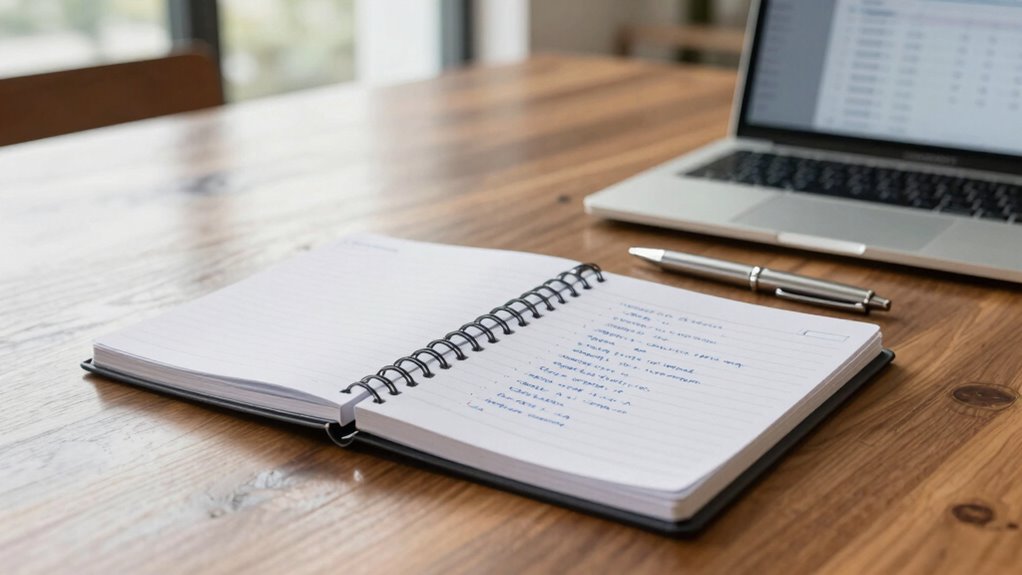

Good meeting notes are clear, structured, and action-oriented, helping you stay aligned and accountable. They capture who said what, highlight key decisions, and specify detailed tasks with assigned responsibilities and deadlines. Organized notes should be shared promptly and easily accessible, allowing team members to comment and track progress. Well-crafted notes reduce confusion and foster accountability—if you keep these elements in mind, you’ll guarantee everyone knows what’s next. Keep going to discover how to create notes that truly support your team.

Prime made for students and young adults
- Fast, free delivery for dorm and study essentials
- Prime Video and Amazon Music included
- Member-only deals
Key Takeaways
- Clear identification of attendees, key discussion points, and decisions made during the meeting.
- Specific, actionable tasks with assigned responsible persons and deadlines.
- Organized format using headings, bullet points, and consistent structure for easy reference.
- Inclusion of timestamps or speaker labels to maintain context and clarity.
- Opportunities for team members to comment or update notes to ensure ongoing engagement.

Have you ever wondered why some meetings produce clear action items while others end in confusion? The difference often lies in how well you capture and communicate those notes afterward. Good meeting notes aren’t just a summary of what was discussed—they’re a roadmap that guides everyone’s next steps, especially when working through remote collaboration. When your notes are clear, thorough, and actionable, your team can stay aligned, even when miles apart.
Clear, actionable meeting notes keep remote teams aligned and moving forward seamlessly.
Effective meeting notes start with capturing the essentials—who said what, key decisions made, and specific action items assigned. You want to record details precisely so that there’s no ambiguity. For example, instead of writing “Follow up on project,” you should specify, “John to send the updated project timeline by Friday.” This level of detail makes action item follow-up straightforward and minimizes miscommunication. When working remotely, this clarity becomes even more critical because you can’t rely on face-to-face cues or informal check-ins. Clear, actionable notes bridge that gap, and adopting standardized note formats can help ensure consistency across meetings.
Another hallmark of good meeting notes is their accessibility. You should organize and share them promptly so everyone can refer back easily. Use shared digital tools or platforms that support real-time collaboration. This way, team members can add comments, ask clarifying questions, or update their progress without waiting for the next meeting. In remote collaboration, this ongoing engagement keeps momentum going and helps prevent tasks from falling through the cracks. Additionally, incorporating effective documentation practices ensures everyone remains informed and accountable. Recognizing the importance of consistent updates can further enhance clarity and keep all stakeholders aligned.
A crucial component often overlooked is assigning ownership. When you document action items, specify who’s responsible and when they need to follow up. This accountability ensures that nothing slips through the cracks, and everyone knows their role. Follow-up becomes a lot easier when your notes include deadlines or checkpoints to review progress. Regularly revisiting these action items and updating your notes ensures that the team stays aligned, especially in a remote environment where oversight can be challenging. Proper security strategies for storing and sharing these notes help protect sensitive information and maintain confidentiality.
Lastly, good meeting notes serve as a record of accountability and progress. They provide a trail that shows what was agreed upon and how the team is moving forward. When everyone has access to clear notes, it reduces the need for repeated clarifications and helps track ongoing tasks. This transparency is especially valuable when collaborating remotely, as it keeps everyone in sync and fosters a culture of accountability. When your meeting notes are well-crafted, they become an essential tool for ensuring your team’s success, no matter where everyone is located.
Popular right now

Vitamix 5200 Professional-Grade Blender, 64 oz. Container, Black

De'Longhi Linea Classic Espresso Machine with Adjustable Milk Frother

Breville Bambino Espresso Machine, Brushed Stainless Steel
As an affiliate, we earn on qualifying purchases.
Frequently Asked Questions
How Detailed Should Meeting Notes Be?
You should aim for notes that are detailed enough to capture key decisions and action items, but not so exhaustive that they become overwhelming. Use clear note formatting with bullet points, headers, and highlight deadlines. Digital tools can help organize and share your notes efficiently, allowing you to quickly update and access them later. Focus on capturing essential info, and keep your notes concise yet thorough for effective follow-up.
Should Action Items Be Assigned During the Meeting?
Of course, you should assign action items during the meeting—irony intended, right? Clear agenda clarity and note formatting make it easy to track who’s responsible for what. When you assign tasks on the spot, everyone leaves with a clear understanding, avoiding confusion later. Well-formatted notes capture these assignments, ensuring accountability. It’s a simple step that keeps meetings productive, turning good intentions into tangible results.
How Can I Ensure All Voices Are Heard in Notes?
You can guarantee all voices are heard in notes by actively using inclusive language and deliberately capturing diverse perspectives. Utilize note-taking tools that allow multiple contributors or real-time collaboration, making it easier to include everyone’s input. During the meeting, encourage quieter participants to share their thoughts and reflect their contributions accurately in the notes. This approach fosters a more inclusive environment and results in thorough, balanced meeting documentation.
What’s the Best Way to Share Meeting Notes Securely?
Think of sharing meeting notes like opening a vault—confidential sharing requires strict access control. You can use secure platforms like encrypted cloud services or password-protected documents, ensuring only authorized people view the notes. Regularly update permissions and audit access logs. This way, you keep sensitive information safe while enabling team members to access notes securely and efficiently, just like safeguarding valuable assets in a vault.
How Often Should Meeting Notes Be Reviewed or Updated?
You should review and update your meeting notes regularly, ideally after each meeting, to keep the information current and relevant. The note revision frequency depends on your meeting frequency—more frequent meetings demand more frequent updates, like weekly or bi-weekly. Consistently revisiting your notes guarantees action items stay clear, priorities remain aligned, and everyone stays informed, which helps maintain productivity and accountability across your team.
Conclusion
Good meeting notes serve as the sturdy backbone of your team’s progress, anchoring ideas and decisions in a clear, unwavering foundation. Like a well-tended garden, they cultivate clarity amid chaos, ensuring everyone’s voice blossoms into action. When you craft notes with purpose and precision, you’re weaving a tapestry of shared understanding — vibrant, resilient, and ready to guide your team through any storm. Let your notes be the compass that keeps everyone on course.