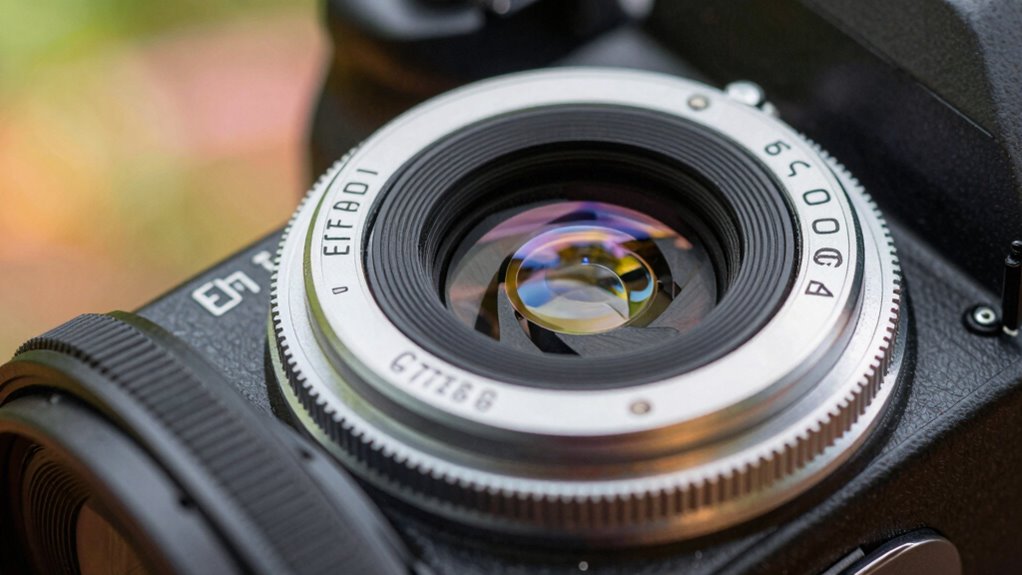

Understanding focal length and aperture is key to mastering your camera. Focal length determines how much of the scene you capture and how perspective appears, with wide lenses showing more and telephoto lenses bringing subjects closer. Aperture controls how much light enters the lens, affecting depth of field—shallow for portraits or wide for landscapes. Combining these elements helps you create the look you want; keep exploring to learn how they work together for stunning results.

Prime made for students and young adults
- Fast, free delivery for dorm and study essentials
- Prime Video and Amazon Music included
- Member-only deals
Key Takeaways
- Focal length determines the lens’s field of view and perspective, affecting how close or distant subjects appear.
- Wide focal lengths (e.g., 18mm) create expansive scenes, while telephoto lenses (e.g., 200mm) bring distant objects closer.
- Aperture controls the amount of light entering the lens, influencing exposure and depth of field—wide apertures produce blurred backgrounds.
- A wide aperture (e.g., f/1.4) offers a shallow depth of field, ideal for portraits, whereas narrow apertures (e.g., f/16) increase scene sharpness.
- Combining focal length and aperture settings allows photographers to manage lighting, background blur, and composition creatively.
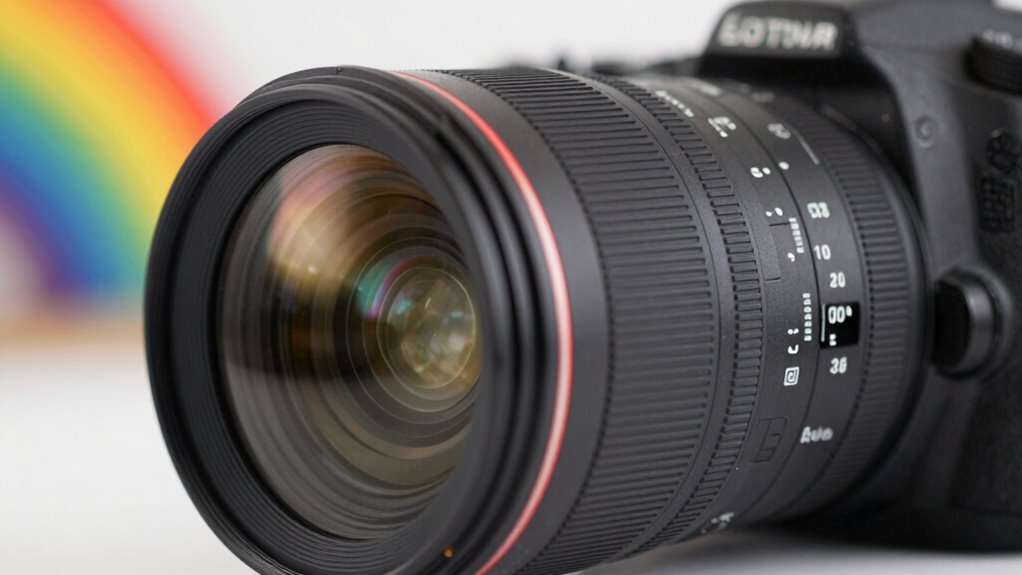
Understanding camera lenses is essential for taking better photos, as they directly influence the sharpness, focus, and overall look of your images. One of the most important aspects to grasp is how the focal length affects your shot. Focal length comparison helps you understand how different lenses change your perspective and framing. A short focal length, like 18mm, gives you a wide field of view, perfect for landscapes or cramped interiors. Conversely, a long focal length, such as 200mm, brings distant subjects closer, making it ideal for wildlife or sports photography. When you compare lenses based on their focal lengths, you’ll notice that wider lenses tend to exaggerate perspective, making close objects appear larger and background elements seem farther away. Telephoto lenses, on the other hand, compress the scene, creating a flatter, more intimate look. The choice between these depends on your subject and the story you want to tell.
Another critical element that works alongside focal length is the depth of field, which determines how much of your scene appears sharp and in focus. A lens with a wide aperture, like f/1.4, produces a shallow depth of field, allowing you to isolate your subject from a blurred background. This is especially effective for portraits, where you want the focus on the person and the background softened. On the other hand, a narrower aperture, such as f/16, increases the depth of field, keeping more of the scene in focus. This setting is ideal for landscape photography, where capturing details from the foreground to the horizon matters. Understanding how the aperture influences depth of field helps you control what’s sharp and what’s blurred, giving you creative freedom over your images. Additionally, focal length and aperture work together to influence your camera’s ability to perform well in different lighting conditions, especially in low light situations.
As an affiliate, we earn on qualifying purchases.
Frequently Asked Questions
How Does Sensor Size Affect Focal Length Perception?
Your sensor size greatly influences focal length perception. On a smaller sensor, like those in compact cameras, the same focal length appears more zoomed-in, creating a crop effect. Conversely, larger sensors, such as full-frame, show a wider field of view, making focal length seem less telephoto. So, understanding sensor size helps you accurately gauge how focal length affects your image’s perspective and framing.
What Is the Difference Between Prime and Zoom Lenses?
They say “the right tool for the right job,” and that’s true for prime and zoom lenses. Prime lenses have a fixed focal length, offering sharp images and wider apertures, ideal for low light. Zoom lenses, with their variable focal lengths, give you versatility, so you can frame shots without changing lenses. Choose prime for quality, zoom for convenience—each has its own charm, like a trusty sidekick or a Swiss Army knife.
How Do Aperture Values Influence Depth of Field?
Aperture values directly affect your depth of field, so a lower f-number creates a shallow depth, making your background blur or bokeh quality softer and more pleasing. This isolates your subject effectively, while higher f-numbers increase depth, keeping more in focus and reducing background blur. By adjusting the aperture, you control how much of your scene is sharp versus artistically blurred, shaping your photo’s mood and focus.
Can Lens Focal Length Impact Image Distortion?
Yes, your lens focal length can impact image distortion. Longer focal lengths tend to compress perspective and minimize lens curvature effects, reducing distortion, especially in telephoto lenses. However, wide-angle lenses with shorter focal lengths often introduce more optical aberrations and noticeable distortion, making straight lines appear curved. So, choosing the right focal length helps you control distortion, ensuring your images remain sharp and true to life.
How Does Lens Quality Affect Photo Sharpness?
Lens quality greatly influences your photo sharpness. High-quality lenses feature superior manufacturing precision, ensuring cleaner, crisper images. Additionally, advanced lens coatings reduce flare and ghosting, enhancing clarity. Cheaper lenses may produce softer images or distortions, but well-crafted lenses with precise manufacturing and coatings deliver sharper, more detailed photos. So, investing in quality glass pays off with noticeably better sharpness and overall image quality.
portrait lens with wide aperture
As an affiliate, we earn on qualifying purchases.
As an affiliate, we earn on qualifying purchases.
Conclusion
Now that you understand focal length and aperture, you’re ready to craft stunning photos. Think of your camera lens as a magic window—like a painter’s brush—shaping how your scene looks. The more you experiment with different settings, the more you’ll discover your unique style. Remember, mastering these basics is like unblocking a secret door—opening endless creative possibilities for every shot you take. Happy shooting!
telephoto zoom lens for wildlife
As an affiliate, we earn on qualifying purchases.
As an affiliate, we earn on qualifying purchases.
wide angle lens for landscape photography
As an affiliate, we earn on qualifying purchases.
As an affiliate, we earn on qualifying purchases.
Halloween Picks
halloween
As an affiliate, we earn on qualifying purchases.

![Competitive Programmer's Handbook (2018) [Pdf]](https://rottenpanda.com/wp-content/uploads/2026/10/competitive-programmer-s-handbook-2018-pdf-featured-560x300.jpg)