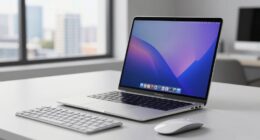
You’ll extend your business laptop’s lifespan when you match its specs to your actual workload. Overpowered devices wear out faster, consume more energy, and require more maintenance, while underpowered ones struggle with daily tasks. By choosing the right balance of CPU, RAM, and features, you reduce unnecessary strain and optimize performance. Cloud integration and battery management further boost longevity. Keep this approach in mind, and you’ll find an effective way to maximize your device’s durability—more details await.

Prime made for students and young adults
- Fast, free delivery for dorm and study essentials
- Prime Video and Amazon Music included
- Member-only deals
Key Takeaways
- Matching hardware specs to workload prevents overuse and reduces wear on components, extending device lifespan.
- Proper workload alignment minimizes unnecessary energy consumption, lowering heat and thermal stress on the laptop.
- Selecting appropriate specs reduces hardware strain, decreasing the risk of premature failure and obsolescence.
- Cloud integration allows lower-spec devices to handle demanding tasks, reducing hardware upgrade frequency.
- Efficient power management and battery optimization support sustained performance and longer overall device usability.

When choosing a business laptop, matching its specifications to your actual workload can considerably extend its lifespan. If you select a device with more power than you need, you’ll likely notice faster wear and tear, increased energy consumption, and higher maintenance costs. Conversely, opting for a model that aligns with your daily tasks helps ensure you get the most value from your investment. For example, if your work involves basic document editing and email management, a mid-range processor and sufficient RAM will serve you well without overburdening the system. On the other hand, if your duties include heavy data processing or multimedia editing, investing in a more robust configuration makes sense.
One key aspect to consider is cloud integration. When your business laptop seamlessly connects with cloud services, you can work more flexibly and efficiently, regardless of the hardware specs. Cloud integration allows you to offload some processing tasks and store files remotely, reducing the strain on your device’s local resources. This not only extends the hardware’s lifespan but also enhances security and collaboration. With reliable cloud access, you don’t need a high-spec device for heavy local processing, which means you can opt for a system optimized for portability and battery life without sacrificing productivity. Additionally, understanding the role of hardware specifications in relation to your workload ensures you make smarter choices that balance performance and longevity. Recognizing the importance of digital security features can further protect your device and data over time.
Battery optimization is another crucial factor. If your workload involves frequent travel or remote work, a laptop with excellent battery management will keep you productive longer. Choosing a device with smart power management features, such as adaptive brightness and efficient CPU usage, prevents unnecessary drain on the battery. When your laptop’s specs are tailored to your actual needs, you’ll avoid overtaxing the battery with unnecessary high-performance components, which can lead to faster degradation. Proper battery optimization paired with matching hardware specs ensures your device remains reliable over time, reducing the need for early replacements. Being aware of energy-efficient components can further help you select devices that are designed for longevity.
Ultimately, understanding your workload and selecting a laptop with appropriate specs, good cloud integration, and battery optimization features leads to better longevity. It’s about finding the right balance—avoiding excess capacity that underutilizes hardware and minimizing strain that accelerates wear. When your business tools are designed to match your work demands, you not only maximize efficiency but also extend the lifespan of your device, saving money and reducing disruptions in the long run.
business laptop with optimized specs for workload
As an affiliate, we earn on qualifying purchases.
As an affiliate, we earn on qualifying purchases.
Frequently Asked Questions
How Can I Determine My Specific Workload Requirements?
To determine your workload requirements, start by analyzing the tasks you perform daily. Identify the hardware compatibility needs for your essential software and check if your current hardware can handle these demands smoothly. Consider software optimization; choose a laptop with specs that match or slightly surpass your workload to guarantee efficiency. Regularly review your usage to adjust specs as your needs evolve, preventing performance bottlenecks.
Do Higher Specs Always Mean Better Longevity?
Higher specs don’t always mean better longevity. Imagine your laptop as a race car—more horsepower won’t help if the track isn’t designed for it. Performance optimization depends on matching hardware compatibility with your specific workload. Overpowered specs can strain components, reducing lifespan. Focus on balancing your needs with appropriate hardware, ensuring your laptop runs smoothly and lasts longer without unnecessary upgrades or strain.
How Often Should I Upgrade My Business Laptop?
You should upgrade your business laptop every 3 to 4 years to maintain ideal battery life and performance. Regular software updates help keep your device secure and efficient, but as hardware ages, battery life decreases and newer software may strain older components. Upgrading sooner ensures you benefit from the latest features, security patches, and better performance, preventing frustration and productivity loss caused by slowdowns or battery drain.
What Maintenance Practices Extend a Laptop’s Lifespan?
Think of your laptop as a garden that needs tending. Regularly calibrate the battery to keep it healthy and prevent unexpected shutdowns, like watering plants at the right time. Dust cleaning is equally essential—use compressed air to remove debris from vents and keyboards, ensuring ideal airflow. These practices prevent overheating and extend your laptop’s lifespan, keeping it thriving and reliable for years to come.
Are There Specific Brands Known for Durable Business Laptops?
You should consider brands like Lenovo, Dell, and Hewlett-Packard for durable business laptops. They have strong brand reputations for build quality and reliability, which means your investment lasts longer. Plus, their warranty coverage offers peace of mind, ensuring repairs or replacements if something goes wrong. By choosing these brands, you get a combination of durability and support that helps your laptop withstand daily work demands.
battery-efficient business laptops
As an affiliate, we earn on qualifying purchases.
As an affiliate, we earn on qualifying purchases.
Conclusion
When you match your business laptop’s specs to your workload, you’ll see significant savings in both stress and surrender. Prioritize performance, plan for proactive upgrades, and prevent premature parts pity parties. Picking the proper power-packed device prevents problems and prolongs productivity. Remember, a well-wielded workstation weathers wear and tear better. So, stay savvy, select suitably, and stretch your investment’s lifespan. Your business benefits from a balanced, built-to-work, and brilliantly lasting laptop.
As an affiliate, we earn on qualifying purchases.
laptops with power management features
As an affiliate, we earn on qualifying purchases.
As an affiliate, we earn on qualifying purchases.
Fall Picks
fall essentials
As an affiliate, we earn on qualifying purchases.