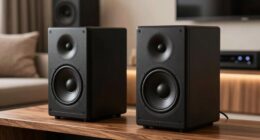
Wireless surround speakers for soundbar systems promise real home-theater surround sound without running cables across your living room, and after comparing twelve of the most popular packages available in 2026, a clear hierarchy emerged. The TCL S65K stands out as my best overall pick because it is one of the few systems here with true wireless surround speakers, a wireless subwoofer, Dolby Atmos and DTS:X, plus automatic room calibration — a feature set the budget brands simply don’t match. Close behind, the LG S40TR offers genuine rear surround speakers with polished room-correction processing at a mid-range price, while the ULTIMEA Skywave X50 is the value champion if you want height-channel Atmos immersion without the premium cost. The main tradeoff in this category is between true wireless rear speakers (TCL, LG) and wired-to-each-other satellite bundles (most ULTIMEA kits), which look identical in photos but install very differently. Continue reading for the full breakdown of all twelve systems, including which ones I’d skip entirely.

Prime made for students and young adults
- Fast, free delivery for dorm and study essentials
- Prime Video and Amazon Music included
- Member-only deals
Key Takeaways
- Only two systems in this lineup — the TCL S65K and LG S40TR — include true wireless rear surround speakers; most ULTIMEA ‘surround’ kits use satellites that must be wired to each other or the sub, which affects where you can place them.
- Room calibration was the biggest differentiator at the top of the ranking: the TCL S65K’s AI Sonic calibration and LG’s AI Sound Pro both tune output to your room automatically, while every ULTIMEA option relies on manual EQ presets.
- ULTIMEA dominates the budget tier with seven of twelve slots, and its Atmos-equipped models (Skywave X40, Skywave X50, Poseidon M60) deliver the cheapest path to height effects — at the cost of weaker build quality and less refined dialogue processing.
- Peak-power marketing is unreliable across this category: the 330W Aura A40 and 120W detachable soundbar sound closer than their numbers suggest, so I weighted driver configuration and codec support over wattage claims.
- App control became a genuine tiebreaker: ULTIMEA‘s app lets you customize surround levels and EQ per channel, something TCL and LG restrict to their remote-based interfaces, which matters if you like to fine-tune your system.
| ULTIMEA 7.1ch Surround Sound Bar for TV (Aura A40 Pro) |  | Best Overall | Channels: 7.1 | Peak Power: 330W | Surround Speakers: 4 (2 wired front, 2 hybrid rear) | VIEW ON AMAZON | See Our Full Breakdown |
| ULTIMEA 5.1.2ch Sound Bar with Dolby Atmos |  | Best Budget Atmos | Channels: 5.1.2 with up-firing drivers | Surround Format: Dolby Atmos (no DTS) | Connectivity: HDMI eARC (up to 37Mbps), CEC | VIEW ON AMAZON | See Our Full Breakdown |
| LG S40TR 4.1 ch. Home Theater Soundbar |  | Best Plug-and-Play Simplicity | Channels: 4.1 | Audio Formats: Dolby Digital, DTS Digital | Subwoofer: Wireless | VIEW ON AMAZON | See Our Full Breakdown |
| ULTIMEA 7.1ch Sound Bar Aura A40 |  | Best Value | Channels: 7.1 virtual surround | Peak Power: 330W | Surround Speakers: 4 (wired fronts, wireless rear pair) | VIEW ON AMAZON | See Our Full Breakdown |
| ULTIMEA Skywave X40 5.1.2ch Sound Bar |  | Best Premium | Channels: 5.1.2 | Peak Power: 530W | Amplifier: GaN, up to 98% efficiency | VIEW ON AMAZON | See Our Full Breakdown |
| Bluetooth Wireless Surround Sound Bar, 2.0ch Smart TV Soundbar with HDMI ARC, OPT, AUX, USB |  | Best Ultra-Budget Starter Bar | Channels: 2.0 | Power: 30W RMS / 80W peak | Connectivity: HDMI ARC, Optical, AUX, USB, Bluetooth 5.3 | VIEW ON AMAZON | See Our Full Breakdown |
| TCL S65K S Series 5.1 Channel Soundbar System with Dolby Atmos and Wireless Surround Speakers |  | Best Plug-and-Play 5.1 System | Channels: 5.1 | Peak Power: 630W | Audio Formats: Dolby Atmos, DTS:X, DTS Virtual:X | VIEW ON AMAZON | See Our Full Breakdown |
| ULTIMEA Skywave X50 5.1.4ch Wireless Surround Sound System for TV |  | Best Premium Immersive Pick | Channels: 5.1.4 | Peak Power: 760W | Bass Extension: Down to 28Hz (Gravus Ultra-Linear) | VIEW ON AMAZON | See Our Full Breakdown |
| ULTIMEA 5.1 Sound Bar for Smart TV with Subwoofer and Rear Speakers (Poseidon D50) |  | Best Value True 5.1 | Channels: 5.1 | Subwoofer: Wireless with BASSMX technology | Rear Speakers: 2 wired satellites, 19.6-ft cable | VIEW ON AMAZON | See Our Full Breakdown |
| ULTIMEA Sound Bar with Wireless Subwoofer, App Control, for Home Theater |  | Best for Dialogue Clarity | Channels: 2.1 | Peak Power: 240W | Frequency Response: 45Hz–18kHz | VIEW ON AMAZON | See Our Full Breakdown |
| Sound Bar with Subwoofer, 120W Bluetooth 5.3 Detachable Surround Sound System |  | Best Budget Starter Pick | Output Power: 120W | Subwoofer: Wired | Connectivity: Bluetooth 5.3, HDMI ARC, Optical, AUX | VIEW ON AMAZON | See Our Full Breakdown |
| ULTIMEA Poseidon M60 5.1CH Surround Sound Bar System with Dolby Atmos |  | Best Atmos Without Rear Speakers | Channels: 5.1ch with Dolby Atmos | Peak Power: 300W | Frequency Response: 45 Hz – 18 kHz | VIEW ON AMAZON | See Our Full Breakdown |
| wireless surround speakers for soundbar | Channels | Connectivity | Peak Power | Subwoofer |
|---|---|---|---|---|
| ULTIMEA 7.1ch Surround Sound B | 7.1 | HDMI ARC, Optical, Aux, Bluetooth 6.0 | 330W | Wired, 6.1L cabinet, down to 45 Hz |
| ULTIMEA 5.1.2ch Sound Bar with | 5.1.2 with up-firing drivers | HDMI eARC (up to 37Mbps), CEC | — | — |
| LG S40TR 4.1 ch. Home Theater | 4.1 | Optical, USB, Bluetooth | — | Wireless |
| ULTIMEA 7.1ch Sound Bar Aura A | 7.1 virtual surround | Optical, Aux, Bluetooth | 330W | — |
| ULTIMEA Skywave X40 5.1.2ch So | 5.1.2 | — | 530W | — |
| Bluetooth Wireless Surround So | 2.0 | HDMI ARC, Optical, AUX, USB, Bluetooth 5.3 | — | — |
| TCL S65K S Series 5.1 Channel | 5.1 | HDMI eARC, HDMI input, Bluetooth, USB | 630W | Wireless, 6.5-inch driver with Bass Boost |
| ULTIMEA Skywave X50 5.1.4ch Wi | 5.1.4 | — | 760W | — |
| ULTIMEA 5.1 Sound Bar for Smar | 5.1 | HDMI ARC, Optical, AUX, Bluetooth | — | Wireless with BASSMX technology |
| ULTIMEA Sound Bar with Wireles | 2.1 | — | 240W | Wireless, 6.5L tuned cabinet, 18mm excursion driver |
| Sound Bar with Subwoofer | — | Bluetooth 5.3, HDMI ARC, Optical, AUX | — | Wired |
| ULTIMEA Poseidon M60 5.1CH Sur | 5.1ch with Dolby Atmos | HDMI eARC, Bluetooth 5.4 | 300W | 5.25-inch wired wooden cabinet, BassMX |
More Details on Our Top Picks
ULTIMEA 7.1ch Surround Sound Bar for TV (Aura A40 Pro)
The Aura A40 Pro earns the top spot because it balances channel count, customization, and connectivity in a way none of the other picks match. Its VocalMatrix processing redistributes dialogue across the rear channels, which means voices stay anchored even during chaotic action scenes — a real weakness in cheaper virtual systems like the standard Aura A40. The hybrid surround setup (wired fronts, semi-wireless rears) cuts cable clutter without the reliability risk of a fully wireless rig. Compared with the Skywave X40, it lacks up-firing Atmos drivers, but its 10-band EQ, 121 presets, and 13 surround levels give buyers more tuning headroom than almost anything else here. The tradeoff: no HDMI eARC passthrough mentioned, and the 330W peak output won’t shake a large open-concept room.
Pros:- VocalMatrix keeps dialogue locked in place across all surround channels
- Hybrid wired/wireless rear design reduces cable runs
- Extensive app tuning with 10-band EQ and 121 presets
- Bluetooth 6.0 with low-latency streaming
Cons:- Subwoofer cabinet is compact, so deep-bass headroom is limited
- No HDMI eARC listed — connection options trail the Skywave X40
Best for: Movie and dialogue-focused viewers in small to medium rooms who want deep surround customization without an AVR
Not ideal for: Atmos enthusiasts or owners of large open-plan living spaces — no height channels and modest peak power
- Channels:7.1
- Peak Power:330W
- Surround Speakers:4 (2 wired front, 2 hybrid rear)
- Connectivity:HDMI ARC, Optical, Aux, Bluetooth 6.0
- Subwoofer:Wired, 6.1L cabinet, down to 45 Hz
- App Control:10-band EQ, 121 presets, 13 surround levels, OTA updates
- Dimensions:15.75 x 2.76 x 3.54 in
Our verdict“The strongest all-around pick for buyers who prioritize dialogue clarity and tunability over raw Atmos theatrics.”
ULTIMEA 5.1.2ch Sound Bar with Dolby Atmos
For buyers who want genuine height effects without the premium pricing of the Skywave X40, this 5.1.2 system is the entry point I’d point to first. Its up-firing drivers with neodymium magnets bounce Atmos effects off the ceiling, so rain and helicopters genuinely feel like they come from above — something the 7.1 Aura A40 Pro simply can’t replicate with horizontal channels only. The HDMI eARC connection carries lossless 5.1.2 audio at up to 37Mbps, which preserves detail that regular ARC compresses away. The compromise is scope: two rear speakers and two height drivers cover a smaller room than the four-surround Ultimea setups, and DTS tracks aren’t supported at all, which matters if your Blu-ray library leans that way.
Pros:- True up-firing Dolby Atmos drivers for overhead effects
- HDMI eARC with lossless audio up to 37Mbps
- CEC sync lets one remote control TV and soundbar
- Same deep app tuning suite as higher-end Ultimea models
Cons:- No DTS compatibility
- Fewer surround channels than the Aura A40 Pro’s 7.1 layout
Best for: Stream-first viewers with Atmos content on Netflix or Disney+ in compact rooms
Not ideal for: DTS disc collectors or anyone with a large room needing wide dispersion
- Channels:5.1.2 with up-firing drivers
- Surround Format:Dolby Atmos (no DTS)
- Connectivity:HDMI eARC (up to 37Mbps), CEC
- Surround Speakers:2 rear wireless
- Up-firing Drivers:Neodymium magnets, 18-core voice coils
- App Control:10-band EQ, 121 presets, 13-level surround adjustment
Our verdict“The cheapest credible path to real overhead Atmos effects — if your content is streamed and your room is modest.”
LG S40TR 4.1 ch. Home Theater Soundbar
The LG S40TR is the pick for buyers who want surround sound that behaves like a household appliance: unpack, connect, done. Unlike the Ultimea models, which lean heavily on app-based EQ matrices, LG keeps things simple with Dolby Digital and DTS Digital decoding, a wireless subwoofer, and wireless rears that need no receiver. The standout feature is WOW Orchestra — if you own an LG TV, the TV’s own speakers work alongside the soundbar and one remote controls everything. That ecosystem integration is something no Ultimea product offers. The honest tradeoff: 4.1 channels with no height effects puts it behind the Atmos picks for immersion, the rears still need a wire between them, and fine-grained tuning stops at a basic 3-band EQ.
Pros:- WOW Orchestra and WOW Interface integrate seamlessly with LG TVs
- Handles both Dolby Digital and DTS Digital
- Wireless subwoofer and wireless rear speakers — no receiver needed
- Clear Voice Plus improves dialogue intelligibility
Cons:- Only 4.1 channels — no height or center channels for Atmos-style immersion
- Rear speakers require a wired link between them and AC power at one unit
Best for: LG TV owners and non-tinkerers who want reliable surround sound with zero setup fuss
Not ideal for: Audio hobbyists who want granular EQ control or height-channel Atmos effects
- Channels:4.1
- Audio Formats:Dolby Digital, DTS Digital
- Subwoofer:Wireless
- Rear Speakers:Wireless to soundbar, wired between units
- Connectivity:Optical, USB, Bluetooth
- Soundbar Dimensions:28.4 x 2.5 x 3.4 in
- App:LG Soundbar App with 3-band EQ
Our verdict“The right choice for LG households that value one-remote simplicity over channel-count ambition.”
ULTIMEA 7.1ch Sound Bar Aura A40
The standard Aura A40 delivers the same 7.1 channel architecture and 330W peak power as its Pro sibling, making it the value play for buyers who want four surround speakers without paying for refinements they may not notice. Where the Aura A40 Pro adds VocalMatrix dialogue processing and Bluetooth 6.0, this version sticks with SurroundX virtualization and a more conventional wireless link for the rear pair — still capable, just less sophisticated with dialogue placement in busy mixes. Compared with the LG S40TR, you get seven channels instead of four plus far deeper app tuning, at the cost of a more involved setup with wired front surrounds. Build is solid metal with wall-mount support, and the 121-preset EQ suite carries over intact, which is rare at this tier.
Pros:- Full 7.1 channel layout with 4 surround speakers at an accessible price
- Same 121-preset EQ and 10-band app tuning as the Pro model
- Metal enclosure with tabletop and wall-mount options
- 13 adjustable surround levels for room-specific tuning
Cons:- Lacks the Pro’s VocalMatrix dialogue processing
- Older Bluetooth and connection options versus the A40 Pro
- Wired front surrounds add installation complexity
Best for: Budget-conscious buyers who want maximum channel count and tuning options per dollar
Not ideal for: Viewers whose priority is dialogue clarity in dense soundtracks — the Pro’s VocalMatrix earns its upcharge there
- Channels:7.1 virtual surround
- Peak Power:330W
- Surround Speakers:4 (wired fronts, wireless rear pair)
- Connectivity:Optical, Aux, Bluetooth
- Audio Encoding:Dolby Atmos
- App Control:Ultimea app, 121 presets, 10-band EQ, OTA updates
- Dimensions:41 x 3 x 16 in
- Mounting:Tabletop or wall mount
Our verdict“The smart pick if channel count matters more to you than dialogue-processing refinements.”
ULTIMEA Skywave X40 5.1.2ch Sound Bar
The Skywave X40 sits at the top of this lineup on raw engineering. Its GaN amplifier runs cooler and cleaner than the silicon amps in the Aura series, the NEURACORE engine processes 24-bit/192kHz audio with under 0.5% distortion, and Gravus bass tech reaches down to 35Hz — deeper than the A40 Pro’s 45Hz floor and with better control at high volume. The dual 5GHz wireless transmission keeps the surround channels locked in where single-band systems can drop out, and 4K HDR passthrough means it slots into a console or Blu-ray chain without visual compromise. At 530W peak, it outguns every other pick here. The costs are real though: this is the heaviest investment in the batch, and 5.1.2 means fewer discrete surround channels than the 7.1 Aura models despite the higher price.
Pros:- GaN amplifier delivers clean, low-heat, high-power output
- Bass extends to 35Hz with controlled low-end at volume
- Dual 5GHz wireless link resists interference and dropouts
- 4K HDR passthrough preserves picture quality through the chain
Cons:- Highest cost in this lineup by a clear margin
- Only 5.1.2 channels — fewer discrete surrounds than the cheaper Aura A40 Pro
Best for: Home theater enthusiasts who want Atmos height effects, deep bass, and clean high-volume performance in one package
Not ideal for: Casual viewers or small apartments — the power and price both exceed what modest rooms and light use demand
- Channels:5.1.2
- Peak Power:530W
- Amplifier:GaN, up to 98% efficiency
- Bass Response:Down to 35Hz (Gravus technology)
- Audio Processing:NEURACORE, 24-bit/192kHz, <0.5% distortion
- Wireless:Dual 5GHz transmission
- Video:4K HDR passthrough
- Design:Metal grille, rose gold accents, wood subwoofer cabinet
Our verdict“The pick for buyers who will actually use 530W of clean, Atmos-capable power and accept paying for it.”
Bluetooth Wireless Surround Sound Bar, 2.0ch Smart TV Soundbar with HDMI ARC, OPT, AUX, USB
Buyers need to know upfront: this is a 2.0-channel stereo bar, not a true surround system, despite what the title implies. There are no rear speakers and no subwoofer — what you get is virtualized surround processing at modest 30W RMS power. Compared with the ULTIMEA 5.1 Sound Bar (Poseidon D50), which includes a wireless subwoofer and wired rear satellites for genuine 5.1, this bar trades immersion for simplicity and a slim footprint. Where it earns its place is flexibility: HDMI ARC, optical, Bluetooth 5.3, USB, and AUX cover nearly every source, and the three sound modes make dialogue noticeably clearer than built-in TV speakers. It wall-mounts or sits on a stand without blocking the screen. If true surround is the goal, spend more — but as a first upgrade from flat TV audio, it does the job.
Pros:- Five input options including HDMI ARC for one-cable TV control
- Compact 15-inch chassis fits desks, bedrooms, and small media consoles
- Three tuned sound modes with a dedicated News setting for dialogue clarity
- Bluetooth 5.3 doubles it as a standalone music speaker
- Wall-mount or tabletop placement flexibility
Cons:- 2.0 channels with no subwoofer — bass response is limited despite the 80W peak figure
- No genuine surround speakers, so the immersive claim relies entirely on virtualization
Best for: Apartment dwellers and bedroom viewers who want a simple, cable-light upgrade from TV speakers without buying a multi-box system
Not ideal for: Home theater enthusiasts who want real rear-channel surround or subwoofer bass — this is stereo only with no separate bass driver
- Channels:2.0
- Power:30W RMS / 80W peak
- Connectivity:HDMI ARC, Optical, AUX, USB, Bluetooth 5.3
- Sound Modes:Music, Movie, News
- Dimensions:15 x 2.4 x 2.5 inches
- Mounting:Tabletop or wall mount
- Control:Remote and onboard buttons
Our verdict“A reasonable first step away from tinny TV speakers, but anyone chasing actual surround sound should look to the multi-channel picks instead.”
TCL S65K S Series 5.1 Channel Soundbar System with Dolby Atmos and Wireless Surround Speakers
This option stands out for doing the hard parts for you. The S65K ships as a complete 5.1 package — soundbar, wireless subwoofer, and wireless surround speakers — and its AI Sonic room calibration tunes output to your space automatically, something the ULTIMEA Poseidon D50 leaves to manual app EQ tinkering. The built-in center channel with a dedicated tweeter keeps dialogue anchored during loud action scenes, and both Dolby Atmos and DTS:X decoding are here at this tier, which the ULTIMEA Sound Bar with Wireless Subwoofer (2.1ch) cannot touch. ChoruSound is the quiet bonus: pair it with a compatible TCL TV and the panel’s own drivers join in for a wider stage. The tradeoff is ecosystem gravity — several marquee features shine brightest within the TCL world, and the wall-mount-focused surround speakers still need power outlets nearby.
Pros:- Complete 5.1 setup with wireless subwoofer and wireless surround speakers in one box
- AI Sonic auto room calibration removes manual tuning guesswork
- Dedicated center channel and tweeter for clear dialogue
- Dolby Atmos and DTS:X support with a single HDMI eARC connection
Cons:- ChoruSound and deepest integration benefits require a compatible TCL TV
- Surround speakers are wireless for audio but still require AC power placement planning
Best for: Movie-focused households, especially TCL TV owners, who want a full 5.1 Atmos system that calibrates itself in one evening
Not ideal for: Tinkerers who want granular 10-band EQ control via an app, or rooms without outlets behind the seating position
- Channels:5.1
- Peak Power:630W
- Audio Formats:Dolby Atmos, DTS:X, DTS Virtual:X
- Subwoofer:Wireless, 6.5-inch driver with Bass Boost
- Surround Speakers:Wireless
- Connectivity:HDMI eARC, HDMI input, Bluetooth, USB
- Calibration:AI Sonic auto room calibration
- Mounting:Wall mount
Our verdict“The most hassle-free route to genuine surround in this lineup — ideal for buyers who value a self-calibrating, one-cable setup over deep manual customization.”
ULTIMEA Skywave X50 5.1.4ch Wireless Surround Sound System for TV
The X50 sits at the top of this lineup because it attacks the two weakest points of budget surround kits: unstable wireless links and muddy bass. Its dual 5GHz transmission is designed to eliminate the dropouts that plague cheaper 2.4GHz systems, and the Gravus bass architecture reaches down to 28Hz — deeper than the ULTIMEA Poseidon D50 or the 2.1ch app-controlled ULTIMEA bar, both of which roll off far higher. With four height channels in a 5.1.4 layout, it produces genuine overhead effects, moving beyond the virtualized height of the Skywave X40’s 5.1.2 configuration. The GaN amplifier and NEURACORE DSP translate to clean output at high volume, and 4K HDR pass-through protects picture quality. The honest tradeoffs: this is the priciest route here, the multi-box layout demands a larger room, and full value only materializes with Atmos-encoded content.
Pros:- True 5.1.4 layout with four height channels for overhead effects
- Dual 5GHz wireless transmission for stable, dropout-resistant surround connection
- Gravus bass technology reaching 28Hz for genuine low-end extension
- 4K HDR pass-through and high-efficiency GaN amplification
Cons:- Highest cost in this batch, and full benefit requires Atmos/DTS:X source content
- Physically larger multi-component setup needs space and thoughtful placement
Best for: Dedicated home theater buyers with a medium-to-large room who want true height-channel Atmos and deep, clean sub-bass
Not ideal for: Small bedrooms or casual viewers — the 760W output and multi-speaker layout are overkill, and it commands a premium price
- Channels:5.1.4
- Peak Power:760W
- Bass Extension:Down to 28Hz (Gravus Ultra-Linear)
- Wireless:Dual 5GHz transmission
- Amplifier:GaN (up to 98% efficiency)
- Audio Processing:NEURACORE, 24-bit/192kHz
- Video:4K HDR pass-through
- Subwoofer Cabinet:Wood-crafted
Our verdict“If cinematic overhead sound and rock-solid wireless are non-negotiable, this is the pick that justifies its premium over every other entry here.”
ULTIMEA 5.1 Sound Bar for Smart TV with Subwoofer and Rear Speakers (Poseidon D50)
For buyers who want actual rear speakers without the premium pricing of the TCL S65K or Skywave X50, this model splits the difference cleverly. It delivers a full 5.1 layout — soundbar, wireless subwoofer, and two wired rear satellites on a 19.6-foot cable — meaning you trade cable-hiding effort for a connection that never drops, unlike fully wireless surrounds. SurroundX processing upmixes standard 2.0 PCM into 5.1, so ordinary TV broadcasts gain surround width. Where it beats the TCL on paper is customization: the Ultimea app serves up 121 preset EQ matrices, a 10-band equalizer, and six listening modes. The TCL counters with auto room calibration and Atmos decoding, which the D50 lacks. Bass via BASSMX is punchy for action and gaming, though the sub won’t plumb the X50’s subterranean depths.
Pros:- True 5.1 channels with dedicated rear speakers and wireless subwoofer
- Extensive app control: 121 EQ presets, 10-band equalizer, six modes
- SurroundX upmixing expands stereo content to surround
- 19.6-foot rear cable allows flexible placement in most rooms
Cons:- Rear speakers are wired, requiring cable management across the room
- No Dolby Atmos or DTS:X height-channel support
Best for: Value-conscious movie and gaming households that prioritize genuine rear-channel effects and deep EQ tuning over Atmos decoding
Not ideal for: Buyers who refuse to run speaker cable behind the couch, or anyone wanting Dolby Atmos height effects
- Channels:5.1
- Subwoofer:Wireless with BASSMX technology
- Rear Speakers:2 wired satellites, 19.6-ft cable
- Connectivity:HDMI ARC, Optical, AUX, Bluetooth
- EQ Control:Ultimea App, 121 presets, 10-band EQ
- Listening Modes:Movie, Music, Voice, Sport, Game, Night
- Upmixing:SurroundX (2.0 PCM to 5.1)
Our verdict“The smartest spend for listeners who want real surround speakers and app-level sound shaping while skipping the Atmos premium.”
ULTIMEA Sound Bar with Wireless Subwoofer, App Control, for Home Theater
Not everyone needs rear speakers — plenty of viewers mainly want speech they can actually hear. This 2.1 system is built around that problem: VoiceMX DSP processing dynamically boosts the 120Hz–6kHz vocal range so dialogue cuts through effects, while the BRD mica-reinforced drivers reduce distortion for cleaner mids than typical budget bars. Compared with the no-name 2.0 Bluetooth bar in this roundup, the dedicated wireless subwoofer with BassMX tuning adds low-end the stereo bar simply cannot produce. And unlike the Poseidon D50, there are no rear cables to route — just a bar, a sub you place anywhere, and Bluetooth 6.0 streaming. The catch is structural: with only 2.1 channels, this is not a surround system, and its 240W output suits small-to-medium rooms. Buyers chasing movies with effects flying behind them should step up to the TCL S65K.
Pros:- VoiceMX dialogue enhancement keeps speech intelligible at any volume
- Wireless subwoofer with BassMX delivers tunable 45–150Hz bass without placement cables
- Mica-reinforced drivers reduce distortion for cleaner mids and highs
- Bluetooth 6.0 and full app EQ control with OTA updates
Cons:- Only 2.1 channels — no rear or height speakers for true surround
- 240W peak output is modest for larger living rooms
Best for: News, sports, and drama watchers in small-to-medium rooms who value crisp dialogue and clean bass over surround immersion
Not ideal for: Cinephiles and gamers wanting rear-channel or height effects — 2.1 channels cap the immersion here
- Channels:2.1
- Peak Power:240W
- Frequency Response:45Hz–18kHz
- Max SPL:95 dB
- Subwoofer:Wireless, 6.5L tuned cabinet, 18mm excursion driver
- Dialogue Tech:VoiceMX (120Hz–6kHz adaptive boost)
- Bluetooth:Bluetooth 6.0
- App Control:10-band EQ, 121 presets, OTA updates
Our verdict“A dialogue-first 2.1 setup that solves the most common TV-audio complaint — muddy speech — for buyers who don’t need a full surround array.”
Sound Bar with Subwoofer, 120W Bluetooth 5.3 Detachable Surround Sound System
This option stands out as the simplest, most affordable entry point in the lineup for viewers who want better-than-TV-speaker audio without a complicated setup. The 120W output with a wired subwoofer delivers more low-end punch than most built-in TV speakers can manage, and the wired connection sidesteps the wireless interference and pairing headaches that occasionally plague systems like the LG S40TR. Bluetooth 5.3, ARC, optical, and AUX inputs cover nearly every source a bedroom or office setup could need. Where it falls short is immersion: unlike the ULTIMEA Poseidon M60, there is no Dolby Atmos, no dedicated surround processing, and no app-based tuning. This model is better suited to casual movie nights and music streaming than to true home-theater ambitions.
Pros:- Four input options (Bluetooth 5.3, ARC, optical, AUX) cover virtually any TV, PC, or projector
- Wired subwoofer guarantees lip-sync-accurate bass with no wireless dropouts
- Tool-free setup with remote control and wall-mount hardware included
- Slim, detachable design fits tight TV stands and small rooms
Cons:- No Dolby Atmos, DTS:X, or real surround-channel processing — it’s stereo widening at best
- 120W peak output struggles to fill larger living rooms at cinema volume
- Wired subwoofer means cable routing and less placement flexibility than wireless alternatives
Best for: First-time soundbar buyers and students who want a cheap, plug-and-play audio upgrade for a bedroom TV, monitor, or projector
Not ideal for: Home-theater enthusiasts — the lack of Dolby Atmos, surround speakers, and app EQ makes it feel flat next to the ULTIMEA Poseidon M60 or TCL S65K
- Output Power:120W
- Subwoofer:Wired
- Connectivity:Bluetooth 5.3, HDMI ARC, Optical, AUX
- Design:Detachable two-piece soundbar
- Audio Formats:Stereo / virtual surround
- Mounting:Tabletop or wall mount (hardware included)
- Control:Remote control
Our verdict“Buy this only if budget and simplicity are your top priorities; anyone wanting genuine surround immersion should step up to the ULTIMEA Poseidon M60 instead.”
ULTIMEA Poseidon M60 5.1CH Surround Sound Bar System with Dolby Atmos
The Poseidon M60 earns its spot by solving a specific problem: real Dolby Atmos and 5.1-channel sound from a single bar and sub, with no rear satellites to run cables for. Two side-firing drivers plus DSP processing create a surprisingly wide soundfield, and the 5.25-inch wooden subwoofer with BassMX digs down to 45 Hz — tighter and deeper than the budget 120W bar above. Compared with the ULTIMEA Aura A40, which uses four surround speakers for envelopment, the M60 trades some rear-channel precision for a clutter-free setup that takes under a minute. VoiceMX dialogue enhancement is a genuine differentiator for dialogue-heavy content, and the app’s 10-band EQ with 121 presets offers tuning depth most rivals lack. The tradeoff: side-firing drivers can’t fully replicate true rear speakers, and buyers wanting physical surround channels should look elsewhere.
Pros:- True Dolby Atmos via HDMI eARC with up to 37 Mbps lossless bandwidth
- 300W peak output from a 6-driver array reaching 99 dB SPL
- Deep, controlled bass from a 5.25-inch wooden-cabinet wired subwoofer
- Extensive app control with 10-band EQ, 121 presets, and 13 surround levels
Cons:- Virtual surround from side-firing drivers falls short of dedicated rear speakers in large rooms
- Wired subwoofer limits placement freedom versus fully wireless systems
- At nearly 32 inches wide and 12.6 pounds, it’s bulkier than compact alternatives
Best for: Apartment dwellers and minimalists who want genuine Dolby Atmos and app-tuned 5.1 sound without rear speakers or visible cables
Not ideal for: Owners of large, open living rooms — without physical rear speakers, the virtual surround can’t match the envelopment of the ULTIMEA Aura A40 or LG S40TR
- Channels:5.1ch with Dolby Atmos
- Peak Power:300W
- Frequency Response:45 Hz – 18 kHz
- Max SPL:99 dB
- Subwoofer:5.25-inch wired wooden cabinet, BassMX
- Connectivity:HDMI eARC, Bluetooth 5.4
- Latency:<0.5 ms via DSP
- App Control:10-band EQ, 121 presets, 13 surround levels, OTA updates
- Dimensions:31.5″ D x 3.54″ W x 2.76″ H, 12.6 lbs
Our verdict“The strongest single-bar-plus-sub choice here for Atmos fans who refuse to run rear-speaker cables — but sizeable rooms will still benefit from a system with physical surrounds.”

How We Picked
I judged every system in this roundup against the same five criteria, weighted by what actually shapes the listening experience. Surround authenticity came first: whether the rear channels were truly wireless or wired satellites, how many physical drivers they used, and whether the system supported object-based formats like Dolby Atmos and DTS:X rather than virtualized surround only. Setup and placement flexibility came second, because a surround system you can’t install in your actual room is worthless — I favored systems with simple wireless pairing, clear wall-mount options, and foolproof room calibration. Connectivity was third: HDMI eARC/ARC support, optical and Bluetooth inputs, and whether the system handled 4K passthrough.
From there, I weighed sound quality for movies versus music — dialogue clarity, subwoofer integration, and how well the height and rear channels blended rather than calling attention to themselves — and finally value relative to the competition, not just price in isolation. Systems ranked higher when they solved real problems (calibration, true wireless rears, Atmos on a budget) and ranked lower when they repackaged the same drivers with new model names. That’s why the TCL S65K leads despite ULTIMEA’s aggressive feature-per-dollar positioning, and why nearly identical ULTIMEA variants are separated by meaningful differences in channel count and app support rather than listed interchangeably.
Factors to Consider When Choosing Wireless Surround Speakers For Soundbar
Before clicking buy on any wireless surround bundle, a few category-wide realities will shape whether you end up happy or returning the box. These are the factors I’d weigh before anything else.True Wireless vs. Wired Satellite “Surround” Speakers
The single biggest source of buyer disappointment in this category is the word wireless. Many systems — including most of the ULTIMEA kits in this roundup — advertise wireless surround but mean only that the subwoofer connects to the soundbar wirelessly; the rear satellites still need speaker wire running between them or to the sub. That’s fine if your sofa sits against a wall and you can hide wire under carpet, but it’s a dealbreaker for open floor plans where the rears would sit freestanding. True wireless rears like those on the TCL S65K and LG S40TR only need power outlets, which changes your placement options entirely. Check the product photos for rear-speaker terminals before buying, not just the marketing headline.
Channel Count: What Those Numbers Actually Mean
A 5.1 system gives you three front channels, two surrounds, and a subwoofer — the baseline for real surround. Adding a .2 or .4 (as in 5.1.2 or 5.1.4) means dedicated height channels for Dolby Atmos overhead effects, which only matter if your ceiling is flat, hard, and low enough to reflect sound. A 7.1 system adds side surround channels, which helps in larger rooms but is wasted in a small space where the extra speakers sit inches from the existing ones. My advice: match the channel count to your room size, not your ambition. A 5.1.2 system in a bedroom will outperform a 7.1 system crammed into the same space because the drivers won’t fight each other.
HDMI eARC: The Connection You Shouldn’t Compromise On
Several budget systems in this category only offer optical and Bluetooth inputs, and that limitation bites harder than most buyers expect. Optical can’t carry lossless Dolby Atmos or DTS:X — you’ll get a downmixed signal at best. HDMI eARC carries full object-based audio from your TV’s built-in apps, which is where most people stream Netflix and Disney+ today. Bluetooth, meanwhile, compresses audio and adds latency that desyncs dialogue. If your TV has an eARC port, treat it as a hard requirement; the savings on an optical-only system aren’t worth losing Atmos from streaming apps. This is a major reason the TCL and LG models rank above otherwise-capable budget picks.
Room Calibration and Your Room’s Reality
Manufacturers tune soundbars in acoustic labs; your living room has sofas, curtains, hardwood, and awkward angles that scramble that tuning. Automatic room calibration — like TCL’s AI Sonic or LG’s AI Sound Pro — measures your space with a microphone and adjusts the output accordingly, and it’s the feature budget brands cut first. Without it, you’re stuck adjusting manual EQ presets and hoping one fits. Also honest with yourself about placement: a soundbar tucked inside a TV cabinet or a subwoofer hidden in a corner will never sound like the demo you heard. If your room is acoustically awkward, calibration isn’t a luxury feature; it’s what separates a system that sounds good in your home from one that sounded good in the store.
Power Ratings Are Marketing — Ignore the Wattage Arms Race
Peak wattage numbers like “330W” are measured in bursts under conditions you’ll never replicate, and they tell you almost nothing about loudness or clarity. What matters is driver size and configuration: more physical drivers each doing less work generally sounds cleaner than two small drivers pushed hard. The 120W detachable soundbar in this lineup doesn’t sound dramatically quieter than higher-rated systems because its drivers are efficiently matched to its enclosure. Instead of comparing watts, listen for (or read about) distortion at the volume you actually watch movies — usually far below maximum. If a brand leads its marketing with wattage, that’s often because there’s little else to say.
Brand Ecosystem and Long-Term Support
ULTIMEA appears seven times in this roundup for a reason: it releases new variants constantly, sometimes with overlapping features and confusing names. The upside is aggressive pricing and surprisingly capable app control with per-channel adjustment; the downside is that firmware updates and long-term support are less certain than with LG or TCL, whose soundbars tie into established TV ecosystems and receive steadier software support. Ask yourself how long you plan to keep the system. If you upgrade every two years, the budget brands are a reasonable gamble; if you want a five-year centerpiece, the established brands’ track records justify their higher pricing.
Frequently Asked Questions
Do wireless surround speakers need to be plugged into power?
Yes, in almost every case. Even on systems with truly wireless rear speakers like the TCL S65K and LG S40TR, each rear speaker needs its own power outlet — only the audio signal travels wirelessly. The speakers contain amplifiers, and amplifiers need electricity. Plan your placement around outlet locations before buying, and if your sofa’s rear corners lack outlets, look at systems where the satellites wire to the subwoofer instead, since the sub can sit near one outlet and feed both rears. This is the most common installation surprise in the category, so measure and plan before ordering rather than after the box arrives.
Can I add surround speakers to a soundbar I already own?
Usually not, unless your soundbar was designed with expansion in mind. Surround-capable systems like the ones in this roundup ship as matched kits because the rear speakers, subwoofer, and bar are tuned and wirelessly paired as a set — the LG S40TR’s rears won’t connect to a Samsung bar, for instance. Some brands sell optional wireless rear kits for specific models, but compatibility is strictly within the same brand and often the same product family. If you bought a standalone 2.0 or 2.1 soundbar expecting to add rears later, the realistic path is replacing the whole system. That’s why I’d recommend buying the full surround package up front if surround sound is the goal.
Is Dolby Atmos worth paying extra for on a soundbar system?
It depends heavily on your ceiling and your streaming habits. Atmos height effects from soundbar systems rely on upward-firing drivers bouncing sound off a flat, reflective ceiling; if you have vaulted ceilings, beams, or heavy acoustic treatment, the height channels largely vanish and you’ve paid for nothing. But if your room cooperates and you stream Atmos content from Netflix, Disney+, or Apple TV+, the added vertical dimension is genuinely noticeable in action films. The ULTIMEA Skywave X40 and X50 make Atmos affordable enough that the premium is small, while the TCL S65K pairs Atmos with DTS:X for broader disc and game compatibility. On a tight budget, a well-executed 5.1 system beats a poorly implemented Atmos one.
Why do so many of these listings say 7.1 but only include four speakers?
Because the number counts audio channels, not physical speakers. A 7.1-channel bar like the ULTIMEA Aura A40 uses processing to virtualize channels that don’t have dedicated drivers — the bar’s front array simulates the side and center channels while the physical satellites handle the rear effects. That’s not necessarily dishonest, but it means a “7.1” budget system won’t produce the same precise imaging as a true 7.1 setup with seven discrete speakers. Judge these systems by what’s physically in the box: driver count, satellite count, and subwoofer size tell you more than the channel label. Virtualized channels can sound impressively wide, but they can’t place a sound behind you the way real rear speakers do.
Are these systems good for music, or only movies?
Most surround bundles in this price range are tuned for movies first, and it shows with music — dialogue-focused tuning can make music sound thin, and budget subwoofers often boom rather than reproduce bass notes accurately. The LG S40TR handles music most gracefully among my top picks thanks to more refined processing, while ULTIMEA’s app-based EQ lets you manually warm things up for music listening. If music is half or more of your listening, prioritize a system with Bluetooth streaming that supports higher-quality codecs and a subwoofer with adjustable crossover. And don’t discount the stereo-focused picks: the detachable 120W bar, while limited for surround, is the most musically natural of the budget options here because it isn’t compensating with virtualization.
Conclusion
After comparing all twelve systems, the decision really comes down to three buyer types. If you want the best overall package, the TCL S65K earns the top spot with its combination of true wireless surround speakers, Dolby Atmos and DTS:X support, wireless subwoofer, and automatic room calibration — no other system here checks all four boxes. For best value, the ULTIMEA Skywave X40 delivers Atmos height channels and app control at a fraction of the TCL’s cost, and the ULTIMEA Aura A40 is an even cheaper route to 7.1-channel surround if Atmos isn’t a priority.
Best premium goes to the LG S40TR, whose polished processing, genuine rear speakers, and brand ecosystem support make it the safest long-term investment for a living-room centerpiece. Beginners should start with the ULTIMEA 5.1 Sound Bar or the 120W detachable soundbar — simple, affordable systems that teach you what you actually want before you spend more. For specific needs: the Skywave X50 suits Atmos enthusiasts on a budget with its 5.1.4 layout, the Poseidon M60 fits larger rooms wanting fuller Atmos coverage, and the detachable 120W bar is the pick for desks, bedrooms, and projectors where flexibility beats channel count. Whatever you choose, buy based on your room’s outlets, ceiling, and size — not the wattage on the box.