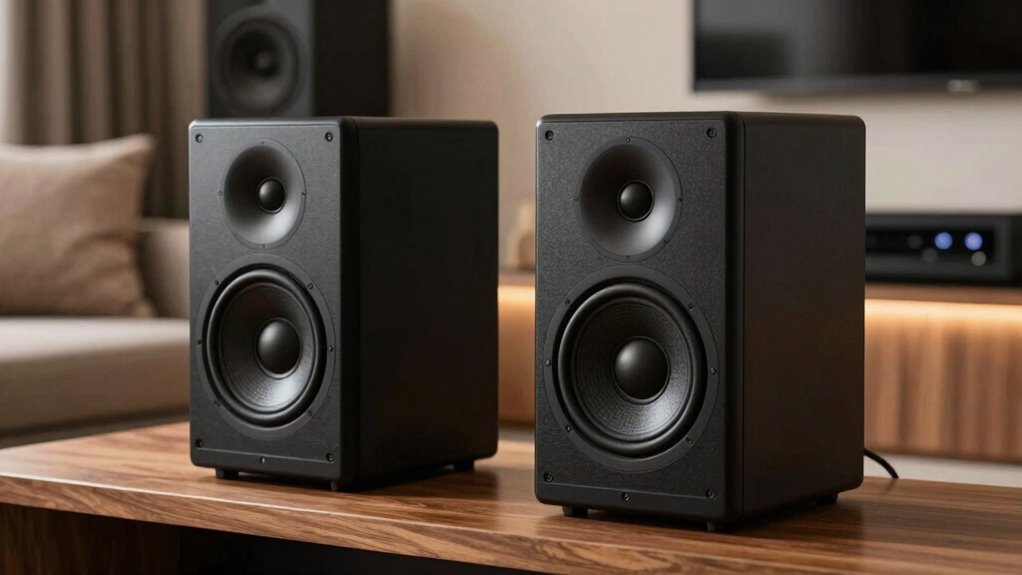

For most listeners shopping for bookshelf speakers under $600, I’d start with the Klipsch RP-600M: its larger cabinet and passive design make it the strongest choice here for a more substantial stereo system, provided you already have an amplifier. The Klipsch R-50PM is a standout if you want powered speakers with convenient connections, while the Edifier R1280DBs suits listeners seeking simple powered audio with Bluetooth. The main tradeoff is between passive speakers that need separate electronics and active models that keep setup simple but limit upgrade choices. Cabinet size, room placement, and the connections you need can matter as much as the speaker’s sound profile. Read on for the full breakdown and a guide to choosing the right pair for your setup.

Prime made for students and young adults
- Fast, free delivery for dorm and study essentials
- Prime Video and Amazon Music included
- Member-only deals
Key Takeaways
- The RP-600M is the strongest passive-system pick in this group, but it needs an amplifier and more space than the compact options.
- The R-50PM reduces setup complexity with built-in amplification and useful connections, making it a better fit than passive Klipsch models for buyers without a receiver.
- The Edifier R1280DBs and R1280T serve different convenience needs: the DBs adds Bluetooth and broader connectivity, while the T is a simpler powered option.
- Compact choices trade room-filling scale for easier placement; the Polk XT15, Sony SS-CS5M2, and Klipsch R-41M suit tighter spaces better than larger cabinets.
- Passive and powered models are not directly interchangeable: the Dayton B65, Klipsch R-51M, and other passive pairs require external amplification, while powered picks can connect directly to sources.
| Polk Monitor XT15 Pair of Bookshelf or Surround Sound Speakers – Hi-Res Audio Certified, Dolby Atmos & DTS:X Compatible |  | Best for Home Theater Expansion | Quantity: Pair | Tweeter: 1-inch Terylene | Woofer: 5.25-inch dynamically balanced | VIEW ON AMAZON | See Our Full Breakdown |
| Klipsch R-50PM Powered Speakers with 5.25″ Woofers, Black |  | Best Powered Pick for Easy Setup | Speaker type: Powered bookshelf speakers | Woofer: 5.25 inches | Tweeter: 1-inch aluminum LTS with Kapton suspension | VIEW ON AMAZON | See Our Full Breakdown |
| Klipsch R-51M Bookshelf Speakers (Pair), Black |  | Best Passive Pick for a Traditional Stereo | Quantity: Pair | Tweeter: 1-inch aluminum LTS | Horn: 90° x 90° Tractrix | VIEW ON AMAZON | See Our Full Breakdown |
| Sony SS-CS5M2 3-Way Compact Bookshelf Speakers (Pair) |  | Best Compact Passive Pair | Speaker type: 3-way, 3-driver bookshelf speakers | Quantity: Pair | Woofer: 5.12 inches | VIEW ON AMAZON | See Our Full Breakdown |
| Edifier R1280DBs Active Bluetooth Bookshelf Speakers |  | Best Value for Flexible Connections | Power: 42W RMS | Channels: 2.0 stereo | Bluetooth: Bluetooth 5.0 | VIEW ON AMAZON | See Our Full Breakdown |
| PreSonus Eris Accent Powered Bookshelf Speakers |  | Best for Desktop Listening | Power: 50W | Woofer: 4 inches | Tweeter: ½-inch silk dome | VIEW ON AMAZON | See Our Full Breakdown |
| Klipsch R-41M Reference Bookshelf Speakers, Pair, Black |  | Best Compact Passive Pair | Speaker type: Passive bookshelf speakers | Quantity: Pair | Woofer: 4-inch spun-copper IMG | VIEW ON AMAZON | See Our Full Breakdown |
| Dayton Audio Classic B65 Bookshelf Speakers, 6.5-inch Woofer & 1-inch Tweeter, Passive 2-Way Design, 60W RMS, Wood |  | Best for Flexible Placement | Design: Passive 2-way | Power handling: 60W RMS | Woofer: 6.5 inches | VIEW ON AMAZON | See Our Full Breakdown |
| Klipsch RP-600M Reference Premiere Bookshelf Speakers, Pair (Ebony) |  | Best for a Larger Passive System | Quantity: Pair | Woofer: 6.5-inch spun-copper Cerametallic | Tweeter: 1-inch titanium LTS vented | VIEW ON AMAZON | See Our Full Breakdown |
| Edifier R1280T Powered Bookshelf Speakers |  | Best for Simple Two-Source Setup | Type: Powered bookshelf speakers | Configuration: 2.0 | Tweeter: 13 mm silk dome | VIEW ON AMAZON | See Our Full Breakdown |
| bookshelf speakers under 600 | Tweeter | Woofer | Quantity |
|---|---|---|---|
| Polk Monitor XT15 Pair of Book | 1-inch Terylene | 5.25-inch dynamically balanced | Pair |
| Klipsch R-50PM Powered Speaker | 1-inch aluminum LTS with Kapton suspension | 5.25 inches | — |
| Klipsch R-51M Bookshelf Speake | 1-inch aluminum LTS | — | Pair |
| Sony SS-CS5M2 3-Way Compact Bo | — | 5.12 inches | Pair |
| Edifier R1280DBs Active Blueto | 13mm silk dome | 4 inches | — |
| PreSonus Eris Accent Powered B | ½-inch silk dome | 4 inches | — |
| Klipsch R-41M Reference Booksh | 1-inch aluminum LTS with Kapton suspension | 4-inch spun-copper IMG | Pair |
| Dayton Audio Classic B65 Books | 1-inch silk dome | 6.5 inches | — |
| Klipsch RP-600M Reference Prem | 1-inch titanium LTS vented | 6.5-inch spun-copper Cerametallic | Pair |
| Edifier R1280T Powered Bookshe | 13 mm silk dome | — | — |
More Details on Our Top Picks
Polk Monitor XT15 Pair of Bookshelf or Surround Sound Speakers – Hi-Res Audio Certified, Dolby Atmos & DTS:X Compatible
The Polk Monitor XT15 is the strongest fit here for buyers building a home theater around passive speakers. Its Dolby Atmos and DTS:X compatibility makes it a flexible choice for front, surround, or other supported placements, while the 5.25-inch woofer gives it more room to deliver midrange weight than the Edifier R1280DBs’ 4-inch driver. Unlike the powered Edifier or Klipsch R-50PM, the XT15 needs a separate amplifier or receiver, so it is not the simplest route to music from a phone. It also arrives as a pair, not a complete surround package, and the supplied description recommends stands for better placement. Choose it for a system you plan to grow; skip it if you want a self-contained wireless setup.
Pros:- Dolby Atmos and DTS:X compatibility supports use in a flexible home theater layout.
- A 5.25-inch woofer is larger than the Edifier R1280DBs’ 4-inch driver.
- The pair can be positioned for music, movies, or gaming setups.
- Hi-Res Audio certification is listed in the product title.
Cons:- Requires a separate amplifier or AV receiver.
- Stands may be needed for the recommended placement.
- A pair alone does not provide a full surround sound system.
Best for: Home theater buyers who already own or plan to add an AV receiver and want a pair that can serve in more than one speaker position.
Not ideal for: Listeners who want Bluetooth and amplification built into the speakers, or who need a complete surround system in one purchase.
- Quantity:Pair
- Tweeter:1-inch Terylene
- Woofer:5.25-inch dynamically balanced
- Impedance:4–8 ohms
- Compatibility:Dolby Atmos and DTS:X
- Speaker type:Bookshelf or surround sound
Our verdict“Choose the XT15 if you want passive speakers for an expandable home theater, but pick a powered model if you want direct, simple playback.”
Klipsch R-50PM Powered Speakers with 5.25″ Woofers, Black
The Klipsch R-50PM is the convenient choice for listeners who want a powered stereo pair without adding a separate amplifier. Its Bluetooth and wired connectivity make setup more direct than with passive options such as the Polk Monitor XT15 or Klipsch R-51M, both of which need amplification. Klipsch’s horn-loaded tweeter design is intended to spread sound broadly, while the 5.25-inch woofers give this model a larger driver than the Edifier R1280DBs. The tradeoff is a comparatively bulky footprint, which may be awkward on a crowded desk or shallow shelf. The supplied details also do not list specific wired input types, so buyers with several sources should check compatibility before choosing it. This is the pick for straightforward powered listening, not a receiver-based upgrade path.
Pros:- Powered design avoids the need for a separate amplifier.
- Bluetooth supports wireless playback from compatible devices.
- 5.25-inch woofers are larger than the Edifier R1280DBs’ 4-inch woofer.
- Magnetic grilles allow a clean look with or without the covers.
Cons:- The speakers may be bulky for small desks and compact shelves.
- The listed details do not identify the specific wired input types.
- Powered speakers are less suited to buyers planning a conventional passive-speaker system.
Best for: Listeners who want a powered stereo setup for a living room or media space, with Bluetooth plus a wired connection and no separate amplifier.
Not ideal for: Desk users with very limited shelf space or buyers who need clearly specified connections for several wired sources.
- Speaker type:Powered bookshelf speakers
- Woofer:5.25 inches
- Tweeter:1-inch aluminum LTS with Kapton suspension
- Connectivity:Bluetooth and wired connections
- Finish:Black
- Grilles:Magnetic
Our verdict“Pick the R-50PM for a simple powered setup with Bluetooth and a larger woofer, provided you have room for its cabinets.”
Klipsch R-51M Bookshelf Speakers (Pair), Black
The Klipsch R-51M suits buyers who want a passive pair and already have an amplifier or receiver. Its Tractrix horn and aluminum LTS tweeter set it apart from the more compact, three-way Sony SS-CS5M2, while dual 5.25-inch spun-copper woofers give the Klipsch a notably different driver layout from the Sony’s single 5.12-inch woofer. The rear-firing bass-reflex port can support low-frequency output, but it also means these speakers need breathing room behind them; shelves pushed close to a wall may limit placement options. Unlike the powered Klipsch R-50PM, the R-51M does not offer built-in amplification or Bluetooth, so source convenience depends on the rest of your system. Choose this pair for a component-based setup, not an all-in-one listening station.
Pros:- Includes a pair of passive bookshelf speakers.
- Aluminum LTS tweeter is paired with a 90° x 90° Tractrix horn.
- Dual 5.25-inch spun-copper IMG woofers provide a distinct driver configuration.
- Rear-firing bass-reflex port is designed to support bass response.
Cons:- Requires a separate amplifier or receiver.
- Rear-firing port needs clearance behind the speakers.
- Does not include the powered convenience or Bluetooth listed for the Klipsch R-50PM.
Best for: Stereo listeners with an existing amplifier or receiver who want a passive Klipsch pair for music or home theater use.
Not ideal for: People seeking Bluetooth streaming and built-in amplification, or anyone who must place speakers tight against a wall.
- Quantity:Pair
- Tweeter:1-inch aluminum LTS
- Horn:90° x 90° Tractrix
- Woofers:Dual 5.25-inch spun-copper IMG
- Bass-reflex port:Rear-firing
- Dimensions:13.3 x 7 x 8.5 inches
- Color:Black
Our verdict“Choose the R-51M if you already have amplification and can leave space behind a passive Klipsch pair.”
Sony SS-CS5M2 3-Way Compact Bookshelf Speakers (Pair)
The Sony SS-CS5M2 is the compact passive option for buyers who want a three-way design without moving up to a larger cabinet. Its 5.12-inch woofer, tweeter, and super tweeter divide the design across three drivers, unlike the Polk Monitor XT15’s stated single tweeter and single woofer. The listed 53–50,000 Hz frequency response and Hi-Res Audio support may appeal to listeners seeking detailed playback, but those specifications alone do not establish how the speakers will sound in a particular room. Like the Klipsch R-51M, this pair needs separate amplification; unlike the powered Edifier R1280DBs, it has no built-in Bluetooth or listed digital inputs. I’d shortlist it for a small-room stereo system, while buyers who need source flexibility should favor the Edifier.
Pros:- Compact bookshelf format is suited to space-conscious setups.
- Three-way, three-driver design includes a dedicated super tweeter.
- Bass-reflex enclosure is designed to support low-frequency sound.
- Hi-Res Audio support and a 53–50,000 Hz stated frequency response are listed.
Cons:- Requires a separate amplifier or receiver.
- No Bluetooth or specific wired input options are listed.
- The supplied product details do not include performance measurements beyond frequency response.
Best for: Small-room stereo listeners who want a compact passive pair and already have an amplifier or receiver.
Not ideal for: Buyers who need powered speakers, Bluetooth, or a stated set of inputs for connecting several devices.
- Speaker type:3-way, 3-driver bookshelf speakers
- Quantity:Pair
- Woofer:5.12 inches
- Frequency response:53–50,000 Hz
- Enclosure:Bass reflex
- Audio support:Hi-Res Audio
Our verdict“Choose the SS-CS5M2 for a compact, three-way passive setup, but pick the Edifier R1280DBs if you need built-in inputs and amplification.”
Edifier R1280DBs Active Bluetooth Bookshelf Speakers
The Edifier R1280DBs is the practical pick for buyers who want amplification and several connection options built into one pair. Optical, coaxial, RCA, and Bluetooth 5.0 let it connect to a wider mix of sources than the Klipsch R-50PM’s listed Bluetooth and general wired connectivity. Its 42W RMS output, remote, and side-panel tone controls also make everyday adjustments simpler than with passive models such as the Sony SS-CS5M2, which need a separate amplifier. The compromise is a 4-inch woofer, smaller than the 5.25-inch drivers in both Klipsch pairs, and the subwoofer output requires a wired connection. Choose it for a TV, desktop, or compact room where connection flexibility matters more than a larger woofer or a passive system you can expand around.
Pros:- Optical, coaxial, RCA, and Bluetooth 5.0 connections support varied sources.
- 42W RMS powered design needs no separate amplifier.
- Subwoofer output includes automatic detection and a built-in crossover.
- Remote control and side-panel bass, treble, and volume controls simplify adjustments.
Cons:- The 4-inch woofer is smaller than the 5.25-inch woofers in the Klipsch R-50PM and R-51M.
- Subwoofer connection is wired.
- Not water resistant.
Best for: Apartment dwellers and desktop listeners who want one powered pair for a TV, computer, and Bluetooth playback, with the option to add a wired subwoofer.
Not ideal for: Listeners prioritizing larger woofers or those building a passive speaker system around a separate amplifier or receiver.
- Power:42W RMS
- Channels:2.0 stereo
- Bluetooth:Bluetooth 5.0
- Inputs:Optical, coaxial, RCA, Bluetooth
- Subwoofer output:Wired, with automatic detection and built-in crossover
- Tweeter:13mm silk dome
- Woofer:4 inches
- Bluetooth range:30 feet
- Signal-to-noise ratio:85 dB
Our verdict“Choose the R1280DBs for an easy-to-connect powered pair and subwoofer option, but look to the larger Klipsch models for bigger woofers.”
PreSonus Eris Accent Powered Bookshelf Speakers
The PreSonus Eris Accent is a practical fit for a desk or compact listening area where easy setup and adjustable sound matter more than room-filling output. Its USB-C and RCA inputs accommodate different sources, and the included remote makes everyday volume and sound adjustments easier from across a room. Customizable controls also give it more flexibility than the Edifier R1280T, whose listed inputs are limited to two AUX connections. The 4-inch woofer and 50W output suit near-field music, movies, and gaming, but the stated 85 dB peak SPL points to modest headroom for louder playback. There is no built-in Bluetooth, and these powered speakers need shelf or desk space. Choose them for wired convenience and tailored sound; skip them if wireless playback or strong output for a large room is a priority.
Pros:- USB-C and RCA inputs support a range of wired audio sources
- Remote control allows adjustments without reaching the speakers
- Customizable sound settings help tailor playback
- 50W powered design avoids the need for a separate amplifier
Cons:- No built-in Bluetooth connectivity
- 50W output and 85 dB peak SPL limit suitability for large rooms or loud listening
- Requires dedicated shelf or desk space
Best for: Desktop listeners and small-room users who want powered speakers with USB-C, RCA, a remote, and adjustable sound.
Not ideal for: Buyers seeking Bluetooth playback or enough output to fill a large room at high volume.
- Power:50W
- Woofer:4 inches
- Tweeter:½-inch silk dome
- Frequency range:55Hz–20kHz
- Peak SPL:85 dB
- Inputs:USB-C, RCA
- Subwoofer output:Yes
- Included:Two speakers, power cable, speaker wire, remote, quick start guide
Our verdict“Pick the PreSonus Eris Accent for adjustable, wired desktop listening, but choose a wireless model or higher-output system for a larger room.”
Klipsch R-41M Reference Bookshelf Speakers, Pair, Black
The Klipsch R-41M is the compact passive choice here for listeners who already have an amplifier and want speakers that are easy to place. At 11.3 × 5.75 × 7.9 inches and 7 pounds per speaker, it takes up less room than the larger Dayton Audio Classic B65, whose 6.5-inch woofer favors buyers with more space. Klipsch pairs a 4-inch woofer with a horn-loaded aluminum tweeter, and its stated 90 dB sensitivity means the speakers can produce useful output without demanding especially high amplifier power. The tradeoff is bass: the listed response begins at 68 Hz, and the small woofer is less suited to deep, weighty low frequencies than larger designs. These are passive speakers, so they need amplification; skip them if you want an all-in-one powered setup like the PreSonus Eris Accent.
Pros:- Compact cabinets are easier to place than the Dayton Audio Classic B65
- 90 dB sensitivity supports strong output from a compatible amplifier
- Horn-loaded LTS tweeter is designed to reduce distortion and improve detail
- Reinforced MDF cabinets help limit vibration
Cons:- 4-inch woofer and 68 Hz low-frequency limit restrict deep bass
- Requires an external amplifier or receiver
- Small cabinet is a less suitable choice for listeners seeking fuller low-end output
Best for: Apartment listeners with an existing amplifier who need a compact passive pair for music, TV, or surround use.
Not ideal for: Buyers who want deep bass from the speakers alone, need powered speakers, or have no amplifier or receiver.
- Speaker type:Passive bookshelf speakers
- Quantity:Pair
- Woofer:4-inch spun-copper IMG
- Tweeter:1-inch aluminum LTS with Kapton suspension
- Frequency response:68 Hz–21 kHz ±3 dB
- Impedance:8 ohms
- Sensitivity:90 dB at 2.83 V/1 m
- Power handling:50W continuous / 200W peak
- Dimensions:11.3 × 5.75 × 7.9 inches
Our verdict“Choose the R-41M when compact passive speakers and amplifier-friendly sensitivity matter more than deep bass or built-in amplification.”
Dayton Audio Classic B65 Bookshelf Speakers, 6.5-inch Woofer & 1-inch Tweeter, Passive 2-Way Design, 60W RMS, Wood
The Dayton Audio Classic B65 makes the most sense for buyers who want a larger passive speaker and the option to mount it on a wall. Its 6.5-inch woofer gives it a more substantial driver than the 4-inch units in the Klipsch R-41M and PreSonus Eris Accent, a useful distinction for music and TV playback where a small driver may feel limited. The wall-mountable design adds placement flexibility, while the wood-veneer cabinets can suit a living room better than a utilitarian studio-style finish. The compromise is setup: unlike the powered PreSonus, the B65 needs an external amplifier or receiver. Its bass may also benefit from a subwoofer, so buyers wanting deeper low frequencies should plan for an expanded system. At 13 inches tall and 14.7 pounds, it is not the compact pick in this group.
Pros:- 6.5-inch woofer is larger than the drivers in the Klipsch R-41M and PreSonus Eris Accent
- Can be placed on a shelf or mounted on a wall
- Wood veneer offers a home-friendly cabinet appearance
- Compatible with a subwoofer for a system with stronger bass
Cons:- Requires an external amplifier or receiver
- Limited bass without a subwoofer
- Larger and heavier than compact options in this roundup
Best for: Home listeners who want a larger passive speaker with shelf or wall placement options and already own, or plan to add, an amplifier.
Not ideal for: Buyers who need an all-in-one powered setup, a small speaker for a crowded desk, or deep bass without a subwoofer.
- Design:Passive 2-way
- Power handling:60W RMS
- Woofer:6.5 inches
- Tweeter:1-inch silk dome
- Mounting:Shelf or wall
- Dimensions:7.8 × 6.7 × 13 inches
- Weight:14.7 pounds
- Enclosure material:Wood, poly, and silk
- Additional system compatibility:Compatible with subwoofers
Our verdict“Choose the B65 for a larger passive speaker that can go on a shelf or wall, provided you have amplification and accept that deep bass may call for a subwoofer.”
Klipsch RP-600M Reference Premiere Bookshelf Speakers, Pair (Ebony)
The Klipsch RP-600M is the more ambitious passive option in this set, pairing a 6.5-inch Cerametallic woofer with a titanium LTS tweeter and hybrid Tractrix horn. Compared with the compact R-41M, its larger driver and rear-firing port are aimed at a fuller presentation, though the cabinet needs breathing room behind it and an amplifier is still required. Dual binding posts allow bi-wiring or bi-amping for owners building a more configurable system; they are not a reason to buy it if a simple powered setup is the goal. The PreSonus Eris Accent, by comparison, includes amplification and a remote, making it easier to set up but less suited to an expandable passive chain. The RP-600M’s supplied details do not give dimensions, sensitivity, or power handling, so check placement and amplifier compatibility before choosing it.
Pros:- 6.5-inch Cerametallic woofer offers a larger driver than the Klipsch R-41M
- Titanium LTS tweeter and hybrid Tractrix horn form a distinctive high-frequency design
- Dual binding posts support bi-wiring or bi-amping
- Removable magnetic grille allows a clean look with or without grilles
Cons:- Requires an external amplifier or receiver
- Rear-firing ports make close placement against a wall less convenient
- Provided product data does not specify dimensions, sensitivity, or power handling
Best for: Listeners building a passive stereo or home-theater system who have an amplifier and room for larger speakers with rear-firing ports.
Not ideal for: Desk users, buyers who need powered speakers, or anyone unable to leave space behind the cabinets.
- Quantity:Pair
- Woofer:6.5-inch spun-copper Cerametallic
- Tweeter:1-inch titanium LTS vented
- Horn:Hybrid Tractrix
- Bass reflex:Rear-firing Tractrix port
- Binding posts:Dual; supports bi-wiring or bi-amping
- Grille:Removable magnetic
- Color:Ebony
Our verdict“Pick the RP-600M for a configurable passive system with larger drivers, but choose the powered PreSonus if simple setup and built-in amplification matter more.”
Edifier R1280T Powered Bookshelf Speakers
The Edifier R1280T is the straightforward pick for someone who wants powered speakers and an easy way to keep two wired sources connected. Its two AUX inputs let a listener switch between devices without repeatedly changing cables, while the remote and side-panel controls handle volume, bass, and treble. That makes it simpler to get running than either passive Klipsch pair, which needs an amplifier or receiver. Compared with the PreSonus Eris Accent, the Edifier offers familiar AUX connections and a wood-effect finish, but the supplied specifications do not list USB-C, RCA, or a subwoofer output for it. Neither model lists Bluetooth connectivity. The 4-inch driver is suited to modest spaces, though buyers seeking stronger low bass should look at a larger passive speaker such as the Dayton Audio Classic B65 and budget for amplification.
Pros:- Two AUX inputs allow two wired devices to stay connected
- Remote and side-panel controls provide convenient sound adjustments
- Powered design avoids the need for a separate amplifier
- Wood-effect vinyl finish suits a home setting
Cons:- No wireless connectivity is listed
- 4-inch driver is less suited to deep bass than the Dayton Audio Classic B65’s 6.5-inch woofer
- No included subwoofer is listed
Best for: Listeners furnishing a small room who want powered speakers, two connected AUX sources, and simple remote or panel controls.
Not ideal for: Buyers who want wireless playback, a listed subwoofer output, or deeper bass from larger drivers.
- Type:Powered bookshelf speakers
- Configuration:2.0
- Tweeter:13 mm silk dome
- Driver:4-inch full-range
- Inputs:Two AUX inputs
- Controls:Remote control; side-panel volume, bass, and treble controls
- Cabinet material:MDF with wood-effect vinyl finish
Our verdict“Choose the R1280T for uncomplicated powered listening with two wired sources, but look elsewhere for wireless audio or stronger bass.”

How We Picked
I compared these speakers by how well they suit common home-audio setups, not by treating every pair as if it served the same buyer. My ranking weighs whether the speaker is passive or powered, the connections and amplification a buyer must supply, cabinet size and placement flexibility, and how useful its design is for music, television, or surround-sound systems. I also looked at what a buyer gives up: a compact speaker may be easier to place but less suited to filling a larger room, while a powered model simplifies setup but offers fewer ways to change the amplification later.
The order favors versatility and a clear role within the under-$600 category. The RP-600M leads for buyers building a capable passive stereo system; the R-50PM ranks highly for buyers who want a more complete powered setup. Compact passive speakers and straightforward Edifier powered pairs follow for smaller rooms, simpler budgets, or narrower needs. These are product-based recommendations, not claims of hands-on listening tests; check current specifications and connections before buying to confirm a model fits your system.
Factors to Consider When Choosing Bookshelf Speakers Under 600
Before choosing a pair, match the speakers to the rest of your setup and the room they will occupy. The biggest decision is often not a brand or sound description, but whether you want to supply an amplifier, which sources you need to connect, and how much physical space you can give the cabinets.
Passive or Powered: Decide Who Supplies the Amplifier
Passive speakers need an amplifier or receiver between them and your source; powered speakers include amplification in the cabinet. That distinction changes your total setup, available controls, and room for future upgrades. A common mistake is buying passive speakers before checking whether an existing receiver has suitable speaker outputs and enough channels for the intended system. Powered models can make a clean desktop or TV setup easier, but replacing the amplifier later may mean replacing the speakers too. Choose passive speakers when you already own compatible electronics or want to select them separately; choose powered speakers when fewer components matter more than modular upgrades.
Check Connections Against Your Actual Sources
Make a short list of what you plan to connect: a television, turntable, computer, phone, streamer, or game console. Then check the exact inputs on the speakers and any intervening equipment rather than assuming Bluetooth covers every need. Bluetooth can be handy for casual phone playback, but it does not replace a wired connection for every source or listening routine. Digital optical inputs can simplify some TV hookups, while analog inputs may suit computers or older devices. Also check whether a turntable has a built-in phono stage; a speaker’s analog input does not automatically provide one. Matching connections first can prevent extra adapters, boxes, and setup complications.
Size the Speakers to the Room and Placement
Cabinet size affects where speakers can sit, how much visual space they occupy, and how freely you can position them. Measure the shelf or stands, including room behind the speakers if rear-facing ports or cables need clearance. Small speakers are not automatically the best choice for a small room, and a large model is not automatically better for a larger one; placement, listening distance, and volume habits all matter. Avoid trapping speakers in a tight cubby if you can place them on open stands or a clear shelf. If you need flexible placement, prioritize dimensions and practical mounting options over the assumption that any bookshelf speaker belongs on a bookshelf.
Plan for Music, TV, or a Future Surround System
Think about the main job before paying for features you may not use. A stereo pair for music can prioritize simple source switching and placement, while TV use may call for a convenient digital connection or a separate receiver. If you plan to build surround sound, confirm that the speakers can work with your intended receiver and that matching center or surround options make sense for your system. Dolby Atmos or DTS:X compatibility describes system use, not a guarantee that a pair alone creates an immersive surround setup. Buying a stereo pair now can still work well, but map out future channels and electronics before committing to a system path.
Compare Total System Cost, Not Just the Speaker Pair
With passive speakers, account for an amplifier or receiver, speaker wire, and possibly stands or a subwoofer. With powered speakers, check whether the included controls and connections cover your needs, and budget for stands or a suitable source if they do not. A low component count can be worth more than a higher speaker specification for someone setting up a first system. On the other hand, buyers with a capable receiver may get more flexibility from passive speakers they can keep as the rest of the system changes. Do not assume a subwoofer is mandatory: first decide whether the speakers cover your usual listening needs and whether your room has space for another component.
Frequently Asked Questions
Do I need an amplifier for bookshelf speakers under $600?
Only passive models need a separate amplifier or receiver; powered speakers have amplification built in. In this lineup, the Polk XT15, Klipsch R-51M, Sony SS-CS5M2, Dayton B65, Klipsch R-41M, and RP-600M are passive options, while the R-50PM and Edifier pairs are powered. Check the model’s input and output connections before ordering, especially if you plan to connect a television or turntable. If you already own a receiver, a passive pair may fit naturally into your system. If you do not, a powered pair can reduce the number of components you need to buy.
Which of these speakers is the easiest choice for a first stereo system?
A powered pair is generally the easier starting point because it does not require a separate stereo amplifier. The Klipsch R-50PM is the more feature-oriented powered option here, while the Edifier R1280DBs offers a simpler route with Bluetooth and multiple connection types. Choose based on the sources you actually own rather than assuming the most inputs are always necessary. Passive options can be a good first purchase if you already have a compatible receiver or want to build a system piece by piece. Check what cables are included and whether your source needs an adapter before you buy.
Can I connect these bookshelf speakers directly to my TV?
Some powered models can connect directly if their inputs match the TV’s available outputs, but passive speakers cannot connect to a TV without an amplifier or receiver in between. Confirm the TV’s connection type—such as optical or analog—and compare it with the speaker’s inputs before choosing. An optical output may need a compatible input on the speakers or a separate converter. HDMI ARC is not a standard connection on every speaker in this roundup, so do not assume it is available. If you want a simple television setup, account for any extra adapter or receiver as part of the system.
Will a compact pair work in a small room, or should I choose a larger speaker?
A compact pair can be easier to position in a small room, but room size alone does not decide which speaker will suit you. Listening distance, cabinet placement, how loudly you play music, and whether you use a subwoofer all affect the choice. Measure the available shelf or stand space and leave room for cables and airflow around powered models. A larger cabinet may take up more space and can be harder to place neatly, while a smaller pair may not suit someone seeking fuller sound at a distance. If you cannot place speakers on open stands, prioritize a model and location that avoid enclosing the cabinets tightly.
Should I choose the RP-600M or a powered model if I may upgrade later?
The RP-600M is the more natural fit if you want a passive system and already have—or plan to select—an amplifier. Separate components let you change the amplifier without replacing the speakers, though that flexibility adds equipment and setup decisions. A powered model such as the R-50PM keeps the initial arrangement simpler, but its amplification is built into the speaker system. Consider whether you are more likely to upgrade individual components or keep one compact setup for years. Also check the amplifier’s compatibility and available room before choosing the passive route.
Conclusion
For the best overall passive system, I’d choose the Klipsch RP-600M if you have an amplifier and room for its cabinet. The Klipsch R-50PM is my pick for buyers who want a capable powered setup without assembling separate amplification, while the Edifier R1280DBs is the more straightforward value choice for everyday connected listening. For beginners, I’d start with a powered pair and select between those models by matching their inputs to your sources; the R1280T is a simpler alternative if Bluetooth is not needed. For compact placement or a surround-oriented setup, compare the Polk XT15, Sony SS-CS5M2, and Klipsch R-41M by size and system compatibility. The best choice is the one that fits your room and electronics—not simply the speaker with the longest feature list.
Fall Picks
fall essentials
As an affiliate, we earn on qualifying purchases.