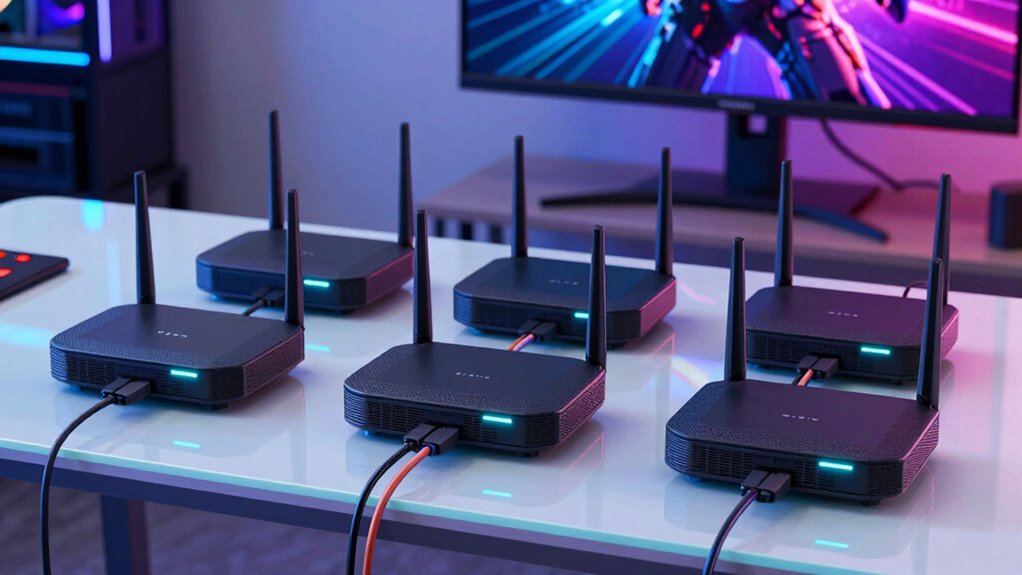

For gamers, a reliable and fast internet connection is essential, and a mesh wifi system can make all the difference in reducing lag and dead zones. The best mesh systems for gaming offer high throughput, low latency, and extensive coverage, but they also come with tradeoffs like cost and complexity. The TP-Link Deco X55 AX3000 stands out as the overall top pick for its balanced performance and affordability, while the NETGEAR Orbi 770 Series offers premium speed for serious gamers, albeit at a higher price. Many systems struggle to deliver consistent performance in large homes or with multiple devices, making selection more complex. Keep reading for a detailed breakdown of the best options and how to choose the right mesh system for your gaming setup.

Prime made for students and young adults
- Fast, free delivery for dorm and study essentials
- Prime Video and Amazon Music included
- Member-only deals
Key Takeaways
- High-end WiFi 7 mesh systems generally provide faster speeds and lower latency, but come at a premium price.
- Tri-band systems tend to outperform dual-band options in managing multiple gaming devices simultaneously.
- Coverage area and device capacity are crucial; larger homes or gaming setups require more robust systems.
- Build quality and ease of setup vary, impacting long-term usability and user experience.
- The most expensive system isn’t always the best value; balancing features and cost is key for gamers on a budget.
| TP-Link Deco X55 AX3000 WiFi 6 Mesh System (3-Pack) |  | Best Overall for Large Homes and Multi-Device Connectivity | Wi-Fi Standard: Wi-Fi 6 (AX3000) | Coverage: 6500 sq ft | Maximum Devices: 150 | VIEW ON AMAZON | See Our Full Breakdown |
| TP-Link Deco 7 Pro BE63 Tri-Band WiFi 7 Mesh System |  | Best for High-Speed, Future-Proof Gaming Networks | Coverage: 5800 sq ft | Speed: up to 5188 Mbps | Number of Devices Supported: 200+ | VIEW ON AMAZON | See Our Full Breakdown |
| Deco 7 Dual-Band WiFi 7 Mesh System (BE5000), 4-Stream, 5 Gbps |  | Best for Speed and Large Coverage in Gaming and Streaming | Wi-Fi Standard: Wi-Fi 7 | Max Speed: 5 Gbps | Coverage Area: 6600 sq ft | VIEW ON AMAZON | See Our Full Breakdown |
| NETGEAR Orbi 370 Series WiFi 7 Mesh System, 3 Pack |  | Best for Reliable Coverage and Easy Expansion | Coverage: 6000 sq ft | Max Speed: 5 Gbps | Supported Devices: Up to 70 | VIEW ON AMAZON | See Our Full Breakdown |
| eero 7 Dual-Band Mesh Wi-Fi 7 Router (3-Pack) |  | Best for User-Friendly Setup and Smart Home Integration | Wi-Fi Standard: Wi-Fi 7 | Coverage: 6000 sq ft | Supported Devices: Multiple | VIEW ON AMAZON | See Our Full Breakdown |
| NETGEAR Orbi 770 Series WiFi 7 Mesh System, 3 Pack |  | Best Overall for High-Speed Whole-Home Coverage | Coverage: Up to 8,000 sq ft | Number of units: 3 Pack | WiFi Technology: WiFi 7 | VIEW ON AMAZON | See Our Full Breakdown |
| TP-Link Deco XE75 AXE5400 Tri-Band WiFi 6E Mesh System, 3-Pack |  | Best for Advanced WiFi 6E Technology in Large Areas | Coverage: 7200 sq ft | WiFi Bands: Tri-Band (6 GHz, 5 GHz, 2.4 GHz) | Total Speed: 5400 Mbps | VIEW ON AMAZON | See Our Full Breakdown |
| TP-Link Deco M5 Mesh WiFi System – Whole Home Coverage, 3-Pack |  | Best Budget-Friendly Mesh for Reliable Coverage | Coverage: 5500 sq ft | Number of units: 3 | Ethernet Ports per Unit: 2 | VIEW ON AMAZON | See Our Full Breakdown |
| TP-Link Deco S4 Mesh AC1900 WiFi System (3-Pack) |  | Best for Basic Large-Home WiFi with Stability | Coverage: 5500 sq ft | Number of units: 3 | Speed: AC1900 | VIEW ON AMAZON | See Our Full Breakdown |
| eero 6 Mesh WiFi System – 3 Pack (1 Router + 2 Extenders) |  | Best for Easy Setup and Smart Home Integration | Coverage: 4500 sq ft | Wi-Fi Speed: up to 500 Mbps | Devices Supported: 75+ | VIEW ON AMAZON | See Our Full Breakdown |
| Deco 7 Pro Tri-Band Wi-Fi 7 Mesh System, 10Gbps Internet, 3 Pack |  | Best Overall for Large Homes and High-Speed Connectivity | Wi-Fi Technology: Wi-Fi 7 | Total Bandwidth: 14 Gbps | Coverage: Up to 8,100 sq. ft. | VIEW ON AMAZON | See Our Full Breakdown |
| Deco 7 BE25 Dual-Band WiFi 7 Mesh System, 5 Gbps |  | Best for Fast, Secure Coverage in Medium Homes | WiFi Standard: WiFi 7 | Speed: 5 Gbps | Coverage Area: Up to 4,600 sq. ft. | VIEW ON AMAZON | See Our Full Breakdown |
| Deco 7 Pro Tri-Band WiFi 7 BE10000 Whole Home Mesh System 6-Stream 10 Gbps |  | Best for Ultra-High Capacity and Large-Scale Gaming | Coverage: 7,600 sq.ft. | Number of Devices Supported: Over 200 | Wi-Fi Speed (6 GHz): 5,188 Mbps | VIEW ON AMAZON | See Our Full Breakdown |
| mesh wifi system for gaming | Coverage | Security |
|---|---|---|
| TP-Link Deco X55 AX3000 WiFi 6 | 6500 sq ft | TP-Link HomeShield |
| TP-Link Deco 7 Pro BE63 Tri-Ba | 5800 sq ft | Network protection, parental controls |
| Deco 7 Dual-Band WiFi 7 Mesh S | — | TP-Link HomeShield |
| NETGEAR Orbi 370 Series WiFi 7 | 6000 sq ft | Advanced Router Protection, NETGEAR Armor (subscription required) |
| eero 7 Dual-Band Mesh Wi-Fi 7 | 6000 sq ft | WPA3 |
| NETGEAR Orbi 770 Series WiFi 7 | Up to 8,000 sq ft | — |
| TP-Link Deco XE75 AXE5400 Tri- | 7200 sq ft | TP-Link HomeShield |
| TP-Link Deco M5 Mesh WiFi Syst | 5500 sq ft | Built-in |
| TP-Link Deco S4 Mesh AC1900 Wi | 5500 sq ft | — |
| eero 6 Mesh WiFi System | 4500 sq ft | — |
| Deco 7 Pro Tri-Band Wi-Fi 7 Me | Up to 8,100 sq. ft. | — |
| Deco 7 BE25 Dual-Band WiFi 7 M | — | — |
| Deco 7 Pro Tri-Band WiFi 7 BE1 | 7,600 sq.ft. | — |
More Details on Our Top Picks
TP-Link Deco X55 AX3000 WiFi 6 Mesh System (3-Pack)
The TP-Link Deco X55 AX3000 stands out for its ability to blanket up to 6,500 square feet with reliable Wi-Fi 6, making it ideal for large households with many connected devices. Compared with Wi-Fi 7 options like the Deco 7 Pro, it offers solid performance without the need for cutting-edge hardware, which can be more budget-friendly. Its support for up to 150 devices is a key advantage for busy smart homes, and the AI-driven mesh ensures stable connections across the entire space. However, it requires a separate modem, and lacks some of the speed and future-proofing of Wi-Fi 7 systems. Best suited for homeowners who need broad coverage and device support without obsessing over the latest Wi-Fi standard.
Pros:- Extensive coverage up to 6,500 sq ft
- Supports up to 150 devices simultaneously
- Easy setup and management via the Deco app
- Includes advanced security features
Cons:- Requires a separate modem for most ISPs
- Limited details on real-world performance metrics
Best for: Large households with many smart devices and a need for dependable coverage across a big area
Not ideal for: Users seeking the fastest possible speeds or planning to future-proof with Wi-Fi 7 technology
- Wi-Fi Standard:Wi-Fi 6 (AX3000)
- Coverage:6500 sq ft
- Maximum Devices:150
- Ethernet Ports:3 per unit
- Mesh Technology:AI-driven
- Security:TP-Link HomeShield
Our verdict“This system offers a reliable, high-capacity mesh network ideal for large homes with many devices on Wi-Fi 6, but it doesn’t provide the latest Wi-Fi 7 speeds.”
TP-Link Deco 7 Pro BE63 Tri-Band WiFi 7 Mesh System
The Deco 7 Pro BE63 supports Wi-Fi 7 with speeds exceeding 5 Gbps and covers up to 5,800 square feet, making it ideal for gamers demanding ultra-fast, low-latency connections. Unlike the NETGEAR Orbi 370, which offers a similar coverage but with a slightly lower maximum speed, the Deco 7 Pro’s tri-band setup and AI-driven roaming ensure seamless device switching—crucial for gaming sessions. Its support for over 200 devices and multiple 2.5G ports caters to dense smart home setups. A drawback is that it requires a separate modem and has a complex setup process for non-technical users, plus it comes at a higher price point. This system is best suited for tech-savvy gamers wanting to future-proof their network with Wi-Fi 7’s fastest speeds.
Pros:- Supports Wi-Fi 7 with speeds over 5 Gbps
- Handles over 200 devices comfortably
- Seamless AI-driven roaming for uninterrupted gaming
- Extensive coverage up to 5,800 sq ft
Cons:- Requires a separate modem for internet access
- Complex setup process for non-tech users
Best for: Gamers and tech enthusiasts who want the latest Wi-Fi 7 speeds and extensive mesh coverage
Not ideal for: Users with basic internet needs or those with limited technical skills who prefer plug-and-play solutions
- Coverage:5800 sq ft
- Speed:up to 5188 Mbps
- Number of Devices Supported:200+
- Ports:Four 2.5G WAN/LAN
- Wi-Fi Standard:Wi-Fi 7
- Security:Network protection, parental controls
Our verdict“This system is a top choice for gamers seeking ultra-fast Wi-Fi 7 with extensive coverage, provided they are comfortable with advanced setup.”
Deco 7 Dual-Band WiFi 7 Mesh System (BE5000), 4-Stream, 5 Gbps
The Deco 7 BE5000 delivers high-speed Wi-Fi 7 on dual bands, supporting up to 4324 Mbps and covering up to 6,600 square feet—an excellent fit for large homes with demanding gaming and streaming needs. Compared to the TP-Link Deco X55, which is Wi-Fi 6-based, the Deco 7 offers significantly faster speeds and more robust security features with TP-Link HomeShield. Its support for over 150 devices and VPN makes it suitable for a busy connected household. A key limitation is that it requires a separate modem and a backhaul setup, which could complicate installation. Price isn’t specified, but this model leans towards premium users. This is a strong choice for those wanting high-speed Wi-Fi 7 with broad coverage for gaming and smart home devices.
Pros:- High-speed Wi-Fi 7 with 4324 Mbps on 5 GHz
- Coverage up to 6,600 sq ft
- Supports over 150 devices
- Includes VPN support and advanced security
Cons:- Requires separate modem for internet connection
- Backhaul setup needed for optimal performance
Best for: Large homes needing high-speed Wi-Fi 7 for gaming, streaming, and smart tech
Not ideal for: Casual users with smaller spaces or less intensive networking needs
- Wi-Fi Standard:Wi-Fi 7
- Max Speed:5 Gbps
- Coverage Area:6600 sq ft
- Device Support:Over 150
- Security:TP-Link HomeShield
- Ethernet:2.5G Ethernet
Our verdict“Ideal for power users wanting the fastest Wi-Fi 7 with generous coverage, assuming they can handle a more involved setup.”
NETGEAR Orbi 370 Series WiFi 7 Mesh System, 3 Pack
The NETGEAR Orbi 370 Series offers a balanced mix of coverage up to 6,000 sq ft and Wi-Fi 7 speeds up to 5 Gbps, making it a reliable choice for large homes with multiple devices. Compared to the eero 7, it excels in coverage and ease of expansion because it supports additional satellites and has an intuitive app for management. Its support for up to 70 devices might be limiting in very device-dense environments, but for most gaming setups, it’s sufficient. A notable requirement is a subscription for full Armor security features, which adds ongoing costs. Overall, it provides a straightforward, high-speed mesh solution for users who want dependable coverage without the complexity of Wi-Fi 7’s full feature set. Best suited for those valuing reliable coverage and ease of setup over the latest Wi-Fi speeds.
Pros:- Supports Wi-Fi 7 with up to 5 Gbps speeds
- Coverage up to 6,000 sq ft with three units
- Easy setup with the Orbi app
- Expandable with additional satellites
Cons:- Requires a subscription for full Armor security features
- Performance varies depending on home layout
Best for: Homeowners needing dependable Wi-Fi coverage with straightforward setup and expansion options
Not ideal for: Enthusiasts seeking the absolute fastest Wi-Fi 7 speeds or maximum device support
- Coverage:6000 sq ft
- Max Speed:5 Gbps
- Supported Devices:Up to 70
- Wi-Fi Technology:WiFi 7
- Backhaul:Enhanced
- Security:Advanced Router Protection, NETGEAR Armor (subscription required)
Our verdict“This system is excellent for users wanting reliable, fast Wi-Fi with simple expansion, though it doesn’t push the absolute speed limits.”
eero 7 Dual-Band Mesh Wi-Fi 7 Router (3-Pack)
The eero 7 mesh system offers Wi-Fi 7 support with seamless coverage up to 6,000 square feet, making it a compelling choice for smart home enthusiasts. Its dual-band radios and support for multiple devices ensure good performance in typical gaming and streaming scenarios. Unlike the Deco 7 Pro, which emphasizes speed and advanced security, eero prioritizes user-friendly setup and reliable smart home integration. Its 1.1 GHz quad-core processor and WPA3 security provide a smooth experience, though the system’s Wi-Fi 7 speeds may not match the highest-end models. The higher price and subscription requirement for some features could be drawbacks for budget-conscious buyers. This system is ideal for users who want easy setup and robust smart home compatibility alongside solid Wi-Fi 7 performance.
Pros:- Supports Wi-Fi 7 with good coverage
- Easy setup with app control
- Compatible with many smart home devices
- Includes WPA3 security
Cons:- Higher price for a 3-pack
- Some features require subscription (eero Plus)
Best for: Smart home users seeking an easy-to-manage mesh network that supports gaming and multiple devices
Not ideal for: Power users demanding the absolute fastest speeds or maximum device support without subscriptions
- Wi-Fi Standard:Wi-Fi 7
- Coverage:6000 sq ft
- Supported Devices:Multiple
- Number of Radios:2; dual-band
- Security:WPA3
- Ethernet Ports:Two 2.5 Gbps
Our verdict“This is a strong choice for users prioritizing ease of use and smart home integration over raw maximum speed.”
NETGEAR Orbi 770 Series WiFi 7 Mesh System, 3 Pack
The NETGEAR Orbi 770 Series stands out for its impressive coverage of up to 8,000 sq ft, making it ideal for large gaming setups that demand reliable, fast internet across multiple rooms. Unlike the TP-Link Deco XE75, which also offers WiFi 6E but with slightly less coverage, the Orbi 770 leverages WiFi 7 technology to support speeds up to 11 Gbps, ensuring smooth gaming experiences even with many devices connected. While its setup is straightforward, the system’s security features require a subscription for full protection, which can be a downside for cost-conscious users. The main tradeoff involves its potentially higher price and reliance on subscription services for security. This system is best for large households or gamers who prioritize extensive coverage and top-tier speed, and are willing to invest in premium features.
Pros:- Extensive coverage up to 8,000 sq ft with no dead zones
- Supports WiFi 7 with speeds up to 11 Gbps for smooth gaming
- Easy to expand with additional satellites
Cons:- Coverage can vary based on home layout and construction
- Requires subscription for full security features
Best for: Large households or gamers needing extensive coverage with fast, reliable WiFi for multiple devices
Not ideal for: Small apartments or users on a tight budget who don’t require such broad coverage or top speeds
- Coverage:Up to 8,000 sq ft
- Number of units:3 Pack
- WiFi Technology:WiFi 7
- Speed:Up to 11 Gbps
- Device Capacity:Up to 100 devices
- Expandable Coverage:Additional satellite up to 2,750 sq ft
Our verdict“Ideal for large homes or serious gamers seeking maximum coverage and speed, despite higher cost and subscription needs.”
TP-Link Deco XE75 AXE5400 Tri-Band WiFi 6E Mesh System, 3-Pack
The TP-Link Deco XE75 excels at delivering high-speed WiFi 6E across large spaces, with coverage reaching 7,200 sq ft. Compared with the NETGEAR Orbi 770, which uses WiFi 7 for higher speeds, the XE75’s main advantage is its support for the new 6 GHz band, reducing interference and congestion for gaming devices. Its AI-driven mesh simplifies setup, and built-in security via TP-Link HomeShield adds peace of mind. The tradeoff involves reliance on a modem for most ISPs and premium features that may require subscriptions. While it offers robust coverage and future-proof WiFi 6E, device compatibility and speed depend on client devices supporting the latest standards. This pick makes the most sense for gamers who want cutting-edge WiFi 6E with broad coverage, and are comfortable with potential additional costs for full security.
Pros:- Extensive coverage up to 7,200 sq ft
- Supports WiFi 6E with the new 6 GHz band for reduced congestion
- Easy setup via Deco app with integrated security
Cons:- Requires a modem for most internet services
- Premium features may need subscription
Best for: Tech-savvy gamers seeking the latest WiFi 6E for large home coverage and minimal interference
Not ideal for: Casual users or those with smaller homes who don’t need WiFi 6E’s capabilities
- Coverage:7200 sq ft
- WiFi Bands:Tri-Band (6 GHz, 5 GHz, 2.4 GHz)
- Total Speed:5400 Mbps
- Number of Units:3
- Security:TP-Link HomeShield
- Compatibility:All major ISPs
Our verdict“Best suited for gamers who want the latest WiFi 6E tech in a broad coverage system, accepting some additional costs for full security and features.”
TP-Link Deco M5 Mesh WiFi System – Whole Home Coverage, 3-Pack
The TP-Link Deco M5 offers reliable, seamless WiFi coverage up to 5,500 sq ft, making it a strong choice for gamers on a budget who still need solid performance. It’s less powerful than the Deco XE75 but provides dependable speeds with adaptive routing, ensuring stable gameplay and streaming. Its setup is straightforward via the Deco app, and the built-in security plus parental controls add value for families. The tradeoff is that it requires a modem for most ISPs, and it lacks support for WiFi 6 or WiFi 7, meaning slower speeds for high-bandwidth gaming compared to more recent systems. For users with smaller homes or less demanding speed needs, this remains a dependable, cost-effective option. This system is ideal for budget-conscious gamers who prioritize coverage and stability over the latest wireless standards.
Pros:- Reliable coverage up to 5,500 sq ft
- Simple setup and management via Deco app
- Includes security and parental controls
Cons:- No support for WiFi 6 or 7
- Requires a modem for most ISPs
Best for: Budget-conscious gamers needing reliable coverage in a medium-sized home
Not ideal for: Power users requiring ultra-fast speeds or WiFi 6/7 support for demanding gaming or streaming
- Coverage:5500 sq ft
- Number of units:3
- Ethernet Ports per Unit:2
- Wired Backhaul Support:Yes
- Compatibility:All major ISPs
- Security:Built-in
Our verdict“A dependable choice for gamers wanting steady WiFi coverage at a lower cost, with some limitations on speed and future-proofing.”
TP-Link Deco S4 Mesh AC1900 WiFi System (3-Pack)
The TP-Link Deco S4 provides dependable WiFi coverage for homes up to 5,500 sq ft, making it suitable for gamers who need stable connections without the latest WiFi 6/7 features. Its AC1900 speeds are sufficient for moderate gaming and streaming, though not for the most bandwidth-intensive titles. Setup is simple with the Deco app, and it supports up to 100 devices, which is adequate for most home networks. Its main limitation involves the absence of WiFi 6 support, which means slower speeds and higher latency compared to newer systems like the Deco XE75. It’s a good choice for users seeking basic, reliable mesh WiFi without the need for future-proofing. This system appeals to budget-conscious households that prioritize stable coverage over cutting-edge wireless technology.
Pros:- Reliable coverage up to 5,500 sq ft
- Easy setup with the Deco app
- Supports up to 100 devices
Cons:- Lacks WiFi 6 support
- Speed limited to AC1900
Best for: Small to medium-sized homes needing reliable WiFi without advanced features
Not ideal for: Power users or gamers with high-speed internet plans who need the latest WiFi standards
- Coverage:5500 sq ft
- Number of units:3
- Speed:AC1900
- Ethernet Ports per Unit:2
- Supports Wired Ethernet Backhaul:Yes
- Compatibility:All major ISPs
Our verdict“A solid, budget-friendly mesh system for gamers who want dependable coverage without needing the latest WiFi tech.”
eero 6 Mesh WiFi System – 3 Pack (1 Router + 2 Extenders)
The eero 6 Mesh WiFi System offers whole-home coverage up to 4,500 sq ft, with WiFi 6 speeds up to 500 Mbps. While this speed may fall short for high-end gaming, its ease of setup and integration with Zigbee smart home devices make it appealing for users who want a simple, reliable WiFi network that supports over 75 devices. Compared with systems like the NETGEAR Orbi 770, which supports higher speeds, the eero 6’s main advantage is its seamless app management and smart home compatibility. The main tradeoff is the slower maximum speed and limited throughput, which could cause lag in bandwidth-heavy gaming. This pick makes sense for casual gamers or families prioritizing smart home features alongside reliable WiFi coverage. This system is best for those seeking easy setup, smart home integration, and moderate gaming needs.
Pros:- Easy setup with mobile app
- Supports over 75 devices
- Built-in Zigbee smart home hub
Cons:- Maximum speed of 500 Mbps may be insufficient for high-end gaming
- Limited throughput compared to WiFi 6/7 systems
Best for: Casual gamers and smart home enthusiasts who prioritize ease of use over maximum bandwidth
Not ideal for: Hardcore gamers or high-speed internet users requiring low latency and high throughput
- Coverage:4500 sq ft
- Wi-Fi Speed:up to 500 Mbps
- Devices Supported:75+
- Number of Units:3
- Includes Zigbee Hub:Yes
- Compatibility:All major ISPs
Our verdict“Great for casual gamers and smart home users wanting simple, reliable WiFi with minimal fuss, despite lower speeds.”
Deco 7 Pro Tri-Band Wi-Fi 7 Mesh System, 10Gbps Internet, 3 Pack
The Deco 7 Pro BE67 stands out for its tri-band Wi-Fi 7 technology, delivering up to 14 Gbps total bandwidth, which surpasses many dual-band options like the Deco 7 BE25. This makes it ideal for large households with demanding gaming and streaming needs, offering extensive coverage up to 8,100 sq. ft. and multi-gig ports for wired connections. However, its advanced features and high performance come with a premium price tag and added complexity, especially for those unfamiliar with mesh setups. Compared to the Deco 7 BE25, it provides faster speeds and broader coverage but requires a more capable modem and a more technically inclined user. It’s best suited for gamers who want a future-proof, high-capacity network without compromises but are prepared for higher investment and setup effort.
Pros:- Exceptional tri-band Wi-Fi 7 speeds up to 14 Gbps
- Coverage up to 8,100 sq. ft., ideal for large homes
- Multi-gig ports for ultra-fast wired connections
- AI-driven roaming for seamless device handoff
Cons:- Requires a separate modem, adding to initial setup complexity
- Higher price point may deter budget-conscious buyers
- Potentially overkill for smaller spaces
Best for: Large households with multiple high-bandwidth devices and advanced networking needs
Not ideal for: Small apartments or users seeking a simple, plug-and-play system at a lower cost
- Wi-Fi Technology:Wi-Fi 7
- Total Bandwidth:14 Gbps
- Coverage:Up to 8,100 sq. ft.
- Number of Units:3
- Ports:1x 10 Gbps WAN/LAN, 1x 2.5 Gbps WAN/LAN, 1x USB 3.0
- Dimensions:4.23 x 4.23 x 6.93 inches
Our verdict“This system is perfect for large homes that demand cutting-edge speed, extensive coverage, and future-proof features, despite its higher cost and setup complexity.”
Deco 7 BE25 Dual-Band WiFi 7 Mesh System, 5 Gbps
The Deco 7 BE25 offers a reliable dual-band WiFi 7 network with speeds up to 5 Gbps, making it a solid choice for users who prioritize fast streaming and gaming in moderate-sized homes. Unlike the Deco 7 Pro, it doesn’t support tri-band Wi-Fi, which means slightly less capacity for multiple high-demand devices but still delivers excellent performance for most gaming setups. Its coverage of up to 4,600 sq. ft. and support for over 150 devices makes it well-suited for tech-heavy households, especially with easy app-based setup and security features like TP-Link HomeShield. The main tradeoff here is that it requires a separate modem and has limited backhaul options, which could hinder performance in densely populated setups. This makes it a strong choice for gamers who want a balance of speed, coverage, and security without overextending on features they may not need.
Pros:- Fast Wi-Fi 7 speeds up to 5 Gbps
- Coverage up to 4,600 sq. ft. supports multiple devices
- Easy setup via Deco app with security features
- Supports over 150 devices, suitable for busy households
Cons:- Requires a separate modem for internet access
- Limited backhaul options unless additional units are added
- Not as future-proof as tri-band systems
Best for: Gamers and streamers in medium-sized homes seeking fast, secure Wi-Fi 7
Not ideal for: Very large households or users wanting tri-band speed with maximum device support
- WiFi Standard:WiFi 7
- Speed:5 Gbps
- Coverage Area:Up to 4,600 sq. ft.
- Number of Devices Supported:Over 150
- Ethernet:2.5G Ethernet
- Setup:App-controlled, easy setup
Our verdict“This model offers a balanced mix of speed, security, and coverage for medium homes, though it lacks the capacity for the largest setups or tri-band flexibility.”
Deco 7 Pro Tri-Band WiFi 7 BE10000 Whole Home Mesh System 6-Stream 10 Gbps
The Deco 7 Pro BE10000 is designed for users with the highest demand for coverage and device support, supporting over 200 devices across up to 7,600 sq. ft. of space. It combines tri-band Wi-Fi 7 speeds with a dedicated 6-stream Wi-Fi setup, offering peak speeds exceeding 5 Gbps on the 5 GHz band and nearly 6 Gbps on the 6 GHz band. This makes it particularly suitable for large homes with many gamers or devices streaming simultaneously. Its future-proof 10G WAN/LAN ports and AI-enabled roaming ensure high performance and seamless connectivity, even in complex setups. However, it involves a complex setup process and a significant investment, which may be unnecessary for smaller households. Compared to the Deco 7 BE25, this system supports a larger number of devices and offers higher speeds, but the complexity and cost are higher, making it better suited for tech-savvy users with demanding networks.
Pros:- Supports over 200 devices with high speeds
- Coverage up to 7,600 sq. ft. for large spaces
- Future-proof with 10G WAN/LAN ports and Wi-Fi 7
- AI-driven roaming for stable, seamless connectivity
Cons:- Complex setup process requiring technical know-how
- Higher price point might be prohibitive for some
- Performance can vary depending on environment and placement
Best for: Large households with extensive device requirements and high-performance gaming needs
Not ideal for: Small homes or users seeking straightforward, budget-friendly setups
- Coverage:7,600 sq.ft.
- Number of Devices Supported:Over 200
- Wi-Fi Speed (6 GHz):5,188 Mbps
- Wi-Fi Speed (5 GHz):4,324 Mbps
- Wi-Fi Speed (2.4 GHz):574 Mbps
- WAN/LAN Ports:4 x 2.5G
Our verdict“This system excels for large, demanding households that need maximum device capacity and ultra-high speeds, despite its complexity and cost.”

How We Picked
The products included in this roundup were evaluated based on their performance in handling real-time gaming traffic, overall coverage, latency, and ease of setup. We prioritized systems with WiFi 6 and WiFi 7 technology, as these offer the best future-proofing and speed for gaming. Reliability and build quality were also key, as a system that’s prone to disconnects or difficult to configure won’t serve gamers well. Additionally, we considered value for money, ensuring options cater to different budgets without sacrificing core performance features. The ranking reflects a blend of speed, coverage, user experience, and cost-effectiveness, highlighting the best overall options for gaming enthusiasts.| mesh wifi system for gaming | Security |
|---|---|
| TP-Link Deco X55 AX3000 WiFi 6 | TP-Link HomeShield |
| TP-Link Deco 7 Pro BE63 Tri-Ba | Network protection, parental controls |
| Deco 7 Dual-Band WiFi 7 Mesh S | TP-Link HomeShield |
| NETGEAR Orbi 370 Series WiFi 7 | Advanced Router Protection, NETGEAR Armor (subscription required) |
| eero 7 Dual-Band Mesh Wi-Fi 7 | WPA3 |
| NETGEAR Orbi 770 Series WiFi 7 | — |
| TP-Link Deco XE75 AXE5400 Tri- | TP-Link HomeShield |
| TP-Link Deco M5 Mesh WiFi Syst | Built-in |
| TP-Link Deco S4 Mesh AC1900 Wi | — |
| eero 6 Mesh WiFi System | — |
| Deco 7 Pro Tri-Band Wi-Fi 7 Me | — |
| Deco 7 BE25 Dual-Band WiFi 7 M | — |
| Deco 7 Pro Tri-Band WiFi 7 BE1 | — |
Factors to Consider When Choosing Mesh Wifi System For Gaming
Choosing the right mesh wifi system for gaming involves more than just looking at specs. Gamers need a system that offers high throughput, minimal latency, and consistent coverage across their entire home. Factors like device capacity and compatibility with the latest WiFi standards can significantly impact gaming performance. It’s also important to consider ease of setup and future-proofing, especially if you plan to upgrade devices or expand your network. Understanding these considerations can help you avoid common pitfalls, such as underestimating coverage needs or overpaying for features you won’t use.Performance and Speed
For gaming, a mesh system’s ability to deliver high speeds with low latency is paramount. Look for WiFi 6 or WiFi 7 support, which provide faster data rates and better handling of multiple devices. Keep in mind that theoretical maximum speeds are less important than real-world performance, especially under load. Systems with dedicated gaming modes or QoS features can prioritize gaming traffic, reducing lag and jitter during intense gameplay sessions. Avoid systems that can’t handle the bandwidth needs of modern gaming, especially if you stream or download large files simultaneously.
Coverage and Scalability
Assess your home’s size and layout to determine how much coverage you need. Larger homes or multi-story setups typically require more nodes or a system designed for extensive coverage. A system that easily scales with additional nodes ensures you won’t face dead zones or weak signals in key gaming areas. Remember, more nodes can improve coverage but might increase complexity and cost. Choosing a system with flexible placement options and good backhaul connectivity helps maintain high performance across the entire home.
Ease of Setup and Management
Even the most powerful system is useless if it’s difficult to install or manage. Look for user-friendly apps that simplify setup and allow easy monitoring of network health. Systems with clear, step-by-step instructions and minimal configuration are especially valuable for less tech-savvy gamers who want quick results. Regular firmware updates and intuitive management features help maintain performance over time, preventing issues like slow speeds or disconnections. A system that provides robust control, such as device prioritization and parental controls, adds value for versatile home networks.
Price and Future-Proofing
Gaming systems range from budget-friendly options to high-end setups with the latest tech. Higher-priced systems often include WiFi 7 and tri-band support, which can future-proof your network for years to come. However, evaluate whether the extra speed or additional features genuinely benefit your gaming style or household needs. Cheaper systems may suffice for casual gaming or smaller homes, but they could struggle under heavy load or in large spaces. Consider your current and future device needs to find the best balance between price and performance.
Additional Features to Watch For
Features like advanced QoS, gaming prioritization, and strong security protocols can enhance your gaming experience. Some systems include dedicated gaming modes that automatically optimize traffic, reducing lag during critical moments. Security features, such as WPA3 encryption and automatic updates, protect your network from threats. While not essential, these extras can improve reliability and peace of mind, especially in households with multiple connected devices or sensitive data.
Frequently Asked Questions
Can a mesh wifi system really reduce gaming lag?
Yes, a well-designed mesh wifi system can significantly reduce lag by providing consistent, high-speed coverage across your home. The key is choosing a system with WiFi 6 or WiFi 7 support, which offers lower latency and better handling of multiple devices. Proper placement of nodes ensures that your gaming devices stay connected to the strongest signal, avoiding disruptions. While no system can eliminate all lag caused by internet service providers, a quality mesh setup minimizes local network bottlenecks, improving overall gaming responsiveness.
Is WiFi 6 or WiFi 7 better for gaming?
WiFi 7 is the newer standard and offers higher maximum speeds, lower latency, and better capacity for multiple devices, which makes it ideal for gaming. However, WiFi 6 still provides excellent performance and is widely available at lower prices. If you already own WiFi 6-compatible devices, upgrading to WiFi 7 might not provide immediate benefits, but it future-proofs your network. For the best gaming experience today, prioritizing WiFi 6 or WiFi 7 systems ensures minimal lag and smooth gameplay, especially in busy households.
How many nodes do I need for a large home?
The number of nodes depends on your home’s size and layout. For a large multi-story house, three or more nodes are often necessary to cover every corner effectively. Focus on systems that support seamless backhaul connections between nodes, which maintain speed and reduce latency. Proper placement is key—placing nodes in central locations or near gaming areas reduces dead zones. Overloading a small number of nodes can cause congestion, so investing in additional nodes or a higher-capacity system ensures consistent performance.
Are tri-band systems worth the extra cost for gaming?
Tri-band systems typically allocate one band for backhaul and two for client devices, which can improve overall network capacity and reduce congestion. For gaming, this means more stable connections and less interference, especially in homes with many connected devices. The extra band can help prioritize gaming traffic and maintain low latency. However, the benefits depend on your specific setup—if you have a smaller home or fewer devices, dual-band systems might suffice. Evaluate your bandwidth needs and device count before investing in a tri-band system.
What features should I look for in a gaming-focused mesh system?
A gaming-focused mesh system should include features like built-in QoS, device prioritization, and low-latency support via WiFi 6 or WiFi 7. Systems with dedicated gaming modes or optimized traffic routing help reduce lag and jitter during gameplay. Security features like WPA3 encryption protect your gaming data, while easy management apps allow quick setup and adjustments. Additional features such as multiple gigabit ports and mesh backhaul options can also improve overall network stability, making gameplay smoother and more reliable.
Conclusion
The best overall mesh wifi system for gaming in 2026 is the TP-Link Deco X55 AX3000 for its balance of speed, coverage, and affordability, ideal for most gamers. For those seeking premium performance and future-proofing, the NETGEAR Orbi 770 Series offers top-tier speeds and extensive coverage, though at a higher cost. Beginners or casual gamers will find the eero 7 Dual-Band Mesh Wi-Fi 7 Router straightforward to set up and manage. For large homes or users with demanding setups, systems with WiFi 7 and multiple nodes, like the Deco 7 Pro Tri-Band WiFi 7, provide the best performance. Ultimately, your choice should align with your budget, home size, and gaming needs to ensure a lag-free experience.
As an affiliate, we earn on qualifying purchases.Halloween Picks
halloween