
For an integrated amplifier for audiophiles, I’d start with the Cambridge Audio CXA81 MkII for its strong balance of power, digital connectivity, and two-channel focus. The Yamaha A-S801BL stands out for buyers who want a built-in DAC and phono input, while the Marantz MODEL 40n is a compelling pick if streaming is central to your setup. The main tradeoffs are connectivity versus simplicity, amplifier headroom versus speaker needs, and paying for features you may never use. This roundup compares all 11 options by system fit, usability, and long-term flexibility. Read on for the full breakdown and recommendations by buyer type.

Prime made for students and young adults
- Fast, free delivery for dorm and study essentials
- Prime Video and Amazon Music included
- Member-only deals
Key Takeaways
- The Cambridge Audio CXA81 MkII is the most balanced all-rounder: its 80-watt-per-channel output and digital inputs suit listeners building a capable modern stereo system.
- The Yamaha A-S801BL offers a particularly useful mix of sources: a built-in DAC and phono input make it easier to connect digital gear and a turntable without adding separate boxes.
- Streaming separates the Marantz MODEL 40n from traditional integrated amps: it is the clearest fit for buyers who want network playback built into the amplifier.
- Entry-level choices prioritize different kinds of simplicity: the Cambridge Audio AXA35 keeps the feature set focused, while the NAD C 328 adds Bluetooth and a DAC.
- Higher output alone does not make an amplifier the right match: the Denon PMA-1700NE and Yamaha A-S1200SL make the most sense when their greater scale, system needs, and feature approach justify the step up.
| Yamaha A-S801BL Natural Sound Integrated Stereo Amplifier |  | Best for High-Resolution USB Audio | Power output: 100 W per channel | Frequency response: 10 Hz–100 kHz | THD: 0.019% | VIEW ON AMAZON | See Our Full Breakdown |
| NAD C 328 Integrated Amplifier with Built-in DAC and Bluetooth | 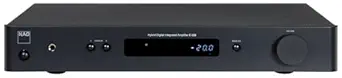 | Best for Simple Wireless-and-Vinyl Setups | Channels: 2 | DAC: 24-bit/192 kHz | Wireless connectivity: Bluetooth | VIEW ON AMAZON | See Our Full Breakdown |
| Marantz PM6007 Slimline Integrated Stereo Amplifier with 45W |  | Best for Lower-Powered Listening Rooms | Power output: 45 W | DAC: AK4490 | High-resolution support: Up to 192 kHz/24-bit | VIEW ON AMAZON | See Our Full Breakdown |
| Cambridge Audio CXA81 MkII Integrated Stereo Amplifier, 80 W per Channel, Lunar Grey |  | Best for Flexible Digital and Balanced Sources | Amplifier model: CXA81 MkII | Power output: 80 W per channel | Amplification: Class AB | VIEW ON AMAZON | See Our Full Breakdown |
| Denon PMA-600NE Bluetooth Stereo Amplifier | 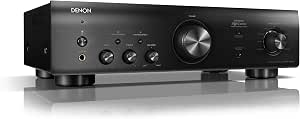 | Best for Analog Listening with Bluetooth Convenience | Channels: 2 | Output power: 70 W per channel at 4 ohms | DAC: 192 kHz/24-bit | VIEW ON AMAZON | See Our Full Breakdown |
| Yamaha A-S501BL Natural Sound Integrated Stereo Amplifier (Black) |  | Best Value for Digital and Vinyl | Power output: 85 W + 85 W (20 Hz–20 kHz, 0.019% THD) | Channels: Stereo | Inputs: Digital coax, TOSLINK optical, analog including phono | VIEW ON AMAZON | See Our Full Breakdown |
| Marantz MODEL 40n Integrated Stereo Amplifier with Streaming (Silver Gold) |  | Best All-in-One Streaming System | Power output: 70 watts per channel | Channels: 2.2 | Built-in streaming: Yes | VIEW ON AMAZON | See Our Full Breakdown |
| Cambridge Audio AXA35 Integrated Amplifier with Built-in Phono Stage |  | Best Entry Point for Compact Systems | Power output: 35 watts into 8 ohms | Channels: 2 | Frequency response: 5 Hz–50 kHz | VIEW ON AMAZON | See Our Full Breakdown |
| Marantz Model 50 Integrated Stereo Amplifier, 70 W |  | Best for Purely Analog Listening | Power output: 70 W | Amplifier architecture: Class A/B | Signal path: Pure analog | VIEW ON AMAZON | See Our Full Breakdown |
| Yamaha A-S1200SL Integrated Amplifier (Silver) |  | Best Premium Design Pick | Mounting type: Freestanding | Channels: 2 | Dimensions: 24 × 23 × 10 inches | VIEW ON AMAZON | See Our Full Breakdown |
| Denon PMA-1700NE Integrated Amplifier for Home Audio (140W x 2), Black |  | Best for High-Power, High-Resolution Systems | Power output: 140W x 2 | Digital inputs: 3 | Computer audio input: USB-B | VIEW ON AMAZON | See Our Full Breakdown |
| integrated amplifier for audiophile | Power output | Channels |
|---|---|---|
| Yamaha A-S801BL Natural Sound | 100 W per channel | — |
| NAD C 328 Integrated Amplifier | — | 2 |
| Marantz PM6007 Slimline Integr | 45 W | — |
| Cambridge Audio CXA81 MkII Int | 80 W per channel | — |
| Denon PMA-600NE Bluetooth Ster | — | 2 |
| Yamaha A-S501BL Natural Sound | 85 W + 85 W (20 Hz–20 kHz, 0.019% THD) | Stereo |
| Marantz MODEL 40n Integrated S | 70 watts per channel | 2.2 |
| Cambridge Audio AXA35 Integrat | 35 watts into 8 ohms | 2 |
| Marantz Model 50 Integrated St | 70 W | — |
| Yamaha A-S1200SL Integrated Am | — | 2 |
| Denon PMA-1700NE Integrated Am | 140W x 2 | — |
More Details on Our Top Picks
Yamaha A-S801BL Natural Sound Integrated Stereo Amplifier
The Yamaha A-S801BL is the strongest fit here for listeners building a serious wired system around high-resolution digital sources. Its USB DAC supports DSD and PCM up to 384 kHz/32-bit, while 100 watts per channel gives it more stated output than the Cambridge Audio CXA81 MkII’s 80 watts. That extra headroom may suit less-sensitive speakers or louder listening, though power ratings alone do not predict sound quality or speaker compatibility. Multiple digital inputs and a phono input also let it serve both a computer-based setup and a turntable. The tradeoff is a distinctly traditional approach: no Bluetooth or Wi-Fi, unlike the NAD C 328 and Cambridge, and its substantial construction may be awkward in a compact rack. Choose it for wired flexibility and power, not convenience streaming.
Pros:- 100 watts per channel provides the highest stated output among these five picks.
- USB DAC supports DSD and PCM formats up to 384 kHz/32-bit.
- Digital coaxial, optical, analog, and phono inputs cover varied wired sources.
- Custom power transformer and 12,000 µF block capacitors support its robust power design.
Cons:- No Bluetooth or Wi-Fi for direct wireless streaming.
- Its bulky design may not suit small shelves or compact listening spaces.
- Its stereo-only format will not serve buyers seeking multichannel home theater.
Best for: Listeners pairing a computer or other digital sources with demanding stereo speakers who also want a phono input and high-resolution USB playback.
Not ideal for: Buyers who rely on wireless streaming or need a compact amplifier; the Yamaha has no stated Bluetooth or Wi-Fi and may take up considerable shelf space.
- Power output:100 W per channel
- Frequency response:10 Hz–100 kHz
- THD:0.019%
- DAC support:DSD 2.8 MHz/5.6 MHz; PCM up to 384 kHz/32-bit
- Inputs:Digital coaxial, TOSLINK optical, analog including phono
- Power transformer:Custom-made
- Block capacitors:12,000 µF
Our verdict“Choose the A-S801BL if high-resolution wired sources and strong stated output matter more than wireless convenience or a small footprint.”
NAD C 328 Integrated Amplifier with Built-in DAC and Bluetooth
The NAD C 328 is the most straightforward choice here for listeners who want Bluetooth and a turntable input without making wireless streaming the center of their system. Its 24-bit/192 kHz DAC handles supported digital audio, and the dedicated MM phono stage accommodates a compatible moving-magnet cartridge. That mix gives it a practical everyday role the wired-only Yamaha A-S801BL does not fill as neatly. Compared with the Cambridge Audio CXA81 MkII, however, the supplied product details do not identify a range of digital inputs or a balanced XLR connection, so I would not choose it for a source-heavy setup. Bluetooth adds convenience, but the format and codec are unspecified. The available data also give no amplifier power rating, making speaker matching harder than with the Yamaha, Marantz, or Cambridge options.
Pros:- Built-in Bluetooth allows direct wireless playback from compatible devices.
- 24-bit/192 kHz DAC supports high-resolution digital audio.
- Dedicated MM phono stage accepts a compatible turntable without a separate phono preamp.
- Intuitive controls suit listeners who want a simple stereo setup.
Cons:- No amplifier power rating is provided in the supplied specifications, complicating speaker matching.
- Additional digital inputs and outputs are not specified.
- Bluetooth codec support is not stated, limiting informed comparison with aptX HD-equipped options.
Best for: Listeners with a moving-magnet turntable and a phone or tablet who want basic Bluetooth playback in a two-channel system.
Not ideal for: Buyers matching an amplifier to power-hungry speakers or several wired digital sources; the supplied data omit output power and do not specify a broad set of digital inputs.
- Channels:2
- DAC:24-bit/192 kHz
- Wireless connectivity:Bluetooth
- Phono stage:Dedicated MM
- Item dimensions:17.13 × 11.22 × 2.76 inches
- Mounting type:Surface mount
- Supply voltage:100 volts
Our verdict“Pick the C 328 for a simple Bluetooth-and-MM-vinyl stereo system, but choose a model with a stated power rating and broader input details if speaker matching or source expansion is a priority.”
Marantz PM6007 Slimline Integrated Stereo Amplifier with 45W
The Marantz PM6007 makes the most sense for a carefully matched stereo system where input choice and a modest footprint matter more than high output. Its 45 watts and AK4490 DAC supporting 192 kHz/24-bit playback give it a different priority from the more powerful Yamaha A-S801BL and Cambridge Audio CXA81 MkII: it offers a capable mix of analog and digital connections without chasing their higher stated wattage. Five analog inputs, optical and coaxial inputs, and a phono stage make it especially adaptable for a source-rich two-channel setup. The tradeoffs are clear: it has no Bluetooth or Wi-Fi, and the supplied weight of 10.499 kg is substantial despite its slim profile. I would pair it with speakers suited to its output rather than assume its feature list makes it a fit for any room or speaker load.
Pros:- Five analog inputs plus optical and coaxial connections suit a setup with several wired sources.
- AK4490 DAC supports digital audio up to 192 kHz/24-bit.
- Integrated phono stage supports turntable connection without a separate phono preamp.
- Speaker A/B switching and a subwoofer output offer useful system-building options.
Cons:- 45 watts is lower stated output than the Yamaha A-S801BL and Cambridge Audio CXA81 MkII.
- No Bluetooth or Wi-Fi connectivity is specified.
- At 10.499 kg, it is heavy for buyers expecting a slim amplifier to be easy to move.
Best for: Listeners with efficient or otherwise well-matched stereo speakers who want several wired sources, a turntable input, and A/B speaker switching.
Not ideal for: Buyers who need more stated amplifier output for demanding speakers, wireless playback, or a lightweight unit for frequent moving.
- Power output:45 W
- DAC:AK4490
- High-resolution support:Up to 192 kHz/24-bit
- Analog inputs:Five
- Digital inputs:One coaxial and two optical
- Features:Integrated phono stage, speaker A/B switching, subwoofer output
- Weight:10.499 kg
Our verdict“Choose the PM6007 for a wired, source-rich system with speakers suited to 45 watts, not for high-output or wireless-first listening.”
Cambridge Audio CXA81 MkII Integrated Stereo Amplifier, 80 W per Channel, Lunar Grey
The Cambridge Audio CXA81 MkII is the most versatile fit in this group for listeners connecting a mix of computer, digital, and balanced sources. Its 80 watts per channel place it between the Yamaha A-S801BL’s 100 watts and Marantz PM6007’s 45 watts on stated output, while Class AB amplification and an ESS Sabre DAC give the system a substantial wired foundation. USB, optical, coaxial, and balanced XLR inputs make it easier to accommodate varied components than the NAD C 328, whose supplied input details are limited. Bluetooth aptX HD adds a useful wireless option without replacing those wired connections. The main limitation is scope: this is a two-channel stereo amplifier, not a multichannel home-theater hub. The supplied details also do not list a phono input, so vinyl listeners should check their turntable setup or add a phono preamp.
Pros:- 80 watts per channel offers more stated output than the Marantz PM6007.
- USB, optical, coaxial, and balanced XLR inputs serve a broad range of wired sources.
- ESS ES9018K2M Sabre DAC handles digital-to-analog conversion.
- Bluetooth aptX HD adds wireless playback while retaining extensive wired connectivity.
Cons:- Designed for stereo rather than multichannel surround sound.
- A phono input is not listed in the supplied product data.
- Its feature set may be unnecessary for buyers who only need a simple analog amplifier.
Best for: Audiophiles connecting a computer, digital sources, and balanced XLR equipment who want substantial stereo output plus Bluetooth aptX HD.
Not ideal for: Buyers building a surround system or seeking a specified built-in phono stage; this is stereo-only and no phono input is listed in the supplied data.
- Amplifier model:CXA81 MkII
- Power output:80 W per channel
- Amplification:Class AB
- DAC:ESS ES9018K2M SABRE32
- Digital inputs:TOSLINK, coaxial, USB audio
- Other input:Balanced XLR
- Wireless connectivity:Bluetooth aptX HD
- Color:Lunar Grey
Our verdict“Choose the CXA81 MkII if you want flexible digital and XLR connectivity with strong stereo output, and do not need surround processing or a listed phono stage.”
Denon PMA-600NE Bluetooth Stereo Amplifier
The Denon PMA-600NE is a balanced pick for listeners who want turntable support and occasional wireless playback, but still care about keeping digital circuitry out of the way during analog sessions. It combines Bluetooth, a built-in 192 kHz/24-bit DAC, and a phono equalizer; its digital circuits can also be disabled for analog listening. That last feature gives it a more deliberate analog-use option than the Bluetooth-equipped NAD C 328, while the two optical inputs and coaxial input provide several routes for digital sources. Its stated output is 70 watts per channel at 4 ohms, below the Yamaha A-S801BL’s 100 watts per channel, so buyers should compare speaker requirements rather than assume equivalent drive capability. Bluetooth is the only wireless technology specified, and this remains a two-channel amplifier rather than a surround solution.
Pros:- Digital circuitry can be disabled for analog listening.
- Built-in phono equalizer supports turntables.
- Two optical inputs and one coaxial input accommodate wired digital sources.
- Bluetooth provides direct wireless playback, and the built-in DAC supports 192 kHz/24-bit.
Cons:- 70 watts per channel at 4 ohms is below the Yamaha A-S801BL’s stated 100 watts per channel.
- Bluetooth is the only wireless technology specified; Wi-Fi is not listed.
- Two-channel stereo operation does not support multichannel surround playback.
Best for: Listeners who alternate between a turntable, wired digital sources, and Bluetooth streaming, and value the option to disable digital circuitry for analog playback.
Not ideal for: Buyers needing multichannel home theater, Wi-Fi streaming, or more stated output than the Yamaha A-S801BL.
- Channels:2
- Output power:70 W per channel at 4 ohms
- DAC:192 kHz/24-bit
- Connectivity:Bluetooth, two optical inputs, one coaxial input, one phono input
- Audio output mode:Stereo
- Dimensions:17.1 × 12.1 × 4.76 inches
- Weight:18 pounds
- Color:Black
Our verdict“Choose the PMA-600NE if you want a flexible stereo amplifier for vinyl, wired digital sources, and Bluetooth, with an analog-focused listening mode.”
Yamaha A-S501BL Natural Sound Integrated Stereo Amplifier (Black)
The Yamaha A-S501BL is a practical choice for audiophiles who want one amplifier for a digital source and a turntable without moving into a more elaborate system. Its 85 watts per channel gives it more stated output than the Marantz MODEL 40n and Model 50, while coaxial and optical inputs add a straightforward path for compatible digital sources. A built-in phono input also avoids the need for a separate phono stage with a compatible turntable. Compared with the streaming-equipped MODEL 40n, the A-S501BL keeps the system simpler and relies on external sources for streaming. The tradeoff is a conventional stereo feature set rather than HDMI ARC or built-in streaming, and its 22.7-pound weight makes repositioning less convenient. I’d choose it for flexible, component-based listening, not surround sound.
Pros:- 85 watts per channel provides more stated output than the Marantz MODEL 40n and Model 50.
- Coaxial and optical inputs connect compatible digital sources directly.
- Built-in phono input supports a compatible turntable without an extra phono stage.
- Auto standby uses 0.5 W in standby.
Cons:- No built-in streaming or HDMI ARC is specified, unlike the Marantz MODEL 40n.
- Stereo-only design does not serve a surround-sound setup.
- At 22.7 pounds, it is less convenient to move than a compact amplifier.
Best for: Audiophiles building a two-channel system around a turntable, a digital source, and passive speakers who want useful connectivity without built-in streaming.
Not ideal for: Listeners who want one-box streaming and TV integration, or anyone assembling a surround-sound system.
- Power output:85 W + 85 W (20 Hz–20 kHz, 0.019% THD)
- Channels:Stereo
- Inputs:Digital coax, TOSLINK optical, analog including phono
- Standby power consumption:0.5 W
- Weight:22.7 pounds
- Model number:A-S501BL
- Warranty:Manufacturer warranty
Our verdict“Choose the A-S501BL if you want strong stated stereo output and both digital and phono inputs, and can do without integrated streaming.”
Marantz MODEL 40n Integrated Stereo Amplifier with Streaming (Silver Gold)
The Marantz MODEL 40n suits listeners who want an integrated amplifier to handle music streaming, television audio, and vinyl in one stereo system. Its built-in streaming, HEOS, AirPlay 2, Bluetooth, and HDMI ARC reduce the need for separate source boxes; that makes it a more self-contained choice than the analog-only Marantz Model 50 or the source-focused Yamaha A-S501BL. The 70-watt-per-channel output is below the Yamaha’s stated 85 watts, so buyers prioritizing output on paper may prefer the A-S501BL. Here, convenience and source flexibility take priority over a purely analog signal path. A built-in MM phono stage covers compatible cartridges, while adjustable bass and treble offer basic sound-shaping. Its feature-rich setup may take more effort than a simpler amplifier, and stereo output rules out surround duties.
Pros:- Built-in streaming supports Spotify, Apple Music, Tidal, AirPlay, Bluetooth, and HEOS.
- HDMI ARC can bring television audio into a two-channel system.
- Built-in MM phono stage supports compatible turntables.
- Adjustable bass and treble provide simple tone control.
Cons:- Its 70-watt-per-channel output is lower than the Yamaha A-S501BL’s stated 85 watts per channel.
- The range of streaming and connection features can make setup more involved than a basic integrated amplifier.
- Stereo output does not replace a surround-sound receiver.
Best for: Audiophiles who stream from several services, want simple TV-audio integration, and also play records through an MM turntable.
Not ideal for: Listeners seeking a strictly analog amplifier, higher stated output than the Yamaha A-S501BL, or multichannel home-theater playback.
- Power output:70 watts per channel
- Channels:2.2
- Built-in streaming:Yes
- TV connection:HDMI ARC
- Streaming support:Spotify, Apple Music, Tidal, AirPlay, Bluetooth, HEOS
- Phono stage:Built-in MM
- Tone control:Adjustable bass and treble
- Finish:Silver Gold
Our verdict“Pick the MODEL 40n if streaming and TV connectivity matter more to your stereo system than a minimal, purely analog design.”
Cambridge Audio AXA35 Integrated Amplifier with Built-in Phono Stage
The Cambridge Audio AXA35 is the simplest fit here for a smaller two-channel setup where a turntable and a few analog sources are the priority. Its 35 watts into 8 ohms is substantially below the Yamaha A-S501BL’s 85 watts per channel and the 70-watt Marantz amplifiers, so I’d reserve it for speakers and rooms that do not call for higher output. In exchange, the AXA35 keeps the feature set focused: four RCA inputs, a phono input, and a 3.5mm auxiliary connection cover common analog sources without the streaming and TV features of the Marantz MODEL 40n. The built-in phono stage is useful for a compatible turntable, but there is no remote control listed. It makes most sense as a straightforward starter system, not a high-output centerpiece.
Pros:- Built-in phono stage supports a compatible turntable without a separate phono preamp.
- Four RCA inputs and a 3.5mm auxiliary input accommodate several analog sources.
- Compact dimensions suit a smaller equipment shelf.
- Metal construction gives the unit a practical, durable enclosure.
Cons:- 35 watts into 8 ohms is much lower than the Yamaha A-S501BL’s stated output.
- No remote control is included, limiting listening-position convenience.
- No built-in streaming or advanced digital features are specified.
Best for: New stereo-system owners with a compatible turntable, a few analog sources, and a modest room or speaker setup.
Not ideal for: Listeners who need high output for a large room, want built-in streaming or TV integration, or expect remote operation.
- Power output:35 watts into 8 ohms
- Channels:2
- Frequency response:5 Hz–50 kHz
- Signal-to-noise ratio:>82 dB (unweighted)
- Inputs:4 RCA, 1 phono, 1 3.5mm auxiliary
- Dimensions:3.3 × 16.9 × 13.2 inches
- Material:Metal
Our verdict“Choose the AXA35 for a compact, analog-first starter system, but select a higher-output model if your room or speakers demand more power.”
Marantz Model 50 Integrated Stereo Amplifier, 70 W
The Marantz Model 50 is the analog purist’s choice in this group: its pure analog signal path, Class A/B architecture, and six analog inputs suit a system built around physical sources. Compared with the streaming-equipped Marantz MODEL 40n, it omits digital convenience in favor of a simpler signal path and more room for analog components. Its 70-watt output sits below the Yamaha A-S501BL’s 85 watts, but the Model 50 adds speaker A/B switching plus preamp, subwoofer, and power-amp connections for system expansion. The MM phono stage with JFET input circuitry is a clear benefit for compatible cartridges; it does not cover moving-coil cartridges according to the supplied details. I’d skip this if you expect built-in streaming or digital inputs, since neither is specified.
Pros:- Pure analog signal path favors systems centered on analog sources.
- Six analog inputs accommodate multiple components.
- MM phono stage uses JFET input circuitry and HDAM SA-3 amplifier circuitry.
- Preamp, subwoofer, and power-amp connections allow system expansion.
Cons:- No digital inputs or built-in streaming are specified, unlike the Marantz MODEL 40n.
- The stated phono stage is for MM cartridges.
- Its 70-watt output is lower than the Yamaha A-S501BL’s 85 watts per channel.
Best for: Analog-focused audiophiles with several line-level sources, an MM turntable, and plans to expand or split speaker duties.
Not ideal for: Buyers who want digital inputs, built-in streaming, or phono support specified for moving-coil cartridges.
- Power output:70 W
- Amplifier architecture:Class A/B
- Signal path:Pure analog
- Amplifier circuitry:HDAM SA-3
- Phono stage:MM with JFET input circuitry
- Analog inputs:6
- Connections:Stereo preamp outputs, subwoofer output, power amp input
- Speaker switching:A/B
- Weight:31.3 pounds
Our verdict“Choose the Model 50 if your system is analog-first and you value expansion connections over streaming and digital inputs.”
Yamaha A-S1200SL Integrated Amplifier (Silver)
The Yamaha A-S1200SL is the premium-style choice for audiophiles drawn to a substantial, classic-looking stereo component, especially its level meters and robust build. It stands apart from the more connectivity-led Marantz MODEL 40n: the supplied product details emphasize design and high-fidelity sound rather than streaming, HDMI ARC, or a particular input list. That makes the A-S1200SL harder to judge as an all-in-one source hub, but more appealing to buyers who already have their playback components in mind and want the amplifier to anchor the system visually. Its large listed dimensions call for generous shelf space, while the absence of a stated power rating or detailed connection specs makes direct performance comparisons with the Yamaha A-S501BL difficult. I’d choose it for its premium presentation, not for documented versatility.
Pros:- Level meters give the amplifier a distinctive classic appearance.
- Designed as a high-fidelity two-channel component.
- Robust build is suited to a dedicated audiophile system.
- Freestanding format fits a conventional component-based setup.
Cons:- Listed dimensions of 24 × 23 × 10 inches require substantial space.
- The supplied specifications do not state power output or input connections, limiting direct comparison with the A-S501BL.
- Built-in streaming and HDMI ARC are not specified, unlike the Marantz MODEL 40n.
Best for: Audiophiles who want a substantial silver stereo amplifier with vintage-style level meters and have room for a large component.
Not ideal for: Buyers who need clearly documented power and input specifications, built-in streaming, or a compact amplifier for a crowded shelf.
- Mounting type:Freestanding
- Channels:2
- Dimensions:24 × 23 × 10 inches
- Finish:Silver
- Design feature:Level meters
Our verdict“Choose the A-S1200SL if its level-meter design and substantial build are priorities and you can confirm its connections suit your system.”
Denon PMA-1700NE Integrated Amplifier for Home Audio (140W x 2), Black
The Denon PMA-1700NE suits an audiophile building a substantial two-channel system around both digital sources and vinyl. Its 140 watts per channel gives it more power headroom than the 80-watt Cambridge Audio CXA81 MkII, which can be useful when driving less-sensitive speakers or listening in a larger room. Digital support extends to 384 kHz/32-bit PCM and DSD up to 11.2 MHz, while MM and MC phono inputs accommodate a wider range of cartridges than a basic MM-only stage. The tradeoff is a more involved setup and no built-in Wi-Fi or streaming; the Marantz MODEL 40n is a better fit if network playback matters more than this Denon’s power and format support. Choose the PMA-1700NE for a source-rich system, not an all-in-one streaming setup.
Pros:- 140W per channel provides headroom for less-sensitive speakers and larger listening rooms.
- Supports high-resolution PCM up to 384 kHz/32-bit and DSD up to 11.2 MHz.
- MM and MC phono inputs support a broader choice of cartridges than an MM-only stage.
- Combines three digital inputs and USB-B with analog connections for a varied source collection.
Cons:- No built-in Wi-Fi or streaming services, so network playback requires a separate source.
- Its multiple input and playback options may feel complex to buyers seeking a straightforward amplifier.
- High power and extensive digital support may be unnecessary for modest speakers or a simple system.
Best for: Audiophiles with demanding speakers who want substantial amplifier power, high-resolution digital playback, and support for both MM and MC turntables.
Not ideal for: Listeners who want built-in Wi-Fi streaming or a simple, minimal setup; the Marantz MODEL 40n is better suited to integrated network playback.
- Power output:140W x 2
- Digital inputs:3
- Computer audio input:USB-B
- Phono inputs:MM and MC
- Supported formats:MP3, ALAC, WAV, FLAC HD, DSD
- PCM resolution support:Up to 384 kHz/32-bit
- DSD support:Up to 11.2 MHz
- Built-in phono equalizer:Yes
Our verdict“Choose the PMA-1700NE if your priority is ample speaker-driving power, high-resolution digital support, and MM/MC vinyl playback rather than built-in streaming.”

How We Picked
I compared the 11 amplifiers around the decisions that matter in an audiophile system: power and speaker matching, analog and digital inputs, source convenience, build and control layout, and how much flexibility each model offers without extra equipment. I also distinguished amplifiers designed as straightforward two-channel centers from models that add Bluetooth, streaming, or a built-in DAC. Those features can simplify a system, but they do not automatically make an amplifier a better fit for every listener.
The ranking favors balanced system value and broad usability over any single headline specification. The Cambridge Audio CXA81 MkII leads for its combination of output and digital connections; the Yamaha A-S801BL follows as a versatile alternative with phono support. More specialized picks rank higher for their intended audience, not as universal upgrades: the MODEL 40n suits streaming-first systems, while the AXA35 is aimed at simpler setups. Premium and higher-output models can be the better choice for specific speakers or priorities, but their extra capability matters less if a buyer will not use it.
Factors to Consider When Choosing Integrated Amplifier For Audiophiles
Before choosing an amplifier, I’d work backward from the system it must support. These questions help prevent paying for redundant features, overlooking a connection you need, or choosing output that does not suit your speakers and room.
Match Power to Speakers and Listening Room
Amplifier wattage is only one part of speaker matching; sensitivity, impedance behavior, listening distance, and room size all affect how much power is useful. A modestly sized room with efficient speakers may not benefit from the highest-output model in this group. Less-sensitive speakers or louder listening can make extra headroom more valuable, especially when musical peaks arrive suddenly. Check your speaker maker’s guidance and look for an amplifier that can handle the stated impedance, rather than comparing watt figures alone. A common mistake is buying more power while ignoring speaker compatibility. If you are uncertain, prioritize a stable match and adequate headroom over the biggest number on the spec sheet.
Choose Inputs Around the Sources You Actually Own
List every source you plan to connect now, then leave room for one or two likely additions. A turntable requires a phono input or a separate phono preamp, while a television or digital transport may call for suitable digital inputs. Built-in DACs, as found in several options here, can reduce box count and simplify switching between digital sources. They are less useful if you already own a DAC you prefer. Do not assume that Bluetooth, network streaming, and digital inputs are interchangeable: each supports a different way of listening. Picking the connection that fits your habits can matter more day to day than a small difference in amplifier output.
Decide Whether Streaming Belongs in the Amplifier
An amplifier with built-in streaming can reduce clutter and make music available without a separate streamer. That convenience is attractive if most listening comes from online services or a home network. A traditional integrated amplifier paired with an external streamer gives you more freedom to replace or upgrade the streaming component on its own. The tradeoff is another device, another connection, and potentially another control app. Before paying for integrated streaming, check whether it supports your services and preferred control method. If your sources are mostly physical media or a computer, a simpler amplifier may make better sense.
Treat Usability as Part of System Performance
A good system should be straightforward to operate, not just capable on paper. Think about who will use it, how often you switch sources, whether you need a remote, and whether visible controls matter in your room. More built-in functions can save equipment, but they may also add menu steps or make the front panel busier. A stripped-back amplifier can be satisfying when you use only a turntable and one other source, yet restrictive when your system grows. Check the layout and connection access against where the unit will sit. Ease of daily use can shape how often you enjoy the system more than a specification you rarely notice.
Pay More for Capability You Can Use
A higher-tier amplifier is easier to justify when it solves a real system need: more headroom, the right inputs, streaming integration, or a build and control approach you value. It is harder to justify when the upgrade adds features that duplicate equipment you already own. Reserve room in your budget for suitable speakers, stands, cables, or source components rather than treating the amplifier as the whole system. Do not assume a premium model will transform speakers that are poorly matched to your room. Compare the complete setup cost and the features you will use over several years. That approach makes the premium step more deliberate and helps keep an entry-level system from becoming needlessly complicated.
Frequently Asked Questions
Is the Cambridge Audio CXA81 MkII a better choice than the Yamaha A-S801BL for a digital-first system?
Both suit listeners with digital sources, but their broader system fit differs. The CXA81 MkII pairs 80 watts per channel with digital connectivity and makes a strong choice for a modern two-channel setup. The A-S801BL adds a phono input, which is useful if you also want to connect a turntable without a separate phono stage. I’d compare the inputs you will use rather than choosing by power alone. If vinyl is part of the plan, the Yamaha’s built-in phono support may tip the decision; if not, the Cambridge is a strong all-round alternative.
Should I choose the Marantz MODEL 40n or a conventional amplifier with an external streamer?
Choose the MODEL 40n if you want streaming functions integrated into the amplifier and value a simpler equipment stack. An external streamer is a better fit if you already own one, want to select a particular platform, or prefer to upgrade streaming separately from amplification. Check service support and control options before committing to either approach. The external route adds a box and connections, but it can make future changes easier. Your listening sources and appetite for separate components matter more than a general preference for built-in or external features.
Can the Cambridge Audio AXA35 handle an audiophile system, or is it too basic?
The AXA35 can suit a focused system if your speakers and room do not call for more output and its connections cover your sources. Its built-in phono stage is a practical advantage for a turntable-based setup. The pared-back approach also means it lacks the broader feature set of options such as the CXA81 MkII or Yamaha A-S801BL. That is not a problem if you want a simple amplifier and already know what sources you need. I’d look elsewhere if you expect to add several digital sources or need greater headroom.
Do I need a higher-powered amplifier for difficult speakers?
Possibly, but wattage by itself cannot answer the question. Check the speaker’s sensitivity and impedance information, then factor in room size, listening distance, and how loudly you play music. A higher-output model may provide more headroom, but it still needs to be compatible with the speaker’s electrical load. Ask the speaker manufacturer or a qualified retailer about the match if specifications are unclear. Avoid choosing the Denon PMA-1700NE or another high-output option solely because its power figure is larger.
Is Bluetooth enough, or should I prioritize a DAC or network streaming?
It depends on how you listen and what quality and convenience you expect from wireless playback. Bluetooth is a straightforward way to send audio from a phone, but it is not the same as a full network-streaming system, and available codecs and device support can affect results. A built-in DAC is useful when connecting digital sources by cable, while network streaming can provide direct access to supported services without routing audio through a phone. If most listening is from vinyl, those digital features may carry little value. Pick the function that solves a recurring need instead of paying for overlapping features.
Conclusion
For most buyers seeking a flexible, serious two-channel system, I’d choose the Cambridge Audio CXA81 MkII as best overall. The Yamaha A-S801BL is my best value-oriented versatile pick for listeners who need both digital connections and a phono input, while the Marantz MODEL 40n is best for streaming-first systems. Beginners building a straightforward setup can start with the Cambridge Audio AXA35, provided its output and inputs suit their speakers and sources; those who want Bluetooth and a built-in DAC should compare the NAD C 328. For a premium, more traditional two-channel direction, consider the Yamaha A-S1200SL; for buyers who specifically need greater output, the Denon PMA-1700NE is the targeted alternative. My final check would be speaker compatibility and a complete source list: the right amplifier is the one whose capabilities match your system, not the one with the longest feature list.