When choosing an electric tankless water heater, you’re looking for a compact, energy-efficient way to heat water on demand. The Rheem RTEX-24 stands out as the best overall for its reliable performance and dual heating element design. For those prioritizing smart features, the Westinghouse 18kW Wi-Fi Model offers convenient remote control, while budget-conscious buyers may prefer the 11kW Westinghouse for basic needs. These units differ greatly in power capacity, features, and price, so understanding your hot water demand and installation constraints is key. Continue reading to see which model suits your needs best and why.

Prime made for students and young adults
- Fast, free delivery for dorm and study essentials
- Prime Video and Amazon Music included
- Member-only deals
Key Takeaways
- Higher wattage models generally provide faster hot water but require more electrical capacity.
- Smart features like Wi-Fi control are common in mid-range units but add to the cost.
- Compact models are ideal for small spaces but may have limited flow rates.
- Build quality and certifications like ETL ensure safety and durability over time.
- Balancing initial cost against ongoing energy savings is critical for long-term value.


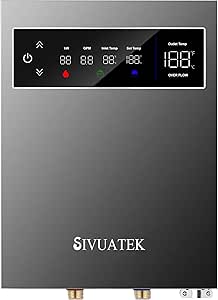


| electric tankless water heater | Power | Voltage | Flow Rate |
|---|---|---|---|
| Rheem RTEX-24 24kW 240V Electr | 24kW | 240V | up to 5.9 GPM |
| 18kW Electric Tankless Water H | 18000 watts | 240V | 4.3 GPM |
| ThermoMate 18kW Electric Tankl | 18kW | 240V | up to 4.4 GPM |
| ThermoMate 27kW Electric Tankl | 27kW | 240V | 6.6 GPM |
| 14kW Tankless Electric Water H | 14 KW | 240V | 3.4 GPM |
| 14kW Tankless Electric Water H | 14kW | 240V | — |
| Westinghouse 11kW Tankless Wat | 11kW | 240V | 2.6 GPM |
| 11kW Electric Tankless Water H | 11kW | 240V | 2.6 GPM |
| 14kW Tankless Electric Water H | 14kW | 240V | 3.38 GPM |
| Westinghouse 18kW Electric Tan | 18kW | 240V | 4.2 GPM |
| Stiebel Eltron Tempra 24 Trend | 24kW | 240V | — |
| Rheem 11kW Multi Fixture Tankl | 11kW | 240V | Up to 2.68 GPM |
| Rheem 18kW 240V Tankless Elect | 18kW | 240V | Up to 4.4 GPM |
More Details on Our Top Picks
Rheem RTEX-24 24kW 240V Electric Tankless Water Heater
The Rheem RTEX-24 stands out for its balance of power and space efficiency, making it suitable for households with multiple fixtures. Compared to the ThermoMate 18kW, it offers a higher flow rate of 5.9 GPM, which benefits larger families. However, its need for specific electrical wiring can complicate installation, especially for DIYers. The digital temperature controls provide precise setting, and its compact design saves valuable space. The main tradeoff is that it requires a dedicated 240V circuit and may need professional wiring upgrades. Overall, this model delivers reliable performance for typical family homes, assuming proper electrical compatibility.
Pros:- Space-saving compact design
- Energy-efficient operation on demand
- Precise digital temperature controls
Cons:- Requires specific electrical wiring and setup
- Installation may need professional assistance
- Limited to 5.9 GPM flow rate
Best for: Mid-sized households needing reliable hot water for several fixtures without excessive space requirements
Not ideal for: Homes with limited electrical capacity or DIY installation experience, due to wiring complexity
- Power:24kW
- Voltage:240V
- Flow Rate:up to 5.9 GPM
- Temperature Range:80°F – 140°F
- Warranty:5-Year Leak, 1-Year Parts
Our verdict“This model suits families seeking a reliable, space-efficient solution with moderate flow needs and proper electrical support.”
18kW Electric Tankless Water Heater 240V WiFi Certified
The 18kW WiFi-enabled heater excels in delivering continuous hot water for small to medium homes, especially with its remote control via WiFi. Compared to the ThermoMate 14kW, it offers a higher flow rate of 4.3 GPM, suitable for 1-2 bathroom homes. Its energy-saving self-modulating technology maximizes efficiency, while the WiFi feature allows easy adjustments. On the downside, it demands a complex electrical setup—requiring professional installation with 2 x 40 Amp breakers—and may be inadequate for larger households. Its limited flow rate makes it less suitable for big families or homes with high simultaneous demand, but it’s perfect for tech-savvy users seeking convenience.
Pros:- Continuous hot water without delays
- Energy savings up to 99%
- Remote WiFi control for convenience
Cons:- Requires professional installation and specific electrical wiring
- Limited flow rate for larger households
- Maximum flow may be insufficient in colder inlet conditions
Best for: Small households or individuals who want remote control and energy efficiency in a space-saving model
Not ideal for: Large families or homes with high simultaneous hot water demand, due to flow limitations
- Power:18000 watts
- Voltage:240V
- Flow Rate:4.3 GPM
- Maximum Temperature:140 °F
- Certifications:ETL Certified
Our verdict“Ideal for tech-savvy singles or couples in small homes who value remote control and energy efficiency.”
ThermoMate 18kW Electric Tankless Water Heater, On Demand Instant Hot Water, Self-Modulating, Indoor Use
The ThermoMate 18kW offers instant, unlimited hot water with a focus on efficiency and space efficiency. Compared with the Rheem RTEX-24, it provides slightly lower flow at 4.4 GPM but is more suited for indoor settings with its compact size. Its self-modulating technology ensures energy savings and cost-effective operation, while the digital display allows for precise temperature control. However, the need for a dedicated 80 Amp breaker and complex electrical wiring can be a barrier for DIY installation. It’s best for small to medium indoor spaces where electrical upgrades are feasible, but not for larger households with high flow demands.
Pros:- Instant, unlimited hot water
- Energy-efficient self-modulating tech
- Compact, space-saving design
Cons:- Requires dedicated 80 Amp electrical setup
- Installation complexity for DIYers
- Limited to indoor use and specific voltage
Best for: Indoor space-constrained households or apartments with electrical upgrade capacity
Not ideal for: Large households or homes with high hot water demand, due to limited flow rate and electrical requirements
- Power:18kW
- Voltage:240V
- Flow Rate:up to 4.4 GPM
- Maximum Current:76 Amp
- Dimensions:17.12 x 13.12 x 3.12 inches
Our verdict“Best suited for indoor spaces where electrical upgrades are possible, prioritizing space savings and precise temperature control.”
ThermoMate 27kW Electric Tankless Water Heater, Max 6.6 GPM, ETL Certified
The ThermoMate 27kW model provides a strong flow rate of 6.6 GPM, making it suitable for simultaneous use of multiple fixtures. Compared to the smaller ThermoMate 18kW, it offers higher capacity ideal for small homes with higher hot water demand or light commercial applications. Its smart modulation ensures consistent temperature and energy efficiency, and its durable construction minimizes scale buildup. The main tradeoff is its significant electrical requirement—at least 150 Amps—which can complicate installation in standard homes. Nonetheless, it offers robust performance where space and electrical capacity are available, and it’s well-suited for users needing reliable, high-flow hot water.
Pros:- High flow rate for multiple fixtures
- Smart modulation for consistent temperature
- Durable design resists scale and corrosion
Cons:- Requires substantial electrical capacity (150+ Amps)
- Complex installation due to electrical demands
- Mostly suited for small to medium-sized households
Best for: Small homes or commercial spaces needing high hot water flow with space constraints
Not ideal for: Large households or homes with limited electrical capacity, due to high power requirements
- Power:27kW
- Flow Rate:6.6 GPM
- Voltage:240V
- Weight:16 lbs
- Certifications:ETL, UL-499, CSA
Our verdict“Perfect for small homes or commercial settings with sufficient electrical capacity and high hot water needs.”
14kW Tankless Electric Water Heater – ThermoMate 240V Instant On-Demand Hot Water with Touch Control
The ThermoMate 14kW is tailored for small homes, apartments, or cabins where space is tight and demand is moderate. Its flow rate of 3.4 GPM makes it ideal for single fixtures or light usage. Compared with the Rheem RTEX-24, it offers less capacity but excels in energy efficiency and compact design. The touch control and self-modulating technology provide reliable, stable operation, but the need for a dedicated 60 Amp circuit and the limited flow rate mean it’s not suitable for larger households or multiple simultaneous outlets. For its size, it delivers dependable hot water with straightforward controls in appropriate settings.
Pros:- Instant, continuous hot water
- Space-efficient, wall-mounted design
- Self-modulating for energy savings
Cons:- Requires dedicated 60 Amp circuit
- Flow rate may be limiting if water temperature is low
- Installation complexity for DIY users
Best for: Small homes, apartments, or cabins with modest hot water needs and limited space
Not ideal for: Large families or homes with multiple bathrooms demanding higher flow rates
- Power:14 KW
- Voltage:240V
- Flow Rate:3.4 GPM
- Maximum Temperature:131 °F
- Weight:13 lbs
Our verdict“Ideal for small-scale residential use where space and moderate flow needs are priorities.”
14kW Tankless Electric Water Heater 240V for Sink & Shower, Gray
This 14kW model stands out for its extremely compact size, making it ideal for small apartments or under-sink installations. Compared to larger units like the Westinghouse 18kW, it offers enough power for basic needs but is limited to 1-2 usage points, which could be a drawback for bigger households. Its energy-efficient operation with zero standby power reduces ongoing costs, yet it demands a dedicated 60-amp circuit and professional installation, adding complexity and expense. The smart safety features like leakage and overheating protection provide peace of mind, but its small capacity confines it to single or double fixture setups.
Pros:- Energy-efficient with zero standby power
- Instant hot water with high thermal efficiency
- Compact and easy to install
Cons:- Requires a 60-amp circuit breaker
- Limited to 1-2 usage points only
Best for: Single-family homeowners with limited space needing hot water for one or two fixtures
Not ideal for: Large households or multiple simultaneous hot water outlets due to its limited capacity
- Power:14kW
- Voltage:240V
- Dimensions:15.87″ x 11.14″ x 2.87″
- Water Connection:1/2″ NPT
- Temperature Range:86°F to 131°F
- Installation:Requires electrical expertise
Our verdict“This model suits small households or individual fixtures where space-saving and efficiency are priorities.”
Westinghouse 11kW Tankless Water Heater Electric 240V, WiFi, ETL, Gray
This Westinghouse model excels in delivering hot water instantly with a 3-second response time, making it ideal for busy households that want quick access. Its WiFi and voice control compatibility set it apart from the simpler 11kW Electric Tankless Water Heater 240V, providing modern convenience for tech-savvy users. While its flow rate of 2.6 GPM suits small to medium applications, it may struggle to support multiple outlets simultaneously, especially in colder climates where inlet water is colder. Its safety features like leakage and overheat protection are standard, though it requires a dedicated 60A double-pole breaker and 8 AWG wiring, which could increase installation costs.
Pros:- Instant hot water in 3 seconds
- Smart WiFi and voice control compatibility
- Compact, wall-mountable design
Cons:- Requires a dedicated 60A double-pole breaker and 8 AWG wiring
- Flow rate may limit multiple outlets
Best for: Tech-oriented homeowners seeking smart controls for small-to-medium hot water needs
Not ideal for: Large households or multiple simultaneous outlets, given flow limitations and electrical requirements
- Power:11kW
- Voltage:240V
- Flow Rate:2.6 GPM
- Certifications:ETL
- Protection Features:Leakage, overheat, dry-fire, over-voltage
Our verdict“Ideal for small households that want the convenience of smart control and quick hot water, but not for high-demand use cases.”
11kW Electric Tankless Water Heater 240V On Demand Hot Water
This 11kW model offers reliable instant hot water for small applications such as sinks and bathrooms, making it perfect for renters or small homes. Its simple, space-saving wall-mounted design delivers stable temperature control and safety protections, similar to the Westinghouse 11kW WiFi model, but without smart features. Its 2.6 GPM flow rate is adequate for single fixtures but could fall short in larger households or cold climates. Electrical setup requires specific wiring and a dedicated breaker, which could be a hurdle for DIYers or those with limited electrical capacity.
Pros:- Provides instant hot water without preheating
- Space-saving wall-mounted design
- Energy-efficient with self-modulating technology
Cons:- Requires specific electrical wiring and breaker setup
- Limited flow rate for multiple fixtures
Best for: Small households and renters needing quick hot water in specific points-of-use
Not ideal for: Homes with multiple bathrooms or high simultaneous demand, due to flow rate limitations
- Power:11kW
- Voltage:240V
- Flow Rate:2.6 GPM
- Maximum Temperature:140°F
- Warranty:2 years
Our verdict“A straightforward choice for small-scale, point-of-use hot water needs where space and simplicity matter.”
14kW Tankless Electric Water Heater, On Demand, 240V, 3.38 GPM
This 14kW unit strikes a balance between power and flow, supporting 2-3 fixtures at once with a flow rate of 3.38 GPM, making it suitable for small to medium households. Compared with the 11kW models, it offers increased capacity but still demands a dedicated 240V/60A breaker, similar to the Westinghouse 18kW, which could limit installation options for some. Its high efficiency and advanced safety protections make it a practical choice for those wanting reliable, on-demand hot water without excessive energy costs. However, its flow rate might be insufficient for larger households or colder climates where inlet water is less warm.
Pros:- Provides instant, endless hot water for multiple points
- High efficiency with up to 60% energy savings
- Compact design with advanced safety features
Cons:- Requires a dedicated 240V/60AMP circuit
- Flow rate may be insufficient for larger households
Best for: Small to medium households needing multiple points of hot water with energy savings
Not ideal for: Large households or homes with high simultaneous hot water demands due to flow constraints
- Power:14kW
- Voltage:240V
- Flow Rate:3.38 GPM
- Temperature Range:86°F – 140°F
- Dimensions:14.2″H x 9.5″L x 3.1″W
Our verdict“A solid multi-point solution for medium-sized homes prioritizing energy efficiency and reliability.”
Westinghouse 18kW Electric Tankless Water Heater, Wi-Fi, Whole House Use
This 18kW model serves as a robust solution for whole-house hot water needs, with a flow rate of 4.2 GPM and Wi-Fi control compatibility with Alexa and Google Home. It offers a significant upgrade over lower-wattage models like the 11kW or 14kW units, providing sufficient hot water for multiple fixtures simultaneously. Its copper heating element ensures durability, and safety features like leak and overheat protection are standard. However, its high power requirement means professional installation is essential, and it might be overkill for small homes or those with limited electrical capacity. It is best suited for larger households or homes with high hot water demand.
Pros:- Supports multiple fixtures simultaneously with 4.2 GPM
- Wi-Fi app control with compatibility for Alexa and Google Home
- Durable copper heating element and safety protections
Cons:- Requires professional installation and significant electrical capacity
- Potentially higher upfront cost due to advanced features
Best for: Large households or homes needing reliable whole-house hot water with smart control
Not ideal for: Small apartments or homes with limited electrical service, due to high power needs
- Power:18kW
- Voltage:240V
- Flow Rate:4.2 GPM
- Maximum Temperature:140°F
- Dimensions:14.17″ W x 3.94″ H x 18.7″ D
Our verdict“Ideal for large homes or busy households seeking a high-capacity, smart-enabled hot water system.”
Stiebel Eltron Tempra 24 Trend Electric Tankless Water Heater, 24kW, 240V
The Stiebel Eltron Tempra 24 Trend stands out for its combination of continuous hot water and energy efficiency, especially in smaller households or those in warm climates. Its auto-modulation technology ensures consistent performance while minimizing energy waste, making it a top choice over models like the Rheem 18kW, which offers a higher flow rate but less energy savings. However, it requires a substantial electrical service of 150 A, which could be a barrier for some homes. Compared to smaller units, this model is better suited for those needing reliable, whole-house hot water, but it’s less ideal where electrical capacity is limited. Pros include its space-saving design, silent operation, and precise digital control. Its main cons are the high electrical demand and limited output in colder environments. Verdict: This pick makes the most sense for homeowners seeking a compact, efficient whole-house heater with robust performance in warm climates.
Pros:- Provides continuous on-demand hot water
- Space-saving and energy-efficient design
- Digital temperature display for easy control
- Silent operation
Cons:- Requires a high electrical service of 150 A
- Suitable for up to 2 showers in cold climates, less in cooler environments
Best for: Homeowners wanting a reliable, space-efficient solution for whole-house hot water in warm climates
Not ideal for: Homes with limited electrical capacity or in colder climates where higher capacity is needed
- Power:24kW
- Voltage:240V
- Recommended Electric Service:150 A
- Output Water Temperature:68° to 140°F
- Operation:Digital, auto-modulating
- Size:Compact
Our verdict“Ideal for small to medium households in warm climates seeking efficient, continuous hot water without noise.”
Rheem 11kW Multi Fixture Tankless Electric Water Heater – 240V
The Rheem 11kW model excels for small households or individual fixtures, offering reliable hot water at a manageable size. Its compact design and no-venting installation make it easier to fit into limited spaces compared to bulkier options like the Rheem 18kW. While it’s less powerful than the Tempra 24 Trend, its digital thermostatic controls allow precise temperature adjustments, ensuring comfort without excess energy use. Its limited flow rate of 2.68 GPM makes it less suitable for larger households or simultaneous fixtures, unlike the 18kW model which can handle more demand. Pros include easy installation, energy-efficient on-demand operation, and digital control. Cons involve the need for professional wiring and its limited capacity for high-demand situations. Verdict: This is best for single or couple households with modest hot water needs and tight space constraints.
Pros:- Space-saving compact design
- Energy-efficient operation
- Digital temperature controls
- No venting required
Cons:- Requires professional installation and specific electrical setup
- Limited flow rate for high-demand use
Best for: Single occupants or couples with low hot water demand and limited installation space
Not ideal for: Larger families or homes needing simultaneous multi-fixture hot water
- Power:11kW
- Voltage:240V
- Flow Rate:Up to 2.68 GPM
- Temperature Range:80°F – 140°F
- Warranty:5-year leak, 1-year parts
- Installation:Requires professional wiring
Our verdict“Perfect for small households or apartments with modest hot water needs and space restrictions.”
Rheem 18kW 240V Tankless Electric Water Heater, Gray
The Rheem 18kW model offers a balanced solution for households with moderate hot water needs, boasting a flow rate of up to 4.4 GPM. Its precise digital LED thermostat provides easy, accurate temperature adjustments, ideal for families or small homes with multiple fixtures. Compared with the Rheem 11kW, this unit delivers higher flow capacity but still requires professional installation due to its 18kW power draw. Its durable copper heating elements enhance longevity, and threaded connections simplify setup. A key tradeoff is that it may not meet the demands of large households with simultaneous high-flow fixtures, unlike larger units in Rheem’s lineup. Pros include reliable flow rate, durable components, and straightforward installation. Its main cons are the flow rate limitations for very large households and the need for a robust electrical setup. Verdict: This model fits households that need dependable hot water for multiple fixtures without over-investing in capacity.
Pros:- Precise digital temperature control with LED display
- Durable copper heating elements
- Easy threaded installation
- Reliable flow rate for typical household needs
Cons:- Flow rate may be limited for large households
- Requires professional electrical setup
Best for: Families or small homes with moderate multi-fixture hot water needs
Not ideal for: Large households or homes with simultaneous high-flow fixtures requiring more than 4.4 GPM
- Power:18kW
- Voltage:240V
- Flow Rate:Up to 4.4 GPM
- Temperature Range:80°F – 140°F
- Heating Elements:Copper immersion
- Water Connections:Bottom 3/4 inch NPT threaded
Our verdict“Suitable for small to medium households seeking reliable, moderate hot water capacity with easy installation.”

How We Picked
These products were selected based on performance, build quality, user safety features, and suitability for different household sizes. We prioritized models with proven reliability, good flow rates, and safety certifications. Ease of installation and maintenance were also key factors, along with overall value for money. The ranking reflects a balance between high-capacity units for whole-house use and compact options for specific fixtures. We aimed to highlight options that serve a range of budgets and technical skill levels, ensuring choices for beginners and experienced DIYers alike.Factors to Consider When Choosing Electric Tankless Water Heater
Choosing the right electric tankless water heater involves more than just wattage. To make a smart purchase, consider your household’s hot water needs, electrical capacity, space constraints, and budget. Each of these factors influences which model will perform reliably without excess cost or installation complexity.Flow Rate and Hot Water Demand
Assess how many fixtures will run simultaneously and their flow rates. Larger households or those with multiple bathrooms will need units with higher GPM ratings, typically above 6 GPM. Smaller homes or single fixtures can often get by with units below 4 GPM, which are more affordable and easier to install. Avoid overestimating your needs, as a unit with insufficient flow can lead to cold water during peak use.
Electrical Requirements and Capacity
Electric tankless heaters vary greatly in wattage, from around 11kW to over 24kW. Higher wattage models deliver hot water faster but demand a substantial electrical setup—often requiring a dedicated 240V circuit and, in some cases, a 3-phase power supply. Ensure your home’s electrical panel can support the unit you choose or plan for upgrades. Incorrect sizing can lead to tripped circuits or inadequate heating.
Space and Installation Constraints
Measure available space carefully, especially if installing in a closet or tight utility area. Compact models are designed for small spaces and are easier to mount on walls, but they might have lower flow rates. Larger units intended for whole-house use need more clearance and often require professional installation. Consider proximity to main water lines and electrical outlets to minimize installation hassle and cost.
Energy Efficiency and Operating Cost
While electric models are generally energy-efficient, look for units with self-modulating or digital temperature controls, which fine-tune energy use based on demand. Certifications like ETL or UL further indicate safety and efficiency standards. Keep in mind that a higher upfront cost may be offset by lower ongoing energy bills if the unit is well-matched to your usage patterns.
Budget and Long-Term Value
Prices for electric tankless heaters vary widely, from budget options under $200 to premium models exceeding $800. Cheaper units might lack advanced features or durability, leading to higher maintenance costs. Investing in a slightly more expensive, high-quality model can pay off through greater reliability, longer lifespan, and energy savings. Define your priorities—whether initial cost, feature set, or long-term savings—to find the best fit.
Frequently Asked Questions
Can I install an electric tankless water heater myself?
Installing an electric tankless water heater can be straightforward for those with electrical experience, especially if the unit is designed for DIY installation. However, given the high voltage requirements and the need for proper wiring, many homeowners opt for professional installation to ensure safety and code compliance. Proper placement, adequate electrical capacity, and correct connections are crucial for reliable operation and safety.
How do I know if my home’s electrical system can support an electric tankless water heater?
Check your main electrical panel’s capacity and current load. Most high-wattage units require a dedicated 240V circuit with sufficient amperage—often 40-50 amps or more. If your panel is already near capacity, you might need an upgrade to support a tankless heater. Consulting an electrician can clarify what’s feasible and help avoid costly electrical modifications later.
Will a higher wattage unit always mean better performance?
Not necessarily. While higher wattage units can heat water faster and supply higher flow rates, they also require more electrical capacity and can be more expensive to operate. For small households or point-of-use applications, lower wattage units may suffice and be more energy-efficient. Matching the unit’s capacity to your actual hot water demand prevents unnecessary expense and energy waste.
How important are certifications like ETL or UL when choosing a water heater?
Certifications from recognized safety testing organizations such as ETL or UL are vital indicators of a product’s safety and compliance with industry standards. They ensure the unit has undergone rigorous testing for electrical safety, durability, and performance. Choosing a certified model reduces risks of electrical faults, leaks, or other hazards, making it a wise investment for peace of mind.
What maintenance do electric tankless water heaters require?
Most units require minimal maintenance, primarily periodic flushing to prevent mineral build-up if you have hard water. Some models include self-cleaning features or require filter replacements. Regularly checking the temperature setting and inspecting electrical connections also helps maintain efficient operation and extend the lifespan of the unit. Following the manufacturer’s maintenance guidelines ensures reliable performance over many years.
Conclusion
For those seeking an all-around reliable and powerful choice, the Rheem RTEX-24 remains the best overall pick, suitable for medium to large households. Budget shoppers or those with limited electrical capacity will find the 11kW Westinghouse a practical, affordable solution. For advanced users wanting smart features, the Westinghouse Wi-Fi model offers convenience without sacrificing performance. Beginners or less technical homeowners should prioritize units with simpler installation and clear instructions. Ultimately, matching your household size, electrical setup, and budget will help you pick the perfect electric tankless water heater for 2026.
As an affiliate, we earn on qualifying purchases.Halloween Picks
halloween