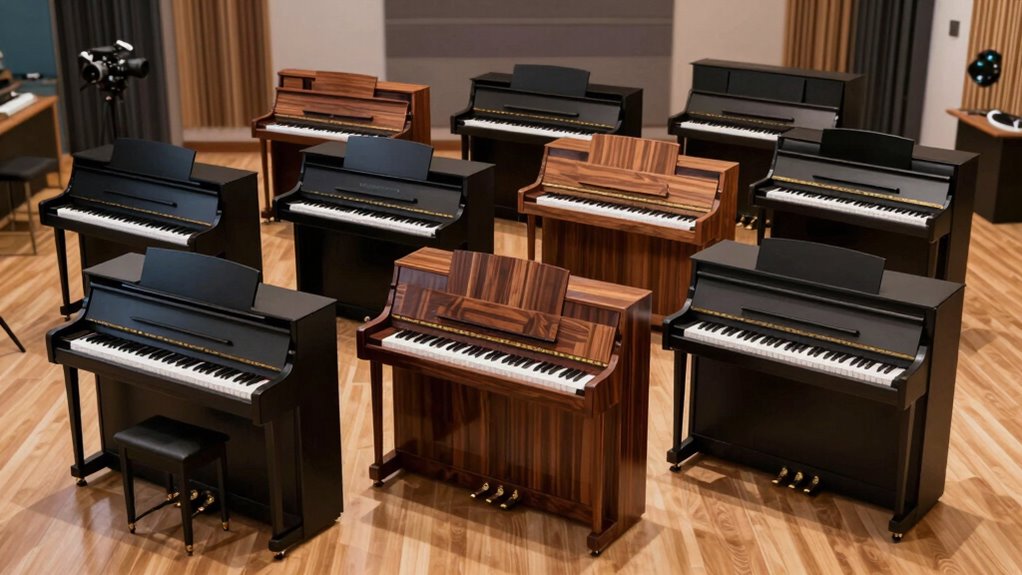

For a digital piano under $1,000, I’d start with the Roland FP-30X as the best overall choice for its weighted action and room to grow, while the Yamaha P-45 is a simpler pick for focused practice and the Casio AP-300 suits players who want a furniture-style home piano. The main tradeoffs are between realistic key feel, a built-in stand and pedals, portability, and extra sounds or learning features. Bundles can add useful accessories, but they do not automatically make a piano better to play. I compare all 15 options by their playing experience, practical setup, and intended use. Read on for the full breakdown and a recommendation matched to your needs.

Prime made for students and young adults
- Fast, free delivery for dorm and study essentials
- Prime Video and Amazon Music included
- Member-only deals
Key Takeaways
- The Roland FP-30X appears in both standalone and bundle listings; the core piano is the same, so choose based on whether the bundle’s accessories are useful and compatible.
- The Roland FP-10 and Yamaha P-45 favor straightforward piano practice, while the Yamaha DGX-670 puts more emphasis on accompaniment, sounds, and broader musical activities.
- Console models such as the Casio AP-S200, AP-300, and PX-870 are better suited to a dedicated home setup than to players who need to carry their piano between locations.
- Accessory-heavy beginner packages offer a convenient starting point, but included headphones, stands, pedals, and lessons vary in usefulness; check what is actually supplied before choosing one.
- The comparison rewards the instrument’s playing and ownership fit over the size of its feature list: weighted keys and a suitable setup matter more for piano study than having many extra sounds.


| digital piano under 1000 | Keys | Connectivity | Included accessories | Key action |
|---|---|---|---|---|
| Casio CELVIANO AP-S200 88-Key | 88 | Bluetooth, USB | — | Smart Scaled Hammer Action |
| UISCOM Digital Piano Keyboard | 88 | USB; Bluetooth audio and MIDI described | Wooden stand, triple pedal, adapter, sheet music stand, headphones | Semi-weighted |
| Roland FP-10 Compact 88-Note D | 88 | Bluetooth, USB MIDI | DP-2 foot switch, sheet music rest | — |
| 88-Key Digital Piano with Semi | 88 | Bluetooth, USB-MIDI | Music stand, power supply, sustain pedal, carrying case, headphones, microphone | Semi-weighted |
| Yamaha P71 88-Key Weighted Act | 88 | — | Sustain pedal, power supply | Weighted hammer action |
| 88 Key Digital Piano Keyboard | 88 | USB-MIDI, Bluetooth | Sustain pedal, stand, carrying case, headphones, microphone, USB power adapter | Semi-weighted |
| Yamaha P-45 88-Key Weighted Po | 88 weighted, touch-sensitive keys | USB, headphone jack | — | Hammer action |
| Casio Celviano AP-300 88-Key D | 88 | Bluetooth MIDI and audio adapter; headphone connection | — | Smart Scaled Hammer Action |
| Roland FP-30X 88-Key Digital P | 88 | USB | — | — |
| Roland FP-10 88-Key Digital Pi | 88 | Bluetooth MIDI, USB MIDI | KSC-FP10 stand, piano bench, sustain pedal, piano book, online lessons, instructional DVD, polishing cloth | — |
| Donner DEP-1S 88-Key Digital P | 88 | Bluetooth, USB | Stand, sustain pedal, stickers | — |
| Alesis 88 Key Keyboard Piano w | 88 touch-sensitive keys | USB-MIDI, Aux in, headphone out | Stand, carry bag, headphones, sustain pedal, power supply | — |
| Yamaha DGX-670 88-Key Weighted | 88 | 3.5 mm jack, USB Type A | Music rest, sustain foot switch, power adapter | Weighted, heavier in low keys and lighter in high keys |
| Roland FP-30X 88-Key Digital P | 88 | Bluetooth audio and MIDI; USB A and B; 1/4-inch output and headphone jacks | — | — |
| Casio PX-870 Privia Digital Pi | 88 | — | Furniture bench, headphones, instructional book, online lessons, DVD, polishing cloth | Scaled, weighted hammer-action |
More Details on Our Top Picks
Casio CELVIANO AP-S200 88-Key Console Digital Piano, Black
The CELVIANO AP-S200 is the strongest fit here for a buyer who wants a home instrument with the feel and setup of a console piano, rather than a keyboard to move between rooms. Its 88-key Smart Scaled Hammer Action, three pedals, and 40-watt stereo speakers make practice feel more complete without requiring separate amplification. The included Bluetooth adapter also adds audio and MIDI connectivity, a useful advantage over the simpler Yamaha P71. The tradeoff is its 75-pound console cabinet: it takes more floor space and is far less convenient to relocate than the 25-pound P71 or compact Roland FP-10. With 19 tones, it favors a focused piano experience over large sound libraries. I’d choose it for a dedicated practice spot, not a portable setup.
Pros:- 88 weighted keys with Smart Scaled Hammer Action
- Three pedals and a soft-close key cover support a console-style setup
- 40-watt stereo speakers provide substantial built-in sound
- WU-BT10 Bluetooth audio and MIDI adapter is included
Cons:- At 75 pounds, it is difficult to move compared with portable models such as the Yamaha P71
- Console dimensions require a permanent, larger footprint
- Its 19 tones offer less variety than keyboards with extensive sound libraries
Best for: Home players who want a full-size console, three pedals, and built-in speakers for a dedicated practice room
Not ideal for: Players who need to carry their piano, have limited floor space, or want a broad library of sounds
- Keys:88
- Key action:Smart Scaled Hammer Action
- Tones:19
- Speaker system:40-watt stereo
- Pedals:3
- Connectivity:Bluetooth, USB
- Included adapter:WU-BT10 Bluetooth Audio and MIDI adapter
- Weight:75 pounds
- Dimensions:11.77 x 54.84 x 31.57 inches
Our verdict“Choose the AP-S200 if you want a weighted-key console with three pedals and strong onboard speakers in a permanent home setup.”
UISCOM Digital Piano Keyboard 88-Key Semi-Weighted for Beginners, Full Size Electric Piano with Stand, Triple Pedal, Adapter, Sheet Music Stand, Headphones, USB-MIDI Compatible, Wood Brown
The UISCOM makes its case through a ready-to-set-up package: the wooden stand, triple pedal, headphones, and sheet music stand give a new player more of the basic setup in one purchase than the Roland FP-10, whose stand is optional. Its full-size 88-key layout and semi-weighted action can make early practice more expressive than an unweighted starter keyboard, while its wood-grain finish suits a living space better than a bare portable board. That action is also the main compromise. It is lighter than a fully weighted piano action, so players building technique for acoustic piano may prefer the Casio CELVIANO AP-S200 or Yamaha P71. The supplied description lists USB connectivity but does not specify built-in speakers, so I would check the audio setup before choosing it for speaker-free practice.
Pros:- Full-size 88-key layout with semi-weighted action
- Stand, triple pedal, headphones, and sheet music stand are included
- Bluetooth audio and MIDI connectivity are described
- Wood-grain brown finish gives the setup a home-friendly appearance
Cons:- Semi-weighted keys do not offer the resistance of the Yamaha P71’s weighted hammer action
- Built-in speakers are not specified in the product information
- Multiple tones, rhythms, and practice functions may add complexity for a learner seeking simple controls
Best for: First-time learners who want a full-size keyboard with a stand, headphones, sheet music rest, and pedal included
Not ideal for: Players focused on acoustic-piano technique or buyers who need confirmed built-in speakers for standalone play
- Keys:88
- Key action:Semi-weighted
- Connectivity:USB; Bluetooth audio and MIDI described
- Headphone jack:3.5 mm
- Power source:AC adapter
- Included accessories:Wooden stand, triple pedal, adapter, sheet music stand, headphones
- Size:Full size
- Color:Brown
Our verdict“Pick the UISCOM if you want a furnished beginner setup and are comfortable with semi-weighted keys and an unconfirmed speaker configuration.”
Roland FP-10 Compact 88-Note Digital Piano with SuperNATURAL Tones and Ivory Feel Keys
The Roland FP-10 is the most appealing choice here for players who prioritize a compact body and piano-focused key feel. Its 88 ivory-feel keys and SuperNATURAL piano sound engine put the emphasis on expressive piano practice, while built-in speakers allow playing without an external amp. Bluetooth and USB MIDI add options for lesson apps or computer-based music work. Compared with the console-style Casio AP-S200, the FP-10 takes a more portable approach, but it gives up the Casio’s three-pedal arrangement and 40-watt speaker system. The supplied DP-2 foot switch is a more basic pedal setup, and the matching KSCFP10 stand is optional, so the instrument may not feel like a complete furniture-style piano out of the box. It suits focused practice better than players seeking many tones or built-in lesson tools.
Pros:- 88 keys with ivory-feel surfaces
- SuperNATURAL Piano sound engine is geared toward piano playing
- Bluetooth and USB MIDI support compatible lesson and music software
- Built-in speakers and headphone output allow both room and quiet practice
Cons:- KSCFP10 stand is optional, unlike the included stand in the UISCOM package
- Included DP-2 foot switch is less complete than the Casio AP-S200’s three-pedal setup
- Its piano-focused feature set offers less sound variety than keyboards with extensive tone libraries
Best for: Piano learners and returning players who want 88-key weighted-feel practice in a compact setup with built-in speakers
Not ideal for: Buyers who want a console cabinet, three integrated pedals, or a stand included for a furniture-style setup
- Keys:88
- Key feel:Ivory Feel
- Sound engine:SuperNATURAL Piano
- Connectivity:Bluetooth, USB MIDI
- Built-in speakers:Yes
- Included accessories:DP-2 foot switch, sheet music rest
- Optional accessory:KSCFP10 stand
Our verdict“Choose the FP-10 for compact, piano-centered practice with weighted-feel keys, and plan separately for a stand if you want a furniture-style setup.”
88-Key Digital Piano with Semi-Weighted Keys, Bluetooth, and Accessories
This model stands apart from the piano-first Roland FP-10 by offering a large collection of timbres, rhythms, and demo songs for experimentation. Its listed 1,000 timbres and 1,000 rhythms give beginners plenty of sounds to try, while Bluetooth and USB-MIDI offer ways to connect beyond the instrument itself. The included stand, carrying case, headphones, sustain pedal, and microphone make the package appealing to someone who wants accessories for both practice and casual performance. The main limitation is the semi-weighted action: it is less suitable for developing the touch expected on an acoustic piano than the weighted-action Yamaha P71 or Casio AP-S200. The sheer number of features may also distract a learner who wants straightforward piano practice, and the product information does not establish detailed build quality.
Pros:- 88-key layout with semi-weighted action
- Lists 1,000 timbres, 1,000 rhythms, and 150 demo songs
- Bluetooth and USB-MIDI connectivity
- Includes stand, carrying case, headphones, sustain pedal, and microphone
Cons:- Semi-weighted keys are less suited to piano technique than the weighted action on the Yamaha P71
- A large number of sounds and rhythms may complicate a simple learning setup
- Product information provides little detail on build quality or brand support
Best for: Beginners who want many sounds and rhythms, included accessories, and options for casual music-making beyond piano practice
Not ideal for: Classical or technique-focused players who want fully weighted keys, or buyers who prefer a simple piano interface
- Keys:88
- Key action:Semi-weighted
- Timbres:1,000
- Rhythms:1,000
- Demo songs:150
- Connectivity:Bluetooth, USB-MIDI
- Included accessories:Music stand, power supply, sustain pedal, carrying case, headphones, microphone
Our verdict“Choose this keyboard if sound variety and a broad accessory bundle matter more to you than a fully weighted piano action.”
Yamaha P71 88-Key Weighted Action Digital Piano
The Yamaha P71 is a good match for buyers who want weighted keys and straightforward operation without a console cabinet or an oversized feature menu. Its 88-key weighted hammer action and touch sensitivity make it more appropriate for piano technique than the semi-weighted UISCOM or accessory-rich 88-key model. One-button controls keep the focus on playing, while Dual Mode can layer two voices for a little extra range. Compared with the Roland FP-10, the P71 has a leaner listed sound selection, with 10 voices, and the product data does not list Bluetooth or MIDI. It is also portable at 25 pounds and includes a sustain pedal and power supply, though the compact body lacks the three-pedal console setup and stronger speaker specification of the Casio AP-S200. This is a practical, piano-first choice, not a sound-library workstation.
Pros:- 88 touch-sensitive keys with weighted hammer action
- Simple one-button controls keep operation focused
- Dual Mode layers two voices
- At 25 pounds, it is easier to move than the Casio AP-S200 console
Cons:- Only 10 built-in voices, fewer than sound-rich options in this roundup
- Listed connectors do not include MIDI or Bluetooth
- A single sustain pedal does not provide the three-pedal setup of the AP-S200
Best for: Learners who want a portable 88-key instrument with weighted hammer action, simple controls, and a sustain pedal included
Not ideal for: Players who want Bluetooth or MIDI connectivity, a wide selection of built-in sounds, or a three-pedal console setup
- Keys:88
- Key action:Weighted hammer action
- Voices:10
- Special features:Built-in speakers, Duo Mode, multiple voices, weighted keys
- Connectors:USB, auxiliary, 3.5 mm headphone jack, sustain pedal jack
- Included accessories:Sustain pedal, power supply
- Weight:25 pounds
- Dimensions:52.25 x 11.5 x 6 inches
Our verdict“Choose the P71 if you want portable weighted-key piano practice with simple controls and can do without Bluetooth, MIDI, and a large sound library.”
88 Key Digital Piano Keyboard with Accessories for Beginners
For a first keyboard, this package favors breadth and convenience over the piano-focused feel of the Yamaha P-45. Its 88 semi-weighted keys give beginners a more substantial starting point than an unweighted keyboard, while the stand, carrying case, headphones, sustain pedal, and microphone cover common setup needs. The large selection of sounds, rhythms, and demo songs can keep practice varied, and USB-MIDI and Bluetooth add options for connecting to learning or music apps. The tradeoff is that semi-weighted keys are not the same as the fully weighted hammer action on the Yamaha P-45 or Roland FP-10, which matters for developing acoustic-piano technique. I’d choose this for an accessory-ready first setup, but not for a player prioritizing realistic piano action.
Pros:- 88 semi-weighted keys offer a more substantial feel than unweighted beginner keyboards.
- Includes a stand, carrying case, headphones, sustain pedal, and microphone.
- USB-MIDI and Bluetooth support connections to compatible devices.
- Many listed sounds, rhythms, and demo songs provide variety for practice.
Cons:- Semi-weighted keys do not match the hammer action of the Yamaha P-45 or Roland FP-10.
- The feature mix is aimed mainly at beginners rather than players seeking a focused piano experience.
Best for: First-time learners who want a full-size keyboard, basic practice features, and a bundled stand and carrying case.
Not ideal for: Pianists building advanced technique or seeking fully weighted hammer-action keys; the semi-weighted action is a compromise.
- Keys:88
- Key action:Semi-weighted
- Timbres:1,000
- Rhythms:1,000
- Demo songs:150
- Connectivity:USB-MIDI, Bluetooth
- Included accessories:Sustain pedal, stand, carrying case, headphones, microphone, USB power adapter
Our verdict“Choose this as an accessory-rich first keyboard if you value convenience and variety more than fully weighted piano action.”
Yamaha P-45 88-Key Weighted Portable Digital Piano, Black
The Yamaha P-45 keeps its appeal simple: 88 weighted, touch-sensitive keys, a Yamaha grand piano voice, built-in speakers, and a compact portable design. That makes it a more piano-centered choice than the accessory-packed beginner keyboard in this list, whose semi-weighted keys and extensive rhythm library favor variety over traditional piano touch. The P-45’s hammer action is a stronger fit for learners who want their fingers to adapt to graded piano playing, while its included music rest and sustain foot switch cover basic practice needs. The tradeoff is a restrained set of 10 voices and USB connectivity rather than the Bluetooth MIDI options found on the Roland FP-10. I’d favor it for straightforward piano practice and portability, not for built-in sound variety or app flexibility.
Pros:- 88 weighted, touch-sensitive keys with hammer action support piano technique.
- Includes a Yamaha grand piano voice and built-in speakers.
- Compact design weighs 11.5 kg, making it easier to move than the Roland FP-30X bundle.
- Music rest and sustain foot switch are included.
Cons:- Only 10 voices, far fewer than the beginner bundle’s listed sound selection.
- USB connectivity is listed, but Bluetooth MIDI is not.
- Does not include a stand or bench.
Best for: Learners and returning pianists who want weighted keys and a recognizable piano sound in a portable, uncomplicated instrument.
Not ideal for: Buyers who want Bluetooth MIDI, a large selection of instrument sounds, or a furniture-style console with a bundled bench.
- Brand and model:Yamaha P-45 (P45B)
- Keys:88 weighted, touch-sensitive keys
- Key action:Hammer action
- Voices:10
- Connectivity:USB, headphone jack
- Power:AC adapter
- Dimensions:52.25 x 11.5 x 6 inches
- Weight:11.5 kg
Our verdict“Pick the P-45 if weighted piano action and portability matter more to you than a broad sound library or bundled furniture.”
Casio Celviano AP-300 88-Key Digital Console Piano, Black
The AP-300 is the home-furniture alternative in this group: its weighted 88-key action, 40-watt speaker system, and included height-adjustable bench make it better suited to a settled practice space than the portable Yamaha P-45. Its soft-close key cover and compact-for-a-console cabinet also make it feel more like a permanent household instrument, while Bluetooth MIDI and audio allow compatible devices to connect without relying only on a wired setup. The 19 tones keep the selection focused compared with the beginner keyboard’s huge listed sound and rhythm counts, but the concert grand tone and built-in speakers support a more piano-oriented experience. The main compromise is physical: this cabinet needs dedicated floor space and is not a portable choice. I’d pick it for home use, not frequent moving.
Pros:- 88 weighted keys with Smart Scaled Hammer Action.
- 40-watt speaker system provides built-in sound for home practice.
- Bluetooth MIDI and audio connectivity support compatible devices.
- Includes a height-adjustable padded bench and soft-close key cover.
Cons:- The console cabinet requires dedicated floor space and is less convenient to move than the Yamaha P-45.
- Its 19 tones offer less variety than the beginner keyboard’s listed sound selection.
Best for: Home learners who want a weighted-key console, an included bench, and speakers suited to regular practice in one room.
Not ideal for: People who need a portable piano, already have limited floor space, or want the extensive sound and rhythm selection of a beginner keyboard.
- Keys:88
- Key action:Smart Scaled Hammer Action
- Tones:19
- Amplifier power:40 watts
- Connectivity:Bluetooth MIDI and audio adapter; headphone connection
- Controls:Illuminated touch sensor controls
- Finish:Black
- Included accessory:Height-adjustable padded bench
Our verdict“Choose the AP-300 for a dedicated home practice area where console design, weighted keys, and onboard speakers matter more than portability.”
Roland FP-30X 88-Key Digital Piano Bundle, Black
The FP-30X combines a PHA-4 Standard weighted keyboard and SuperNATURAL Piano sound engine with a substantial accessory bundle. Compared with the Roland FP-10, this package is the better fit if you want a stand, bench, sustain pedal, and learning materials included from the start, while the FP-10 is the lighter alternative and lists Bluetooth MIDI. The FP-30X’s 22-watt stereo speakers give it a strong case for playing without external amplification, and its weighted action aims at a more expressive piano touch than the semi-weighted beginner model. The cost of that fuller setup is portability: the listed bundle weighs 70.5 pounds and measures 57 x 19 x 17 inches. I’d choose it for a home setup, but skip it if you already own furniture or need to move the piano often.
Pros:- PHA-4 Standard weighted action supports expressive, piano-style playing.
- SuperNATURAL Piano sound engine provides a dedicated piano sound approach.
- Built-in 22-watt stereo speakers support practice without separate speakers.
- Bundle includes an adjustable stand, bench, sustain pedal, and learning materials.
Cons:- The listed 70.5-pound bundle is cumbersome to move compared with the Yamaha P-45.
- Stand and bench add little value for buyers who already have suitable accessories.
- USB connectivity is listed, but Bluetooth MIDI is not specified for this model.
Best for: Home learners who want weighted action, onboard stereo speakers, and a ready-to-play stand-and-bench bundle.
Not ideal for: Buyers who already own a stand and bench, need a lighter portable instrument, or specifically want the listed Bluetooth MIDI connectivity of the FP-10.
- Brand and model:Roland FP-30X
- Keys:88
- Keyboard:PHA-4 Standard weighted action
- Sound engine:SuperNATURAL Piano
- Speaker system:22-watt stereo
- Connectivity:USB
- Weight:70.5 pounds
- Included components:Adjustable stand, bench, deluxe sustain pedal, instructional DVD, online piano lessons, polishing cloth
Our verdict“Choose this FP-30X bundle for a home player who wants weighted action and included furniture, rather than a lightweight piano or an add-on-free purchase.”
Roland FP-10 88-Key Digital Piano Bundle with Stand and Accessories
The FP-10 pairs Roland’s PHA-4 Standard hammer-action keyboard and SuperNATURAL Piano engine with Bluetooth MIDI and USB MIDI, giving practice apps and compatible devices a clear role in the setup. Compared with the Yamaha P-45, it offers more explicit wireless MIDI support; compared with the FP-30X bundle, it is listed at a much lower instrument weight and includes a similar collection of stand, bench, pedal, and learning materials. Its Twin Piano mode and built-in metronome also suit structured lessons and shared practice. The tradeoff is that the supplied dimensions may describe the setup with its furniture stand, so check the intended footprint before planning a tight space. I’d choose this bundle for app-assisted learning, but not if you need a frequently moved instrument or only want a piano without bundled accessories.
Pros:- PHA-4 Standard hammer action provides a weighted playing feel.
- Bluetooth MIDI and USB MIDI support connections to compatible devices and apps.
- Twin Piano mode and a built-in metronome support lessons and practice routines.
- Bundle includes a stand, bench, sustain pedal, and learning materials.
Cons:- At 27 pounds, it is not as easy to move as the Yamaha P-45’s listed 11.5 kg instrument.
- The listed dimensions may describe the piano with its stand, which complicates space planning.
- The bundled accessories may be unnecessary for buyers who already have a suitable setup.
Best for: Beginners taking app-based lessons who want hammer action, Bluetooth MIDI, and a stand-and-bench package.
Not ideal for: Players who need a very compact travel instrument, already own furniture and learning materials, or want a console cabinet with more substantial onboard speakers.
- Brand and model:Roland FP-10
- Keys:88
- Keyboard:PHA-4 Standard hammer-action
- Sound engine:SuperNATURAL Piano
- Connectivity:Bluetooth MIDI, USB MIDI
- Headphone jack:3.5 mm
- Weight:27 pounds
- Included accessories:KSC-FP10 stand, piano bench, sustain pedal, piano book, online lessons, instructional DVD, polishing cloth
Our verdict“Pick the FP-10 bundle if you want weighted keys and wireless MIDI for app-supported lessons without stepping up to the heavier FP-30X bundle.”
Donner DEP-1S 88-Key Digital Piano with Stand, Pedal, and Accessories
I’d pick the Donner DEP-1S for a new player who wants a full-size keyboard and the basic setup pieces together. Its 88 velocity-sensitive keys, stand, sustain pedal, and learning stickers make it easier to get started than a piano that arrives without a stand or pedal. Bluetooth, recording, and split mode add useful practice and play-along options, while 128 tones and 100 rhythms offer more variety than a piano-focused model such as the Casio PX-870. That variety comes with a tradeoff: the Donner is aimed at beginner and intermediate use, not players seeking a more piano-centered instrument and more developed key action. Build quality may also be less consistent than its feature list suggests. I’d choose it for a starter setup, but compare the Alesis 88-Key Keyboard if portability and a carry bag matter more.
Pros:- Full 88-key layout with velocity sensitivity
- Stand, sustain pedal, and learning stickers are included
- Bluetooth supports wireless learning and entertainment connections
- Recording, split mode, and multiple tones support varied practice
Cons:- Beginner-to-intermediate feature set may limit advanced players
- Budget-oriented build quality may vary
- Many tones and rhythms do not replace a more developed piano-focused playing experience
Best for: First-time players who want 88 keys, a stand, pedal, and learning aids in one beginner-focused setup.
Not ideal for: Experienced pianists looking for advanced key action, a refined piano-first playing experience, or a more substantial instrument.
- Keys:88
- Key response:Velocity-sensitive
- Built-in tones:128
- Rhythms:100
- Demo songs:88
- Connectivity:Bluetooth, USB
- Included accessories:Stand, sustain pedal, stickers
Our verdict“Choose the Donner DEP-1S if you’re starting out and want a ready-to-play 88-key kit with practice features rather than advanced piano action.”
Alesis 88 Key Keyboard Piano with 480 Sounds, Speakers, USB MIDI, Carry Bag, Stand, Headphones, Pedal, and Lessons
The Alesis 88-Key Keyboard Piano suits beginners who want a portable practice setup, not a furniture-style piano. Its carry bag and battery operation make it easier to move or use away from an outlet than the heavier Yamaha DGX-670, and the included stand, headphones, and sustain pedal reduce the number of extra items a new player needs. The 480 sounds and lesson features also offer plenty to explore beyond standard piano practice. The tradeoff is key feel: its touch sensitivity may not satisfy a player who prioritizes expressive, piano-like response. The Roland FP-30X is a stronger fit for someone focused on a more substantial keyboard feel, but it does not match this package’s emphasis on portability and bundled learning accessories. Note that the six AA batteries are not included.
Pros:- Carry bag supports transport and storage
- Can run from an AC adapter or six AA batteries
- Includes stand, headphones, sustain pedal, and power supply
- 480 sounds and lesson features give beginners options for practice
Cons:- Key sensitivity may feel limited beside more piano-focused models
- AA batteries are not included
- Large sound selection may matter less to buyers focused on piano practice
Best for: Beginners who need an 88-key practice keyboard they can pack up, move, and use with lessons and headphones.
Not ideal for: Pianists prioritizing more expressive key response or a substantial weighted-key feel over portability and bundled accessories.
- Keys:88 touch-sensitive keys
- Sounds:480
- Built-in speakers:Yes
- Connectivity:USB-MIDI, Aux in, headphone out
- Power:AC adapter or 6 AA batteries
- Included accessories:Stand, carry bag, headphones, sustain pedal, power supply
Our verdict“Pick the Alesis if portability and an all-in-one beginner practice kit matter more than a highly expressive key feel.”
Yamaha DGX-670 88-Key Weighted Digital Piano, White
I’d shortlist the Yamaha DGX-670 for players who want an instrument to do more than reproduce a piano part. Its weighted 88-key action and Yamaha CFX grand piano sound provide a piano-centered starting point, while 630 voices and 263 accompaniment styles support arranging, performance, and experimentation. The built-in score display and microphone jack with vocal effects also give it a broader performance role than the more compact Roland FP-30X, which emphasizes a portable piano setup and Bluetooth connections. That versatility has a practical cost: at 67.7 pounds, the DGX-670 is not an easy grab-and-go instrument, and its stand and bench are sold separately. I’d favor it over the Casio PX-870 for accompaniment options, but the Casio is more appealing if a console-style home piano with a strong speaker system is the priority.
Pros:- Weighted 88-key action with a lighter touch in the high register
- Yamaha CFX grand piano sound
- 630 instrument voices and 263 accompaniment styles
- Score display and microphone jack with vocal effects
Cons:- Stand and bench are sold separately
- At 67.7 pounds, it is less convenient to move than the Roland FP-30X
- Wireless adapter for Yamaha music apps is optional
Best for: Home players and hobby arrangers who want weighted keys, extensive accompaniment styles, and a display for scores.
Not ideal for: Musicians seeking a lightweight portable piano or buyers who want a complete furniture-style setup with stand and bench included.
- Keys:88
- Key action:Weighted, heavier in low keys and lighter in high keys
- Instrument voices:630
- Automatic accompaniment styles:263
- Connectivity:3.5 mm jack, USB Type A
- Dimensions:60 x 22 x 10 inches
- Weight:67.7 pounds
- Included accessories:Music rest, sustain foot switch, power adapter
Our verdict“Choose the DGX-670 if you want weighted piano keys plus extensive accompaniment and performance tools, and can accommodate its size and separate stand purchase.”
Roland FP-30X 88-Key Digital Piano, Black
The Roland FP-30X is the portable pick here for players who care more about keyboard feel and piano sound than a large collection of accompaniments. Its PHA-4 Standard keyboard has ivory-feel keys, while the SuperNATURAL piano engine and 22-watt stereo speakers make it well suited to home practice without a separate speaker system. At 32.7 pounds, it is far easier to move than the Yamaha DGX-670, though it is still a substantial full-size instrument rather than a small travel keyboard. Bluetooth audio and MIDI offer convenient device connections, but Bluetooth headphones are not supported, so private practice requires a wired connection. Compared with the Casio PX-870, the FP-30X puts more emphasis on portability and connectivity; the Casio is a better fit for buyers seeking a console-style setup and stronger built-in speaker output.
Pros:- PHA-4 Standard 88-note keyboard with ivory-feel keys
- SuperNATURAL Piano sound engine
- 22-watt stereo speakers for room practice
- Bluetooth audio and MIDI, plus USB connections
Cons:- Bluetooth headphones are not supported
- At 32.7 pounds, it is heavier than a lightweight travel keyboard
- Portable format may not suit buyers wanting an integrated console and furniture setup
Best for: Pianists who want an expressive 88-key portable instrument with built-in speakers and Bluetooth audio and MIDI.
Not ideal for: Players who need Bluetooth headphone use, a furniture-style console, or an especially lightweight keyboard for frequent carrying.
- Keys:88
- Keyboard:PHA-4 Standard with ivory-feel keys
- Sound engine:SuperNATURAL Piano
- Speaker system:22-watt stereo
- Connectivity:Bluetooth audio and MIDI; USB A and B; 1/4-inch output and headphone jacks
- Pedal connections:Damper; damper, sostenuto, and soft
- Dimensions:51.2 x 11.2 x 6 inches
- Weight:32.7 pounds
Our verdict“Choose the FP-30X if you want piano-focused touch and sound in a portable format and are comfortable using wired headphones for private practice.”
Casio PX-870 Privia Digital Piano – Black Bundle with Bench, Headphones, Instructional Book, Online Lessons, DVD, and Cloth
The Casio PX-870 is the home-focused choice in this group: its scaled, weighted hammer-action keys and four-layer stereo grand piano sound aim for a more convincing piano experience than the feature-heavy beginner Donner DEP-1S. A four-speaker, 40-watt system gives it more built-in sound output than the portable Roland FP-30X, which can suit a living room where external speakers are not part of the plan. The bundle also includes a furniture bench, headphones, and learning materials, so it is geared toward setting up a dedicated practice spot. The tradeoffs are space and setup: this is not the instrument to choose for frequent transport, and some buyers may find setup complicated. Its broad feature set can also be more than a casual beginner needs.
Pros:- Scaled, weighted hammer-action keys
- AiR sound source with four-layer stereo grand piano
- Four-speaker system rated at 40 watts total
- Bundle includes bench, headphones, and learning materials
Cons:- Large console format needs dedicated space
- Setup may feel complex for buyers seeking a simple start
- The extensive piano-focused setup may be more than a casual beginner needs
Best for: Home learners and advancing players who want weighted hammer-action keys, room-filling built-in speakers, and a bench-and-learning bundle.
Not ideal for: Players with limited floor space, people who need a portable piano, or casual beginners seeking a simple, compact setup.
- Keys:88
- Key action:Scaled, weighted hammer-action
- Sound source:AiR Sound Source with four-layer stereo grand piano
- Polyphony:256 notes
- Speakers:4 speakers, 40-watt total
- Included accessories:Furniture bench, headphones, instructional book, online lessons, DVD, polishing cloth
- Finish options:Black, oak, white
Our verdict“Choose the PX-870 if you want a dedicated home piano with weighted action, powerful built-in speakers, and bundled practice accessories.”

How We Picked
I ranked these pianos around the needs behind the search for a digital piano under $1,000: a convincing piano feel, reliable practice features, and a setup that fits the buyer’s space and routine. Key action and piano sound carried the most weight because they shape daily playing and musical development. I also considered speakers, portability, pedal and stand arrangements, connectivity, and whether added features make the instrument more useful rather than simply busier.
The order distinguishes instruments with clearer strengths from options whose listings provide less specific information. The Roland FP-30X leads as a flexible weighted-key choice; the Yamaha P-45 and Roland FP-10 suit buyers who want fewer distractions, while Casio’s console models prioritize home presence. The DGX-670 earns a different role through its wider range of musical functions. Bundles and entry-level accessory packages rank according to the convenience they offer, with the caveat that included extras do not replace a strong core instrument.
| digital piano under 1000 | Key action |
|---|---|
| Casio CELVIANO AP-S200 88-Key | Smart Scaled Hammer Action |
| UISCOM Digital Piano Keyboard | Semi-weighted |
| Roland FP-10 Compact 88-Note D | — |
| 88-Key Digital Piano with Semi | Semi-weighted |
| Yamaha P71 88-Key Weighted Act | Weighted hammer action |
| 88 Key Digital Piano Keyboard | Semi-weighted |
| Yamaha P-45 88-Key Weighted Po | Hammer action |
| Casio Celviano AP-300 88-Key D | Smart Scaled Hammer Action |
| Roland FP-30X 88-Key Digital P | — |
| Roland FP-10 88-Key Digital Pi | — |
| Donner DEP-1S 88-Key Digital P | — |
| Alesis 88 Key Keyboard Piano w | — |
| Yamaha DGX-670 88-Key Weighted | Weighted, heavier in low keys and lighter in high keys |
| Roland FP-30X 88-Key Digital P | — |
| Casio PX-870 Privia Digital Pi | Scaled, weighted hammer-action |
Factors to Consider When Choosing Digital Piano Under 1000
Before choosing, I’d match the piano to how and where it will be played, not just compare feature counts. These decisions affect comfort, practice habits, setup costs, and whether a piano remains useful as skills develop.
Choose Key Action for the Music You Want to Learn
For classical study or building piano technique, weighted keys are usually a better fit than semi-weighted keys because they offer resistance closer to an acoustic piano. That difference can help players develop control across soft and loud notes, though key feel still varies from model to model. Semi-weighted entry-level instruments may suit casual playing, portable use, or buyers who are not focused on traditional piano technique. A common mistake is to choose a keyboard based on its advertised number of keys while overlooking how those keys respond. If you can, compare action in person, especially if the piano will be your main instrument for lessons or regular practice.
Decide Between a Portable Piano and a Console
A portable piano is easier to move, store, or connect to a separate stand, but you may need to budget space and setup time for its support and pedals. A console model gives a more settled home arrangement and often looks more like a piece of furniture, which can make a dedicated practice spot easier to maintain. Do not assume that a portable instrument includes a stable stand or a full pedal setup; check the exact package contents. Measure the intended location, including room for the bench and space to sit comfortably. Buyers who expect to perform outside the home should put weight and setup convenience ahead of furniture-style appearance.
Separate Useful Extras From Bundle Padding
Bundled headphones, a stand, a pedal, or learning materials can reduce the number of separate purchases, but only if those extras suit your needs. A basic sustain pedal may be enough for early practice, while more advanced repertoire can call for more expressive pedal control. Headphones are especially useful in shared homes, but comfort and sound quality can vary. Check whether a stand is included, whether it is compatible with the piano, and whether the package lists the specific accessories rather than a broad “accessories” claim. I would choose a stronger core instrument over a larger bundle when the added items are low priority or easy to replace later.
Match Sound and Features to Your Practice Habits
If your main goal is piano practice, a smaller set of convincing piano sounds and a direct interface may be more helpful than hundreds of sounds you rarely use. Players interested in arranging, accompaniment, or exploring different styles may get more from expanded sounds and rhythm features, as found on instruments designed for broader musical use. Ask whether you will actually use Bluetooth, USB-MIDI, lesson functions, or recording connections; each can be valuable, but only for a matching routine. A common buying error is to treat a long feature list as proof of better piano performance. Prioritize the functions that support what you plan to play this year and the skills you hope to build next.
Think About Speakers, Headphones, and the Room
Built-in speakers make spontaneous practice simple, but their sound and projection may not fill a large room or satisfy a player who wants to perform for others. Headphones can provide privacy and let you focus on detail, though long sessions call for a comfortable pair. Room size, wall placement, and household noise all affect which setup feels practical. Before paying for stronger amplification or extra audio features, consider whether you will mostly play alone, with headphones, or for a small audience. If you already own suitable headphones or external speakers, that may change which package offers the most useful setup.
Leave Room for Growth Without Paying for Unused Features
A beginner does not need every advanced function immediately, but the instrument should still support steady progress. For many learners, a full 88-key range, weighted action, sustain pedal support, and a comfortable playing position matter more than accompaniment tools. Players who expect to compose, connect to music software, or explore varied styles should check connectivity and sound options before buying. Ask which feature would solve a real limitation in your current setup, rather than paying for a hypothetical future use. The best fit is the piano that supports your likely next stage without making everyday practice harder.
Frequently Asked Questions
Is the Roland FP-30X bundle a better choice than the standalone FP-30X?
The piano itself is the key point of comparison: the standalone and bundle listings name the same FP-30X model. I would choose the bundle only if its listed stand, pedal, or other accessories match what you need and are compatible with your setup. If you already own those items, the standalone version may avoid duplicating gear. Check the exact contents of the specific listing, since bundle components can differ. Either way, compare the piano’s core features rather than treating extra items as an upgrade to its sound or action.
Should a beginner choose an 88-key weighted piano or a lower-cost semi-weighted package?
If you plan to learn piano seriously, 88 weighted keys are generally the more suitable foundation because they support standard repertoire and a more piano-like playing response. A semi-weighted package can make sense for casual playing or when an included stand and accessories are a bigger priority than developing traditional technique. Think about lessons and the music you want to play, not only the initial setup convenience. Also account for the space needed for a full-size instrument. If you are unsure, choosing based on long-term playing goals can help avoid replacing the keyboard as your skills grow.
Is a console piano worth choosing if I might move it later?
A console can be a good fit when the piano will stay in one room and you want a built-in home setup. Its furniture-style construction can make moving and rearranging less convenient than with a portable model, so it is a weaker fit for frequent transport. Think beyond the piano’s footprint: you will also need room for a bench and a comfortable playing position. If a move is likely, a portable piano with a separate stand may be easier to adapt to a new space. Confirm the instrument’s dimensions and setup requirements before deciding.
Do I need accompaniment features, or should I choose a simpler piano?
Accompaniment and expanded sounds are useful if you enjoy playing with backing styles, arranging music, or exploring beyond piano repertoire. They can add creative options, as the Yamaha DGX-670’s broader feature emphasis suggests. For focused lessons and piano practice, a simpler instrument may be easier to operate and can keep attention on technique. Consider how often you will use these functions, not just whether they sound appealing on a feature list. If your main goal is learning piano, prioritize key action and a dependable practice setup first.
What should I check before buying a digital piano bundle?
Read the itemized contents and check whether the package includes a stand, sustain pedal, headphones, power supply, and any advertised learning materials. Confirm that the stand is stable and designed for the piano, and verify the type of pedal included. Bundles can simplify setup, but an accessory you already own or will soon replace may add little practical value. Look for the exact model name in the listing so you can distinguish a bundle from a different piano. If the accessories are vague, compare the piano on its own merits and plan for any needed extras separately.
Conclusion
For a flexible home or practice piano, my best overall pick is the Roland FP-30X; choose the standalone or bundle version according to the accessories you actually need. The best value for straightforward practice is the Yamaha P-45, while the best beginner package is one of the accessory-focused options only if its listed stand, pedal, and headphones fit your setup. For a more established home instrument, the best premium-style choice is the Casio AP-300 or PX-870, with the AP-S200 also worth a look if its console format suits your room. The best for expanded musical features is the Yamaha DGX-670; skip that broader feature set if you mainly want a simple piano for lessons. Choose by the playing feel and setup you will use most often, not by the longest accessory list.
Fall Picks
fall essentials
As an affiliate, we earn on qualifying purchases.