
For educational science kits for adults, the Thames & Kosmos Structural Engineering kit is my best overall pick because it turns bridge and skyscraper design into a hands-on engineering challenge. The ELEGOO Mega 2560 suits adults who want to learn electronics and coding, while the PalliPartners microscope offers a more direct route into specimen study. The biggest tradeoff is between guided projects that are easy to start and open-ended kits that reward patience but may require extra tools or troubleshooting. Some kits are also labeled for children, so adults should check whether the learning depth matches their goals. Read on for the full comparison and help choosing the right kind of project.

Prime made for students and young adults
- Fast, free delivery for dorm and study essentials
- Prime Video and Amazon Music included
- Member-only deals
Key Takeaways
- Structural engineering earns the overall lead by centering on design principles and physical builds, rather than a sequence of short demonstrations.
- Electronics kits split into two learning styles: Snap Circuits favors quick, guided experiments, while the ELEGOO kit offers more room for coding and circuit work but calls for more setup.
- The microscope, microbiology kit, and rock tumbler offer distinct kinds of observation: direct specimen viewing, prepared agar-based activities, and a slow geological transformation.
- Several chemistry and geology picks are explicitly aimed at children, so adults should judge them by the depth and challenge they want, not by the number of included activities.
- The robot arm and electromagnetic accelerator have narrower appeal than the general-purpose engineering and electronics options; they make more sense for buyers with a specific robotics or physics interest.
| Thames & Kosmos Structural Engineering: Bridges & Skyscrapers Science & Engineering Kit |  | Best for Applied Engineering | Number of models: 20 | Building pieces: 285+ interchangeable pieces | Manual: 36 illustrated pages | VIEW LATEST PRICE | See Our Full Breakdown |
| National Geographic Stunning Chemistry Set – Mega Science Kit with 45 Experiments for Kids Ages 8-12 |  | Best for Guided Chemistry Variety | Brand: National Geographic | Age range: 8 years and up | Number of experiments: 45 | VIEW LATEST PRICE | See Our Full Breakdown |
| PalliPartners Compound Microscope for Adults and Students, White |  | Best for Specimen Study | Brand: PalliPartners | Model: SWXWJ-1 | Color: White | VIEW LATEST PRICE | See Our Full Breakdown |
| Snap Circuits Classic SC-300 Electronics Kit, 300+ Projects, Ages 8+ |  | Best for Accessible Electronics | Model: SC-300 | Number of projects: 300+ | Number of parts: 61 | VIEW LATEST PRICE | See Our Full Breakdown |
| National Geographic Break Open 10 Premium Geodes STEM Science Kit with Goggles & Display Stands |  | Best for Hands-On Geology | Number of geodes: 10 | Material: Natural geodes | Included protective gear: Goggles | VIEW LATEST PRICE | See Our Full Breakdown |
| Evviva Sciences Microbiology Science Project Kit, Pre-Poured Agar Plates for Students, Petri Dishes with Educational Experiment eBook |  | Best for Hands-On Microbiology | Brand: ES Evviva Sciences | Recommended age: 15 years and older | Set name: Microbiology Science Project Kit (Complete) | VIEW LATEST PRICE | See Our Full Breakdown |
| National Geographic Hobby Rock Tumbler Kit | 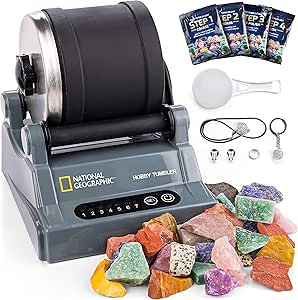 | Best for Patient Earth-Science Learners | Brand: Blue Marble | Recommended age: 8 years and up | Dimensions: 13.81 x 4.88 x 8.06 inches | VIEW LATEST PRICE | See Our Full Breakdown |
| ELEGOO Mega 2560 R3 Electronics Starter Kit |  | Best for Open-Ended Electronics Learning | Brand: ELEGOO | Model: EL-KIT-008 | Controller board: Mega 2560 R3 | VIEW LATEST PRICE | See Our Full Breakdown |
| Discovery™ Super Reactions Science Kit – 66 Experiments STEM Lab for Kids |  | Best for a Wide Mix of Chemistry Activities | Number of experiments: 66 | Recommended age: 8 and up | Included tools: Test tubes, volcano mold, slime powder, citric acid, balloons, measuring cups | VIEW LATEST PRICE | See Our Full Breakdown |
| Thames & Kosmos Mega Cyborg Hand STEM Experiment Kit |  | Best for Mechanical Engineering Concepts | Kit type: STEM experiment kit | Configurations: Right hand, left hand, claw-like | Adjustable: Yes | VIEW LATEST PRICE | See Our Full Breakdown |
| NikolaToy Electromagnetic Coil Accelerator STEM Physics Kit |  | Best for Visualizing Particle Acceleration | Brand: NIKOLATOY | Dimensions: 24 x 24 x 6 cm (9.5 x 9.5 x 2.5 in) | Weight: 1165 g | VIEW LATEST PRICE | See Our Full Breakdown |
| Robotic Arm with Arduino 5DOF/Axis AI Smart Robot Arm Open Source STEM Educational Kit |  | Best for Hands-On Robotics and Coding | Platform: Atmega328 | Degrees of freedom: 5DOF | Control methods: App and knob potentiometers | VIEW LATEST PRICE | See Our Full Breakdown |
| educational science kits for adult | Brand |
|---|---|
| Thames & Kosmos Structural Eng | — |
| National Geographic Stunning C | National Geographic |
| PalliPartners Compound Microsc | PalliPartners |
| Snap Circuits Classic SC-300 E | — |
| National Geographic Break Open | — |
| Evviva Sciences Microbiology S | ES Evviva Sciences |
| National Geographic Hobby Rock | Blue Marble |
| ELEGOO Mega 2560 R3 Electronic | ELEGOO |
| Discovery™ Super Reactions Sci | — |
| Thames & Kosmos Mega Cyborg Ha | — |
| NikolaToy Electromagnetic Coil | NIKOLATOY |
| Robotic Arm with Arduino 5DOF/ | — |
More Details on Our Top Picks
Thames & Kosmos Structural Engineering: Bridges & Skyscrapers Science & Engineering Kit
This is the strongest fit here for adults who want to study how structures handle force, rather than follow short demonstrations. Its 20 build options use more than 285 interchangeable pieces to explore loads, compression, and tension, while the illustrated manual provides a route through the concepts. Compared with the Snap Circuits Classic SC-300, which focuses on electrical connections and quick project variation, this kit centers on physical structures and calls for more patient assembly. That makes it a better match for methodical builders, but less suitable for someone seeking an easy first science activity. The intermediate skill level and time involved are genuine tradeoffs; the payoff is a more sustained engineering challenge than the chemistry or geode kits offer.
Pros:- Connects building activity to force, load, compression, and tension.
- More than 285 interchangeable pieces support a range of models.
- The 36-page illustrated manual gives structured guidance.
- Twenty models provide varied structural challenges.
Cons:- Intermediate skill level may make early builds difficult for beginners.
- Assembly can take longer than short chemistry or geology activities.
Best for: Adults who enjoy model building and want a guided, hands-on introduction to structural forces and engineering principles.
Not ideal for: Absolute beginners or anyone seeking quick experiments, since the intermediate builds may take patience and time.
- Number of models:20
- Building pieces:285+ interchangeable pieces
- Manual:36 illustrated pages
- Learning topics:Force, load, compression, and tension
- Skill level:Intermediate
- Award:Parents’ Choice Gold Award
Our verdict“Choose this kit if you want a sustained, build-focused lesson in structural engineering and are comfortable with a more involved assembly process.”
National Geographic Stunning Chemistry Set – Mega Science Kit with 45 Experiments for Kids Ages 8-12
With 45 guided experiments, this set offers more activity variety than the focused geode kit and is a better choice for adults who want a broad, approachable chemistry sampler. The listed projects include volcanoes, geysers, and rockets, with illustrated instructions intended to make each activity easier to follow. Its stated audience is children ages 8–12, so adults seeking rigorous chemistry study may find the explanations and scope introductory rather than in-depth. Compared with the Thames & Kosmos Structural Engineering kit, this one favors shorter demonstrations over extended model building; compared with the National Geographic geode kit, it spans more kinds of activities but does not center on real mineral specimens. Some experiments call for adult supervision, and this is an educational activity set, not professional lab equipment.
Pros:- Includes 45 experiments covering a range of demonstrations.
- Illustrated instructions are designed to make activities accessible.
- Projects such as volcanoes, geysers, and rockets offer varied formats.
- Provides a child-oriented entry point for shared STEM activities.
Cons:- Designed for ages 8–12, so adult learners may find the science introductory.
- Some experiments require adult supervision.
- The kit is intended for educational activities rather than professional chemistry.
Best for: Adults looking for a family-friendly, illustrated introduction to chemistry with many different guided demonstrations.
Not ideal for: Adult learners seeking advanced chemistry, laboratory techniques, or experiments designed for unsupervised use.
- Brand:National Geographic
- Age range:8 years and up
- Number of experiments:45
- Model number:NGMEGACHEMX
- Item type:Stunning Chemistry Set
- Set count:1
- UPC:816448029363
- Warranty information:Backed by exceptional service
Our verdict“Pick this for a wide assortment of beginner-level chemistry demonstrations, but choose a more specialized kit if you want deeper adult study.”
PalliPartners Compound Microscope for Adults and Students, White
Unlike the build-and-demonstrate approach of the Snap Circuits Classic SC-300, this microscope supports repeated observation: you can prepare specimens, adjust focus, and compare what appears at different magnifications. The 100X–2000X range, coarse and fine focus controls, and adjustable upper and lower LED illumination give learners several ways to work with translucent and opaque samples. It also comes with prepared and blank slides, plus a phone adapter and Bluetooth shutter for capturing images. Those extras make it more self-contained for home study than the National Geographic chemistry set, but they do not make it a professional research instrument. Its educational scope is basic to intermediate, and children need adult supervision. Choose it for microscopy practice, not for a broad assortment of experiments.
Pros:- Offers magnification from 100X to 2000X with three objective lenses.
- Top and bottom LED illumination supports different specimen types.
- Includes 10 prepared slides and 18 blank slides for observation and practice.
- Phone adapter and Bluetooth camera shutter support image capture.
Cons:- Intended for basic to intermediate educational use, not professional research.
- Children require adult supervision during use.
Best for: Adult beginners and students who want to observe prepared or self-made specimens at home and document findings with a phone.
Not ideal for: Buyers seeking professional research equipment or a kit with a wide range of unrelated experiments.
- Brand:PalliPartners
- Model:SWXWJ-1
- Color:White
- Magnification:100X–2000X
- Objective lenses:4X, 10X, and 40X
- Eyepiece and additional lens:WF25X eyepiece; 2X additional lens
- Illumination and focus:Adjustable top and bottom LED; coarse and fine focus knobs
- Included slides:10 prepared slides and 18 blank slides
- Included accessories and certification:Phone clip adapter, Bluetooth camera shutter, power adapter; SGS certified
Our verdict“Choose this microscope if sustained specimen observation matters more to you than the quick, varied activities in the chemistry and electronics kits.”
Snap Circuits Classic SC-300 Electronics Kit, 300+ Projects, Ages 8+
The SC-300 makes electronics approachable through color-coded, snap-together parts rather than soldering or tools. Its 61 components support more than 300 projects, so learners can move through a large collection of circuit activities without assembling a new apparatus from scratch. Compared with the Thames & Kosmos Bridges & Skyscrapers kit, it is easier to start and shifts the learning from structural forces to electrical connections. It is also more focused than the National Geographic chemistry set: that kit offers varied reactions, while this one stays with circuits. The instructions are aimed at ages 8 and up, which may leave adults wanting more technical depth. Four AA batteries are required and not included, and the guided project format is less suited to learners who want open-ended electronics work.
Pros:- Color-coded, numbered components snap together without soldering or tools.
- More than 300 projects provide many guided ways to explore circuits.
- Illustrated instructions arrange projects by complexity.
- Introduces electrical concepts through hands-on construction.
Cons:- Requires four AA batteries, which are not included.
- The age-8-and-up project framing may feel basic to adults seeking advanced electronics.
- Its focus on guided circuits offers less variety than a broad science activity kit.
Best for: Adults new to circuit concepts who want low-barrier, tool-free projects, especially for shared learning with a child.
Not ideal for: Experienced electronics hobbyists seeking advanced circuit design, soldering practice, or a kit that includes its own batteries.
- Model:SC-300
- Number of projects:300+
- Number of parts:61
- Recommended age:8 years and older
- Power source:Four AA batteries, not included
- Included components:Plastic snap-grid and electrical parts
- Guidance:Instruction and project guides
Our verdict“Choose the SC-300 for an accessible, repeatable introduction to circuits, but skip it if you want advanced electronics or wider science coverage.”
National Geographic Break Open 10 Premium Geodes STEM Science Kit with Goggles & Display Stands
This kit offers a tactile geology activity built around 10 natural geodes: open each specimen, inspect its crystals, and use the learning guide to connect the discovery with geode formation. Compared with the National Geographic chemistry set, it is narrower in scope but gives learners real geological material to examine rather than a sequence of demonstrations. It is also less repeatable than the PalliPartners microscope, which supports ongoing observation across prepared and blank slides. The included goggles and two display stands help with handling and keeping selected finds visible, but cracking geodes can be messy and may need adult supervision. Natural specimens vary in size, so the contents may not offer identical experiences from one geode to the next. This is a focused discovery activity, not a broad geology course.
Pros:- Uses natural geodes for direct, tactile exploration of geology.
- Includes a full-color learning guide about geode formation.
- Goggles provide protective equipment for cracking activities.
- Two display stands let learners keep opened specimens visible.
Cons:- Cracking geodes can be messy and may require adult supervision.
- Natural geodes vary in size, so specimens may differ from one another.
- The activity is limited to geodes rather than offering a broad set of experiments.
Best for: Adults who want a straightforward, hands-on introduction to mineral formation using real specimens, especially for a shared activity.
Not ideal for: Learners seeking repeatable experiments, precise specimen study, or a broad science curriculum beyond geodes.
- Number of geodes:10
- Material:Natural geodes
- Included protective gear:Goggles
- Display stands:2
- Learning materials:Full-color learning guide
- Educational focus:Geology, STEM, and science discovery
Our verdict“Pick this for a focused geology activity with real specimens, but choose the microscope or chemistry set for more repeatable or varied study.”
Evviva Sciences Microbiology Science Project Kit, Pre-Poured Agar Plates for Students, Petri Dishes with Educational Experiment eBook
This kit gives adult learners a direct introduction to microbiology experiments without requiring them to prepare agar first. Its 10 pre-poured plates, swabs, pipette, and instructional eBook lower the setup barrier, so the focus can stay on sampling and observing rather than sourcing lab materials. Compared with the PalliPartners Compound Microscope, which is geared toward viewing specimens, this kit is built around collecting and cultivating samples; the two suit different stages of a biology hobby. The tradeoff is a narrow scope: it supports basic educational activities, not a broad range of lab methods or advanced microbiology. I’d also favor it for adults comfortable following careful handling and disposal instructions, since the product is intended for learners 15 and older rather than casual, unsupervised use by children.
Pros:- Pre-poured agar plates remove a time-consuming preparation step.
- Includes 10 plates, cotton swabs, a pipette, and a vial for a ready-to-start activity.
- Instructional eBook provides experiment guidance and ideas.
- Focused format makes microbiology more accessible to learners without a full lab setup.
Cons:- The experiments are limited to basic educational microbiology.
- Ages 15 and older are recommended, and younger users need adult supervision.
- Culturing samples calls for careful handling and cleanup beyond what a casual tabletop kit requires.
Best for: Adult beginners who want a structured, hands-on introduction to microbiology and already have a safe, suitable place to conduct educational experiments.
Not ideal for: Buyers seeking advanced laboratory techniques, a microscope-centered observation kit, or activities that need no special handling or cleanup.
- Brand:ES Evviva Sciences
- Recommended age:15 years and older
- Set name:Microbiology Science Project Kit (Complete)
- Number of items:10
- Included components:Plastic pipette, plastic vial, agar Petri dishes, cotton swabs, instructions
- Educational objective:Hands-on biology, microbiology, and science education
- Model number:LYSB00W4XHF3G-TOYS
Our verdict“Choose this kit if you want a guided first step into microbiology and can handle the extra care that sample-culturing activities require.”
National Geographic Hobby Rock Tumbler Kit
Rock tumbling is a slower kind of science project: learners follow a polishing process over time and see how abrasion changes rough stones. This kit includes four polishing grits, a sifter, nine types of rough gemstones, and a learning guide, giving the activity more structure than a simple specimen-collecting set. Its one-touch timer and automatic shutoff make operation less hands-on, while the leakproof rubber barrel helps contain the tumbling process. Compared with the Evviva Sciences microbiology kit, this is easier to approach without handling biological samples, but it offers less direct practice with experimental observation. It is better suited to adults who enjoy geology and gradual results than to anyone expecting a quick build or a short session. The listed lack of a manufacturer warranty is also a meaningful ownership drawback.
Pros:- Includes rough gemstones, four polishing grits, a sifter, and a learning guide.
- Timer and automatic shutoff simplify operation during extended tumbling.
- Leakproof rubber barrel helps contain the process.
- Offers a clear, observable connection between abrasion and stone finishing.
Cons:- Stone polishing takes sustained time rather than producing an immediate result.
- The tumbler needs a suitable place to operate for extended periods.
- No manufacturer warranty is listed.
Best for: Adult hobbyists who enjoy geology, want a low-intervention project with visible changes over time, and have a place to run a tumbler.
Not ideal for: Learners who want short, immediate experiments, direct control over each step, or a product backed by a stated manufacturer warranty.
- Brand:Blue Marble
- Recommended age:8 years and up
- Dimensions:13.81 x 4.88 x 8.06 inches
- Weight:5.1 pounds
- Included components:Rock tumbler, four polishing grits, sifter, nine types of rough gemstones, learning guide
- Features:One-touch timer and automatic shutoff
- Educational objective:STEM
Our verdict“Pick this for a geology hobby built around patient observation, not for fast experiments or a compact activity you can finish in one sitting.”
ELEGOO Mega 2560 R3 Electronics Starter Kit
For adults who want to build and program their own experiments, this kit offers the broadest electronics platform in this group. The Mega 2560 R3 board has 54 digital I/O pins and 16 analog inputs, while more than 200 components and 35-plus guided projects provide multiple routes from a basic circuit to sensor-based builds. Compared with the Snap Circuits Classic SC-300, this option asks for more programming and assembly, but that extra effort creates room to explore code, inputs, and outputs rather than only connecting predefined modules. It is a stronger fit for self-directed learners than for someone who wants a quick, tool-free activity. The tradeoff is a steeper learning curve: the kit expects users to assemble and program projects, and its component count can feel like clutter without a clear project goal.
Pros:- Includes more than 200 components such as sensors, displays, and motors.
- Offers more than 35 guided projects with example code.
- Mega 2560 R3 provides 54 digital I/O pins, 16 analog inputs, and four hardware serial ports.
- Breadboard, pre-soldered modules, and storage pieces support repeated prototyping.
Cons:- Projects require users to assemble circuits and work with code.
- The broad component selection can be difficult to approach without choosing a clear first project.
- More setup and troubleshooting are involved than with a snap-together circuit kit.
Best for: Adults ready to learn electronics through programming, sensor experiments, and projects they can modify beyond a fixed instruction path.
Not ideal for: Beginners who want immediate, no-code results or learners who prefer a tightly guided, self-contained activity with minimal setup.
- Brand:ELEGOO
- Model:EL-KIT-008
- Controller board:Mega 2560 R3
- Digital I/O pins:54
- Analog inputs:16
- PWM outputs:15
- Hardware serial ports:4
- Included components and guided projects:200+ components; 35+ guided projects
- Connectivity:USB
Our verdict“Choose this if you want programming and expandable electronics projects; choose Snap Circuits instead if you value simpler, faster circuit assembly.”
Discovery™ Super Reactions Science Kit – 66 Experiments STEM Lab for Kids
The appeal here is breadth: 66 experiments cover reactions, slime, volcano activities, and other familiar chemistry demonstrations, with tools such as test tubes and measuring cups included. That variety can help an adult learner sample several kinds of activities before deciding which topics deserve more study. Compared with the National Geographic Stunning Chemistry Set, this kit’s listed experiment count is higher, but the product information emphasizes playful reactions more than a detailed adult-level learning path. The age guidance starts at 8+, so adults seeking rigorous chemistry explanations may find the material introductory. Some activities also call for household items, and the description gives limited detail about safety instructions. I’d treat it as a broad, casual activity set rather than a substitute for a carefully documented chemistry lab curriculum.
Pros:- Offers 66 activities across reactions, slime, volcanoes, and related themes.
- Includes tools such as test tubes, a volcano mold, and measuring cups.
- Ingredients support hands-on demonstrations rather than reading-only lessons.
- Variety gives users several activity styles within one kit.
Cons:- Recommended for ages 8 and up, so the learning depth may feel basic for adults.
- Some activities may need additional household items.
- The product description provides limited detail about safety instructions.
Best for: Adults who want a varied, informal set of chemistry demonstrations to do with a younger learner and can supervise setup and cleanup.
Not ideal for: Adult learners seeking advanced chemistry instruction, detailed safety documentation, or experiments that require no extra household supplies.
- Number of experiments:66
- Recommended age:8 and up
- Included tools:Test tubes, volcano mold, slime powder, citric acid, balloons, measuring cups
- Listed ingredients:Red cabbage powder, glow paint, baking soda, slime mix
- Activity themes:Reactions, volcanoes, slime, and other chemistry activities
- Product type:STEM science experiment kit
Our verdict“Choose this for an informal, activity-rich chemistry session with a younger learner, but not as an adult-focused route into deeper chemistry.”
Thames & Kosmos Mega Cyborg Hand STEM Experiment Kit
This wearable build turns an abstract engineering topic into a device learners can operate with their own hand. Its air-pressure and water-powered pistons demonstrate pneumatic and hydraulic movement without motors or batteries, making the source of motion easy to connect to the hand’s actions. Three configurations—right hand, left hand, and claw-like—add a useful comparison between different mechanical arrangements. Unlike the ELEGOO Mega 2560 R3 kit, which opens a broad path into code and electronics, this is a focused mechanical model with a much more concrete build goal. That focus is also its limit: there is no programmable control or motorized operation, and assembly may take patience. Adults looking for a compact demonstration of force and movement may find it more instructive than a general activity kit; those wanting open-ended robotics should look elsewhere.
Pros:- Shows how air pressure and water can drive mechanical movement.
- Three configurations let learners compare hand and claw-like arrangements.
- Adjustable fit makes the wearable model usable across different hand sizes.
- The visible finger movement connects the mechanism to a clear physical outcome.
Cons:- Manual operation means it has no motors or battery-powered movement.
- Assembly may be complex for younger builders and could require patience from adult learners.
- Its narrow focus offers less project variety than electronics or chemistry kits.
Best for: Adult learners who want a tactile demonstration of hydraulic and pneumatic systems and are comfortable assembling a mechanical model.
Not ideal for: Buyers seeking programmable robotics, motorized operation, or a broad set of unrelated science experiments.
- Kit type:STEM experiment kit
- Configurations:Right hand, left hand, claw-like
- Adjustable:Yes
- Power source:Air pressure and water
- Mechanism:Hydraulic pistons
- Educational focus:Pneumatic and hydraulic systems used in industrial robots
- Award listed:2021 Toy Association STEAM Toy of the Year
Our verdict“Choose this for a focused, hands-on lesson in fluid-powered movement, but pick the ELEGOO kit for programmable and expandable robotics projects.”
NikolaToy Electromagnetic Coil Accelerator STEM Physics Kit
For adults who want a physical way to discuss electromagnetism and accelerator principles, this compact model makes an abstract physics concept easier to point to and explain. Its circular-orbit demonstration contrasts with the bridge-building focus of the Thames & Kosmos Structural Engineering kit: this pick is about illustrating a scientific principle, not testing structures through a sequence of builds. Metal and acrylic construction gives it a durable, display-friendly form for a desk or teaching space, while its 24 x 24 cm footprint stays manageable.
The tradeoff is scope: it is a demonstration model, not a working particle accelerator, so buyers seeking adjustable experiments or a broad project sequence may prefer the ELEGOO Mega 2560 R3 kit. I’d choose this for focused discussion and visual explanation, not for open-ended electronics work.
Pros:- Makes circular particle acceleration easier to illustrate than a text-only explanation.
- Focuses specifically on electromagnetism and accelerator concepts.
- Compact 24 x 24 cm footprint suits a desk or classroom demonstration.
- Metal and acrylic construction provides a sturdy display model.
Cons:- Simulates accelerator principles rather than operating as a real particle accelerator.
- The single included component offers less project variety than electronics kits such as the ELEGOO Mega 2560 R3.
- Its narrow topic may not suit learners looking for a broader STEM curriculum.
Best for: Adult learners, educators, or science enthusiasts who want a compact visual aid for explaining circular particle acceleration and electromagnetism.
Not ideal for: Buyers seeking a functional accelerator, programmable experiments, or a kit with multiple activities and components.
- Brand:NIKOLATOY
- Dimensions:24 x 24 x 6 cm (9.5 x 9.5 x 2.5 in)
- Weight:1165 g
- Materials:Metal and acrylic
- Age range:15 years and up
- Educational objective:STEM
- Set name:Multifunctional STEM Toy for Science Education – Electromagnetic Coil Accelerator
- Included components:Toy
Our verdict“Choose this compact model if your goal is to teach or explore accelerator principles visually, rather than build a working or programmable device.”
Robotic Arm with Arduino 5DOF/Axis AI Smart Robot Arm Open Source STEM Educational Kit
This robotic arm is the more project-oriented choice for adults who want to connect programming, motion, and sensor inputs. Its five degrees of freedom offer several axes to control, while Arduino compatibility and open-source programming invite experiments beyond a fixed demonstration. Compared with the NikolaToy electromagnetic accelerator, this kit asks the learner to work with a controllable system; it also reaches beyond the Snap Circuits Classic by centering the activity on robotic movement rather than a broad collection of simple circuit projects.
App and knob control give newcomers two ways to interact, and expansion ports leave room for sensors such as an accelerometer or ultrasonic sensor. That flexibility comes with a learning curve: setup may be demanding if robotics is new, and the listed starter kit does not include a glowing ultrasonic sensor. I’d pick it for tinkering and code-led learning, not for a ready-to-run, low-effort activity.
Pros:- Arduino compatibility supports open-source programming and custom control projects.
- Five degrees of freedom provide more movement options than a single-axis mechanism.
- Multiple sensor expansion ports support projects that respond to the environment.
- App and knob control offer both software-driven and hands-on operation.
Cons:- Setup may be challenging for people without prior robotics or programming knowledge.
- The glowing ultrasonic sensor is not included in the starter kit.
- Its educational and hobbyist scope may not suit buyers seeking a polished general-purpose robot.
Best for: Adult beginners or hobbyists with some electronics or coding familiarity who want to program a multi-axis arm and expand it with sensors.
Not ideal for: Buyers who want a simple, ready-to-use science demonstration or who lack the time or interest to work through a complex robotics setup.
- Platform:Atmega328
- Degrees of freedom:5DOF
- Control methods:App and knob potentiometers
- Sensor expansion:Multiple ports, including ESP32 Cam, accelerometer, touch sensor, and ultrasonic sensor
- Included components:Starter kit, sensors, Type-C cable, and wires
- Recommended age:17–120 months (as listed)
Our verdict“Choose this kit if you want a programmable robotics project with room to add sensors, and skip it if you need a simple demonstration with minimal setup.”

How We Picked
I ranked these kits by how well they support adult learning through hands-on work: whether the central activity teaches a clear scientific or engineering idea, how much meaningful experimentation it allows, and how approachable the setup is. I also weighed the likely learning curve, the role of supplied materials, the potential to repeat or extend projects, and whether the kit appears suited to independent learning or needs outside guidance. A high activity count alone did not determine placement; the quality and relevance of the learning experience mattered more.
The ranking favors options with a strong balance of substance, usability, and flexibility. The bridge-building kit leads as a broad engineering project, while the microscope and ELEGOO kit rank highly for buyers seeking focused study or technical progression. More specialized kits, child-oriented experiment sets, and projects with narrower repeat value sit lower—not because they cannot be enjoyable, but because they fit fewer adult learning goals. Check each listing for age guidance, required tools, and any consumable or safety needs before choosing.
| educational science kits for adult | Brand |
|---|---|
| Thames & Kosmos Structural Eng | — |
| National Geographic Stunning C | National Geographic |
| PalliPartners Compound Microsc | PalliPartners |
| Snap Circuits Classic SC-300 E | — |
| National Geographic Break Open | — |
| Evviva Sciences Microbiology S | ES Evviva Sciences |
| National Geographic Hobby Rock | Blue Marble |
| ELEGOO Mega 2560 R3 Electronic | ELEGOO |
| Discovery™ Super Reactions Sci | — |
| Thames & Kosmos Mega Cyborg Ha | — |
| NikolaToy Electromagnetic Coil | NIKOLATOY |
| Robotic Arm with Arduino 5DOF/ | — |
Factors to Consider When Choosing Educational Science Kits For Adults
The right kit depends less on its label than on the kind of learning you want: building, observing, programming, or running experiments. I would start by matching the project to your available time, workspace, and appetite for troubleshooting, then check what the kit leaves you to supply.
Choose a learning style, not just a science subject
Science kits can teach through construction, observation, repeated trials, or coding, and those experiences feel very different even when they share a STEM label. A build-centered kit suits someone who learns by making and revising a physical model, while a microscope or geology project rewards careful observation over time. Experiment sets can offer variety, but a long activity list does not automatically mean deep instruction. Before buying, ask whether you want to follow a sequence, test your own ideas, or gain familiarity with a tool. A common mismatch is choosing a kit by topic alone and discovering that the activity format feels tedious. Match the project’s rhythm to how you like to learn.
Check the real difficulty and the support provided
Age labels are only a rough clue, especially when a kit is marketed to children but may still be useful for an adult exploring a subject. Look for signs of the actual learning curve: whether instructions explain the underlying principles, whether assembly is required, and whether the projects depend on coding or specialized vocabulary. Guided kits can make a first session less frustrating, while open-ended kits may provide more room to develop skills after the basics. The tradeoff is that extra flexibility often means more independent troubleshooting. Check whether the instructions are available in a format you will use and whether a beginner can complete a first project without outside help. Adults with prior experience may prefer less hand-holding and more scope for modification.
Account for supplies, safety, and workspace
A kit’s box contents do not tell the whole story: some activities may call for household materials, batteries, a computer, or separate tools. Check the instructions or listing for what must be supplied before the project can begin. Also think about cleanup, storage, and whether the work fits on a desk or needs a protected surface. Chemistry, microbiology, cutting, and powered electronics call for closer attention to handling and disposal guidance than a simple structural model. Protective gear in a package can help, but it does not replace reading the safety directions or checking that the activity is suitable for your setting. A slightly simpler kit may be the better choice if it lets you work safely and consistently in the space you have.
Decide whether you want repeat projects or a one-time experience
Some kits are built around reusable components and variations, while others focus on a finite set of experiments or materials that get used up. Reusable pieces can make sense if you want to return to a subject and change one variable at a time. A one-time activity can still be worthwhile when the goal is a particular experience, such as opening geodes, but it offers less ongoing practice. Consider whether the learning comes from repeating the activity, comparing results, or completing the reveal once. For consumable-based projects, look into whether replacement materials are available and whether the kit gives enough guidance to repeat work responsibly. Do not treat a high experiment count as proof of long-term value; variety and repeatability are separate benefits.
Spend for the challenge and tools you will actually use
Paying more can be worthwhile when the kit supplies a capable instrument, supports a longer learning path, or offers components you can keep using in later projects. It is less compelling when the added contents mostly expand the number of short activities without increasing their depth. For electronics and robotics, think about whether you want to learn the included platform or simply complete one demonstration; a more flexible setup can demand more setup time and patience. For observation kits, the instrument’s usefulness matters more than a large collection of accessories you may not use. Compare the learning materials and project scope against your current skill level, rather than assuming a larger kit is automatically better. Choose the simplest option that can meet your next learning goal, with enough room to grow if you expect to continue.
Frequently Asked Questions
Are kits labeled for children still useful for adults?
They can be, especially for adults who are new to a subject or want a low-pressure introduction. The main question is whether the kit explains why an experiment works, rather than only listing steps to follow. A child-focused set may offer accessible instructions and quick activities but provide less room for technical depth or independent investigation. Check the project descriptions and learning materials before buying, and look for ways to extend the activity if you already have background knowledge. If you want sustained skill development, a more open-ended engineering or electronics kit may be a better fit.
Which type of kit is better for learning electronics: Snap Circuits or an Arduino-based kit?
That depends on whether you want to grasp circuit behavior quickly or work toward programmable projects. Snap Circuits uses guided, modular builds that can make basic connections easier to explore without the same coding demands. An Arduino-based kit offers more flexibility, but setup, programming, and troubleshooting can add a steeper learning curve. Consider whether you have access to a computer and feel comfortable following technical instructions. For a first exposure to electronics, a guided format can reduce friction; for a longer technical project, programmable components may offer more room to progress.
What should I check before buying a microscope or microbiology kit?
Check what specimens or prepared materials are included, how samples are handled, and whether the instructions explain the limits of what you can safely observe. A microscope is an instrument for ongoing exploration, whereas a microbiology kit may rely on prepared plates and specific procedures. That means they suit different goals even if both involve looking at small-scale life. Review cleaning, storage, and disposal guidance, and confirm whether any extra supplies are needed. If you want to explore many kinds of samples over time, prioritize the instrument and its usable accessories; if you want a structured activity, inspect the project guidance and safety directions.
Do I need prior coding or engineering experience for the robot arm and Arduino kits?
Not necessarily, but prior experience can make setup and troubleshooting easier. These kits are more demanding than a simple guided experiment because assembly, wiring, programming, or calibration may be part of the learning process. Before choosing one, check the instructions, software requirements, and whether example programs or project guidance are provided. A beginner who enjoys problem-solving can still learn from the process, but should expect to spend time working through errors. If you want a quick first project rather than a technical challenge, a guided circuit kit or structural build may be a gentler starting point.
How can I tell if a kit is worth choosing for repeat learning rather than a one-time activity?
Look for reusable components, opportunities to vary a build or experiment, and instructions that explain how to compare results. A kit with many activities may still offer little repeat value if each one is a short, fixed demonstration. By contrast, a smaller set of well-chosen parts can support several variations and encourage you to test your own ideas. Check whether the materials are consumed, whether replacements are available, and whether the project can be extended without buying another kit. If you are unsure, prioritize flexible components and clear explanations over a large activity count.
Conclusion
For a broad, hands-on introduction to engineering, I recommend the Thames & Kosmos Structural Engineering kit as best overall. The Snap Circuits Classic is my best value-style pick for approachable guided electronics, while the ELEGOO Mega 2560 is the best premium-style choice for learners ready to take on coding and circuit work. Beginners who want a focused first instrument can start with the PalliPartners microscope; those who prefer simple, guided builds may find Snap Circuits easier. For specific interests, choose the Evviva Sciences kit for microbiology activities, the rock tumbler or geode kit for geology, or the robot arm and electromagnetic accelerator for more specialized engineering and physics projects. Match the kit to the kind of learning you want and the time you can give it, and the choice becomes much clearer.